Visual discrimination Grade 1 Geometry Worksheets
4 filtered results
-
From - To
Enhance your Grade 1 students' understanding of geometry with our engaging Visual Discrimination Geometry Worksheets! Designed specifically for young learners, these worksheets focus on developing crucial skills by helping children identify and differentiate between shapes, patterns, and sizes. Young minds will enjoy a variety of fun activities that promote visual awareness, critical thinking, and foundational geometry knowledge. By practicing visual discrimination, students gain confidence in their ability to recognize geometric concepts in their environment. Perfect for classroom use or at-home learning, our resources make math enjoyable while building essential problem-solving skills. Explore our visually stimulating worksheets today!
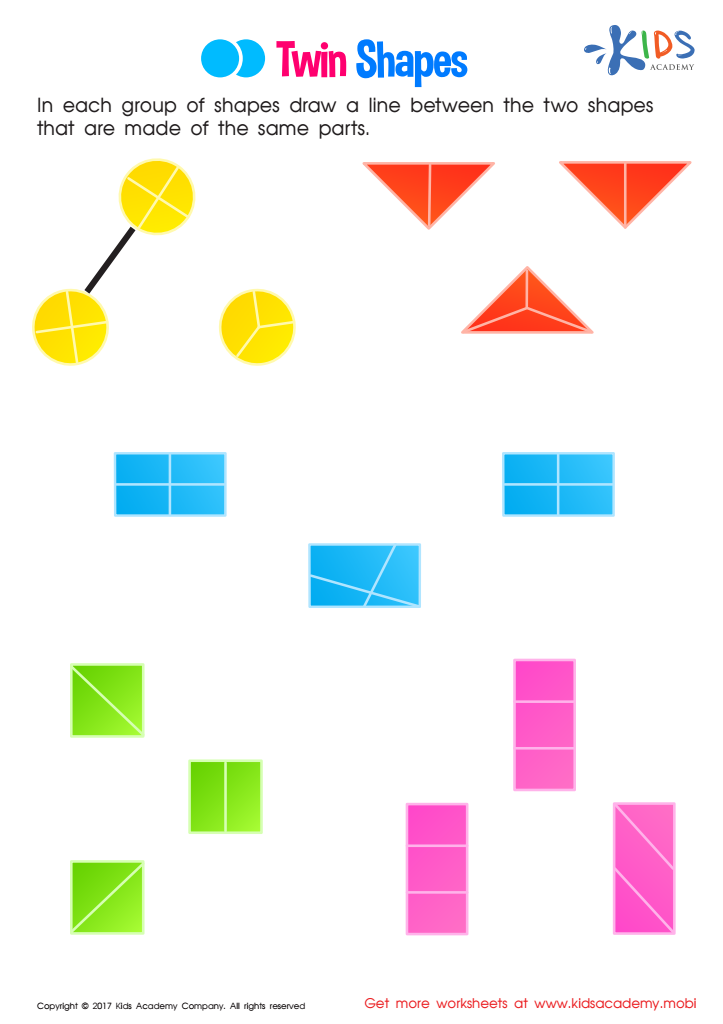
Twin Shapes Worksheet
 Assign to My Students
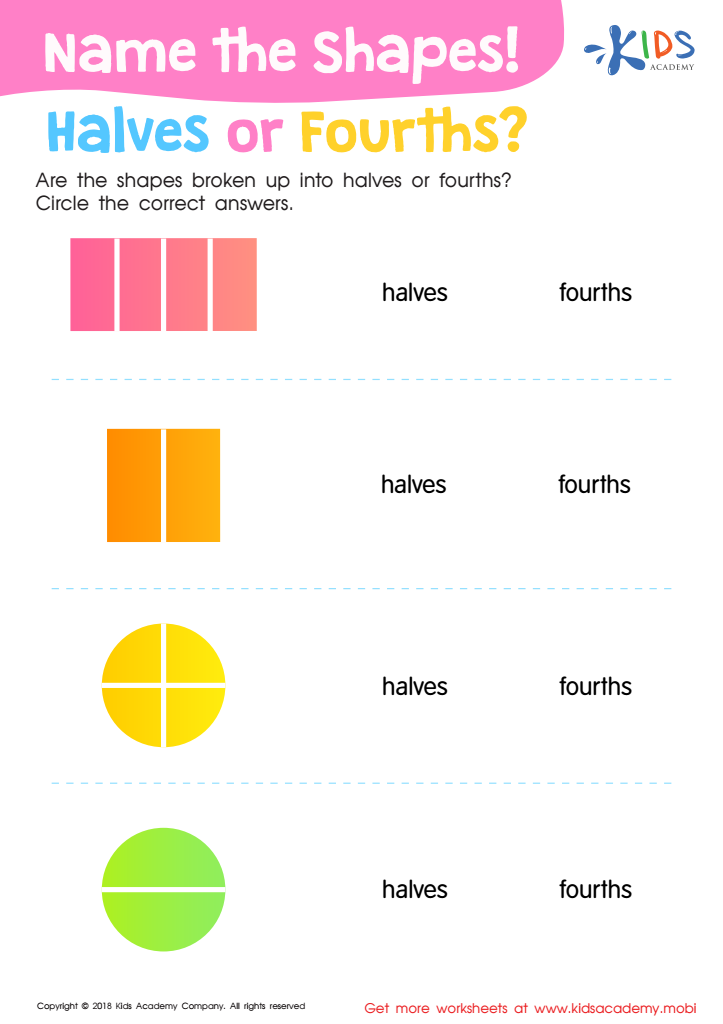
Name the Shapes Halves or Fourths? Worksheet
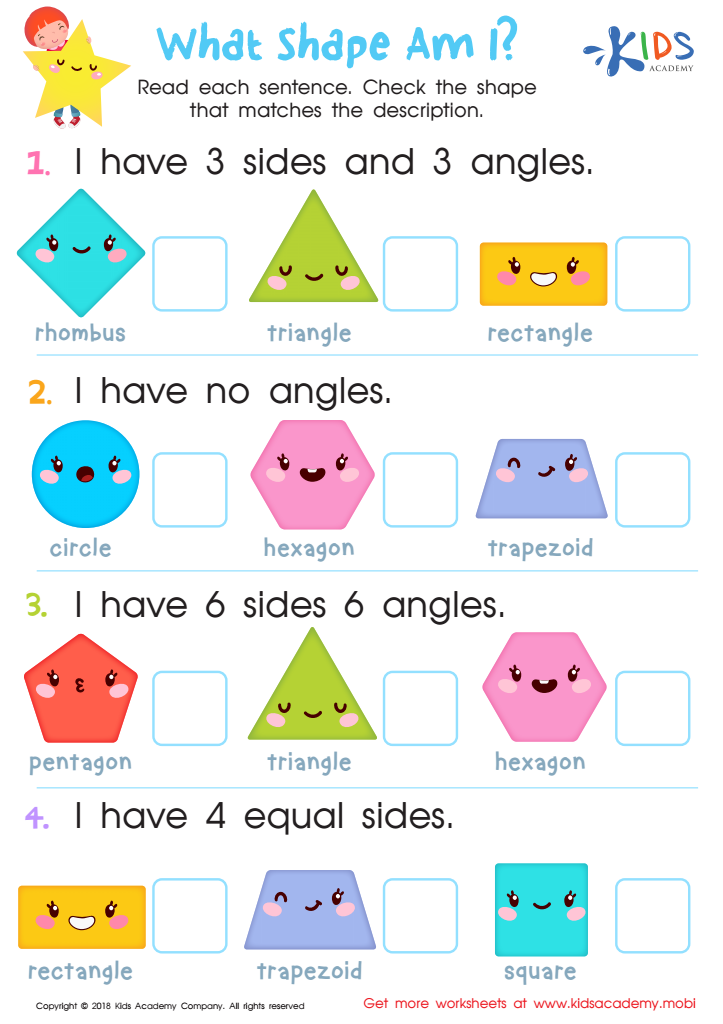
What Shape Am I? Worksheet
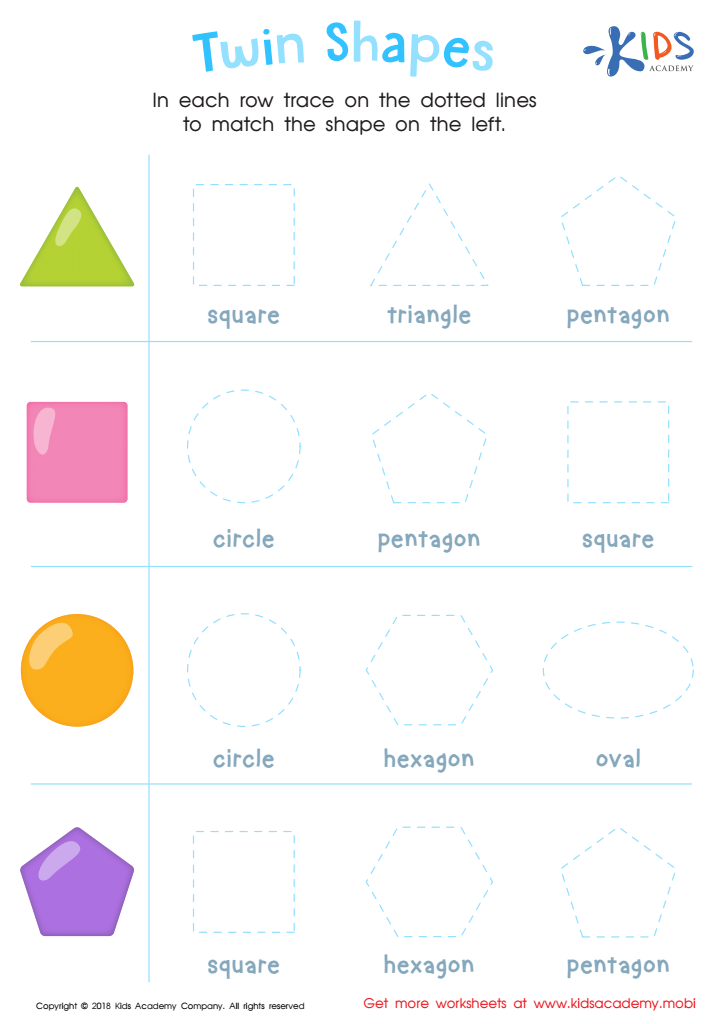
Twin Shapes Dot-to-Dot Worksheet








Visual discrimination is a crucial skill for first graders, particularly in understanding geometry. It refers to the ability to identify differences and similarities in shapes, sizes, and patterns. For parents and teachers, fostering this skill is essential as it lays the foundation for essential mathematical concepts and problem-solving abilities.
Developing visual discrimination helps young learners recognize geometric shapes and their properties, such as vertices, edges, and symmetry. This understanding directly supports their ability to classify shapes, analyze patterns, and comprehend spatial relationships—all vital components of geometry and future math skills.
Moreover, visual discrimination enhances cognitive development by improving attention to detail and critical observation skills. Children who can accurately identify and differentiate shapes are more likely to apply these skills across various subjects, promoting overall academic success.
Additionally, visual discrimination is tied to everyday life. Recognizing shapes and patterns can improve a child’s ability to read maps, follow instructions, and engage in tasks involving spatial awareness, such as art, sports, and even later science concepts.
For these reasons, parents and teachers should prioritize activities that strengthen visual discrimination in grade 1 geometry, ensuring children build a robust foundation for future learning while developing confidence and curiosity in mathematical exploration.