Number Sequencing Grade 1 Numbers Worksheets
8 filtered results
-
From - To
Unlock your child's mathematical potential with our engaging Number Sequencing Grade 1 Worksheets! Designed specifically for first graders, these printable worksheets enhance number recognition and sequencing skills through fun, interactive activities. Our thoughtfully crafted exercises encourage students to practice arranging numbers in order, filling in missing elements, and accurately counting forward and backward. With vibrant visuals and age-appropriate challenges, these worksheets promote a solid foundation in math while keeping learning fun. Ideal for reinforcing classroom lessons or as a supplementary resource at home, our Number Sequencing Worksheets are perfect for fostering mathematical confidence and competence in young learners. Start your journey today!
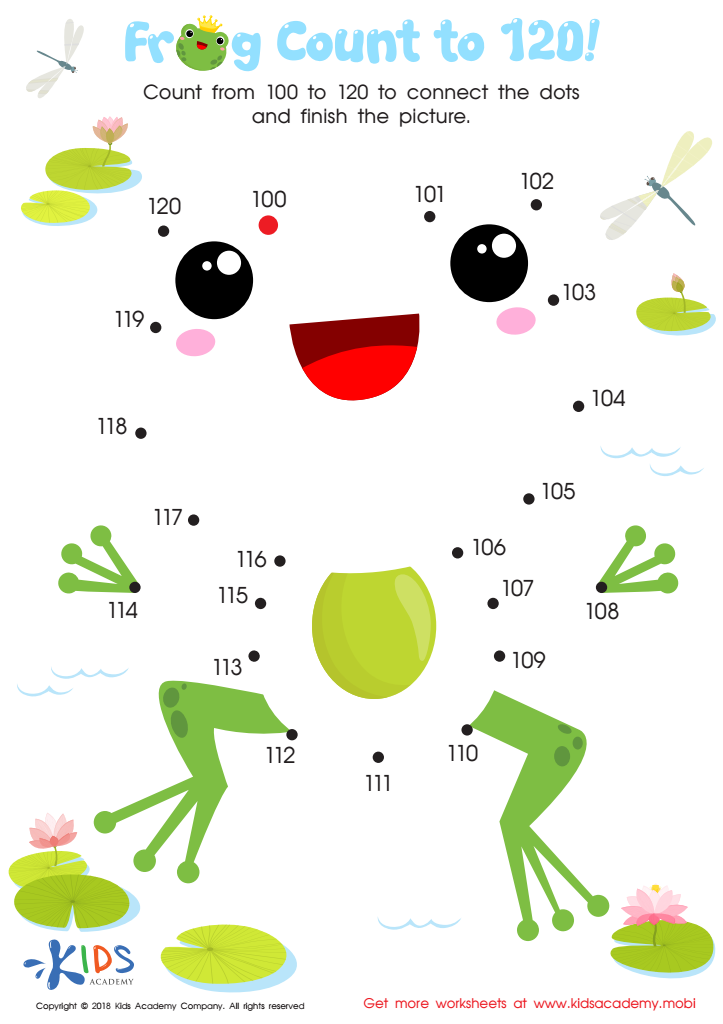
Frog Count to 120 Worksheet
 Assign to My Students
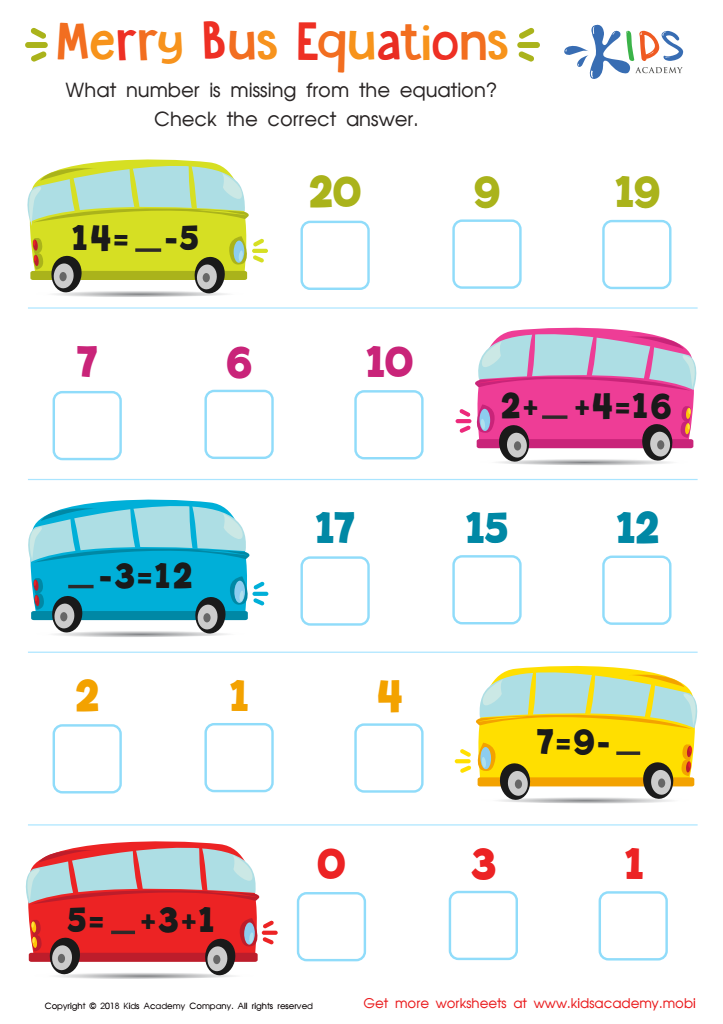
Merry Bus Equations Worksheet
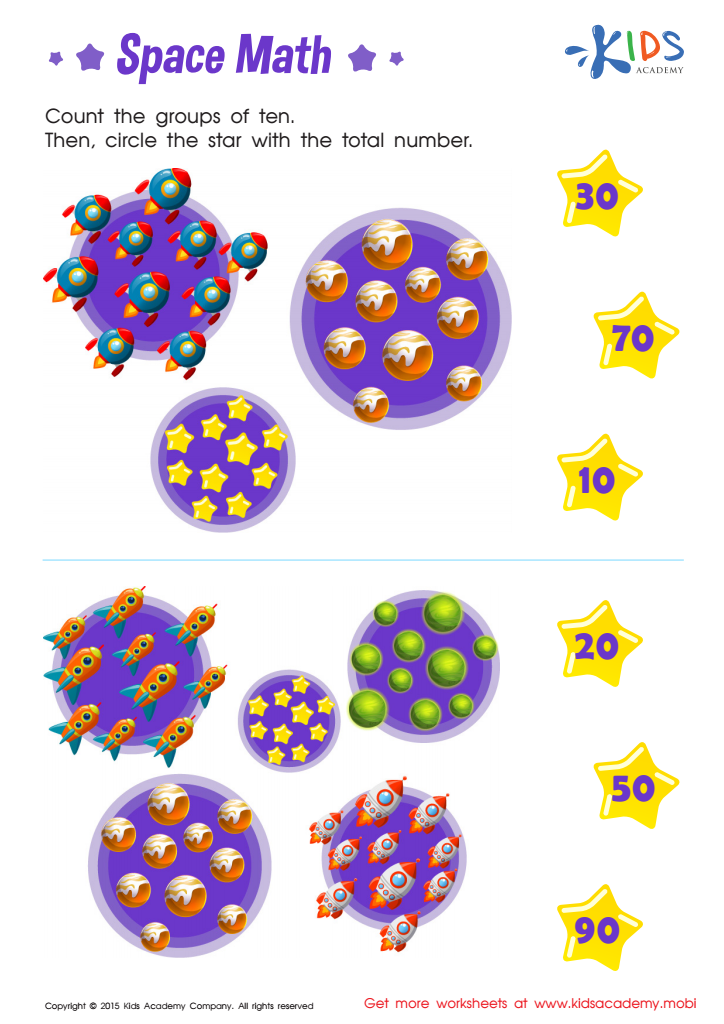
Learn dozens: Space math Worksheet
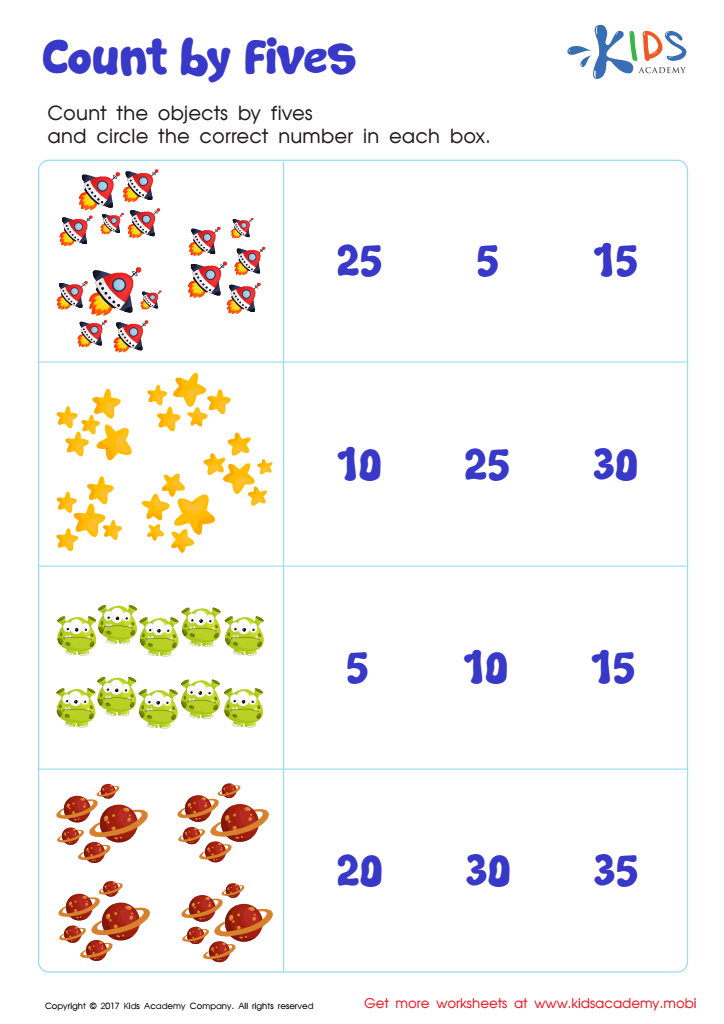
Skip Counting by 5s: Space Math Printable
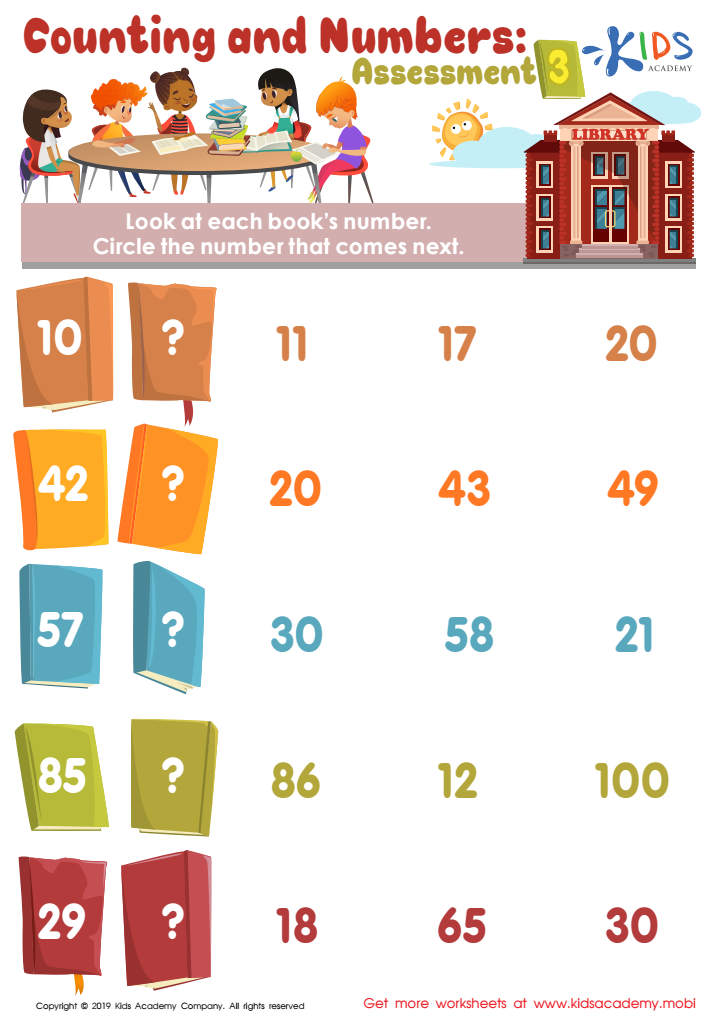
Counting and Numbers: Assessment Worksheet
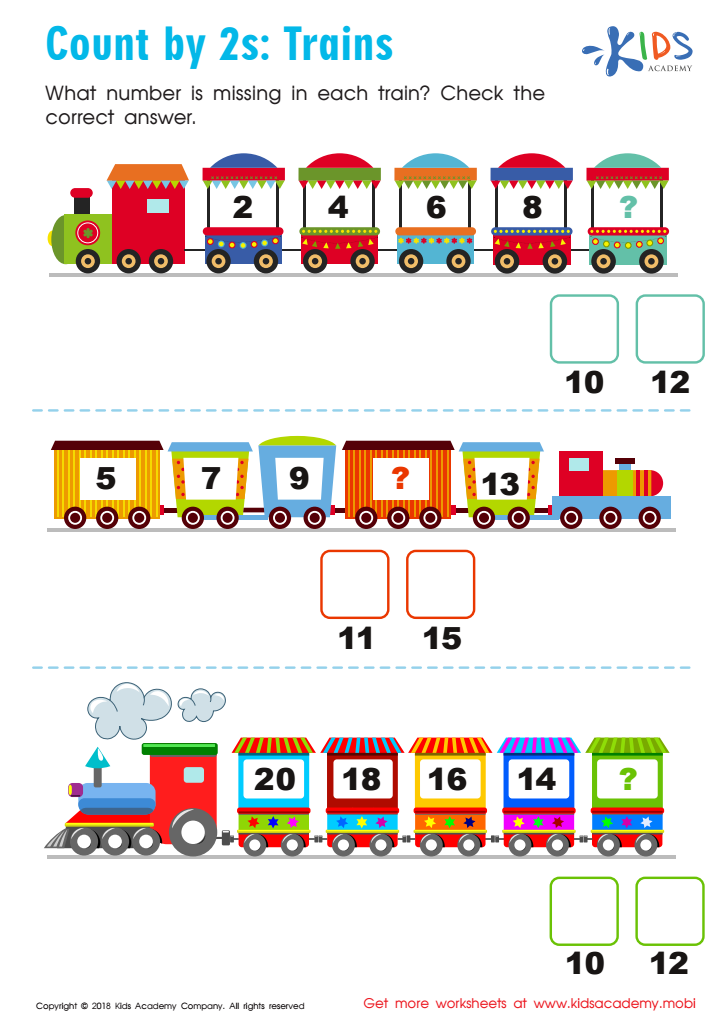
Count by 2's: Trains Worksheet
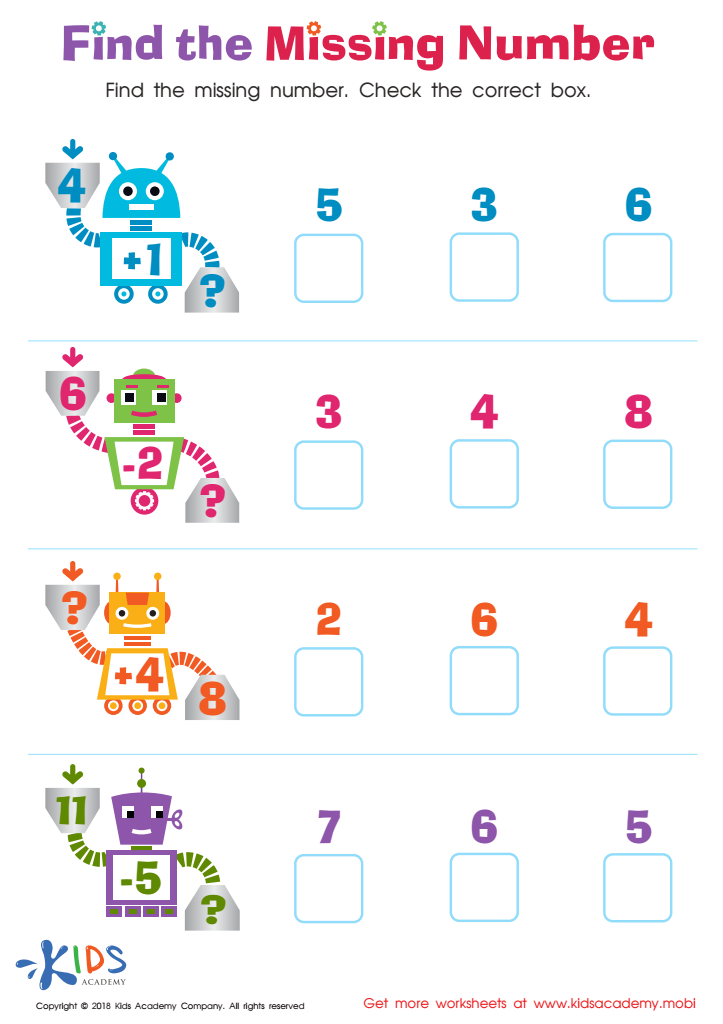
Find the Missing Number Worksheet
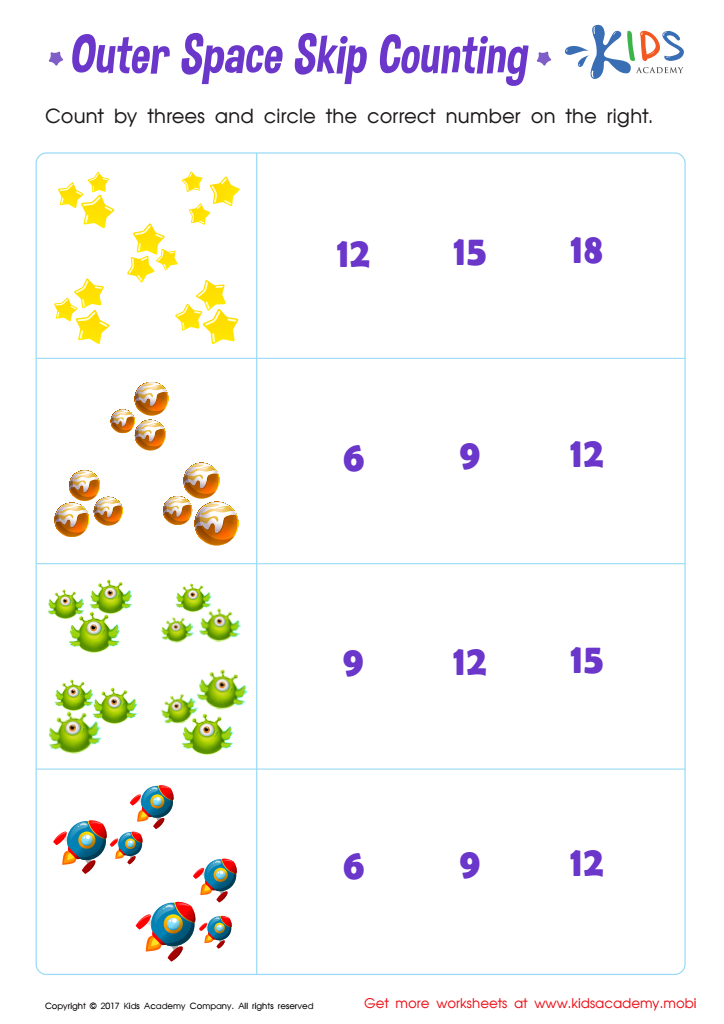
Skip Counting by 3s: Outer Space Skip Counting Printable








Number sequencing is a fundamental skill that forms the basis of math understanding in children, particularly in Grade 1. It involves recognizing and arranging numbers in a specific order, which is crucial for developing basic arithmetic skills. Understanding number sequences helps children grasp concepts such as counting, addition, and subtraction, as well as more complex math operations in later grades.
Parents and teachers should care about number sequencing because it not only fosters mathematical abilities but also promotes critical thinking and problem-solving skills. Children learn to recognize patterns, predict outcomes, and identify relationships between numbers, which are essential skills in both math and everyday life. Additionally, mastering number sequencing boosts children's confidence, making them more willing to engage with challenging math concepts.
Furthermore, early proficiency in number sequences can positively impact a child’s overall academic performance. When students have a strong foundation in sequencing, they are more likely to excel in math and related subjects, leading to greater educational opportunities in the future. Consequently, fostering number sequencing skills in Grade 1 can pave the way for lifelong learning and a positive attitude toward mathematics, making it vital for parents and teachers to prioritize this aspect of early education.