Reading clocks Grade 1 Time Worksheets
3 filtered results
-
From - To
Enhance your first grader's understanding of time with our engaging Reading Clocks worksheets! Designed specifically for young learners, these worksheets introduce the concept of telling time in a fun and interactive way. Students will practice reading both analog and digital clocks, reinforcing their skills through a variety of engaging exercises. With colorful illustrations and easy-to-follow instructions, children will gain confidence in recognizing hours and half-hours. Perfect for classroom activities or home learning, these worksheets make mastering the art of telling time enjoyable and effective. Help your child develop essential time-telling skills today! Download our free worksheets and watch them shine!
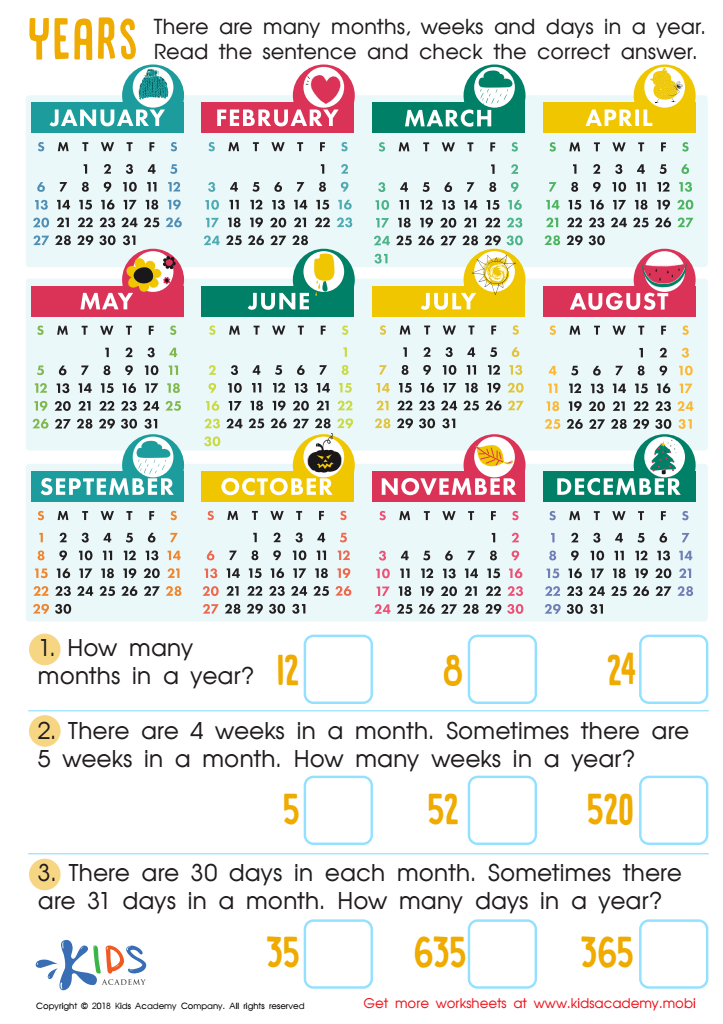
Years Worksheet
 Assign to My Students
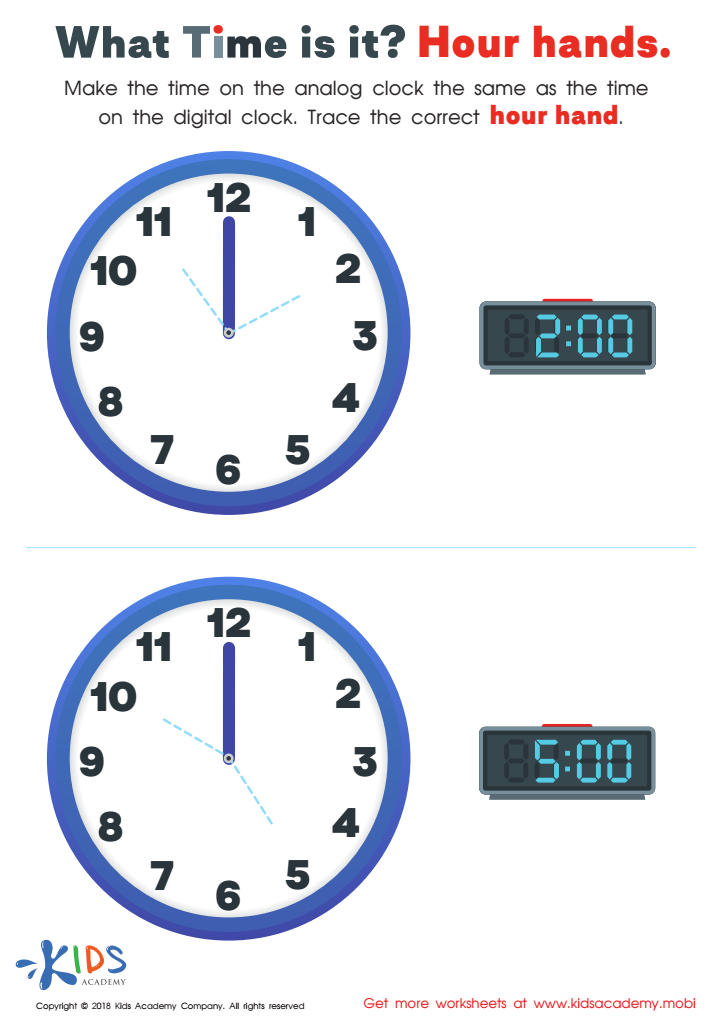
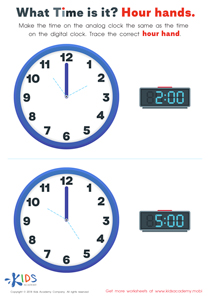
What Time Is it? Hour Hands Worksheet
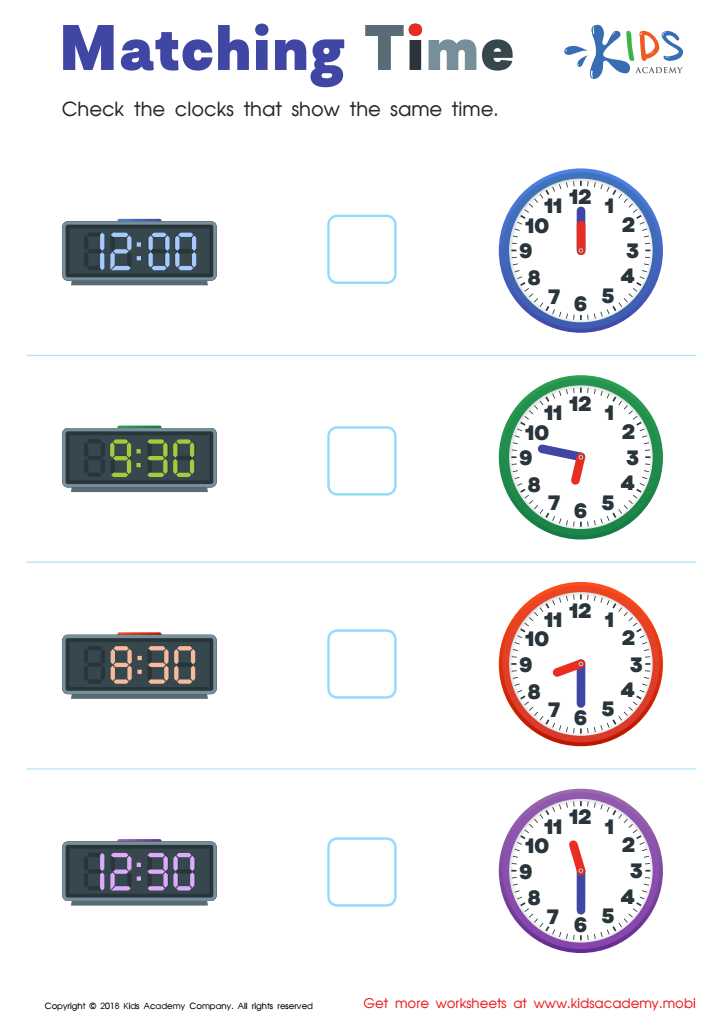
Matching Time Worksheet


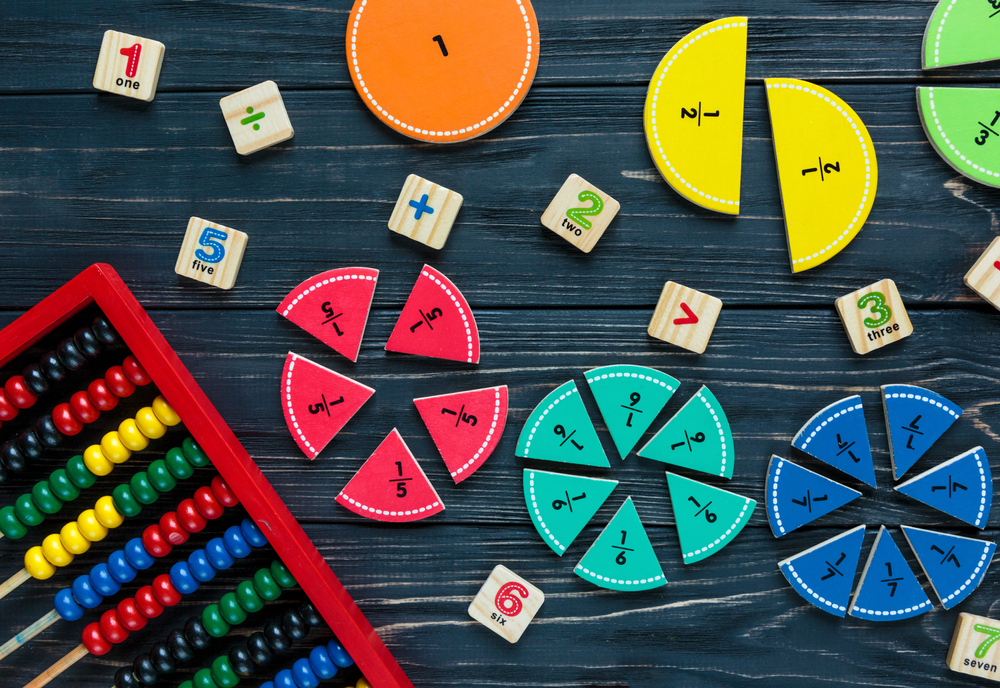





Teaching Grade 1 students to read clocks is crucial for their overall development and understanding of time management. Firstly, it enhances their numeracy skills as they learn numbers, counting, and how to correlate them with time. Understanding the structure of a clock introduces concepts like halves, quarters, and more, creating a foundation for future math learning.
Moreover, learning to tell time helps foster independence. When children grasp how to read clocks, they can manage their own schedules, such as understanding when it's time for school, meals, or bedtime, empowering them to take more control over their daily routines.
Additionally, reading clocks encourages responsibility and punctuality. Children learn the importance of being on time, a valuable life skill that will aid them in school and later in their careers.
Moreover, it aids in developing critical thinking skills as they practice interpreting time and applying it to real-life contexts. For parents and teachers, helping children learn to read clocks enhances their learning experiences, ensuring they gain vital skills that contribute to their holistic growth and prepare them for future educational challenges. Ultimately, this is an essential part of fostering self-sufficiency and confidence in young learners.