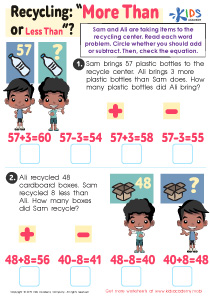
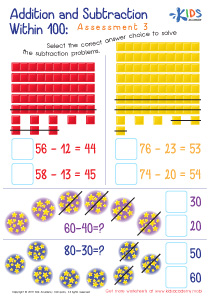
Handwriting practice Grade 1 Tracing Numbers Worksheets
3 filtered results
-
From - To
Welcome to our Handwriting Practice Grade 1 Tracing Numbers Worksheets! Designed for first graders, these engaging worksheets help young learners master numbers through fun tracing activities. Students will develop fine motor skills and enhance their number recognition, which is essential for building a strong mathematical foundation. Each worksheet is crafted to encourage repetition and confidence as they practice writing numbers from 0 to 20. Perfect for home or classroom use, our printables cater to various learning styles, making writing enjoyable and effective. Start your child’s handwriting journey today and watch their skills flourish with each traced number!
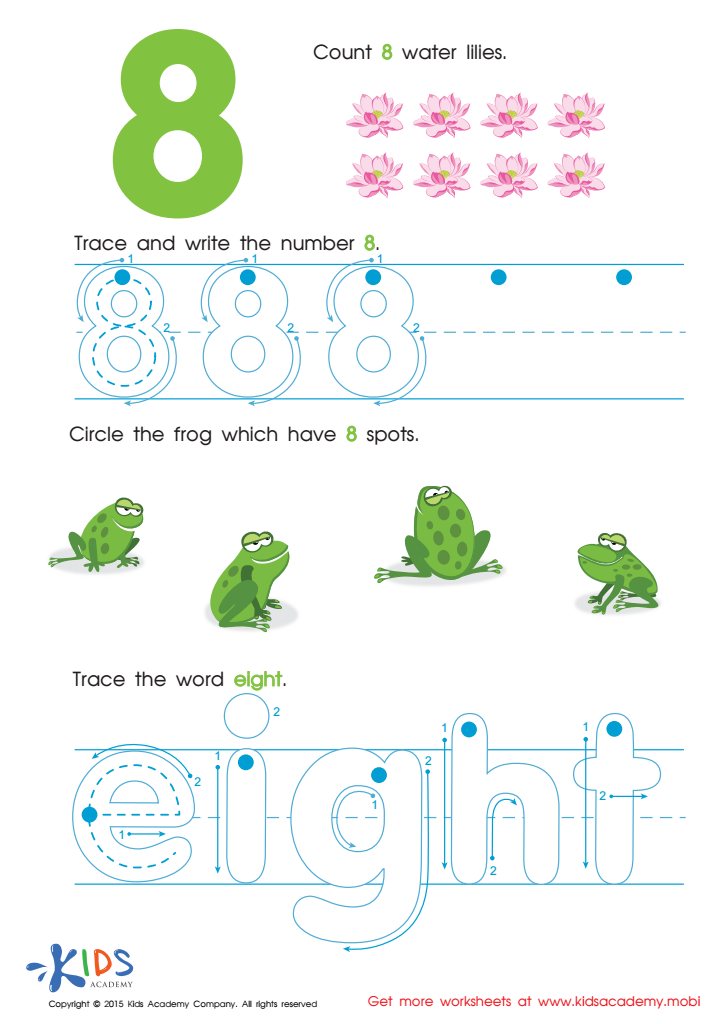
Learn Number 8 Easily Worksheet
 Assign to My Students
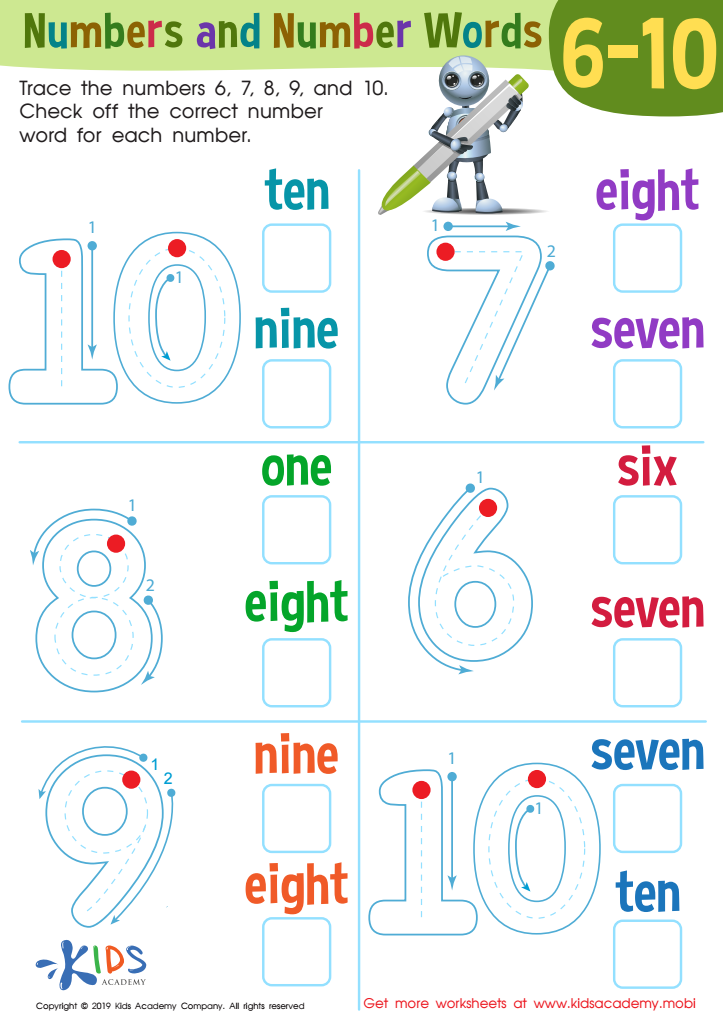
Numbers and Number Words 6–1 Worksheet
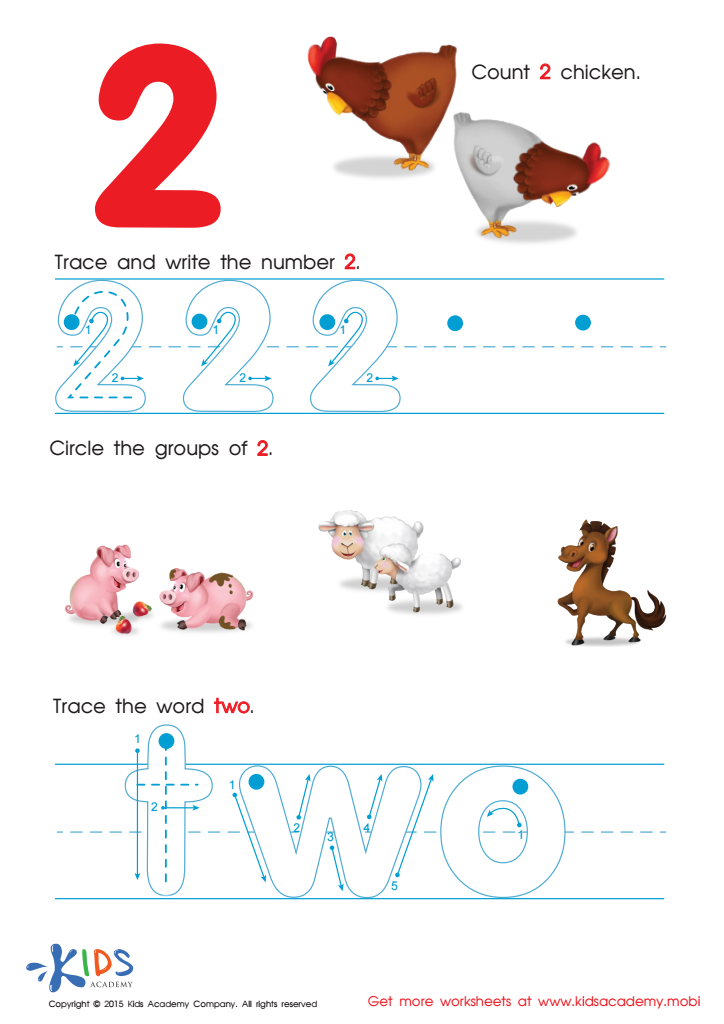
Learn to Write the Number 2 Worksheet




Handwriting practice, particularly tracing numbers in Grade 1, is crucial for young learners' development. Firstly, this practice enhances fine motor skills, which are essential for executing everyday tasks, such as buttoning shirts or manipulating utensils. By tracing numbers, children refine their hand-eye coordination and overall dexterity, laying the groundwork for future writing.
Moreover, mastering number formation fosters mathematical understanding. When students practice tracing, they internalize the shapes and sequences of numbers, which supports their ability to recognize, write, and ultimately compute numeric that may be expected in their mathematical education. This foundational knowledge helps build confidence in their math skills and reduces anxiety around numeracy.
Additionally, handwriting practice contributes to cognitive development. It involves a multi-sensory approach, as children engage visually, tactilely, and kinesthetically. This anatomy helps reinforce memory retention and allows for deeper connections as they learn.
Lastly, regular tracing encourages focus and patience, essential traits for academic success. A structured practice routine nurtures desiliency and promotes a disciplined work ethic. By prioritizing handwriting practice, parents and teachers play an instrumental role in equipping children with vital skills that transfer to various aspects of learning and everyday life.