
Categorizing objects Grade 1 Science Worksheets
3 filtered results
Difficulty Level
Grade
Age
-
From - To
Subject
Activity
Standards
Discover our engaging Grade 1 Science worksheets focused on categorizing objects! These versatile resources are designed to help young learners develop essential skills in organizing and classifying items based on various characteristics. Students will explore exciting categories such as colors, sizes, shapes, and functions, promoting critical thinking and observational skills. Each worksheet features fun illustrations and interactive activities that capture children's interest while enhancing their understanding of how to group and sort objects effectively. Perfect for the classroom or at-home learning, our worksheets provide an enjoyable way for first graders to master the art of categorization. Start categorizing today!
Favorites
With answer key
Interactive
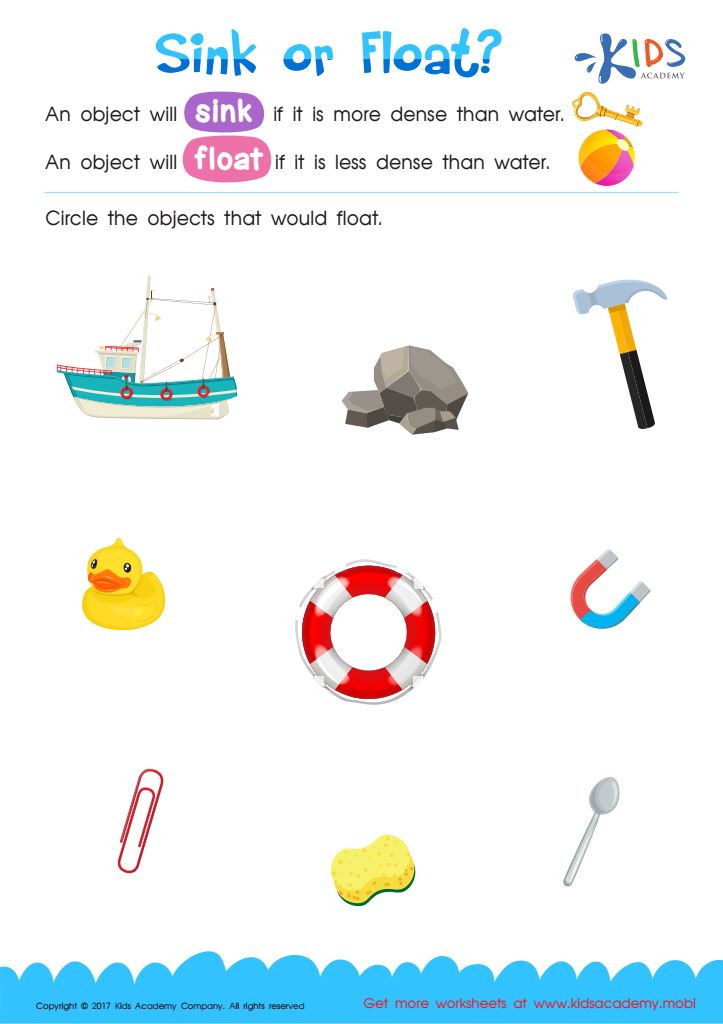
Sink or Float Printable
They'll learn why some things stay on the surface and others sink to the bottom. (80 words)
 Assign to My Students
Sink or Float Printable
Worksheet
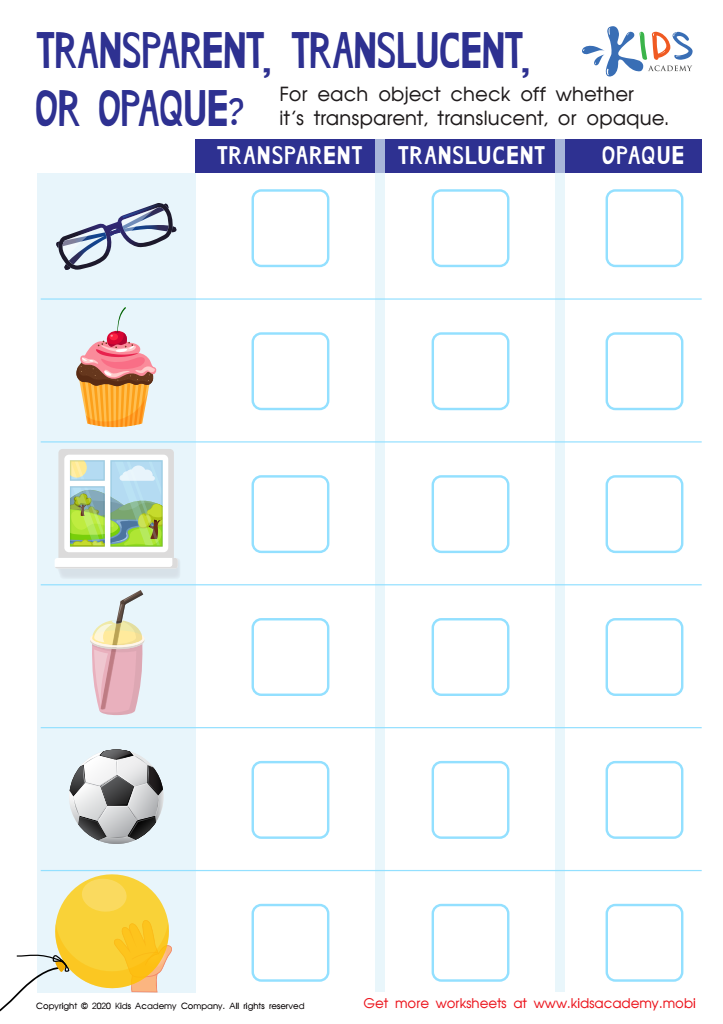
Transparent, Translucent, or Opaque Worksheet
Remind students that transparent objects allow us to see through them, translucent objects let some light pass through, and opaque objects block all light. Have them look at pictures and decide if each object is transparent, translucent, or opaque.
Transparent, Translucent, or Opaque Worksheet
Worksheet
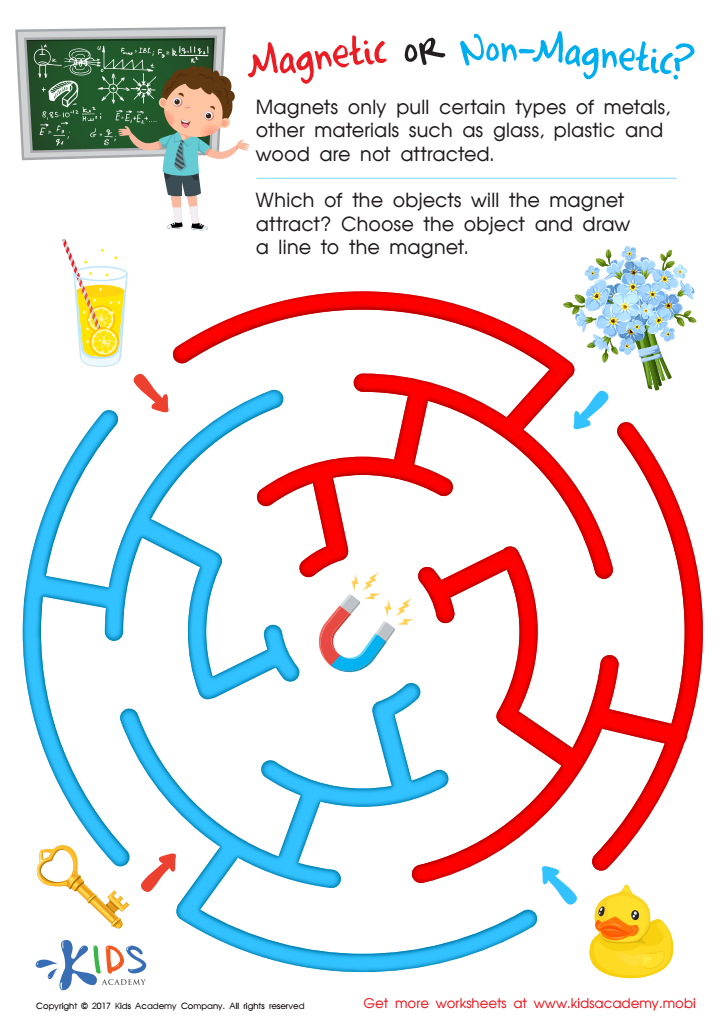
Magnetic or Non–Magnetic Worksheet
Introduce your child to magnetism with this fun maze! Read the summary to explain the concept, then help them find the magnetic object as they navigate the maze. It's a great way to learn and have fun!
Magnetic or Non–Magnetic Worksheet
Worksheet
Join Kids Academy for Free
Who is primarily going to use this learning content?







Categorizing objects is a fundamental skill that greatly benefits Grade 1 students in their understanding of the world around them. For parents and teachers, caring about this concept is crucial, as it lays the groundwork for critical thinking and organization in young learners. Through categorization, children learn to identify similarities and differences among various items, which enhances their cognitive development.
This skill not only nurtures analytical thinking but also promotes language development. As children discuss the characteristics of objects—like size, shape, color, or function—they expand their vocabulary and improve their communication skills. Additionally, categorization fosters collaboration and social skills when children work in groups to sort items, allowing them to share ideas and negotiate categorization criteria.
Furthermore, categorizing reinforces foundational scientific concepts, helping students grasp more complex scientific principles in the future. It introduces them to systematic thinking, which is essential for problem-solving across subjects.
When parents and teachers emphasize categorizing objects, they enrich the learning experience, making it engaging and meaningful. Ultimately, it fosters a lifelong love for learning and strengthens the cognitive skills necessary for future academic success. Therefore, encouraging this activity is an invaluable investment in a child’s educational journey.







