Filters

7 filtered results

Clear all filters
Favorites
With answer key
Interactive

7 filtered results

Difficulty Level

Grade


Unlock your child's potential with our engaging Fine Motor Skills Grade 1 Science Worksheets! Designed specifically for first graders, these interactive worksheets blend science learning with essential fine motor skill development. Children will enhance their dexterity through activities like tracing, cutting, and coloring, all while exploring fundamental science concepts. Perfect for home or classroom use, our worksheets cater to diverse learning styles, making science both fun and educational. Support your child's cognitive growth as they refine their skills and build confidence. Explore our collection today and set the foundation for lifelong learning in science and beyond!

Check out this FREE Grade 1 Trial Lesson on Science!

Aquatic Animal Structures

Favorites
With answer key
Interactive
  • Grade 1
  • Fine Motor Skills
  • Science
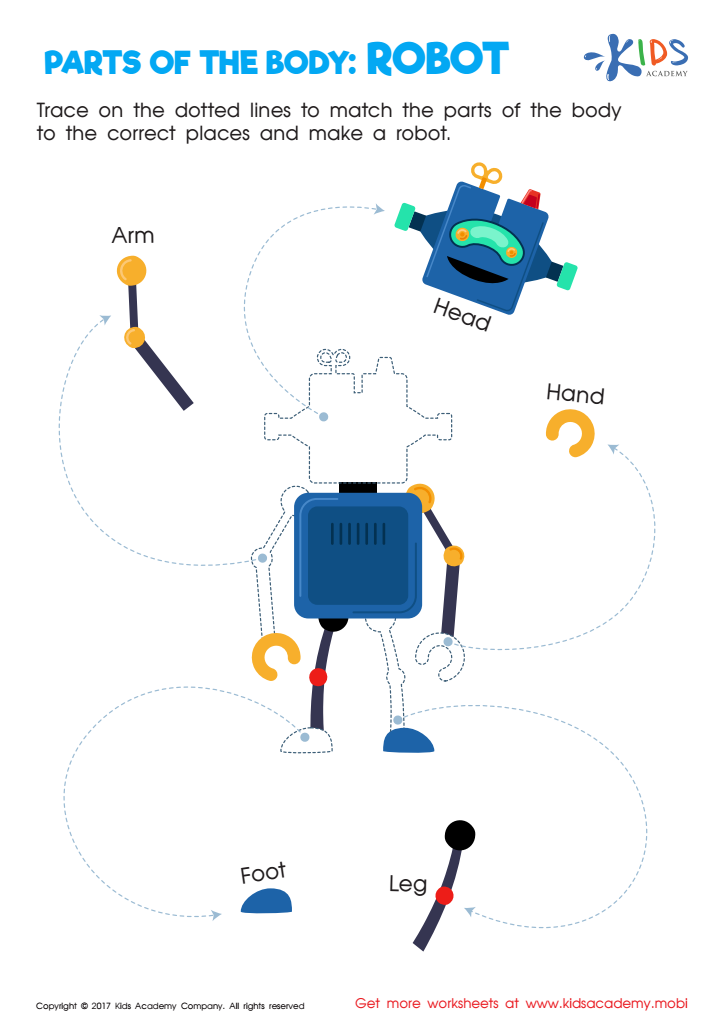
Parts of the Body Worksheet

Robot Printable

Introduce your child to a fun robot and help her hone her matching skills with this parts of the body worksheet! Your child will trace dotted lines to match the robot's body parts to the right place, helping her focus, use abstract thinking and reason better. This worksheet is sure to get your child excited and help her build essential skills for future success!
Robot Printable
Worksheet
Counting Birds Worksheet

Counting Birds Worksheet

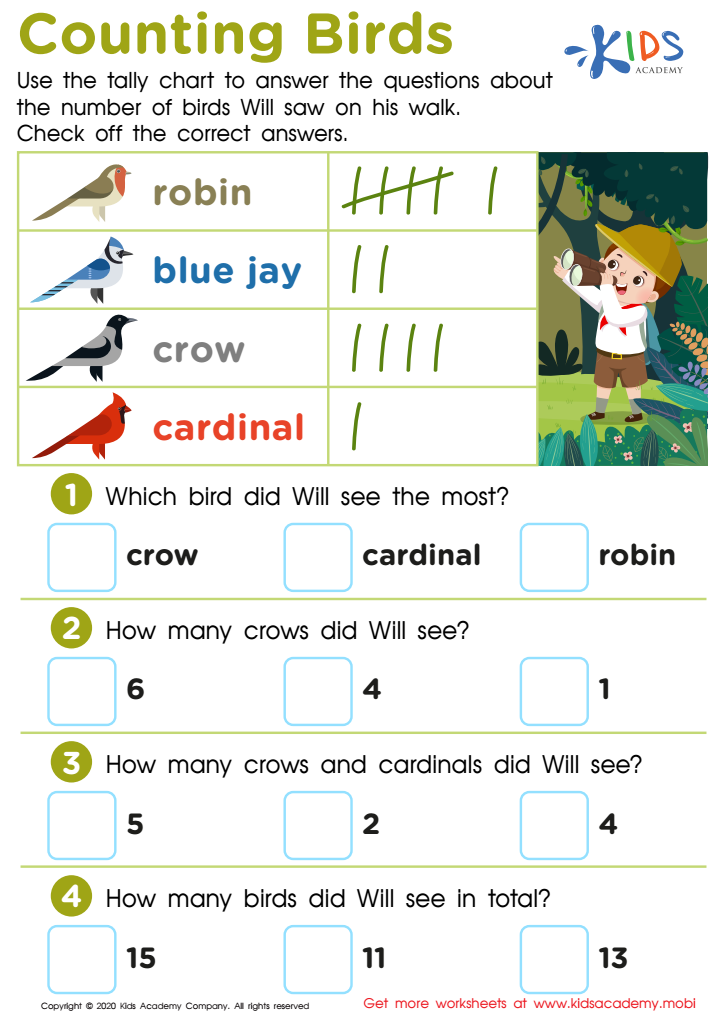
Introduce your child to the exciting activity of bird watching! This PDF worksheet features a tally chart of the different types of birds Will saw on his walk. Have your kid use the tally chart to organize information and use it to answer the questions that follow, thus boosting early science and math skills.
Counting Birds Worksheet
Worksheet
Body Parts Worksheet

Alien Worksheet

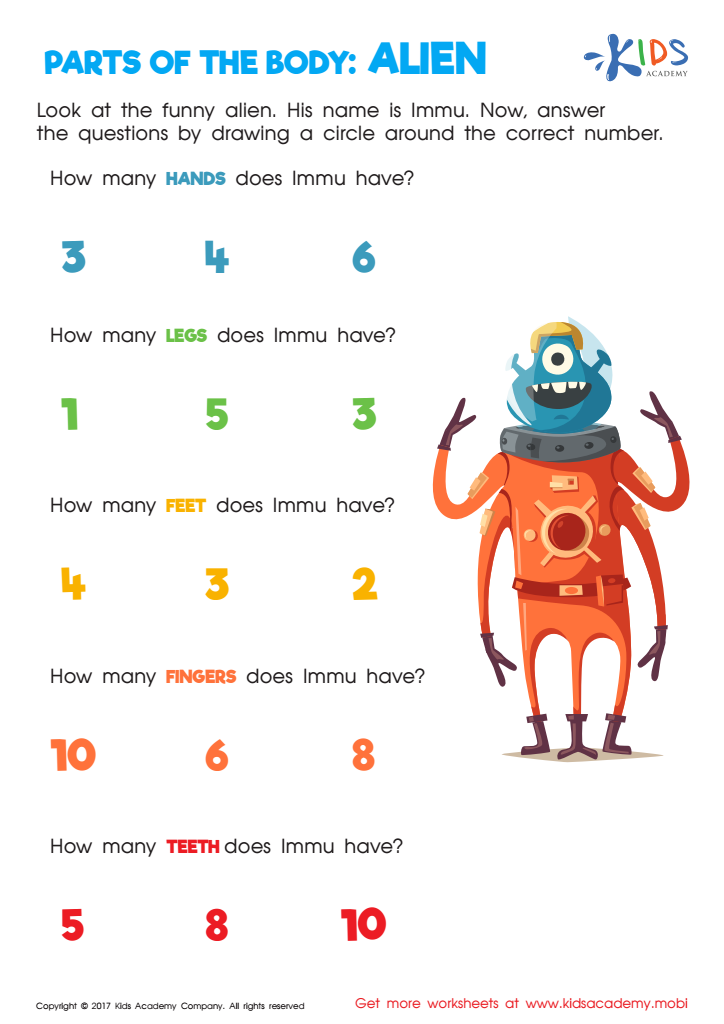
Take your child on an out-of-this-world learning adventure with Immu, our friendly alien! This worksheet helps your child practice counting, recognize body parts and sharpen problem solving skills. Get started with this fun, educational activity today and watch as they learn and grow. Print it now and blast off to outer space!
Alien Worksheet
Worksheet
Connect the Dots Math Worksheet

Little Dipper Worksheet

Little Dipper Worksheet
Worksheet
Underwater Creatures with Shells Worksheet

Underwater Creatures with Shells Worksheet

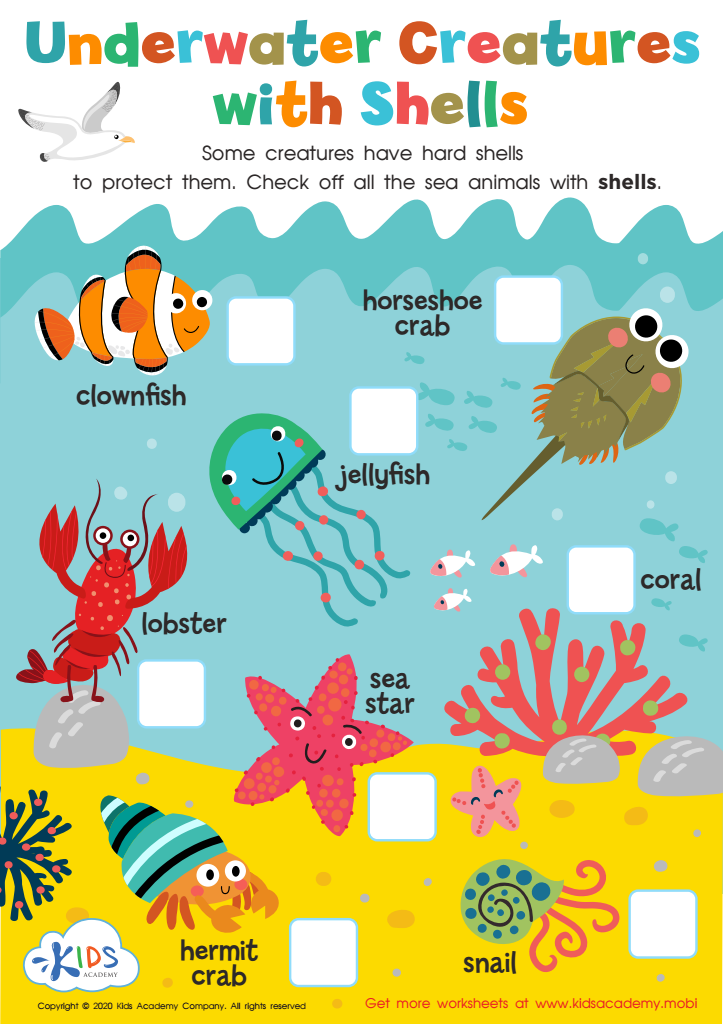
Teach your child about sea creatures with this vibrant PDF science worksheet! Comb through the colorful image to identify animals with shells; compare them to others and check them off. Let them know shells don't just wash up on beach, they serve as protection for sea creatures!
Underwater Creatures with Shells Worksheet
Worksheet
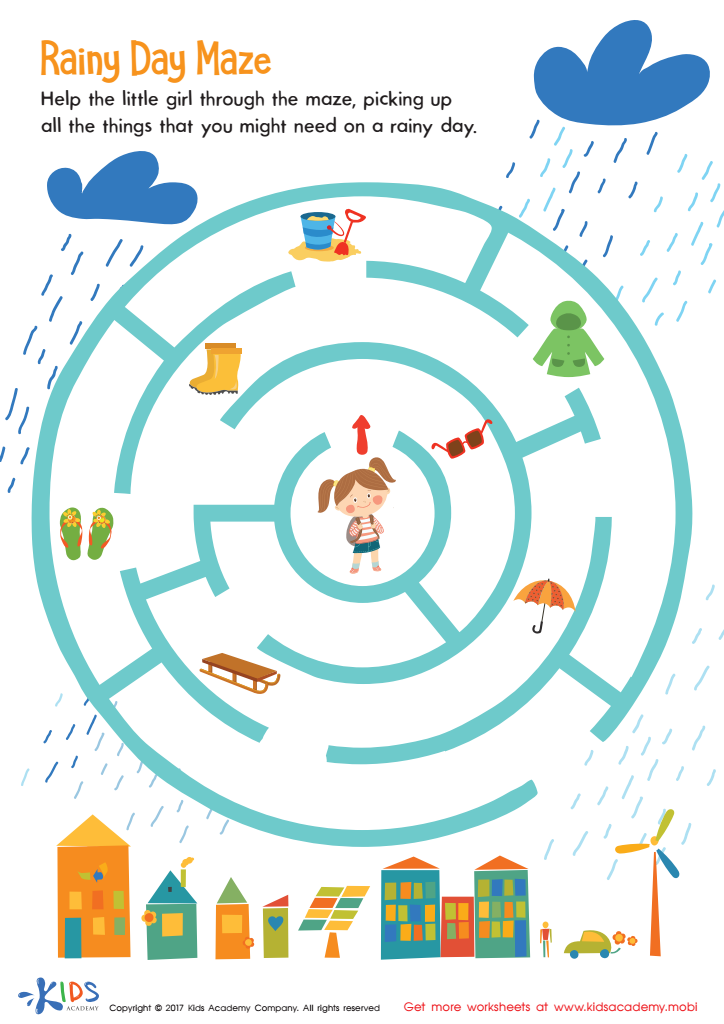
Rainy Day Printable Maze

Rainy Day Maze Worksheet

Help your child use critical and problem solving skills to choose the right items! With this fun rainy day worksheet, they'll have a blast helping the character in the maze while learning about weather. Let’s get started!
Rainy Day Maze Worksheet
Worksheet
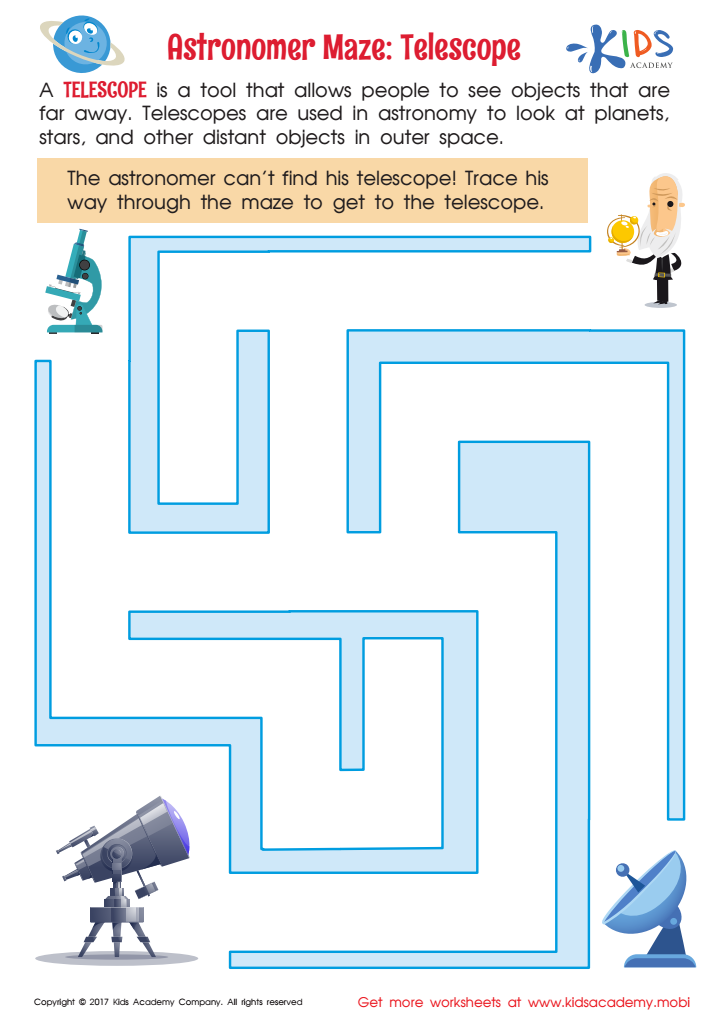
Space maze worksheet: Telescope

Astronomer Maze: Telescope Worksheet

Let your mini astronomer explore the galaxy with this fun and puzzling space maze worksheet – Telescope! Your child will have a great time navigating the maze, while learning how telescopes help scientists study the stars.
Astronomer Maze: Telescope Worksheet

Worksheet


Fine motor skills are essential for young learners, particularly in Grade 1, as they form the foundation for various academic and everyday activities. These skills involve the coordination of small muscles in the hands and fingers, enabling children to perform tasks such as writing, cutting, and manipulating objects. When parents and teachers prioritize fine motor skills in science education, they enhance cognitive development and promote independent problem-solving.

In Grade 1 science, students explore concepts through hands-on experiments and activities, which often require precise movements. For instance, using tools like scissors or pipettes, participating in crafting projects, and handling small objects fosters not only scientific understanding but also dexterity. As children learn to control their movements, their confidence grows, facilitating a positive attitude toward learning.

Moreover, fine motor skills play a vital role in literacy, as improved writing abilities help students express their thoughts and ideas more effectively. By caring about the development of these skills, parents and teachers can help ensure that children are not only prepared academically but also equipped with essential life skills. Encouraging fine motor skill activities intertwines with science learning, creating a holistic educational experience that supports overall child development.