Fine Motor Skills Grade 1 Writing Worksheets
3 filtered results
Difficulty Level
Grade
Age
-
From - To
Subject
Activity
Standards
Boost your child’s handwriting abilities with our Fine Motor Skills Grade 1 Writing Worksheets! Specially designed for first graders, these engaging worksheets focus on enhancing the essential fine motor skills needed for neat and legible writing. Young learners will practice activities like tracing, drawing, and crafting letters, helping them develop hand-eye coordination, finger strength, and dexterity. Our printable worksheets feature fun and educational exercises to keep kids motivated and improve their handwriting precision. Make learning enjoyable and effective, ensuring your child builds a strong foundation for writing success. Download our worksheets now and watch your child's skills flourish!
Favorites
With answer key
Interactive
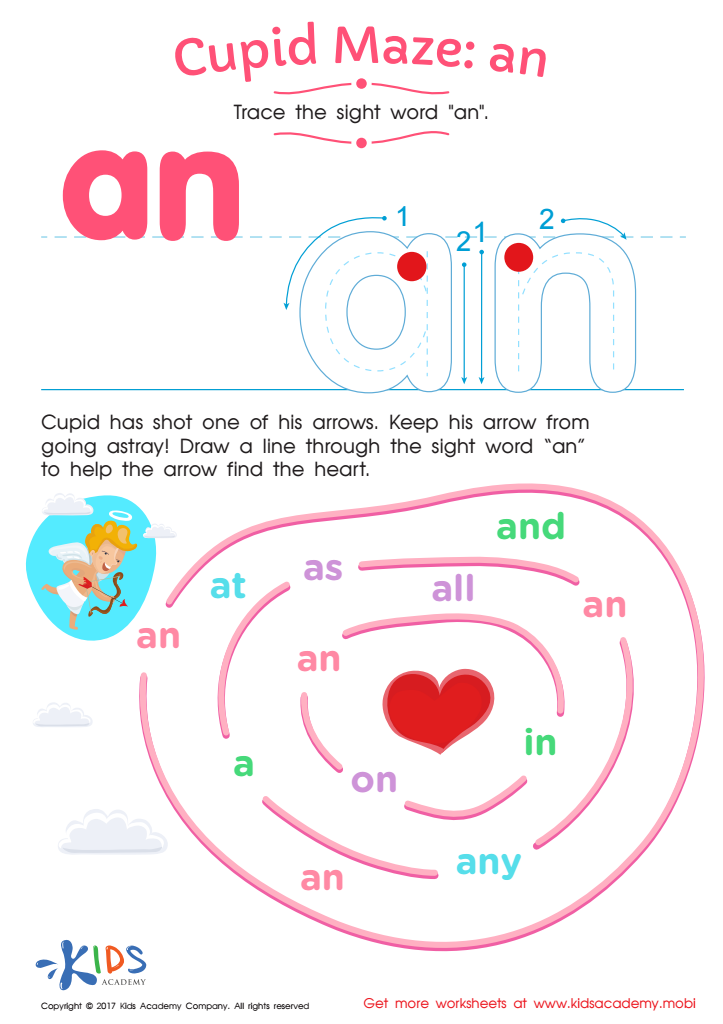
Cupid Maze: An Printable
Get a cute and creative way to boost their reading with this Valentine's Day-themed sight word worksheet. Perfect for kids, it features a fun maze and the article "an".
 Assign to My Students
Cupid Maze: An Printable
Worksheet
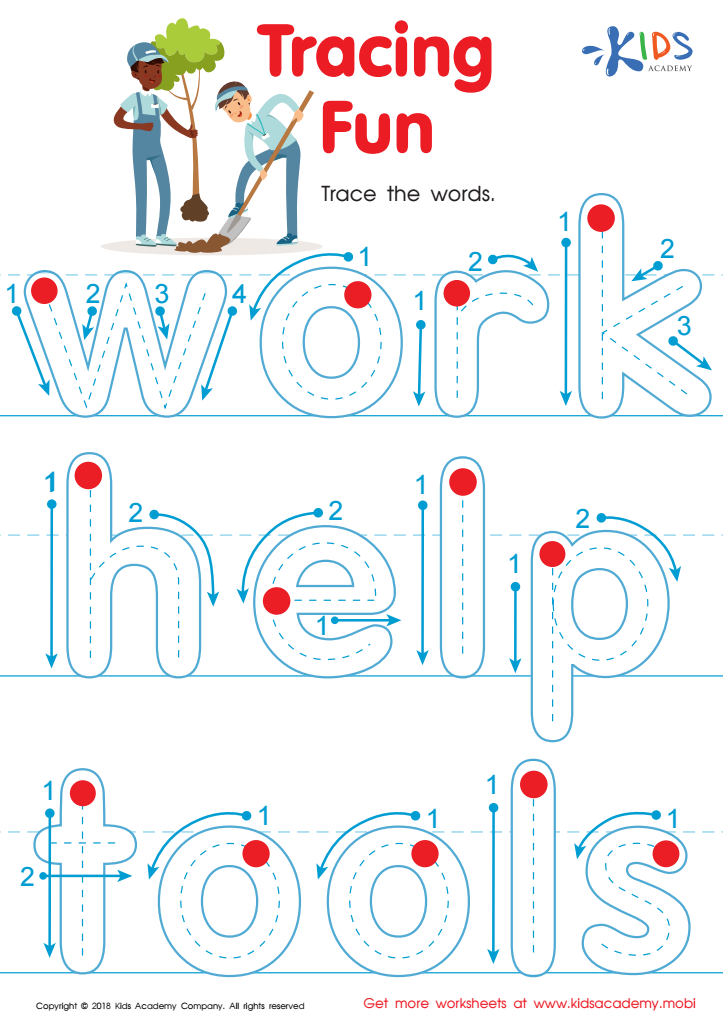
Tracing Fun Worksheet
Believe it or not, good handwriting helps with reading! Starting at the top left and writing legibly builds reading skills. This free worksheet helps little learners practice basic sight words. Red dots show them where to start and the words provide reinforcement without them realising. An enjoyable way to boost their reading and writing.
Tracing Fun Worksheet
Worksheet
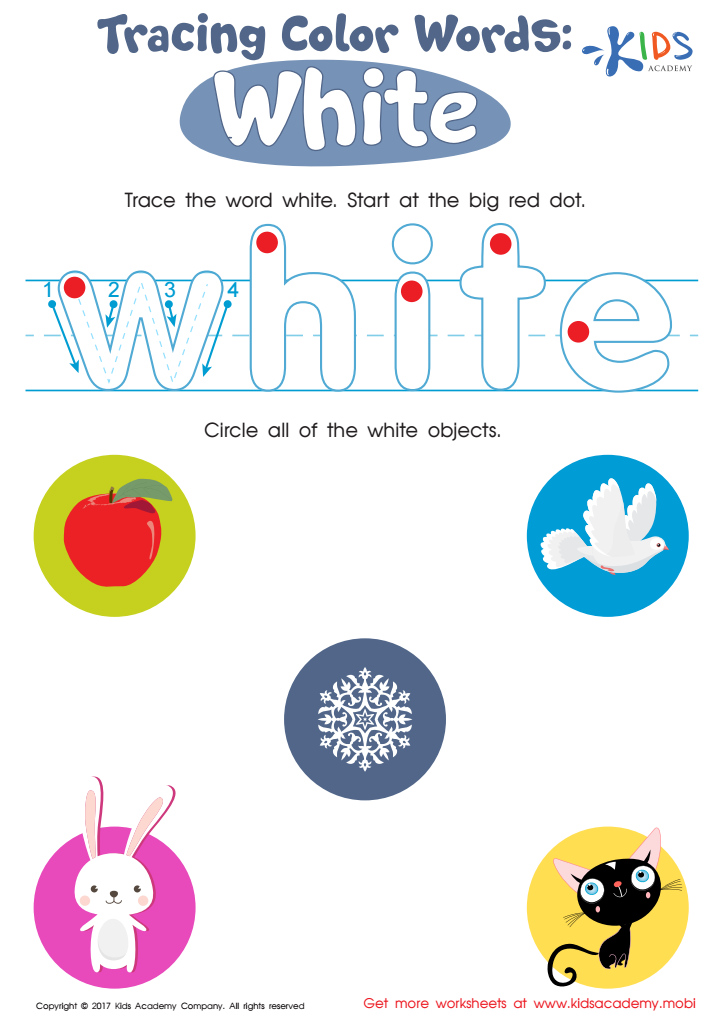
White Tracing Color Words Worksheet
This fun worksheet helps children learn color words quickly. They trace the letters and circle pictures of the color. This helps them practice reading and identifying objects, and they can do it without needing to read phonetically. Download it now and watch your child's skill grow!
White Tracing Color Words Worksheet
Worksheet
Join Kids Academy for Free
Who is primarily going to use this learning content?








Fine motor skills are fundamental for a child's early development, especially when it comes to writing in Grade 1. Parents and teachers should prioritize these skills because they directly impact a child's ability to write legibly and comfortably. Fine motor skills involve the coordination of small muscles in the hands and fingers, allowing children to grasp pencils correctly, form letters precisely, and eventually write words and sentences confidently.
Good fine motor control enhances not only writing but also other essential classroom tasks like cutting with scissors, turning pages in a book, and even tying shoelaces. When children struggle with these skills, they might face frustration and anxiety, which can hinder their overall academic performance and enthusiasm for learning.
Moreover, developing fine motor skills at an early stage sets the foundation for future success, both academically and in everyday life. Children who build strong fine motor skills tend to perform better in tasks requiring attention to detail and dexterity. They also gain a sense of achievement, boosting their self-esteem and fostering a positive attitude towards school.
Therefore, investing time and effort into activities that enhance fine motor skills—such as drawing, playing with building blocks, and practicing writing—can make a significant difference in a child's educational journey and overall development.