Mathematical reasoning Extra Challenge Worksheets for Ages 3-4
6 filtered results
-
From - To
Discover our engaging Mathematical Reasoning Extra Challenge Worksheets specifically designed for children aged 3-4! These worksheets are crafted to enhance early math skills through fun and interactive activities, fostering critical thinking and problem-solving abilities. Each worksheet encourages young learners to explore basic concepts such as counting, shapes, and number recognition while promoting creativity and cognitive development. Ideal for parents, teachers, or caregivers, our resources provide an excellent opportunity for extra learning challenges beyond the classroom. Download these colorful, child-friendly worksheets today to make math an enjoyable and rewarding experience for your little ones as they build a strong foundation for future success!
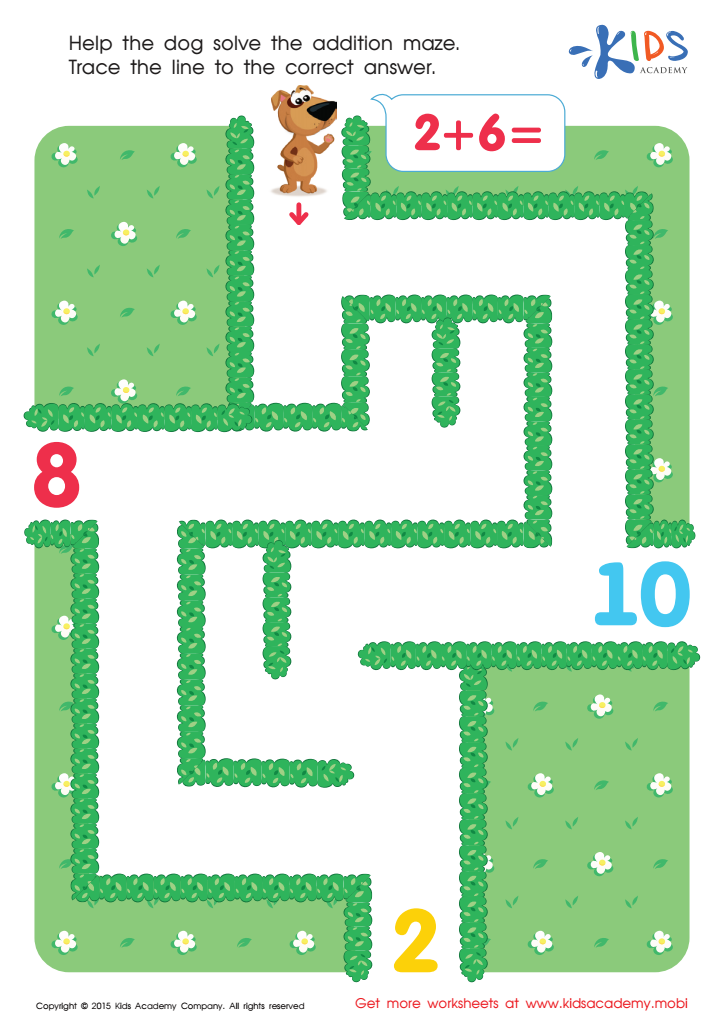
Two Plus Six Addition Worksheet
 Assign to My Students
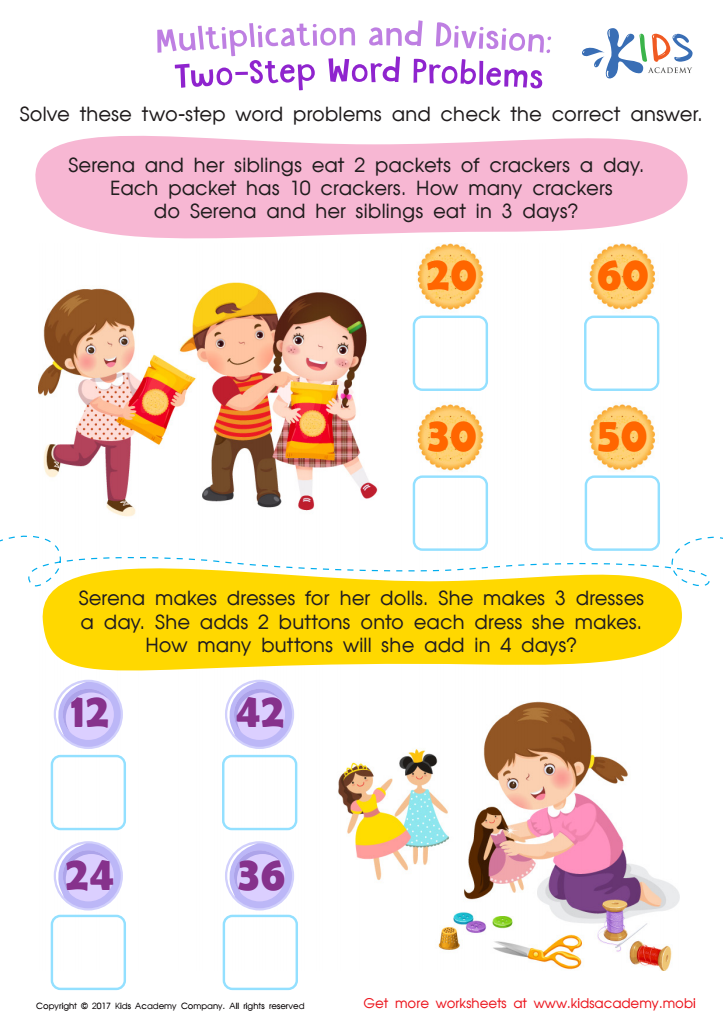
Two Step Word Problems Worksheet
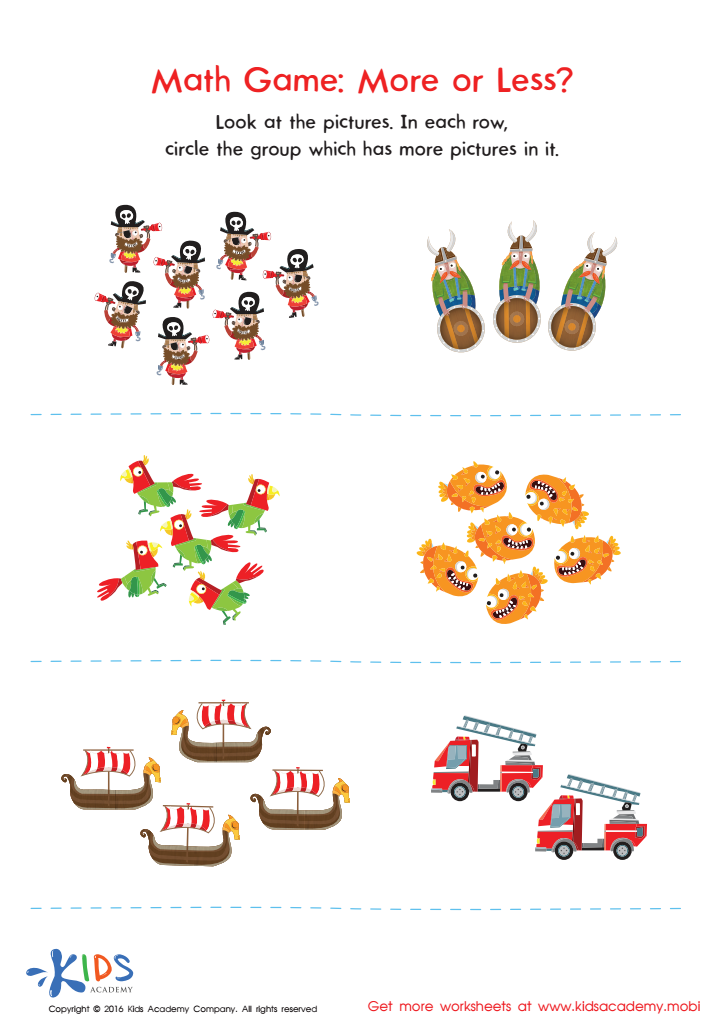
More or Less Worksheet
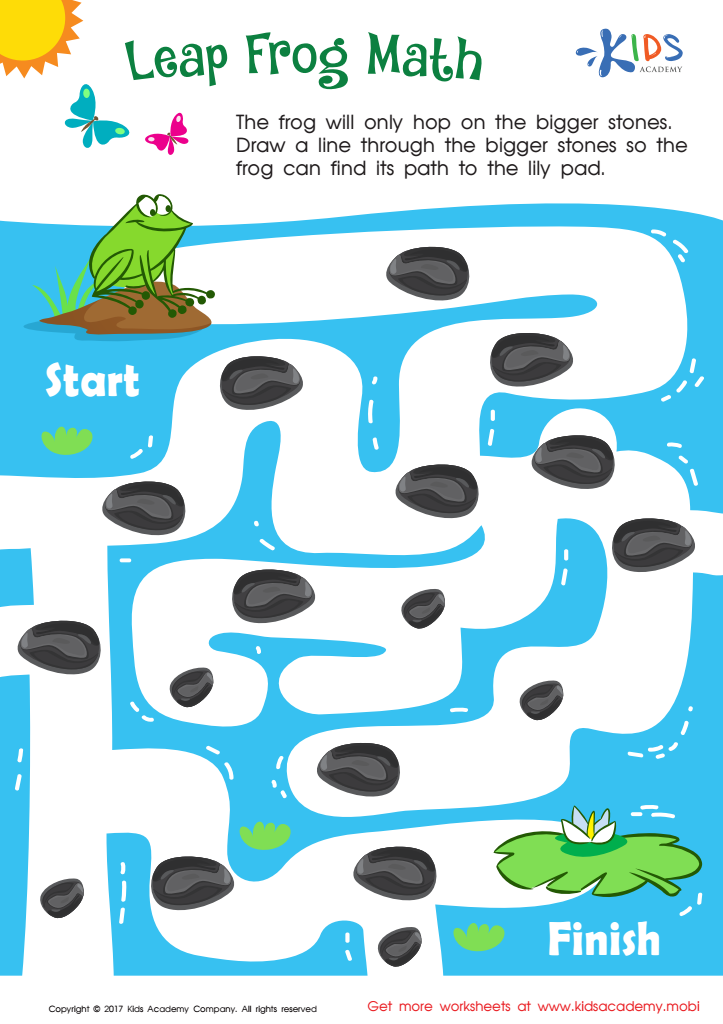
Math Puzzle Worksheet
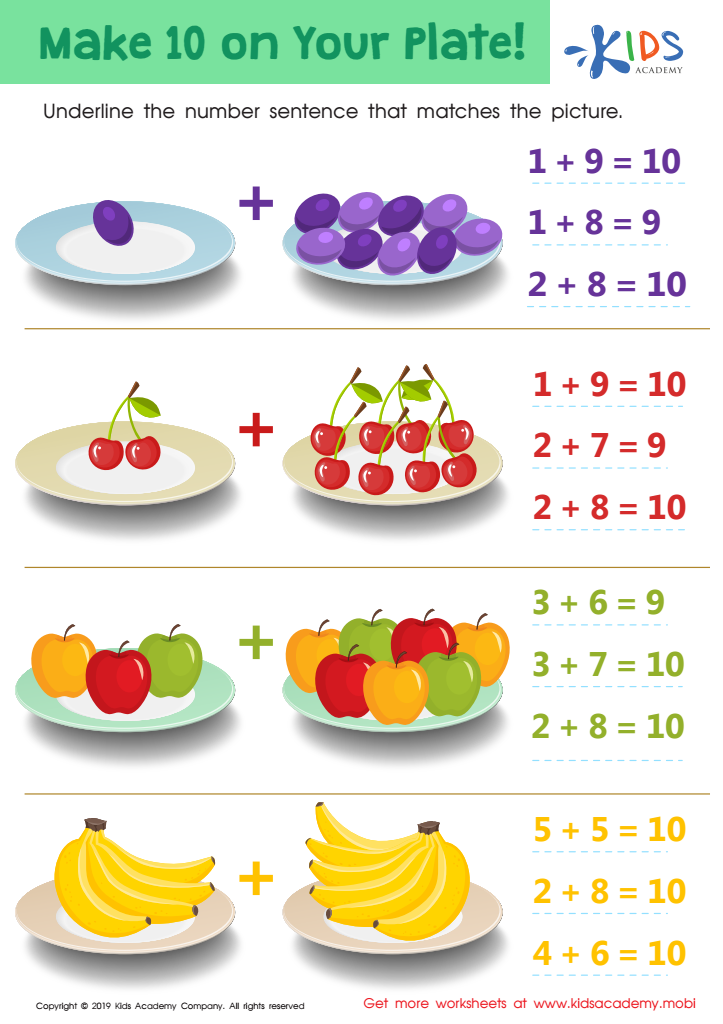
Make 10 on Your Plate! Worksheet
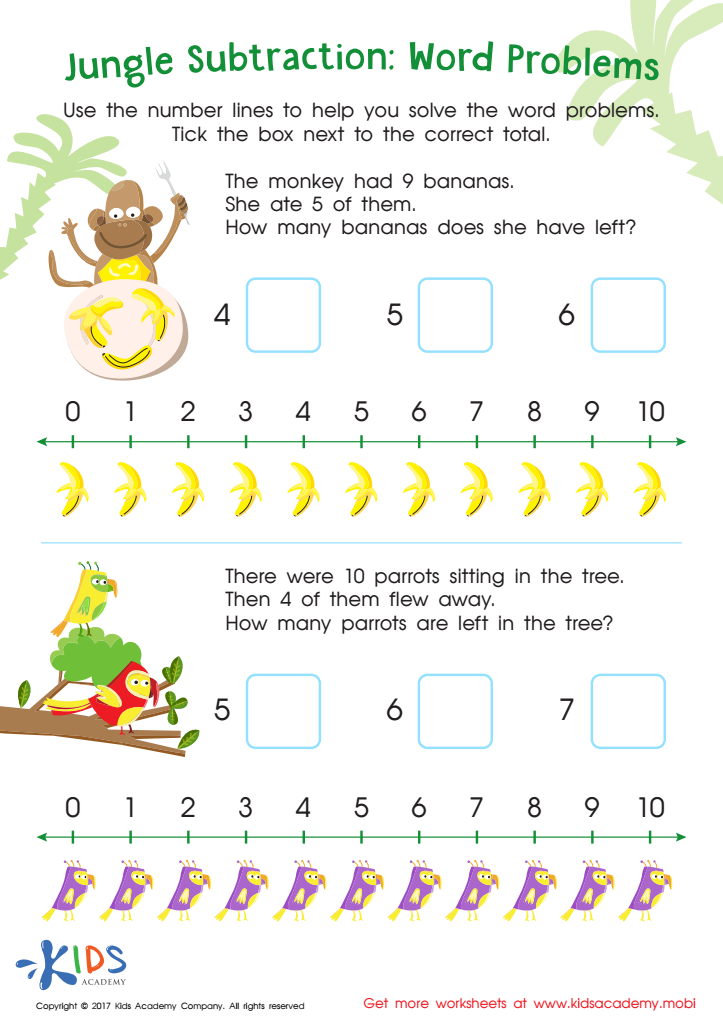
Jungle Subtraction Word Problems Substraction Worksheet








Parents and teachers should prioritize Mathematical Reasoning Extra Challenge for ages 3-4 as it lays a crucial foundation for children's cognitive development. At this early age, children are naturally curious and eager to explore their surroundings. Introducing them to mathematical concepts through engaging challenges helps to foster a sense of curiosity and a love for learning.
Mathematical reasoning at this stage encourages critical thinking and problem-solving skills that are essential throughout their academic journey. For instance, simple challenges involving counting, sorting, and recognizing patterns can help children develop their analytical skills. Additionally, such activities are often hands-on and play-based, making learning enjoyable and relevant to their everyday experiences.
Moreover, incorporating mathematical reasoning aids in building a strong number sense, allowing young learners to understand relationships between numbers and spatial awareness. This early exposure not only prepares them for future math concepts but also boosts their confidence in their abilities, encouraging a positive mindset towards learning.
In summary, investing in Mathematical Reasoning Extra Challenges for preschoolers cultivates essential cognitive and emotional skills, ensuring they are better equipped for both academic success and everyday problem-solving in their lives as they grow.








