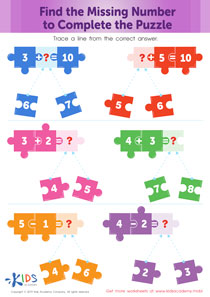
Problem-Solving Skills Extra Challenge Addition Worksheets for Ages 3-4
3 filtered results
-
From - To
Welcome to our engaging “Problem-Solving Skills Extra Challenge Addition Worksheets” designed specifically for children aged 3-4! These interactive worksheets are perfect for young learners, fostering essential problem-solving abilities through fun addition challenges. Each activity encourages children to think critically and develop their reasoning skills while practicing basic math concepts. With vibrant illustrations and age-appropriate tasks, kids will enjoy exploring numbers and honing their analytical abilities. Ideal for parents and educators looking to enhance early math skills, our worksheets offer a delightful way to nurture a love for learning. Dive into our collection and watch your child's confidence in math grow!
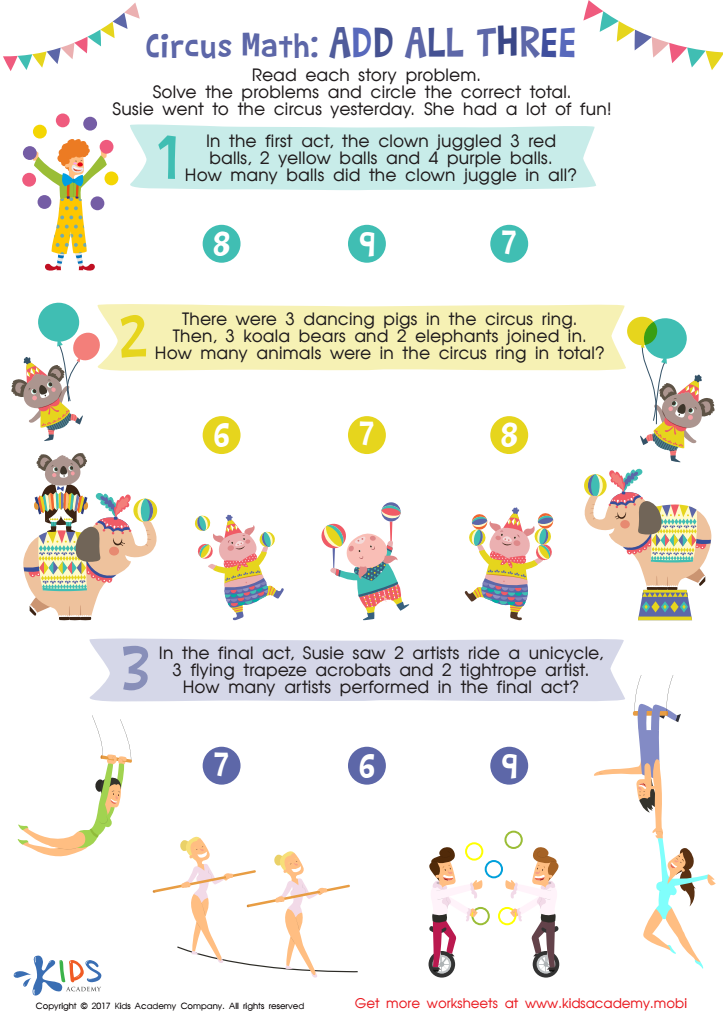
Circus Math Printable
 Assign to My Students
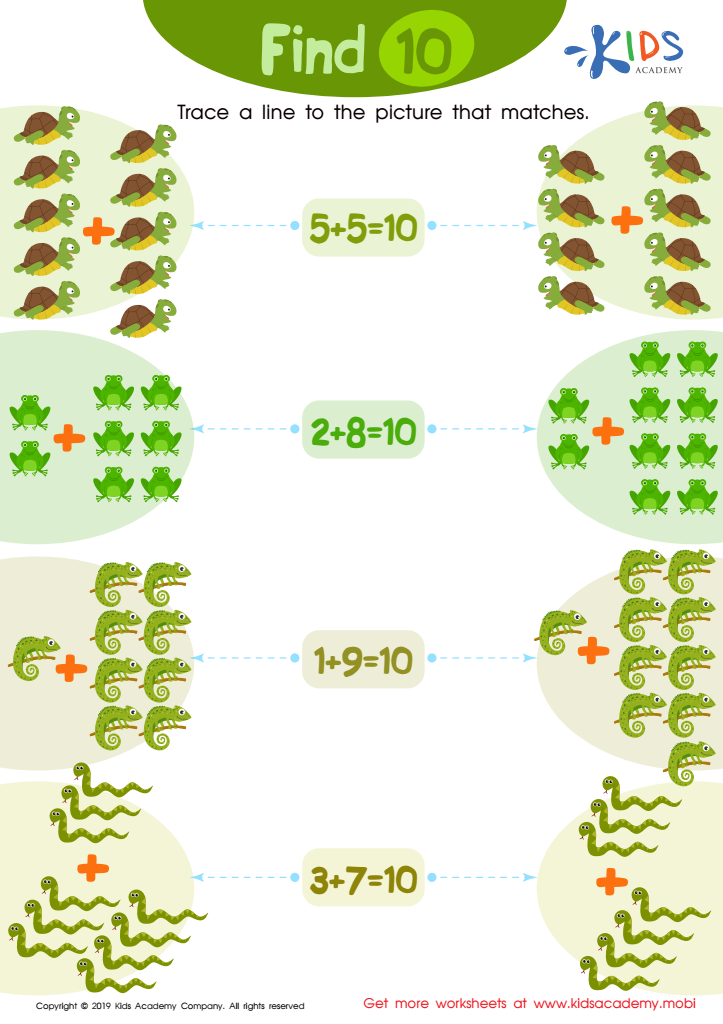
Find 10 Worksheet
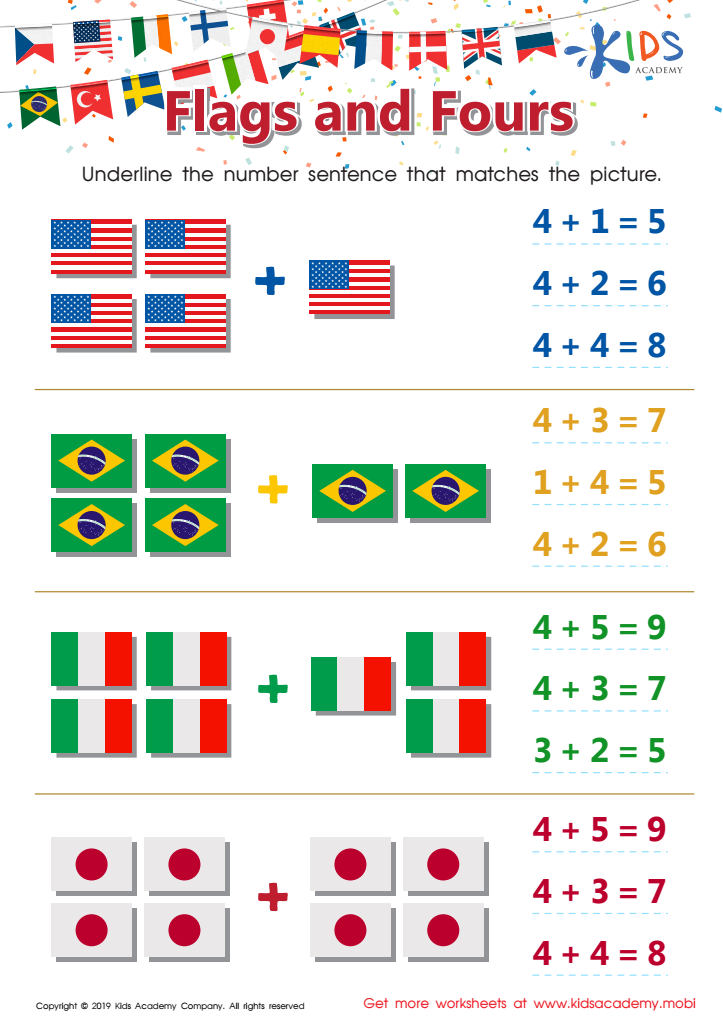
Flags and Fours Worksheet








Problem-solving skills are fundamental in early childhood development and begin shaping a child's future learning experiences. For ages 3-4, engaging in extra challenge activities, particularly in addition, offers several developmental benefits that parents and teachers should prioritize.
Firstly, challenging addition activities encourage cognitive growth, helping children develop critical thinking skills as they navigate various problems. This nurtures resilience, as kids learn to approach tasks persistently, experimenting with different strategies until they find solutions.
Additionally, these exercises foster early numeracy skills, laying a strong foundation for future mathematical comprehension. When children grasp the principles of addition at this age, they enhance their ability to understand more complex concepts in later years.
Moreover, participation in problem-solving tasks supports social interaction, as children often collaborate and communicate with peers during these activities. This not only boosts their mathematical understanding but also enhances language skills and emotional intelligence through sharing and teamwork.
Incorporating extra challenge addition activities cultivates a stimulating learning environment, promoting both academic and social development. Ultimately, encouraging problem-solving abilities in young children equips them with essential skills for lifelong learning and empowerment. Therefore, teachers and parents should take an active role in facilitating these enriching experiences.