Story sequencing Extra Challenge Reading Comprehension Worksheets for Ages 3-4
3 filtered results
-
From - To
Introducing our "Story Sequencing Extra Challenge Reading Comprehension Worksheets" designed specifically for young learners aged 3-4! These engaging worksheets help children develop crucial skills in understanding story order and narrative flow. Through fun illustrations and simple prompts, children can practice organizing story events, fostering their comprehension and critical thinking abilities. Ideal for parents and educators, these worksheets provide an interactive way to enhance literacy skills while fostering creativity and imagination. Help your little ones master sequencing with enjoyable activities that lay the groundwork for advanced reading comprehension. Explore our collection and watch your child's reading confidence soar!
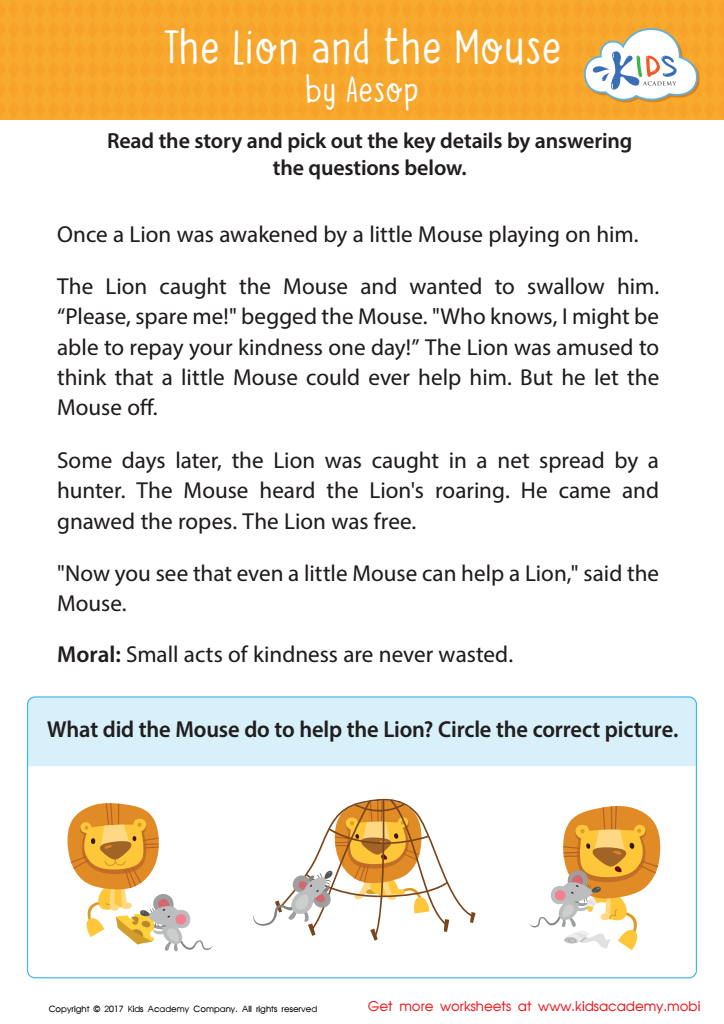
The Lion and The Mouse Sequencing Worksheet
 Assign to My Students
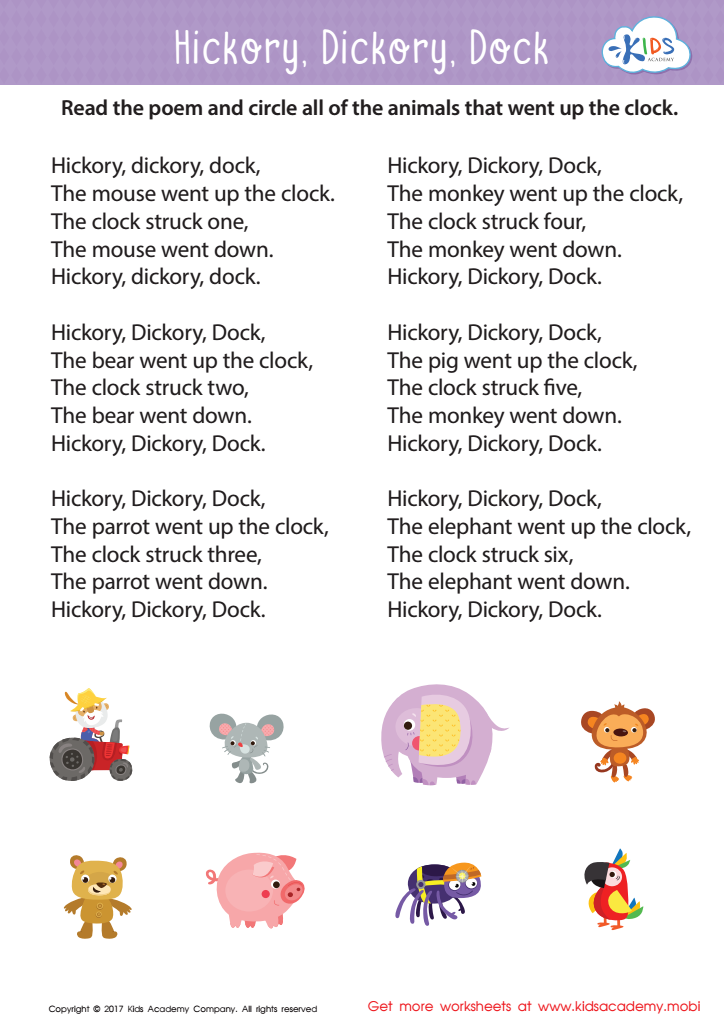
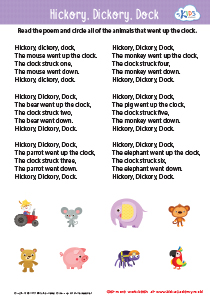
Hickory Dickory Dock Sequencing Worksheet
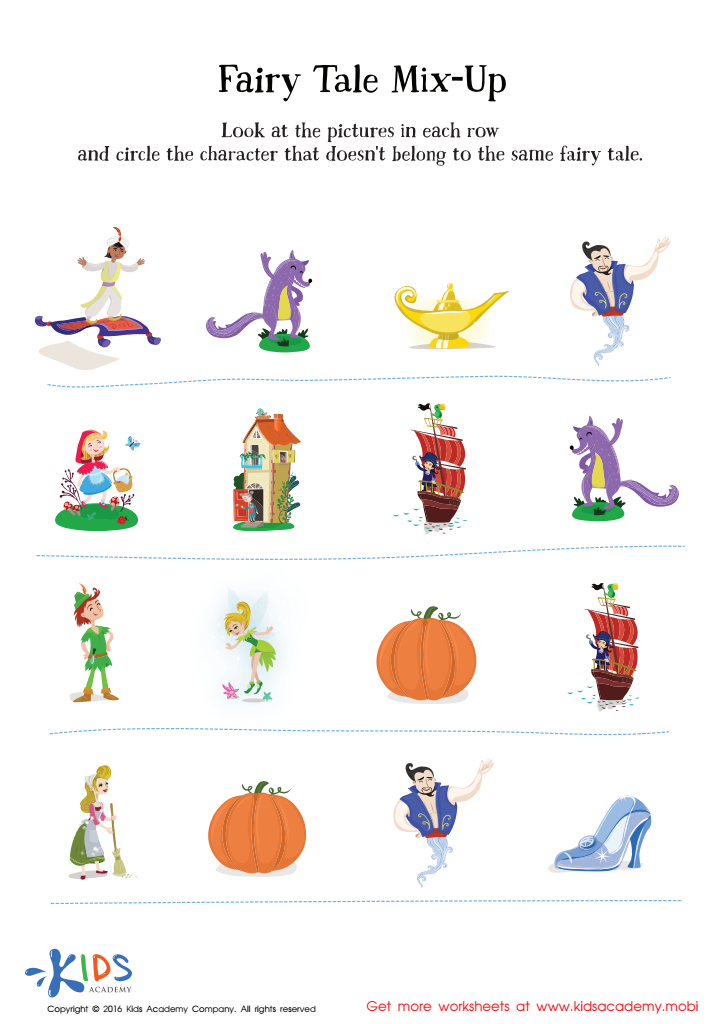
Fairy Tale Worksheet: Story Mix Up








Story sequencing is a crucial skill in early childhood development, especially for children aged 3-4. It involves understanding the order in which events occur in a narrative, helping young learners grasp the structure of stories, fostering critical thinking, and enhancing comprehension. Parents and teachers should prioritize this skill for several reasons.
Firstly, story sequencing aids language development. As children learn to identify and arrange story parts — beginning, middle, and end — they enhance their vocabulary and understanding of narrative structure. This process also encourages active listening and participation, preserving engagement in reading activities.
Secondly, mastering sequencing builds cognitive skills. Children learn logical reasoning as they describe events following a chronological order, preparing them for more complex problem-solving tasks.
Lastly, story sequencing promotes social skills and emotional understanding, as narratives often cover themes of friendship, conflict resolution, and empathy. When children discuss and identify the messages within stories, they become more adept at understanding their own emotions and those of others.
Overall, fostering story sequencing early on lays a solid foundation for literacy skills, critical thinking, and emotional intelligence, ensuring that children are well-prepared for their educational journey ahead.