Basic Counting Extra Challenge Worksheets for Ages 3-5
3 filtered results
-
From - To
Discover our Basic Counting Extra Challenge Worksheets, designed specifically for children aged 3-5! These engaging worksheets are perfect for young learners looking to enhance their counting skills while having fun. Each activity encourages children to practice recognizing numbers and understanding quantity through vibrant illustrations and interactive exercises. Perfect for parents and educators alike, our worksheets provide additional challenges that promote critical thinking and problem-solving. With a focus on foundational math skills, these resources aim to build confidence and competence in early learners. Dive in and let your child explore the joys of counting with our thoughtfully crafted worksheets!
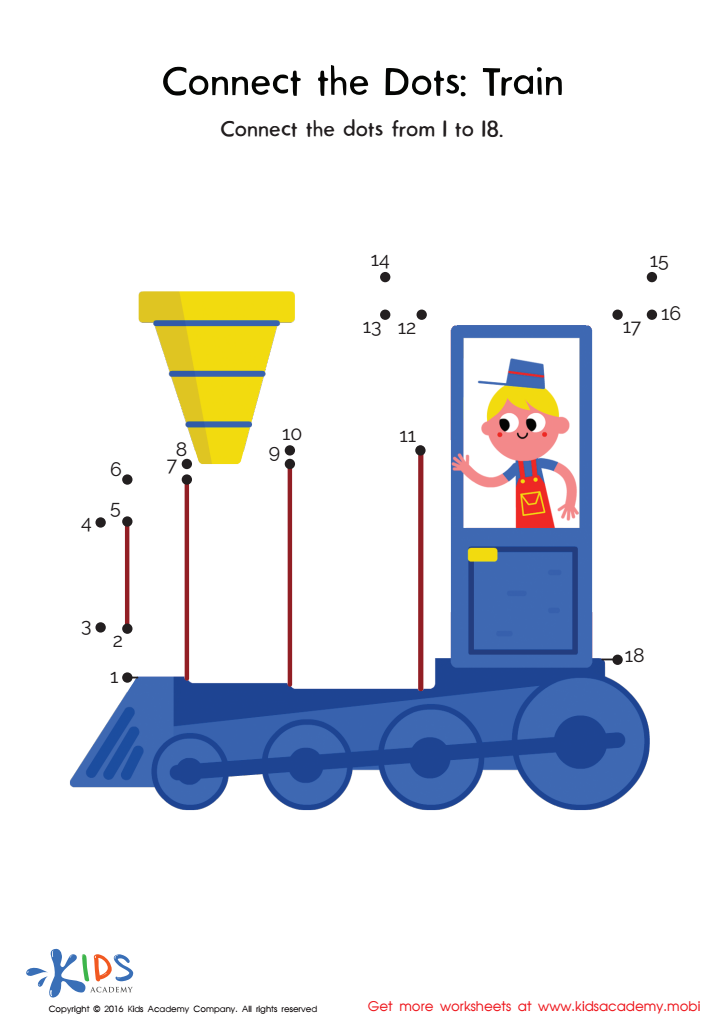
 Assign to My Students
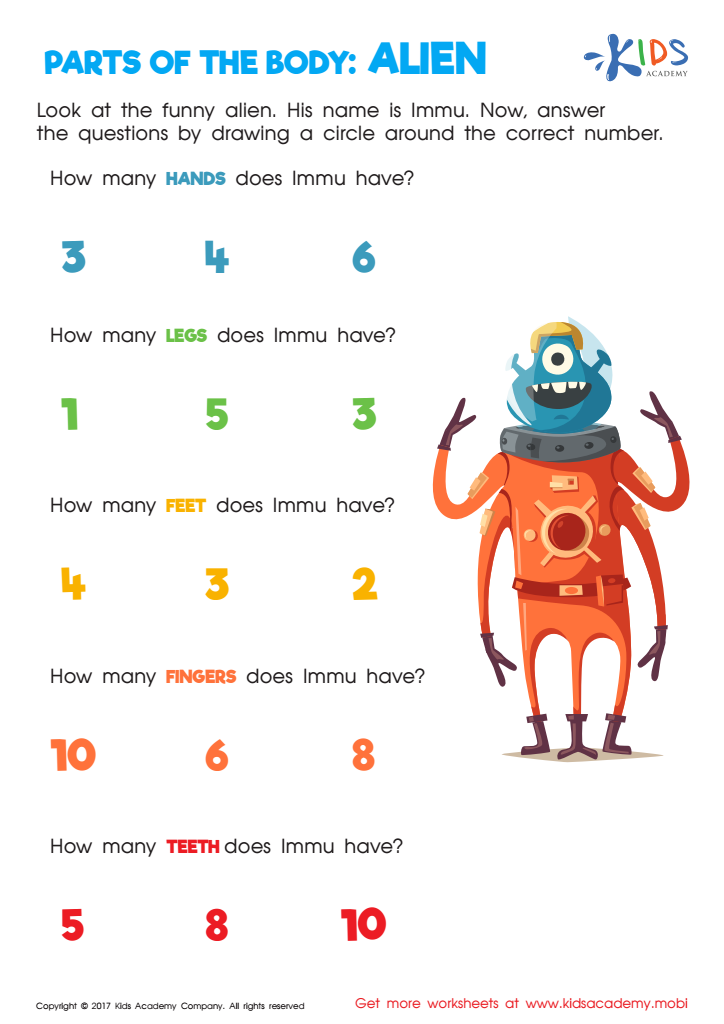
Alien Worksheet
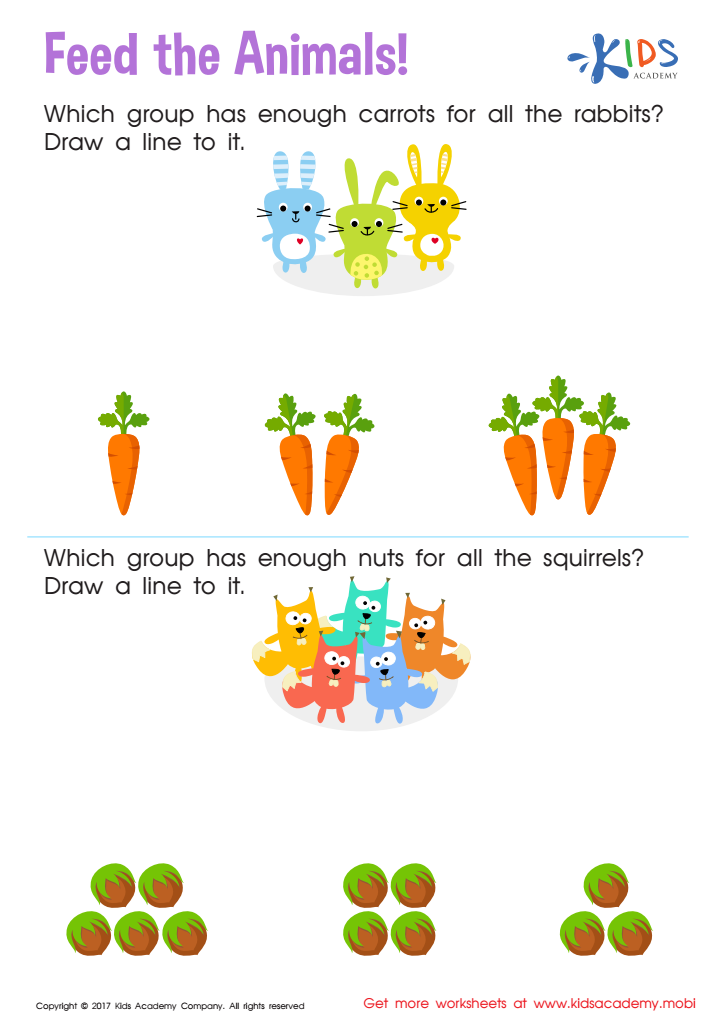
Count and Match: Feed the Animals Worksheet







Parents and teachers should prioritize the Basic Counting Extra Challenge for ages 3-5 because it lays a foundational skill vital for future mathematical understanding. Counting is more than just reciting numbers; it enhances cognitive development, promotes critical thinking, and encourages language skills as children articulate their counting processes.
This activity also fosters fine motor skills through engaging hands-on tasks, making learning both interactive and enjoyable. When children master counting, they develop confidence in their abilities, which can translate to a love for math as they progress in school.
Furthermore, counting challenges align with early childhood learning goals by enhancing number sense and introducing concepts such as grouping and one-to-one correspondence. Parents and teachers play a crucial role in stimulating these cognitive pathways, creating a strong base for future learning.
By participating in activities designed to promote counting skills, families exemplify the importance of education, demonstrating that learning can happen in a fun and engaging way. Such challenges also promote social interactions when carried out in groups, thereby enhancing cooperative skills. Overall, Basic Counting Extra Challenges not only contribute to a child's academic readiness but also enrich their social and motor skills, making them essential components of early learning.








