Basic subtraction skills Extra Challenge Worksheets for Ages 3-5
3 filtered results
-
From - To
Discover the perfect resource to enhance your child's early math education with our "Basic Subtraction Skills: Extra Challenge Worksheets" designed for ages 3-5. These thoughtfully crafted worksheets offer engaging activities to help young learners develop strong subtraction skills through fun and interactive exercises. Each worksheet is designed to challenge preschoolers and kindergarteners, fostering critical thinking and problem-solving abilities. With appealing graphics and age-appropriate content, our worksheets make learning subtraction enjoyable and effective. Introduce your child to the basics of math and watch their confidence grow as they master early subtraction concepts with ease. Download now and start learning today!
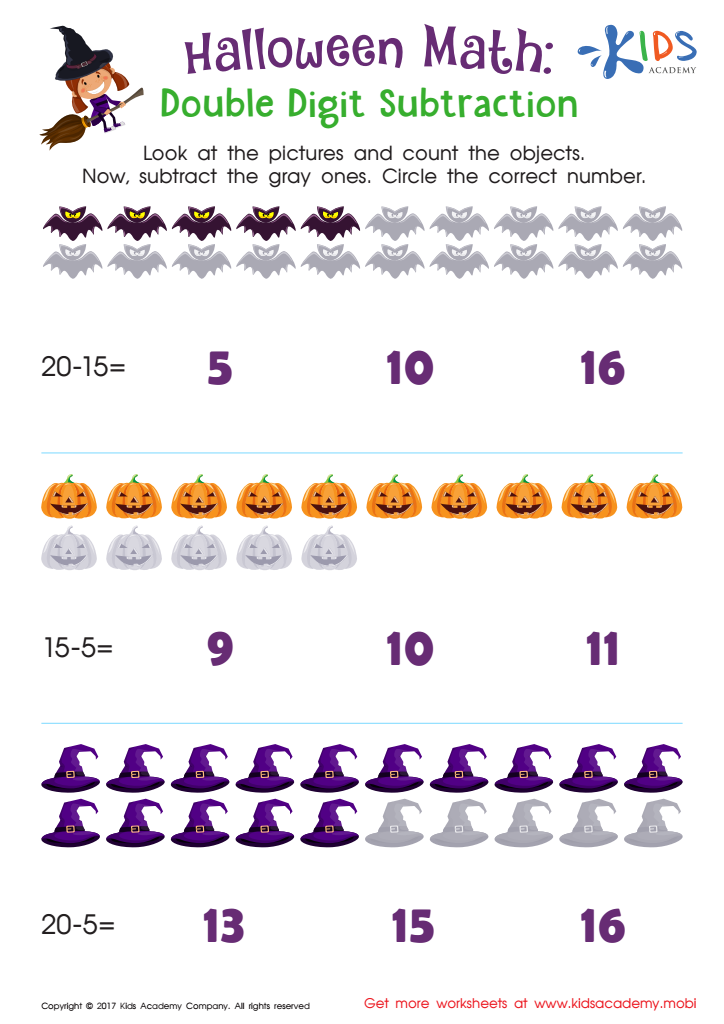
Halloween Math Subtraction Worksheet
 Assign to My Students
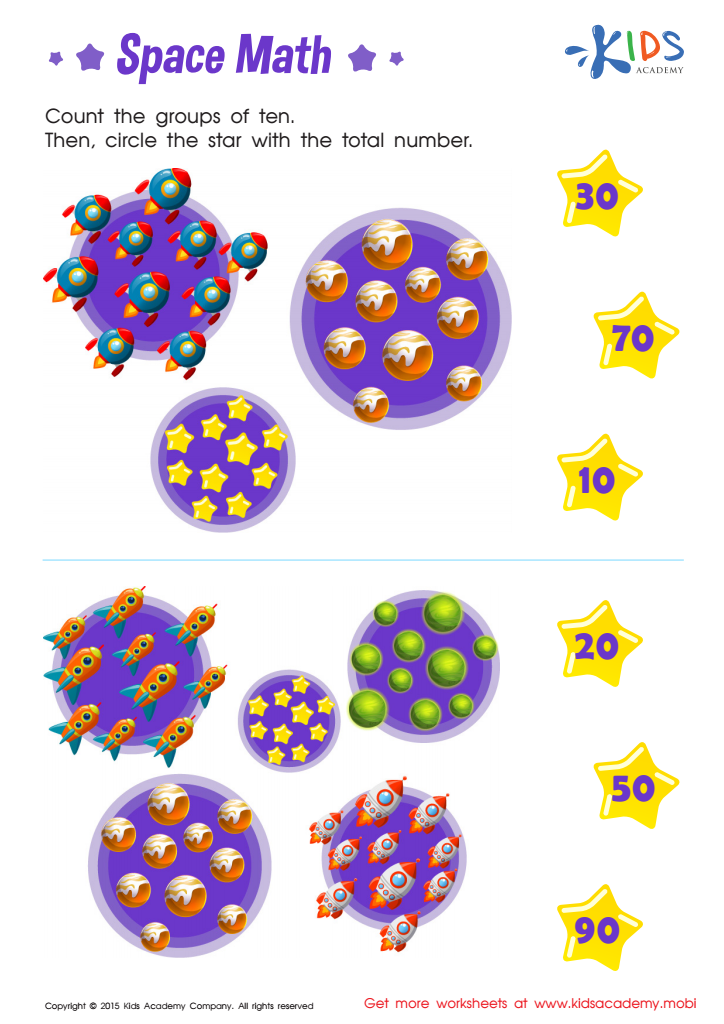
Learn dozens: Space math Worksheet
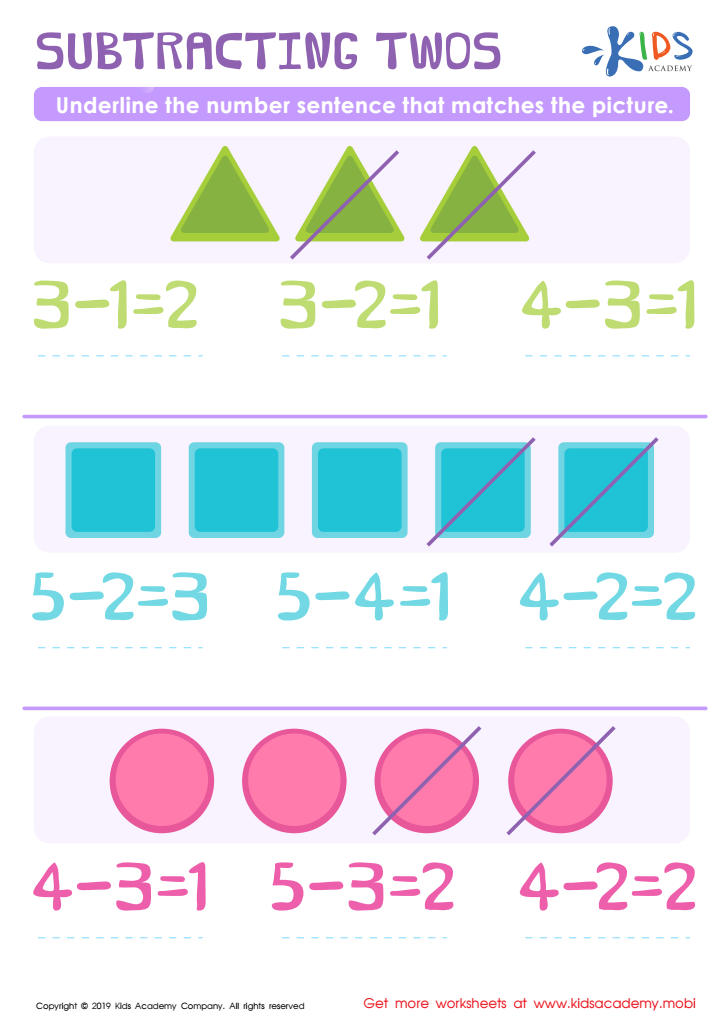
Subtracting Twos Worksheet







Parents and teachers should care about basic subtraction skills extra challenges for ages 3-5 because these activities lay a critical foundation for mathematical understanding and cognitive development. At this delicate age, children are naturally curious and capable of absorbing new concepts quickly. Introducing basic subtraction through engaging and stimulating challenges can spark an early interest in mathematics, improving their confidence and enthusiasm for learning.
When children tackle extra challenges, they develop problem-solving skills and adopt a growth mindset, understanding that effort leads to improvement. These subtraction exercises reinforce fundamental concepts like counting, number recognition, and mathematical operations, which are essential for later academic success. Moreover, early practice with subtraction can enhance a child's ability to think logically and critically, fostering early analytical skills.
In addition, engaging in mathematical challenges enhances fine motor skills through the physical act of writing numbers and using manipulatives. Such activities can be social learning experiences, fostering collaboration and communication skills when done in group settings.
Overall, prioritizing basic subtraction skill challenges for young children can make a significant impact on their educational trajectory, preparing them for more advanced concepts and supporting their overall intellectual growth. Thus, both parents and teachers have a crucial role in nurturing these foundational skills.








