Comparing sizes Extra Challenge Worksheets for Ages 3-5
4 filtered results
-
From - To
Discover our "Comparing Sizes Extra Challenge Worksheets for Ages 3-5," designed to enhance early math skills through engaging activities. These worksheets provide an exciting opportunity for young learners to develop their understanding of sizes and comparisons. With vibrant illustrations and hands-on exercises, children will enjoy sorting and categorizing objects based on size. Each worksheet promotes critical thinking and helps build foundational skills essential for future math learning. Ideal for both classroom use and home practice, our extra challenge worksheets cater to curious minds eager to explore the concepts of big and small. Encourage exploration and make learning fun!
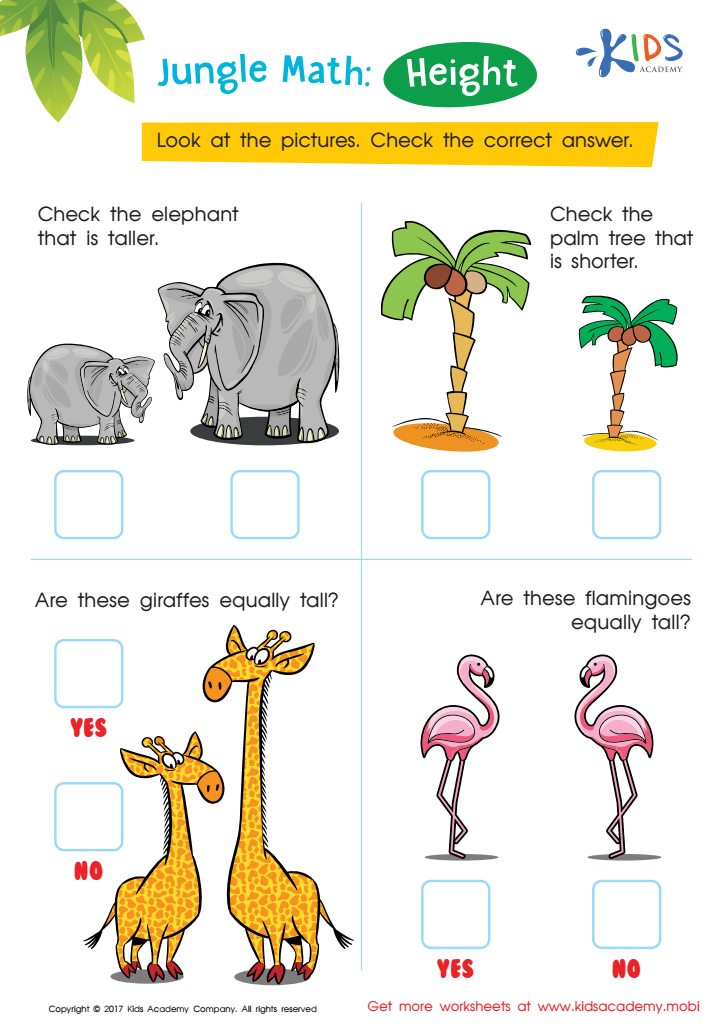
Which Is Taller Worksheet
 Assign to My Students
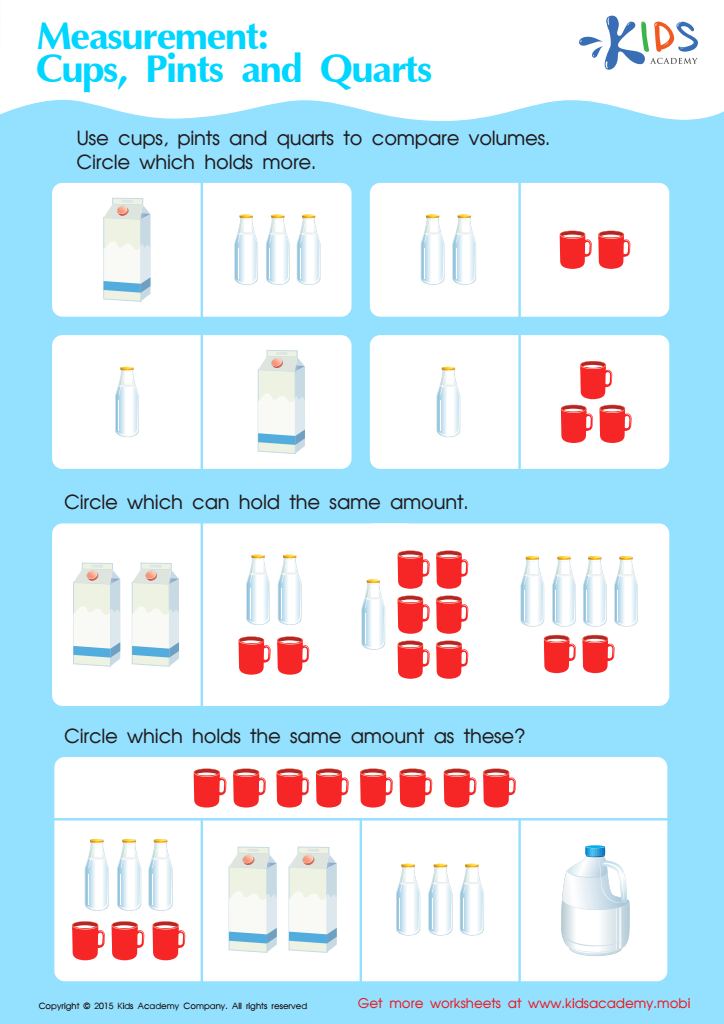
Measurement: Compare Volumes Worksheet
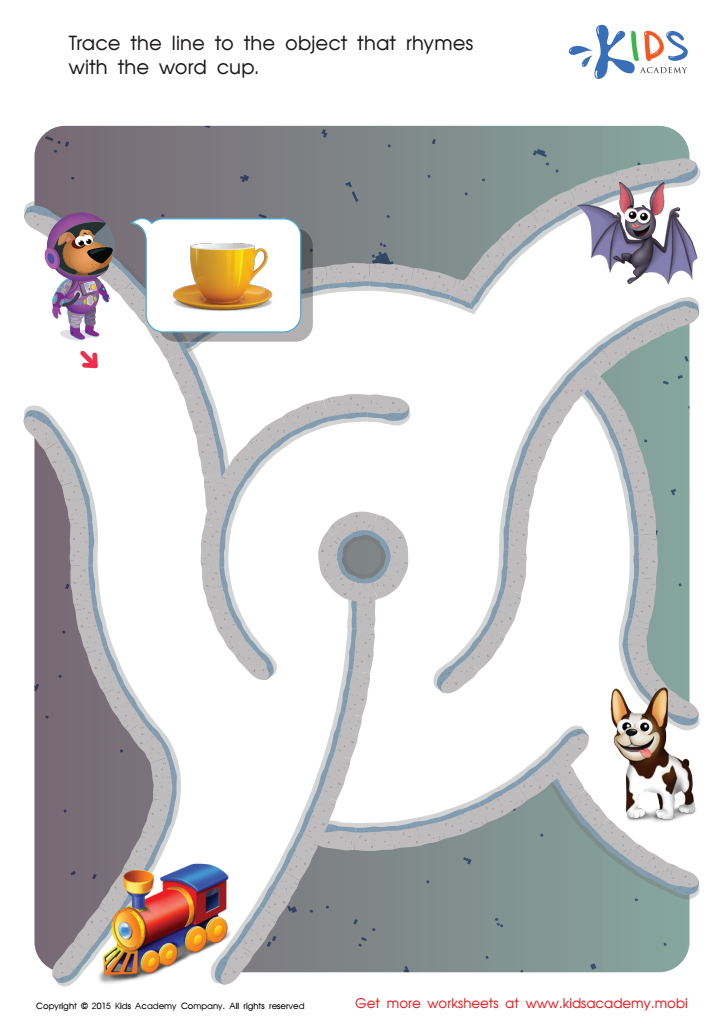
Cup Rhyming Words Worksheet
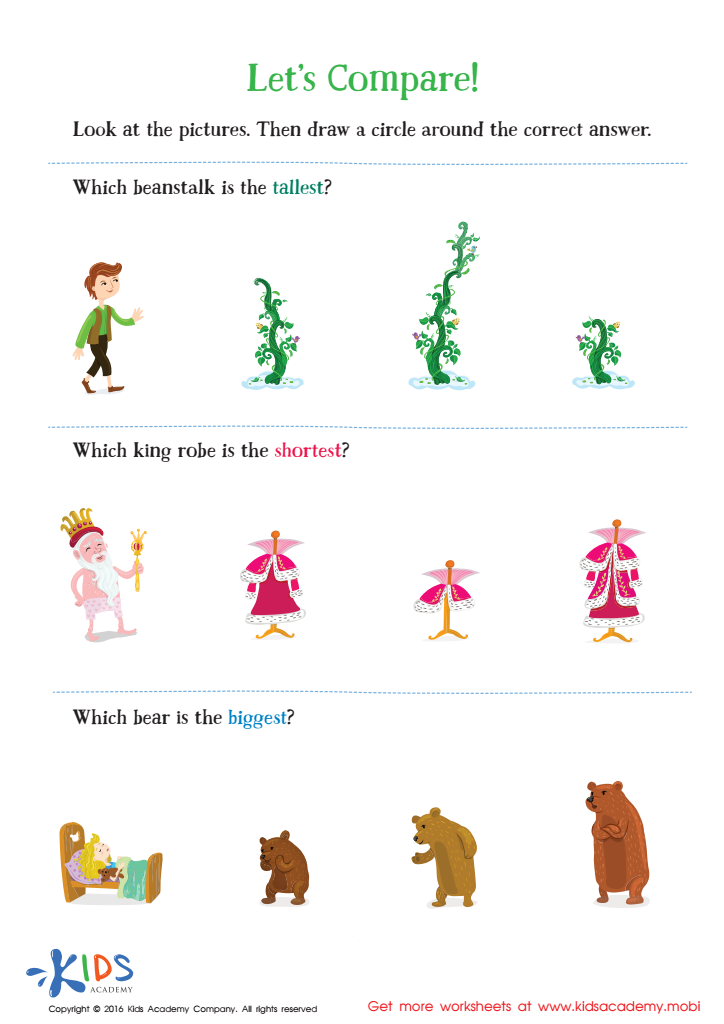
Fairy Tale Worksheet: Let's Compare







Comparing sizes is a fundamental cognitive skill that is crucial for young children's development. Implementing activities that challenge children aged 3-5 to compare sizes fosters early mathematical understanding and critical thinking. When parents or teachers engage children in these activities, it helps them recognize and understand the concept of measurement and sizes, laying a foundation for future math skills.
Furthermore, these activities enhance vocabulary as children learn to use and understand comparative terms like "big," "small," "taller," or "shorter." This vocabulary development is linked to improved literacy skills, which are vital as they progress through school.
Moreover, comparing sizes encourages observational skills and attention to detail, as children learn to notice differences and similarities. It also nurtures hand-eye coordination through hands-on activities, benefiting motor skill development.
Additionally, collaborating on size comparisons provides social learning opportunities. Children engage in discussions, share their insights, and work through challenges together, promoting collaboration and communication skills.
Overall, comparing sizes serves as an invaluable tool for holistic childhood development, promoting cognitive, social, and language skills essential for future academic success. Thus, parents and teachers should embrace these extra challenges to enrich learning experiences for young learners.








