Understanding plurals Extra Challenge Worksheets for Ages 3-5
3 filtered results
-
From - To
Engage your little learners with our "Understanding Plurals Extra Challenge Worksheets for Ages 3-5"! Designed specifically for early education, these worksheets provide a fun and interactive way for toddlers to grasp the concept of plurals. Through exciting activities, children will identify and match singular nouns with their plural forms, enhancing their language skills while building confidence. Each worksheet encourages critical thinking and creativity, making learning an enjoyable experience. Perfect for teachers and parents aiming to reinforce vocabulary development, our extra challenge worksheets will keep young minds curious and eager to learn more about the fascinating world of nouns and plurals!
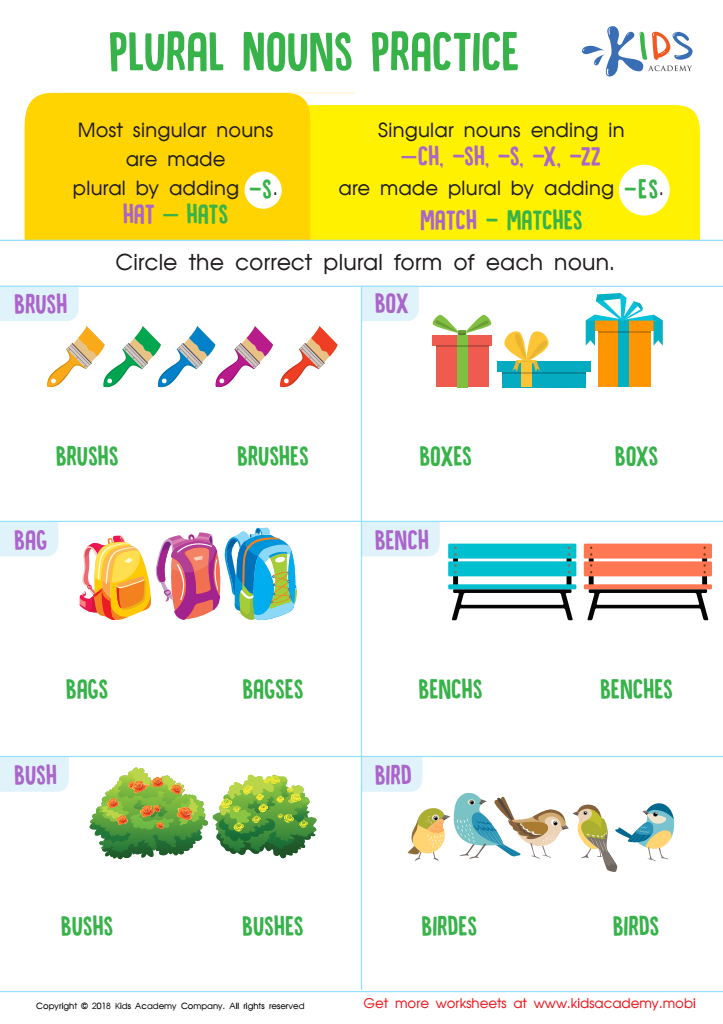
Plural Nouns Practice Worksheet
 Assign to My Students
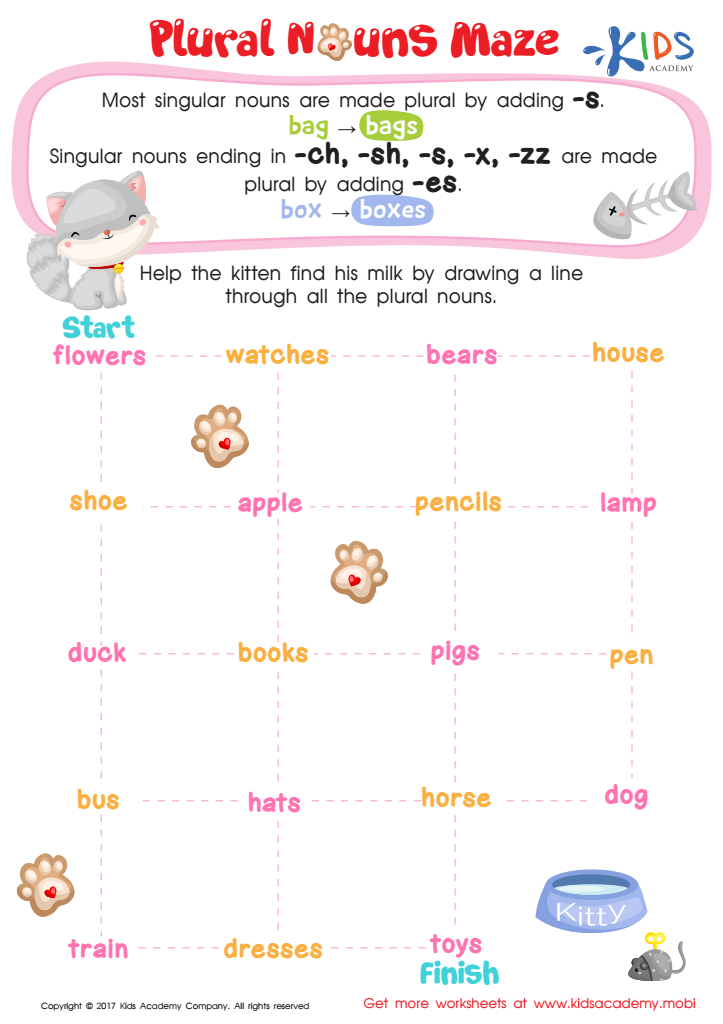
Plural Nouns Maze Worksheet
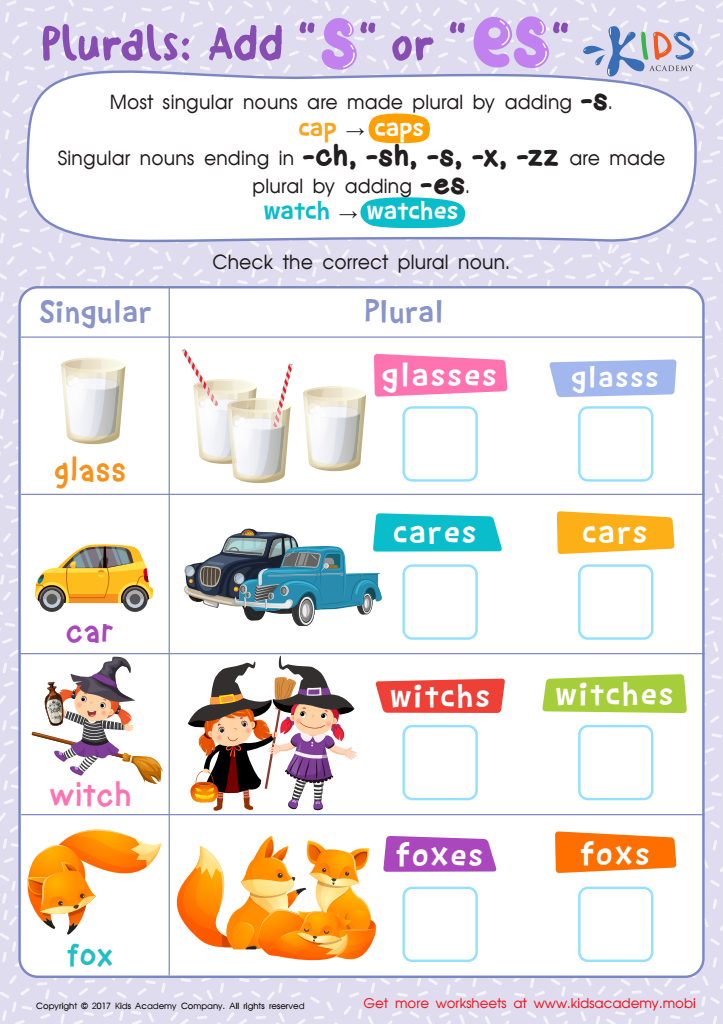
Plurals: "–es" or "–es"? Worksheet






Understanding plurals is vital for young children, and parents or teachers should prioritize this in their early education. At ages 3-5, children are developing critical language skills and learning how to express themselves. Mastering plurals enhances their communication abilities, enabling them to convey more complex ideas and descriptions of the world around them.
When children grasp the concept of plurals, it helps them become more confident speakers and writers. They learn that nouns can change forms to indicate quantity, which fosters essential cognitive skills like categorization and comparison. This understanding also strengthens their reading comprehension, as they encounter plural forms in books and learning materials.
Additionally, engaging in activities that focus on plurals can be fun and interactive. Parents and teachers can introduce games, songs, and everyday conversations that emphasize plural nouns. This not only makes learning enjoyable but also encourages bonding and interaction, reinforcing language in a meaningful context.
By nurturing their understanding of plurals, adults equip children with foundational language skills that will benefit them academically and socially as they grow. Thus, emphasizing plurals during early childhood is crucial for a child's lifelong communication development.








