Money recognition Extra Challenge Money Worksheets for Ages 3-5
4 filtered results
-
From - To
Explore our "Money Recognition Extra Challenge Money Worksheets for Ages 3-5," designed to help young learners master the essential skill of identifying and understanding money. These engaging worksheets provide extra challenges that make learning about coins and bills fun and interactive. Perfect for parents and educators, they encourage visual recognition and foster early math skills through colorful illustrations and simple exercises. Each worksheet enhances children’s confidence in money handling, preparing them for real-world situations. With varying levels of difficulty, these resources cater to diverse learning styles and paces, making them an excellent addition to any early-grade curriculum. Discover learning through play today!
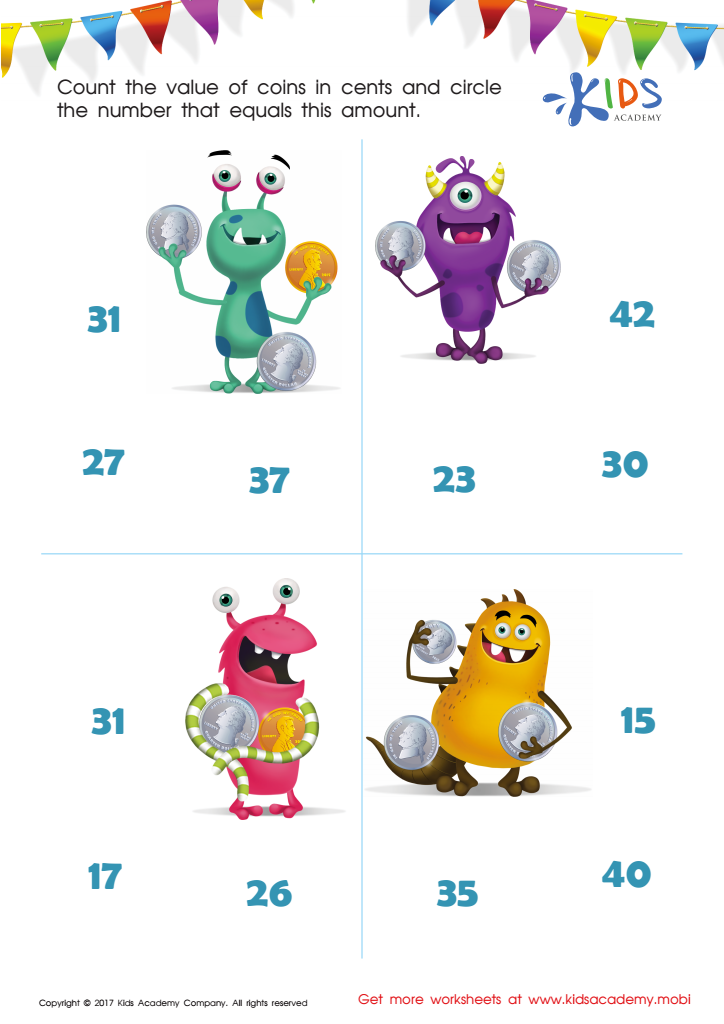
How Many Coins Money Worksheet
 Assign to My Students
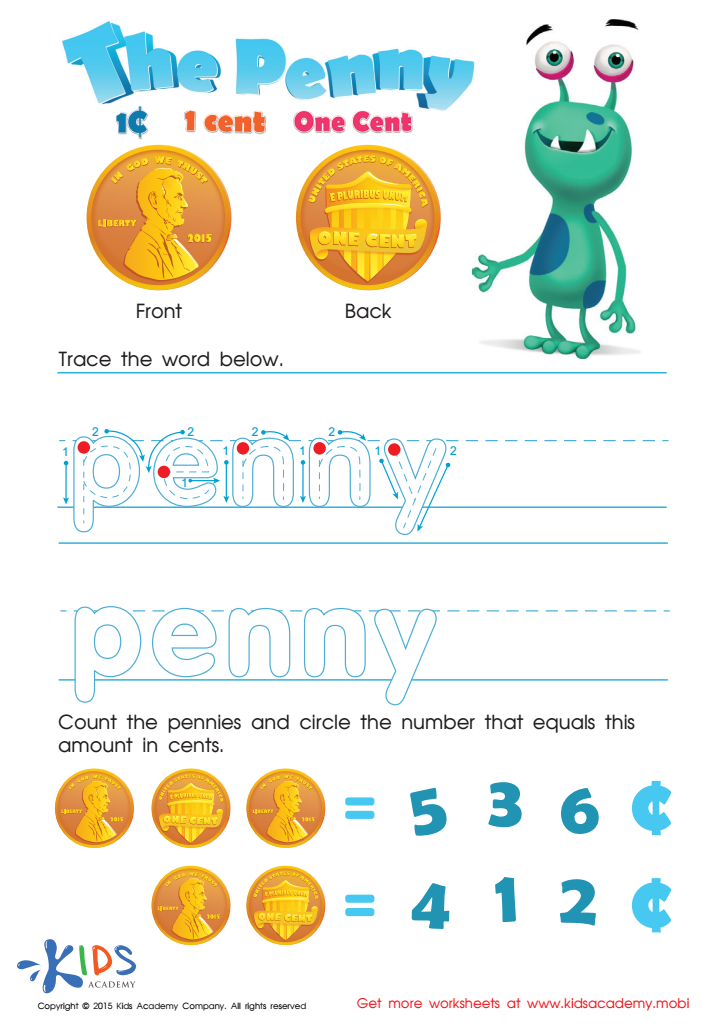
One Cent or the Penny Money Worksheet
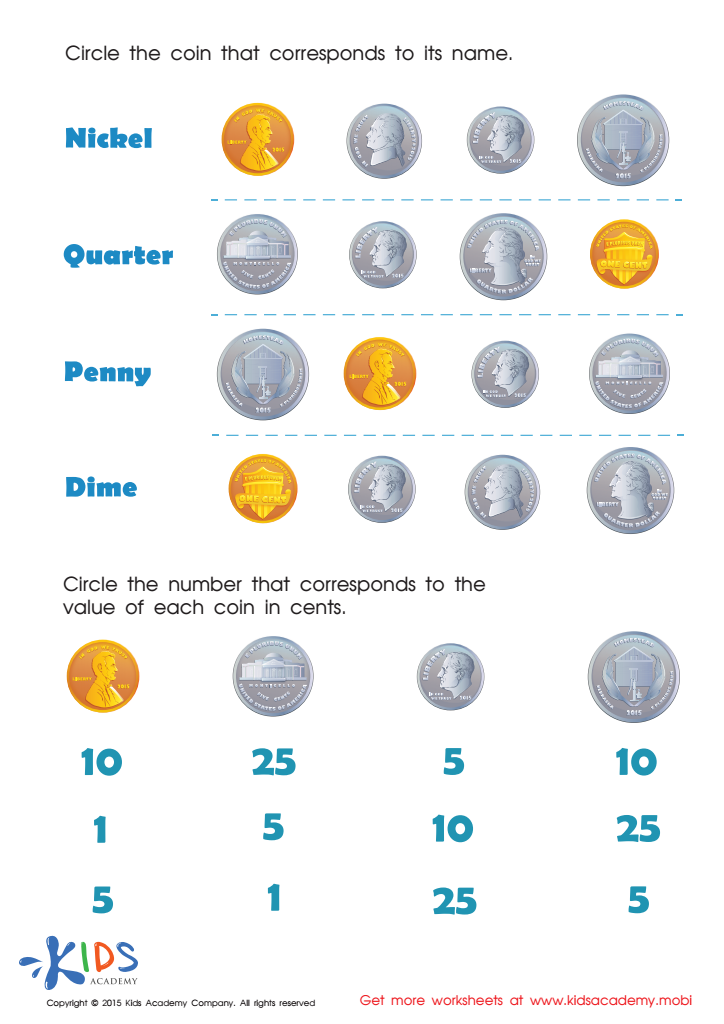
Coin Names and Values Money Worksheet
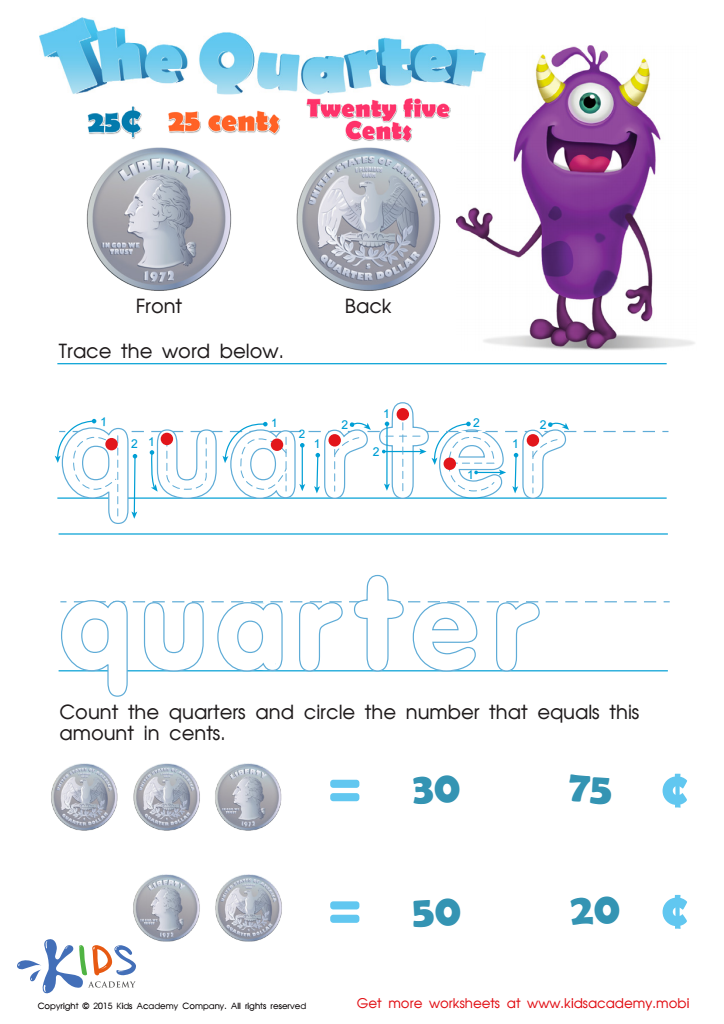
Twenty Five Cents or the Quarter Money Worksheet








Money recognition is an essential skill for children aged 3-5, and both parents and teachers should prioritize it for several reasons. Firstly, understanding money helps children develop early math skills, such as counting, addition, and subtraction, as they learn to identify and differentiate between coins and bills. Additionally, familiarizing young children with money sets the groundwork for important concepts such as value, budgeting, and financial literacy, which will serve them throughout their lives.
Moreover, money recognition fosters independence and decision-making skills. When children can recognize money, they gain the confidence to make small purchases and understand the importance of saving. Engaging them in play-based activities involving pretend money can enhance their cognitive development, as it encourages imaginative play and social interaction.
Furthermore, integrating money recognition into early childhood education supports critical thinking and problem-solving skills. Activities like sorting coins or playing store will enable children to grasp practical applications of money in everyday life.
By prioritizing money recognition, parents and teachers equip children with foundational tools necessary for navigating the complex world of finances, instilling values of responsibility and prudence that will benefit them long into the future.