Fine Motor Skills Extra Challenge Math Worksheets for Ages 3-5 - Page 2
25 filtered results
-
From - To
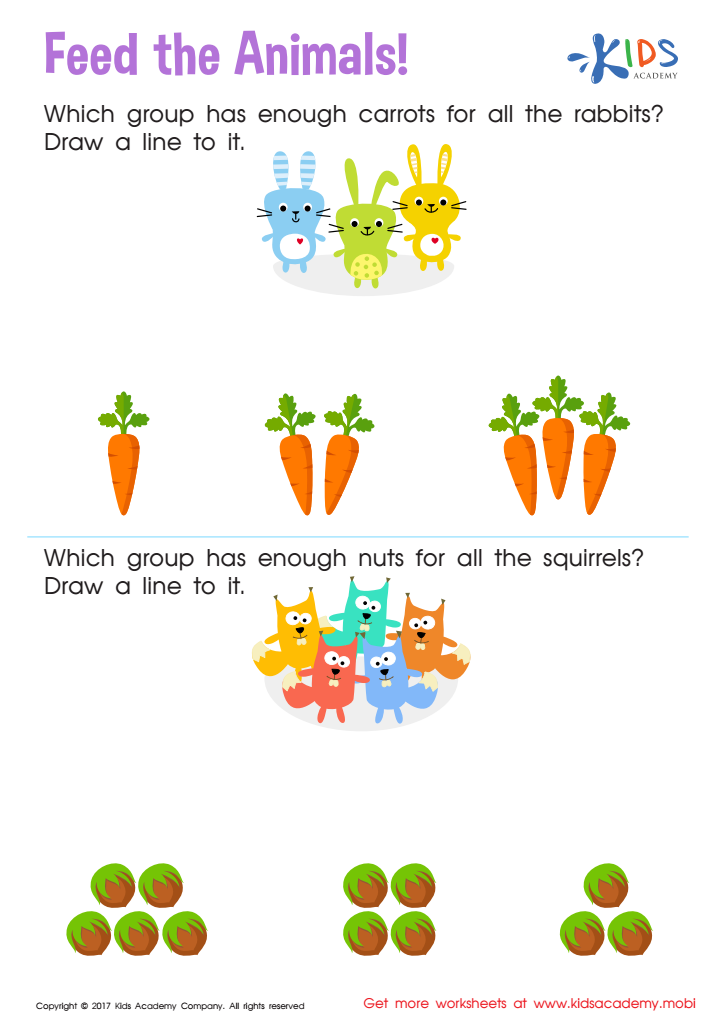
Count and Match: Feed the Animals Worksheet
 Assign to My Students








Fine motor skills are critical for young children's overall development, influencing their ability to perform everyday tasks and engage in academic activities. Fine Motor Skills Extra Challenge Math for Ages 3-5 integrates essential math concepts with dexterous activities, helping children refine their hand-eye coordination andPrecision skills through enjoyable, hands-on learning. As children manipulate objects, they develop the fine motor abilities needed for tasks such as writing, buttoning clothes, and using scissors.
Moreover, integrating math practice with fine motor skill activities helps foster a love for learning early on. Engaging in these challenges allows young learners to explore mathematical ideas, such as counting, shapes, and spatial awareness, in tangible and relatable ways. Parents and teachers benefit from these challenges as they support cognitive development through play, ultimately enhancing children's readiness for future educational experiences.
Furthermore, embracing these innovative approaches encourages active parental involvement in learning and creates opportunities for positive interactions. Fine Motor Skills Extra Challenge Math is an investment in children's foundational skills that lays the groundwork for their academic success and promotes essential life skills, ensuring they are equipped for ongoing learning adventures. Thus, recognizing its significance can lead to enriching early childhood education experiences.