Practical math application Extra Challenge Math Worksheets for Ages 3-5
3 filtered results
-
From - To
Introducing our "Extra Challenge Math Worksheets for Ages 3-5," designed to make math fun and engaging while reinforcing practical application skills. Perfect for young learners, these worksheets encourage children to explore real-world math concepts through interactive activities. Featuring a variety of problems that focus on essential skills like counting, comparing, and basic arithmetic, our worksheets help develop critical thinking and problem-solving abilities. With vibrant illustrations and age-appropriate challenges, kids will delight in enhancing their math skills while preparing for future learning milestones. Watch your little ones gain confidence and enthusiasm as they tackle each exciting worksheet—begin their math journey today!
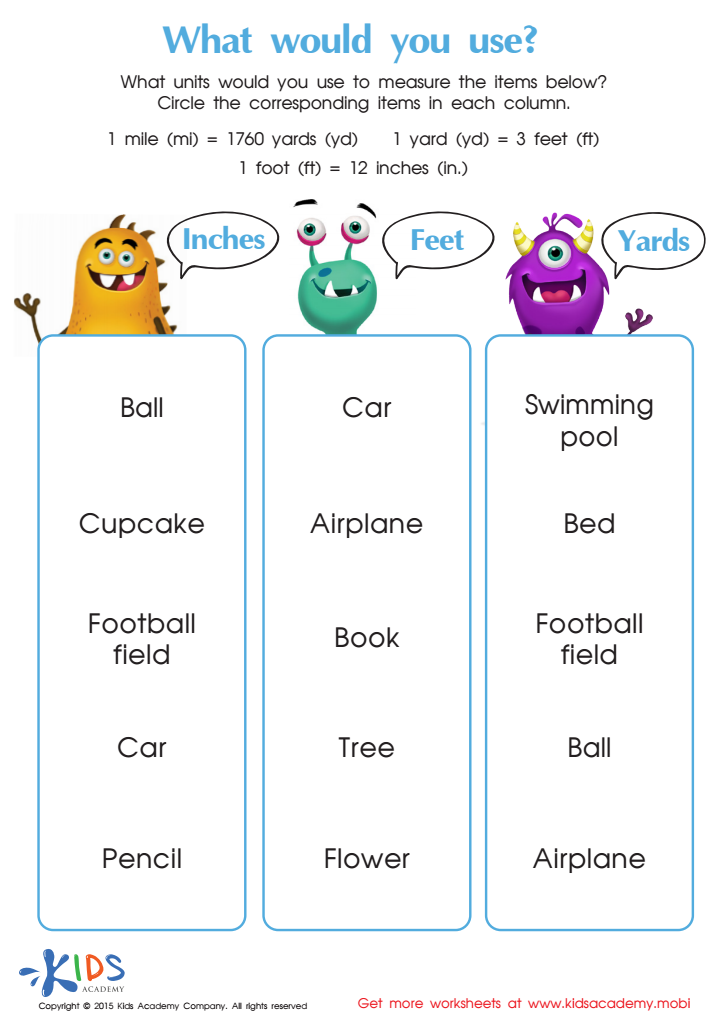
Learning about measuring objects in inches, feet and yards Worksheet
 Assign to My Students
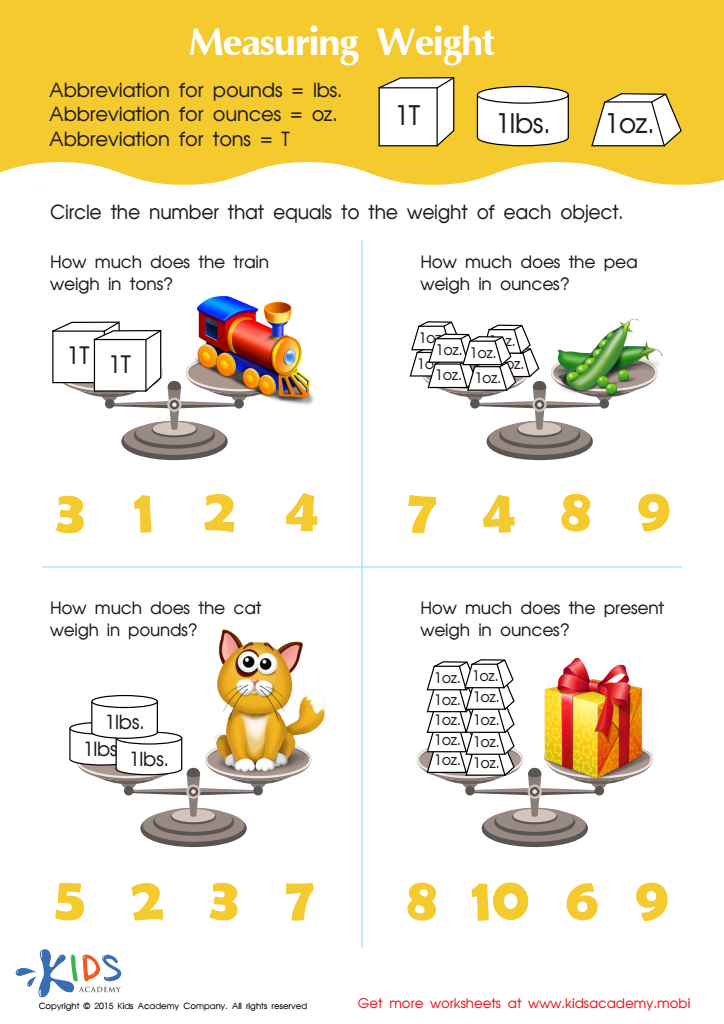
Measuring Weight in Ounces, Pounds and Tons Worksheet
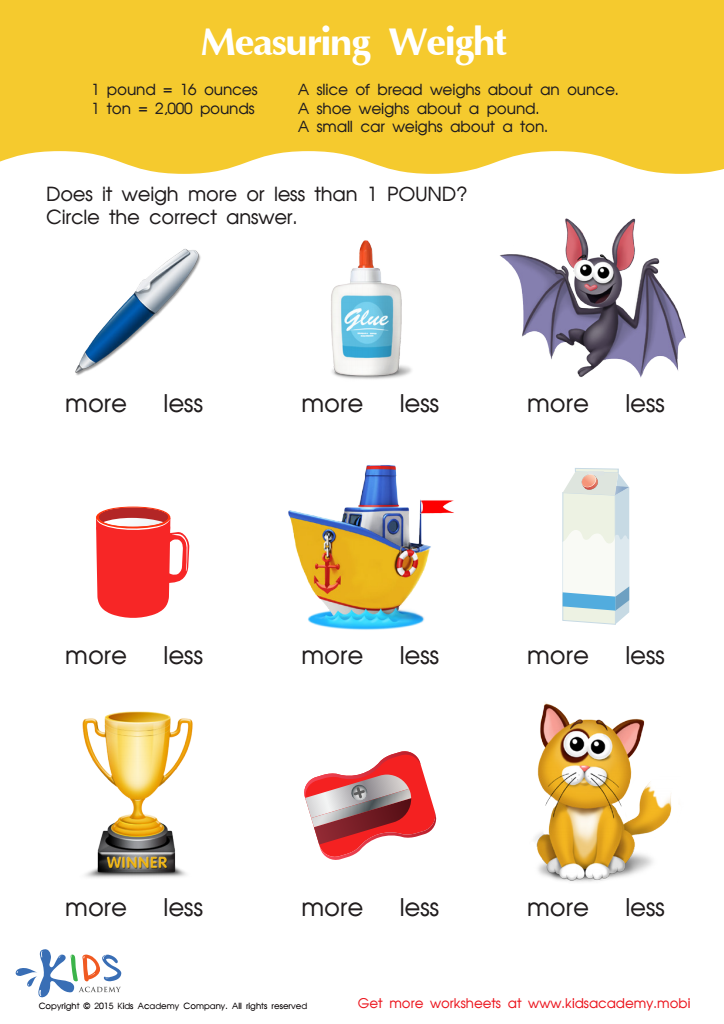
Measuring weight in pounds Worksheet







Parents and teachers should care about Practical Math Application programs like Extra Challenge Math for Ages 3-5 because they play a crucial role in laying the foundational skills children need for future mathematical understanding. At this young age, children are naturally curious and eager to absorb information from their surroundings. Engaging them in practical math challenges makes learning interactive and enjoyable, helping to foster a positive attitude towards mathematics early on.
Practical math applications allow young learners to relate mathematical concepts to real-life situations. This connection enhances comprehension and retention as children see the immediate relevance of what they're learning. Activities such as counting objects during playtime, measuring ingredients in cooking, or sorting toys encourage hands-on experiences that deepen their understanding of numbers, shapes, and quantities.
Moreover, Extra Challenge Math activities can stimulate critical thinking, problem-solving, and reasoning skills, which are essential not just for math but for overall cognitive development. Introducing these practical applications instills confidence in young learners as they navigate challenges successfully, preparing them for future academic endeavors. Ultimately, investing in practical math education for young children sets the stage for lifelong learning and mathematical proficiency.








