Basic Math Skills Extra Challenge Measurement Worksheets for Ages 3-5
5 filtered results
-
From - To
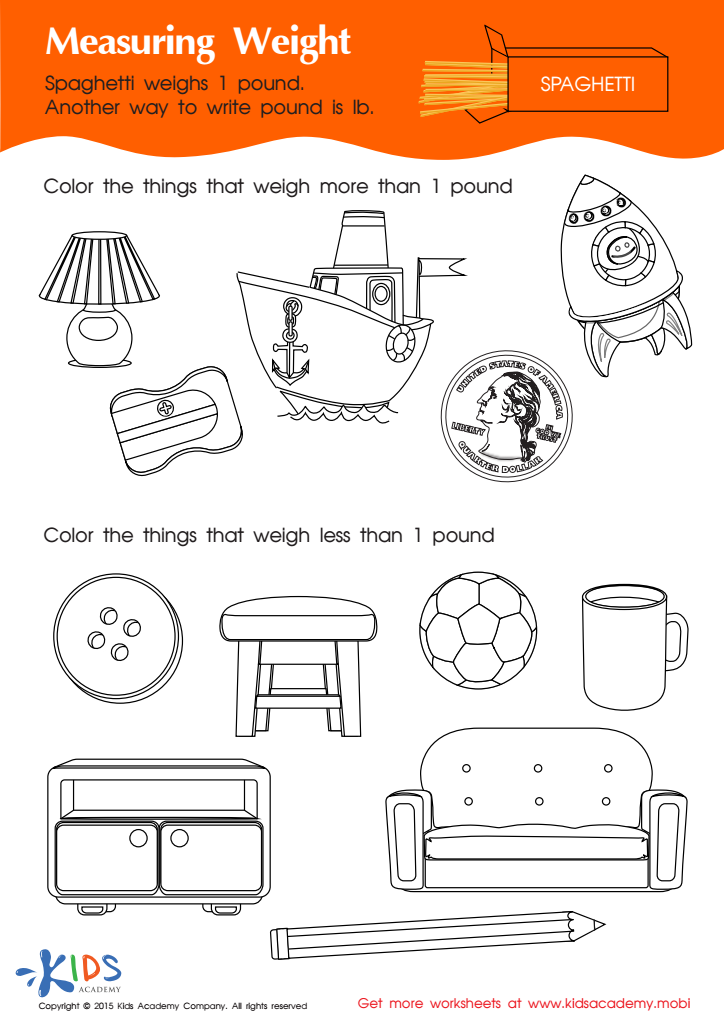
Boost your child's early math skills with our engaging "Basic Math Skills Extra Challenge Measurement Worksheets" designed specifically for ages 3-5. These worksheets provide fun and interactive activities that help young learners grasp fundamental concepts of measurement, including length, weight, and volume. Each worksheet is crafted to inspire curiosity and improve critical thinking through hands-on learning experiences. Ideal for parents and educators, these extra challenges will not only reinforce essential math skills but also encourage a love for learning. Download our worksheets today to support your child's educational journey and build a strong foundation in basic math concepts!
 Assign to My Students
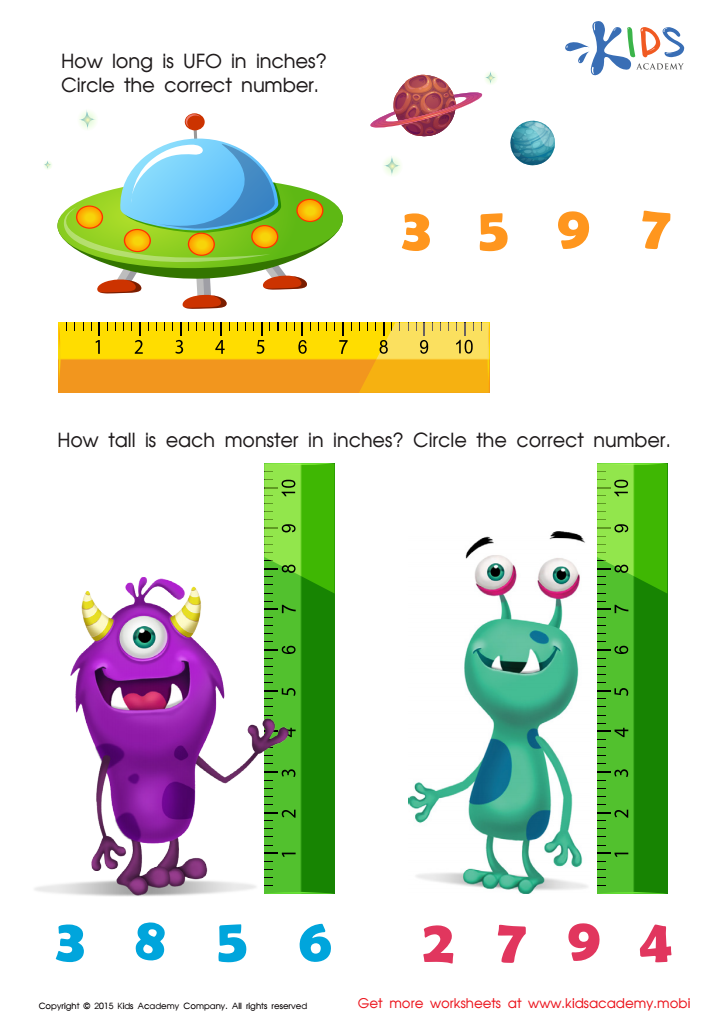
Measuring in Inches Worksheet
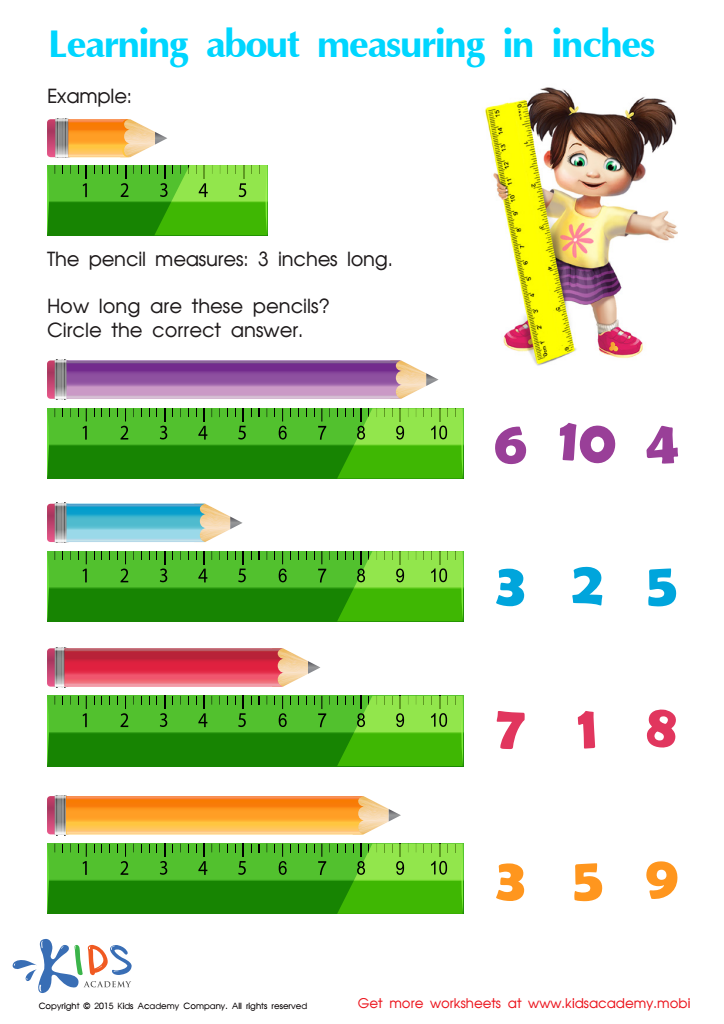
Learning About Measuring In Inches Printable
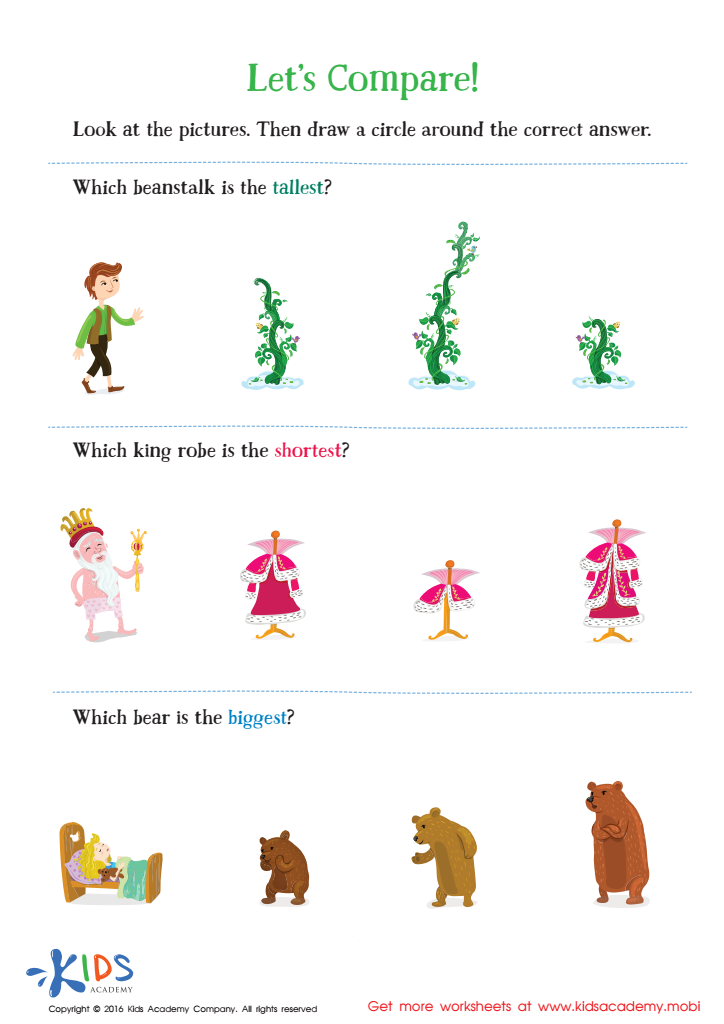
Fairy Tale Worksheet: Let's Compare
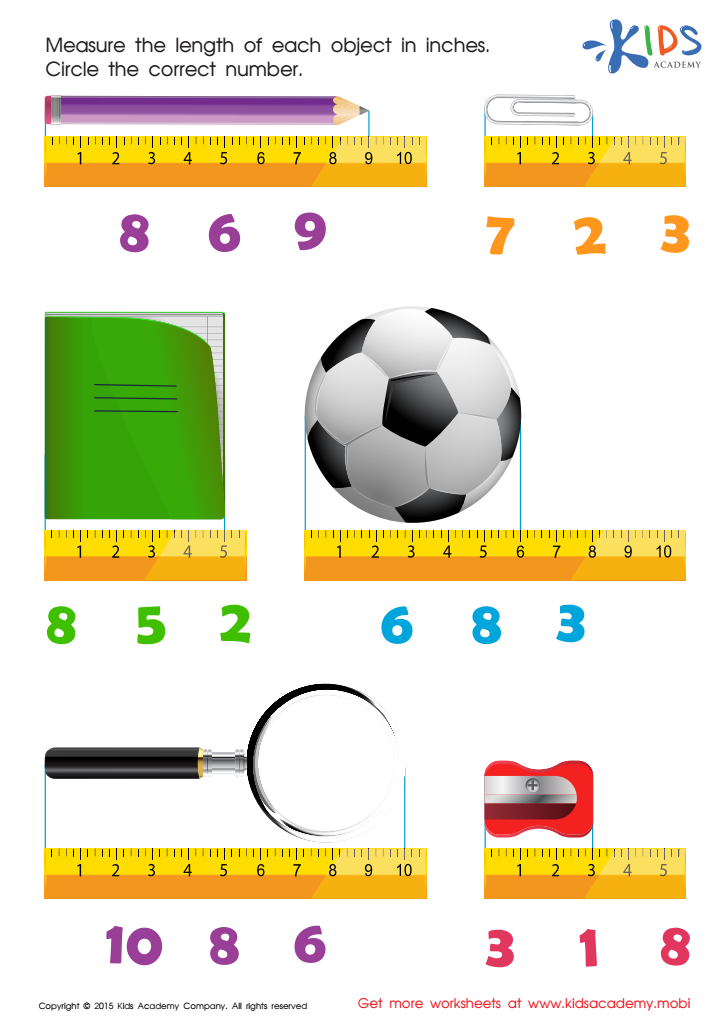
Learning measuring objects in inches Worksheet








Parents and teachers should prioritize the Basic Math Skills Extra Challenge Measurement for Ages 3-5 because early childhood is a crucial period for cognitive development. Engaging children in measurement activities fosters their understanding of mathematical concepts and builds a strong foundation for future learning. Measurement introduces young learners to comparing lengths, weights, and volumes, enhancing their problem-solving skills and critical thinking.
At this developmental stage, children are naturally curious and eager to explore their environment. By incorporating measurement challenges, educators and parents can utilize this curiosity to help children make real-world connections. These activities nurture essential skills such as estimation, sequencing, and number cognition, which are integral for future academic success.
Moreover, measurement activities can be easily integrated into daily routines, making learning enjoyable and practical. For instance, measuring ingredients while cooking or comparing the heights of plants teaches children to recognize patterns and relationships.
Finally, instilling a love and understanding of math at an early age can significantly shape a child's self-confidence and attitudes toward learning in general. Encouraging creative and playful approaches to math allows children to see it not just as a subject, but as a part of everyday life, laying the groundwork for lifelong mathematical competence.