Understanding plurals Extra Challenge Writing Worksheets for Ages 3-5
3 filtered results
-
From - To
Unlock the magic of language with our "Understanding Plurals Extra Challenge Writing Worksheets" designed for children ages 3-5. These engaging worksheets provide a fun and interactive way for young learners to grasp the concept of plurals. Featuring vibrant illustrations and enjoyable exercises, kids will enhance their writing skills while identifying and practicing plural forms of words. With these extra challenge activities, children will develop confidence in their language abilities and spark their creativity. Ideal for classroom or home use, these worksheets aim to make learning enjoyable and effective, setting the foundation for strong literacy skills. Start exploring the world of plurals today!
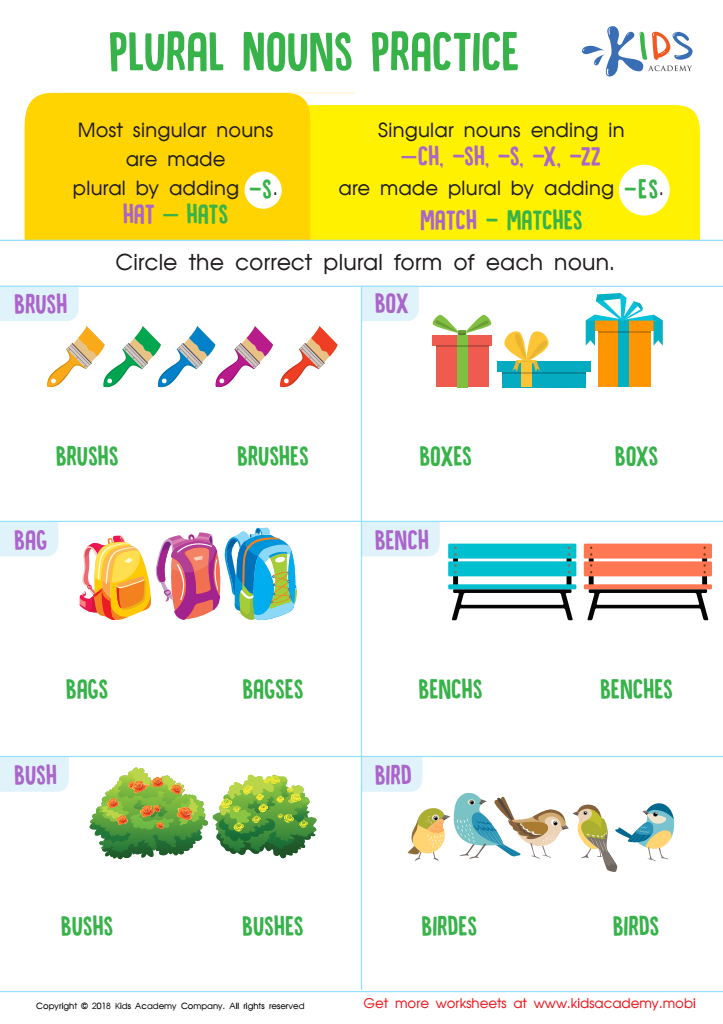
Plural Nouns Practice Worksheet
 Assign to My Students
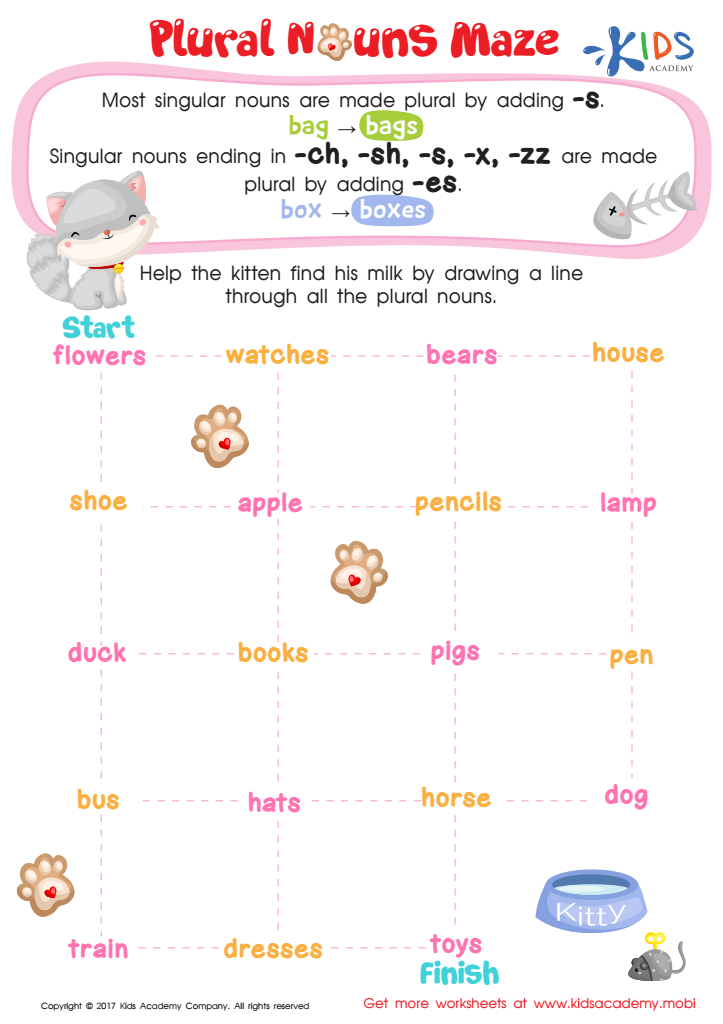
Plural Nouns Maze Worksheet
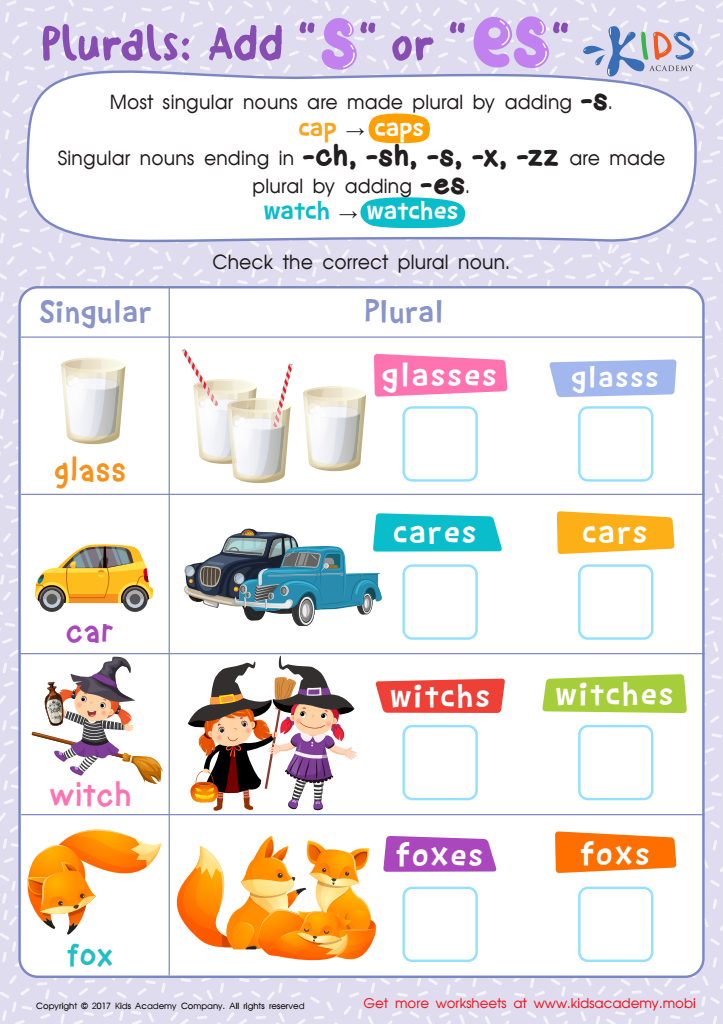
Plurals: "–es" or "–es"? Worksheet







Understanding plurals is crucial for young learners aged 3-5 as it lays the foundation for language development and effective communication. When children grasp the concept of plurals, they learn that one object can be more than one, enhancing their vocabulary and comprehension skills. This resonance is especially important during early childhood, as it allows children to express themselves clearly and accurately.
For parents and teachers, fostering an understanding of plurals means offering children tools to engage with the world around them. Using creative activities like storytelling, singing songs, or playing games that emphasize plurals can stimulate their interest in language and promote social interaction. Extra challenge writing tasks, such as illustrating sentences with singular and plural nouns, encourage critical thinking and creativity.
Furthermore, mastering subjects like plurals supports overall literacy, paving the way for future academic success. As children become confident communicators, they can share their thoughts and feelings more effectively, fostering positive relationships with peers and adults alike. Ultimately, by nurturing their understanding of plurals, parents and teachers play a pivotal role in shaping children into articulate and expressive individuals, better prepared for the world of learning ahead.