Number Matching Extra Challenge Worksheets for Ages 3-6
4 filtered results
-
From - To
Elevate your child's number matching skills with our "Number Matching Extra Challenge Worksheets" tailored for ages 3-6. Designed to challenge and engage young learners, these worksheets boost number recognition, counting skills, and cognitive development. Each activity features playful themes and creative tasks, making learning enjoyable and effective. Perfect for enhancing preschool and kindergarten math readiness, these printables support both classroom and at-home learning. Download now to give your little one a head start on mastering numbers through fun and interactive exercises. Encourage confidence in early math skills with Kids Academy's expertly crafted worksheets.
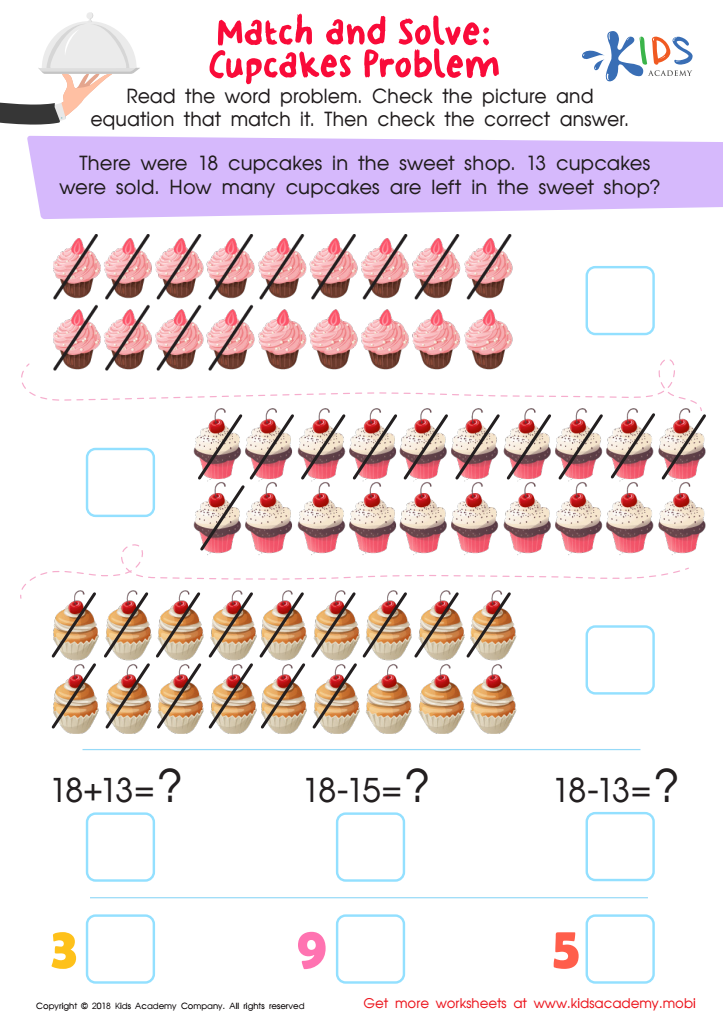
Match and Solve: Cupcakes Problem Worksheet
 Assign to My Students
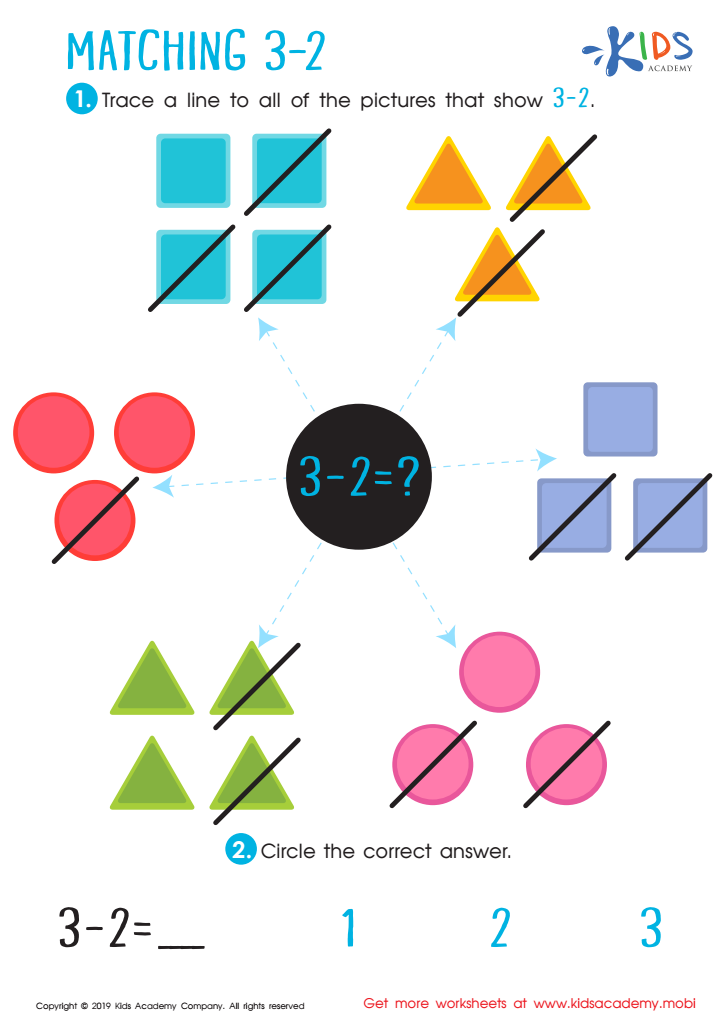
Matching 3-2 Worksheet
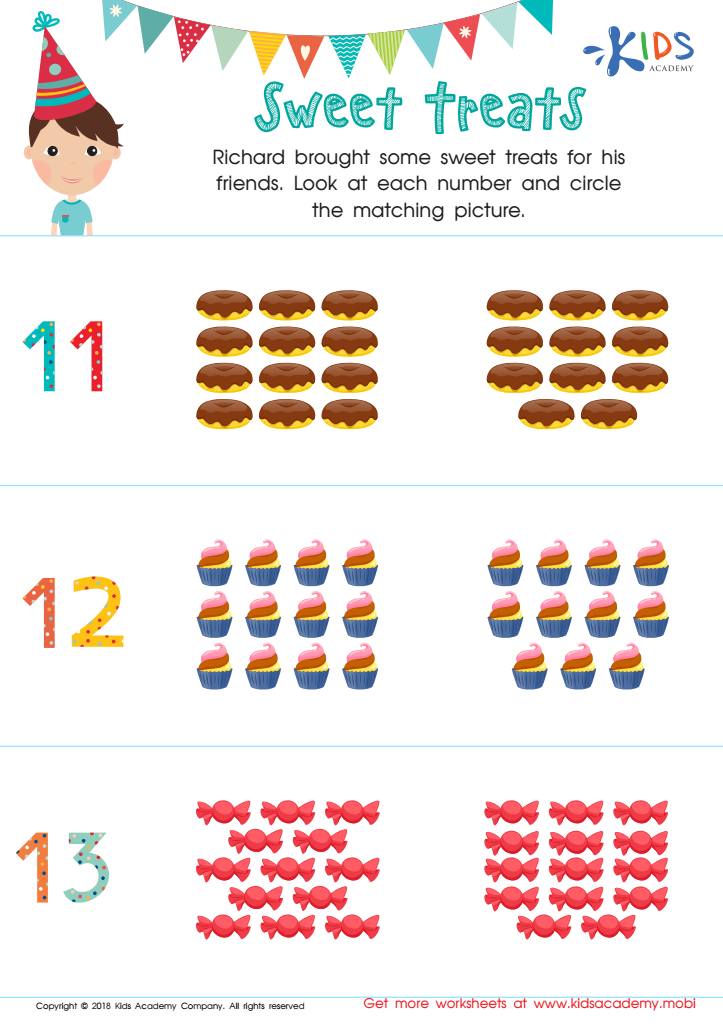
Kindergarten Math Worksheet Matching Numbers
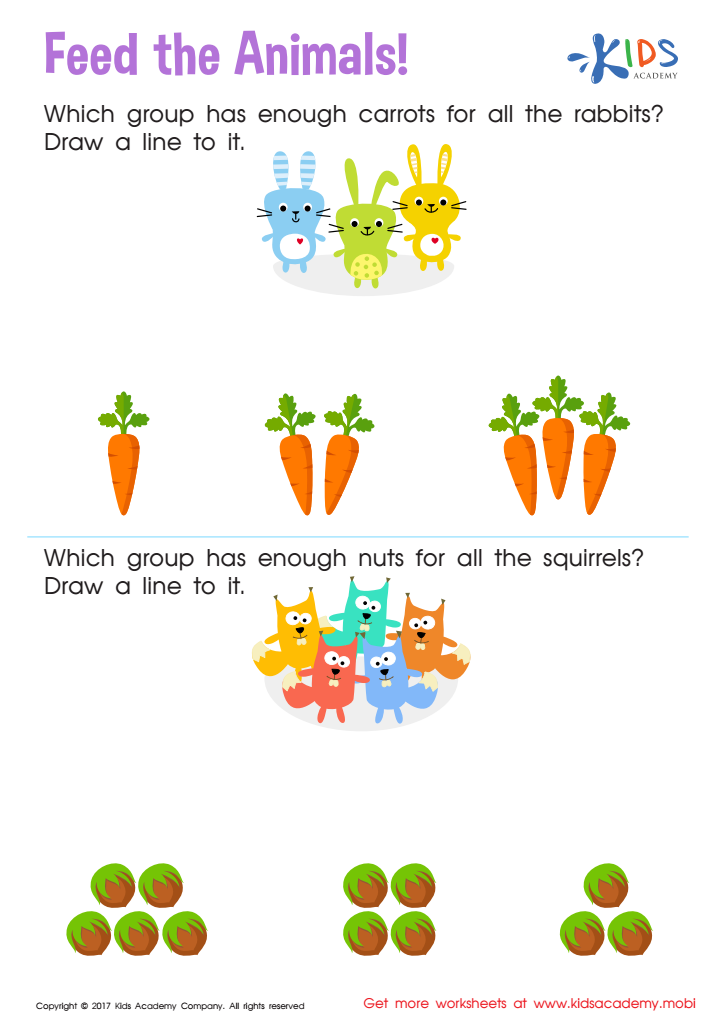
Count and Match: Feed the Animals Worksheet







Number Matching Extra Challenge for ages 3-6 is a game designed to enhance early math skills, crucial for a child's cognitive development. Parents and teachers should care about this activity because it provides a foundational understanding of numbers, crucial for future mathematical learning. Engaging in number matching challenges supports the development of number recognition, counting abilities, and the concept of numerical order.
Furthermore, this activity promotes problem-solving skills and critical thinking. Young children learn to identify patterns and make connections, which are essential cognitive functions. This mental exercise prepares them for more complex tasks and helps to establish a positive attitude towards math-related subjects.
Additionally, number matching enhances fine motor skills and hand-eye coordination through the manipulation of physical cards or objects. It also offers an opportunity for social interaction if done in a group, encouraging collaborative learning and communication skills.
At this developmental stage, children are highly receptive, and playful educational activities can solidify their curiosity and interest in learning. Supporting number matching activities ensures that children build a strong numerical literacy foundation, setting the stage for academic success and confidence in mathematics in their later school years.








