Shape identification Extra Challenge Worksheets for Ages 3-6
3 filtered results
-
From - To
Explore our Shape Identification Extra Challenge Worksheets designed for children ages 3-6! These engaging and fun worksheets enhance shape recognition while encouraging critical thinking and problem-solving skills. Each activity is tailored to various learning levels, featuring vibrant illustrations and interactive elements that captivate young minds. Our extra challenges motivate children to explore shapes in new ways, fostering creativity and confidence. Perfect for parents and educators, these worksheets can strengthen early math skills at home or in the classroom. Get started today and watch your little ones develop a strong foundation in shape identification while having a delightful time!
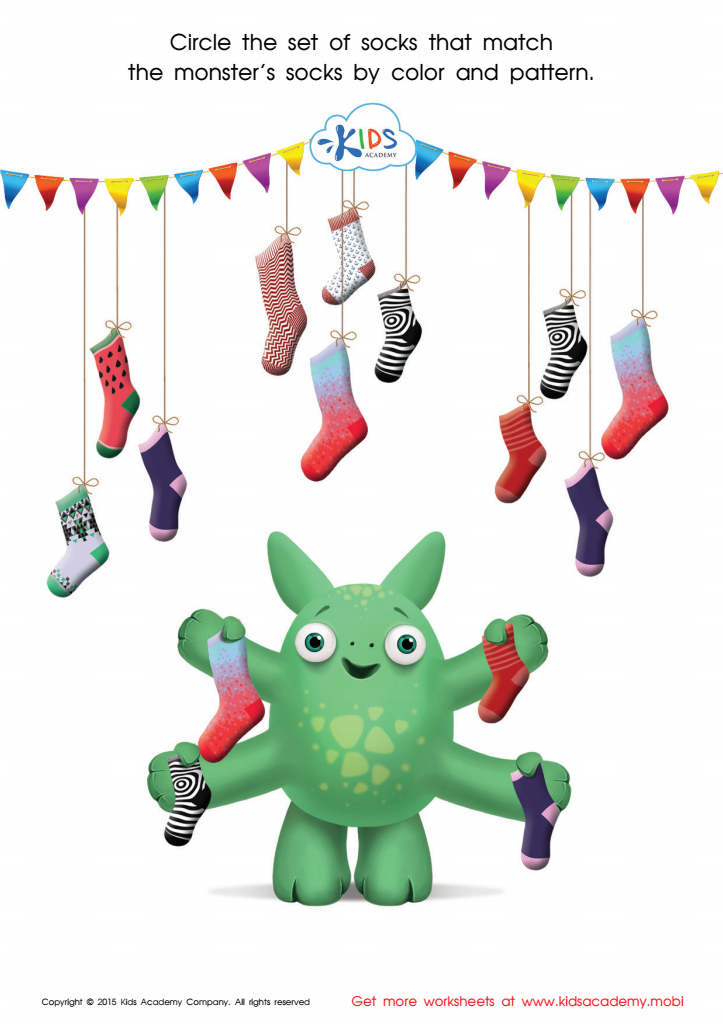
Sort the Monster's Socks Worksheet
 Assign to My Students
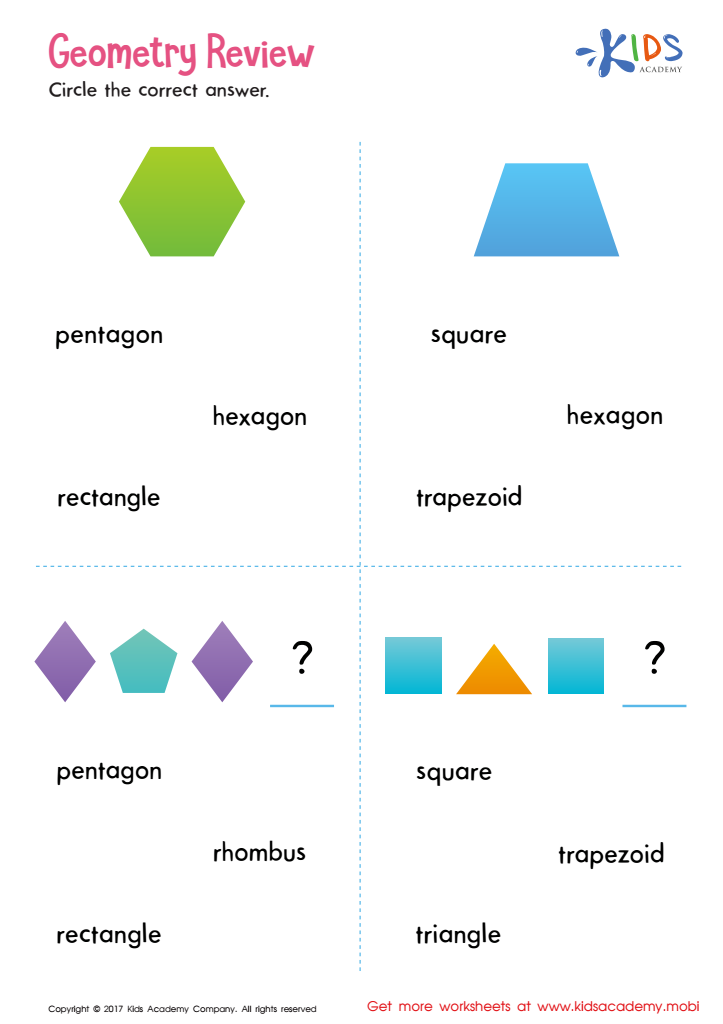
Geometry Review Printable

Shapes Worksheet







Shape identification is a fundamental skill for children ages 3-6, laying the groundwork for a wide range of developmental milestones. Engaging in shape identification extra challenges enhances children's cognitive skills, such as problem-solving, critical thinking, and spatial awareness. It encourages them to observe and categorize their environment, fostering keen analytical abilities that are essential for future academic success.
Parents and teachers should care about these challenges because they promote active learning and hands-on exploration. When children identify and manipulate shapes, they develop fine motor skills and enhance their coordination. Additionally, these activities nurture creativity, as children discover how shapes can combine to form new objects, fostering imaginative play.
Moreover, understanding shapes is integral to early math skills, providing the basis for geometry and measurement later in life. It can even introduce concepts of symmetry and patterns, building a solid mathematical foundation. Engaging in extra challenges makes learning fun and interactive, encouraging a love for exploration and discovery. Ultimately, helping children master shape identification will empower them in their educational journeys while fostering essential life skills that will benefit them in numerous contexts.








