Basic geometry understanding Extra Challenge Geometry Worksheets for Ages 3-6
3 filtered results
-
From - To
Discover our "Basic Geometry Understanding Extra Challenge Geometry Worksheets" designed specifically for young learners aged 3-6! These engaging worksheets enhance foundational geometry skills through fun and interactive activities. Children will explore shapes, sizes, and spatial awareness, building their confidence in recognizing and understanding geometric concepts. Each worksheet presents challenges that encourage critical thinking and creativity, making learning an enjoyable experience. Ideal for home or classroom use, our worksheets facilitate group learning or individual practice. Watch your little ones thrive as they develop essential math skills that serve as a solid groundwork for their academic journey. Start your geometry adventure today!
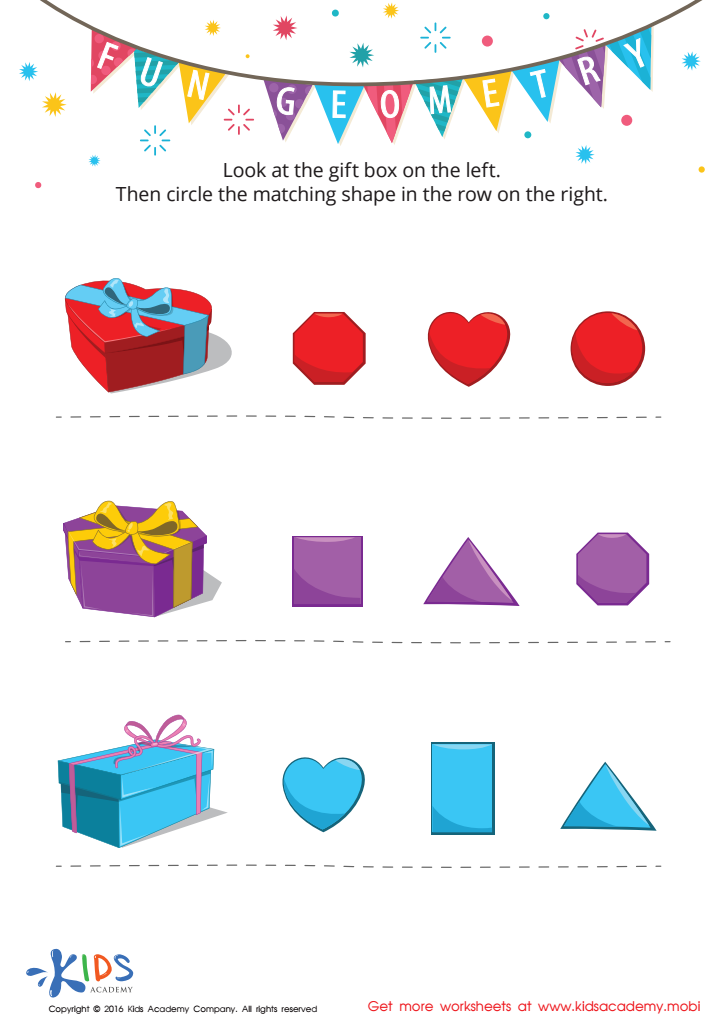
Fun Geometry Worksheet
 Assign to My Students











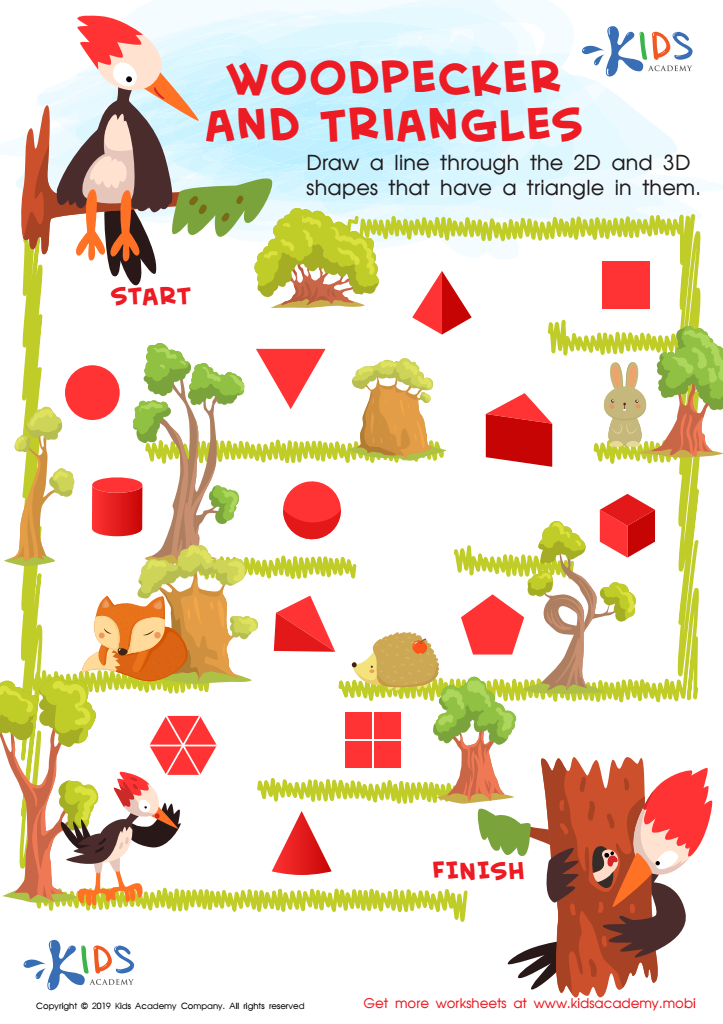
Woodpecker and Triangles Worksheet
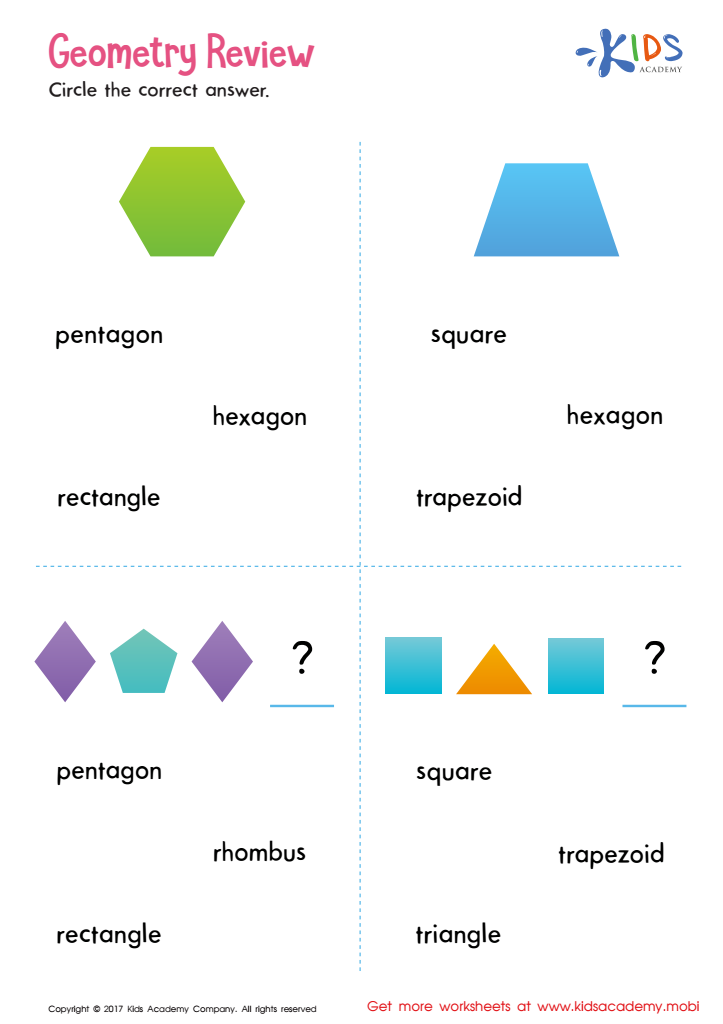
Geometry Review Printable








Understanding basic geometry is crucial for children aged 3 to 6, as it lays the foundation for critical thinking, problem-solving, and spatial awareness. Parents and teachers should prioritize introducing concepts like shapes, sizes, and patterns early on because these skills are essential for everyday experiences and later academic success.
At this age, children are naturally curious. Engaging them in extra challenge activities that involve geometry not only sparks their creativity but also promotes cognitive development. Early exposure to geometrical shapes — such as circles, squares, and triangles — allows children to classify and identify objects in the world around them, enhancing their observational skills.
Learning geometry through play-based tasks can foster important social skills, as children often work together in groups to solve challenges. This interaction promotes language development, as students describe shapes and patterns, enhancing their vocabulary. Furthermore, grasping basic geometry prepares them for more advanced mathematical concepts in the future, setting a strong groundwork for subjects like algebra and physics.
Overall, incorporating geometry into early childhood education nurtures a child’s intellectual growth and enriches their learning experience, ultimately supporting their confidence as learners and future mathematicians.








