Basic geometry understanding Extra Challenge Math Worksheets for Ages 3-6
4 filtered results
-
From - To
Discover our "Basic Geometry Understanding Extra Challenge Math Worksheets" designed specifically for ages 3-6! These engaging and interactive worksheets introduce young learners to fundamental geometric concepts while enhancing their critical thinking skills. Featuring vibrant colors and fun shapes, children will enjoy identifying, matching, and solving various geometry challenges. Perfect for enhancing early math skills at home or in the classroom, these worksheets encourage kids to explore patterns, spatial awareness, and problem-solving. Make learning geometry fun and approachable for your little one with our expertly crafted extra challenges that foster a love for math and a strong foundation for future learning!
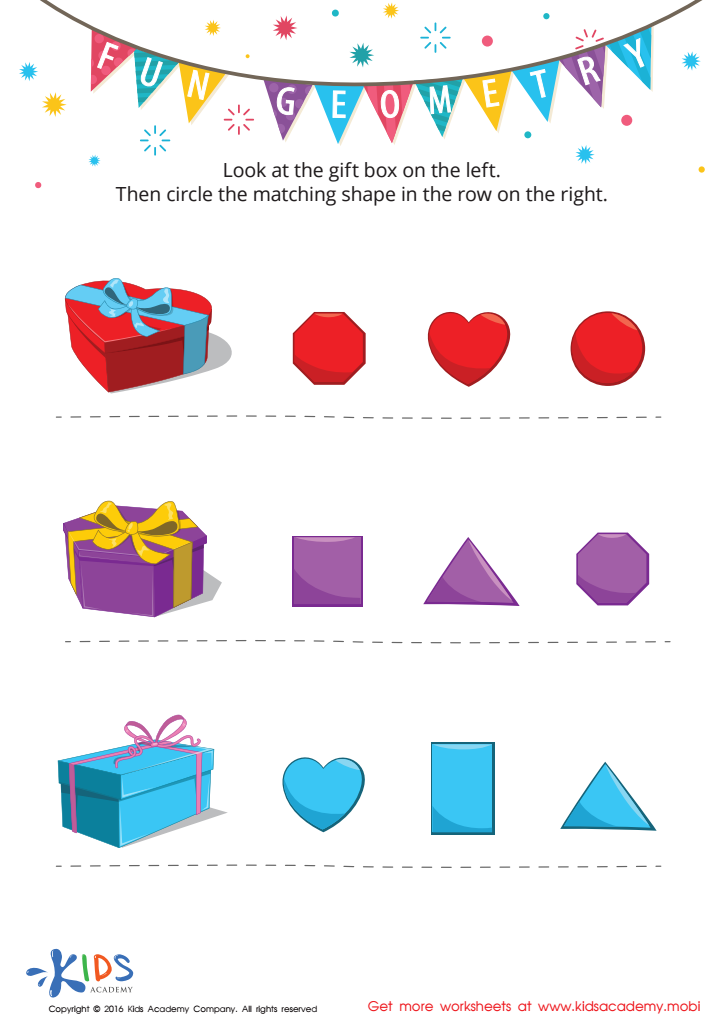
Fun Geometry Worksheet
 Assign to My Students
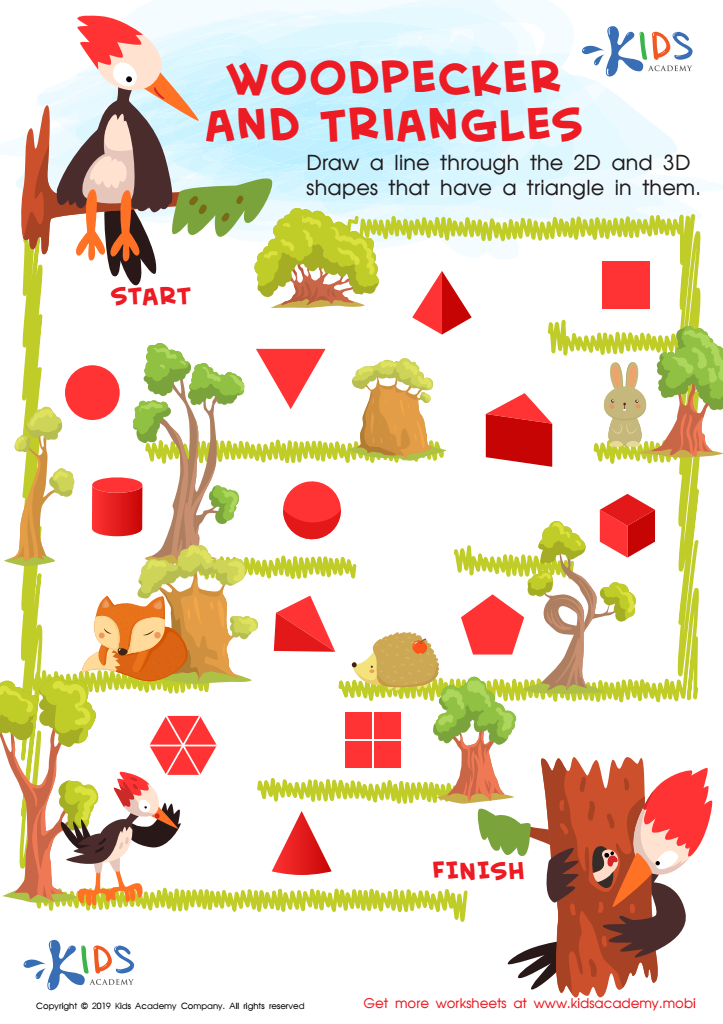
Woodpecker and Triangles Worksheet
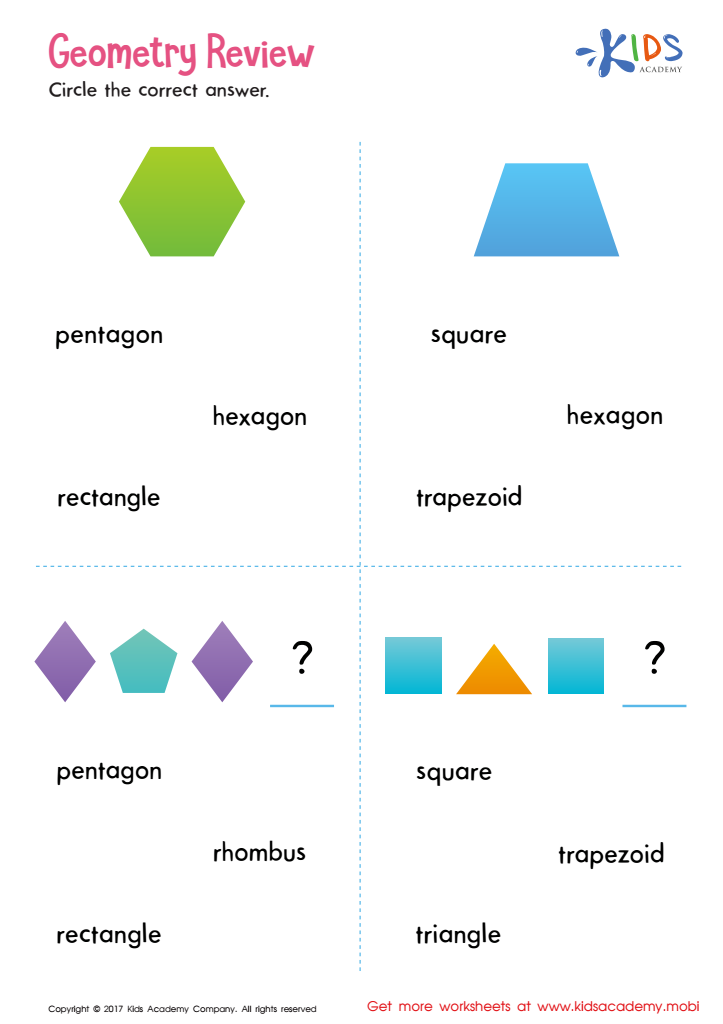
Geometry Review Printable
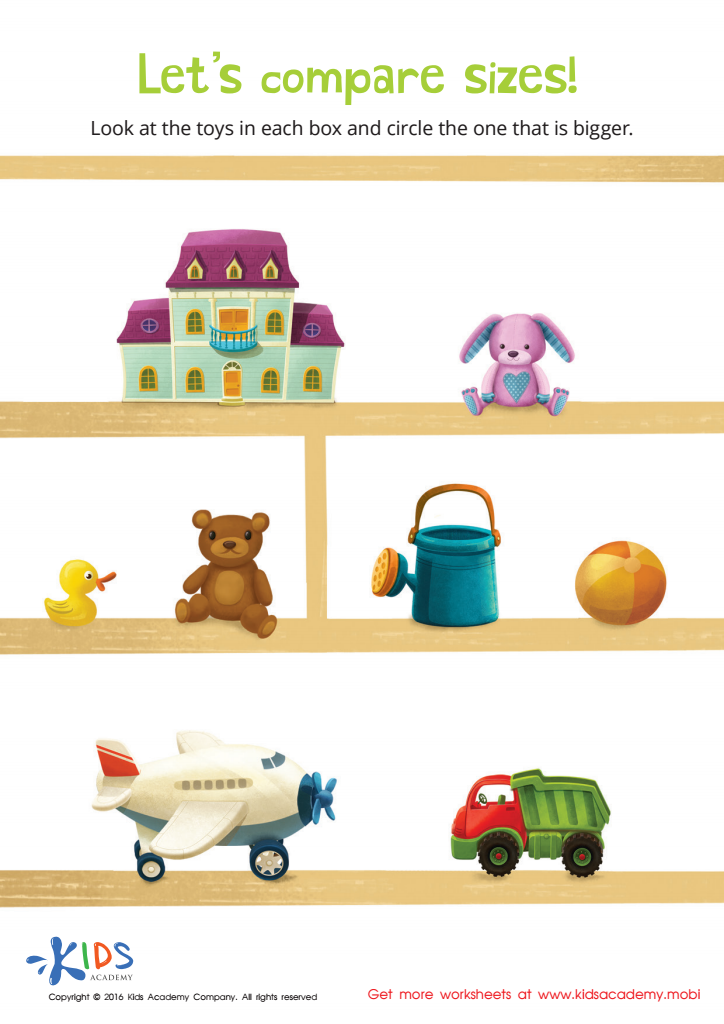
Classifying by Size Sorting Worksheet








Basic geometry understanding lays a vital foundation for mathematical skills in young children aged 3-6. Parents and teachers should prioritize this learning because it promotes critical thinking, spatial awareness, and problem-solving abilities.
At this age, children are naturally curious and eager to explore shapes, sizes, and patterns. Engaging them in activities involving basic geometric concepts helps enhance their cognitive development. Recognizing shapes, understanding symmetry, and exploring sizes enable children to make connections with the world around them, fostering observation skills that are essential for later learning.
Moreover, a grasp of geometry supports not only math proficiency but also other subjects like science and art. For instance, understanding shapes aids in constructing structures in play, creating artwork, or following patterns in nature. It cultivates creativity and imaginative play, key components of early childhood development.
Additionally, by introducing geometry in a playful and enjoyable manner, parents and teachers can nurture a positive attitude towards learning. This sets the stage for future educational success, as confident young learners are more likely to excel in mathematics and related fields as they grow. Overall, prioritizing geometry understanding helps shape well-rounded, capable individuals ready to tackle more complex concepts in school and beyond.








