Shape Recognition Extra Challenge Math Worksheets for Ages 3-6
11 filtered results
-
From - To
Discover our "Shape Recognition Extra Challenge Math Worksheets" designed specifically for children ages 3-6! These engaging worksheets provide an exciting opportunity for young learners to enhance their shape recognition skills through fun and interactive activities. Each worksheet features a variety of challenging tasks, from identifying and matching shapes to coloring and sorting exercises. These activities not only promote cognitive development but also encourage fine motor skills and critical thinking in early learners. Perfect for home or classroom use, our worksheets are a fantastic resource for nurturing early mathematicians, making learning shapes an enjoyable and rewarding experience. Let the shape exploration begin!
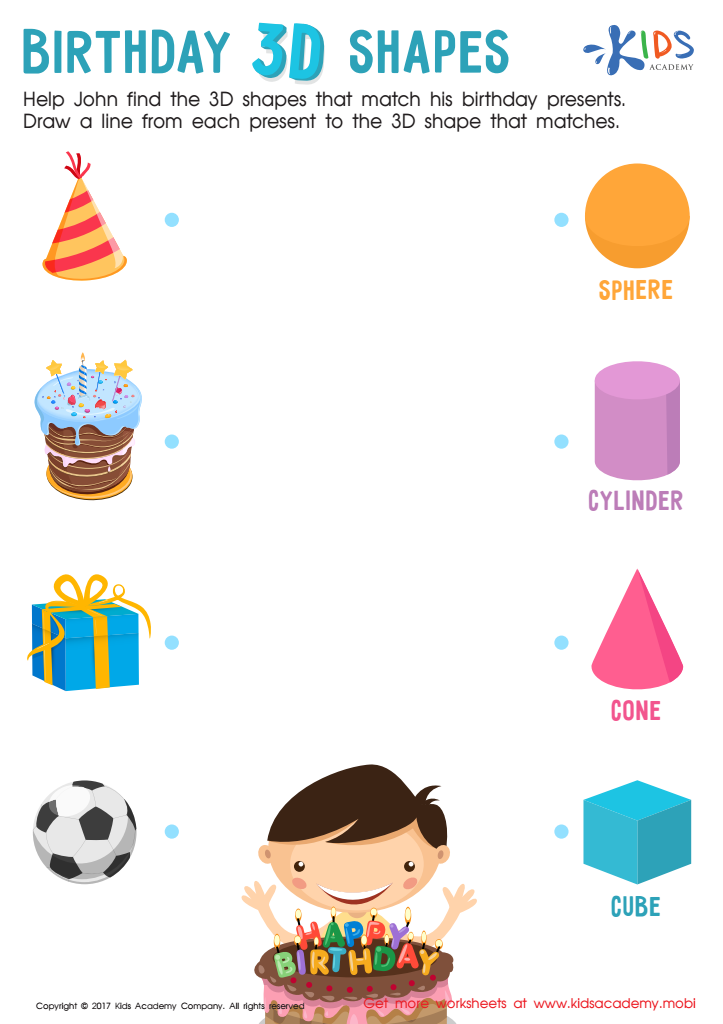
Birthday 3D Shapes Worksheet
 Assign to My Students
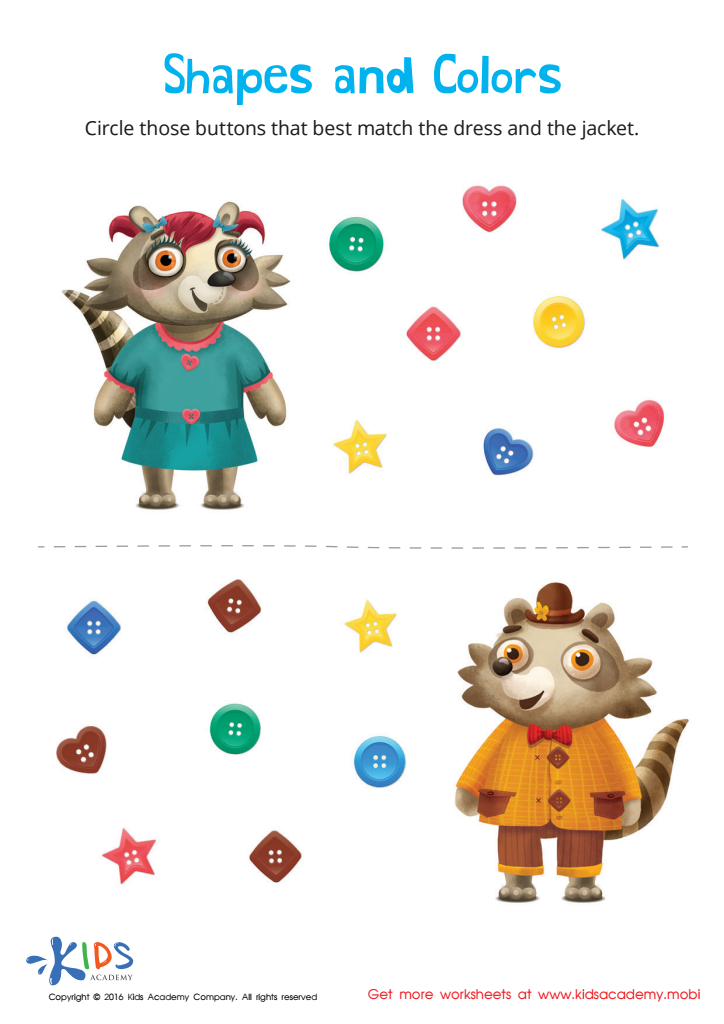
Matching: Shapes and Colors Worksheet
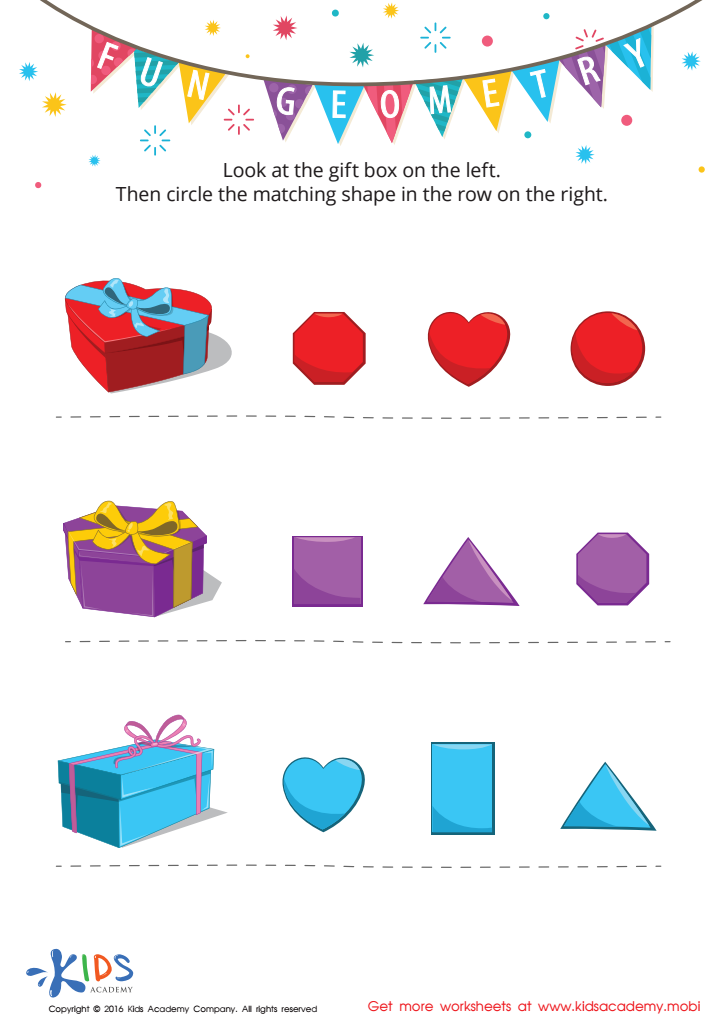
Fun Geometry Worksheet
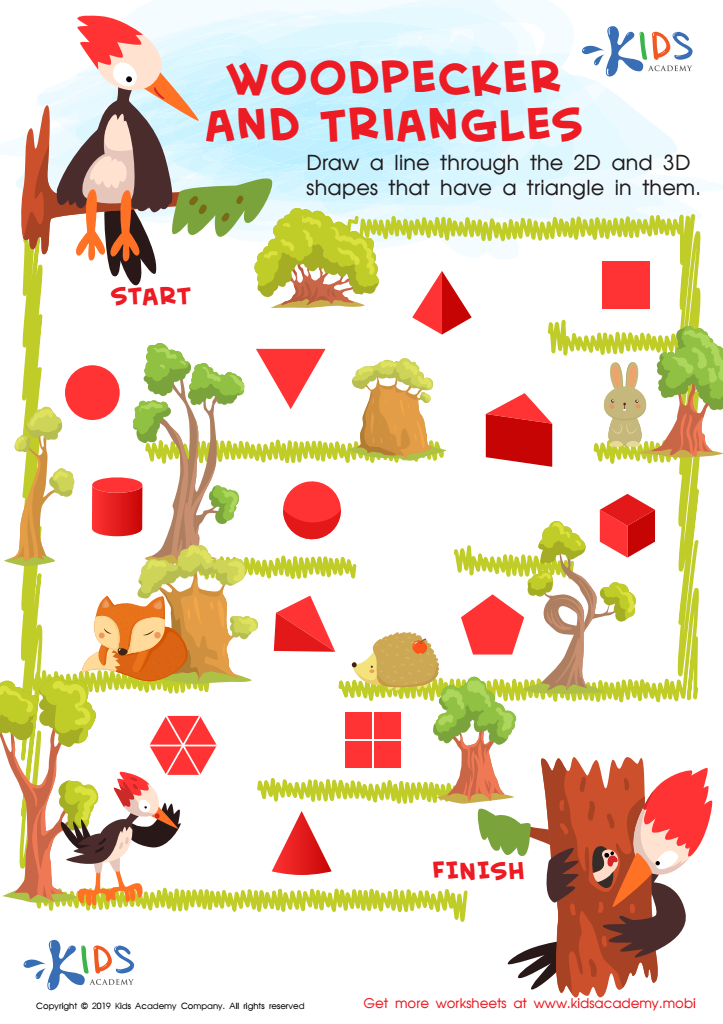
Woodpecker and Triangles Worksheet
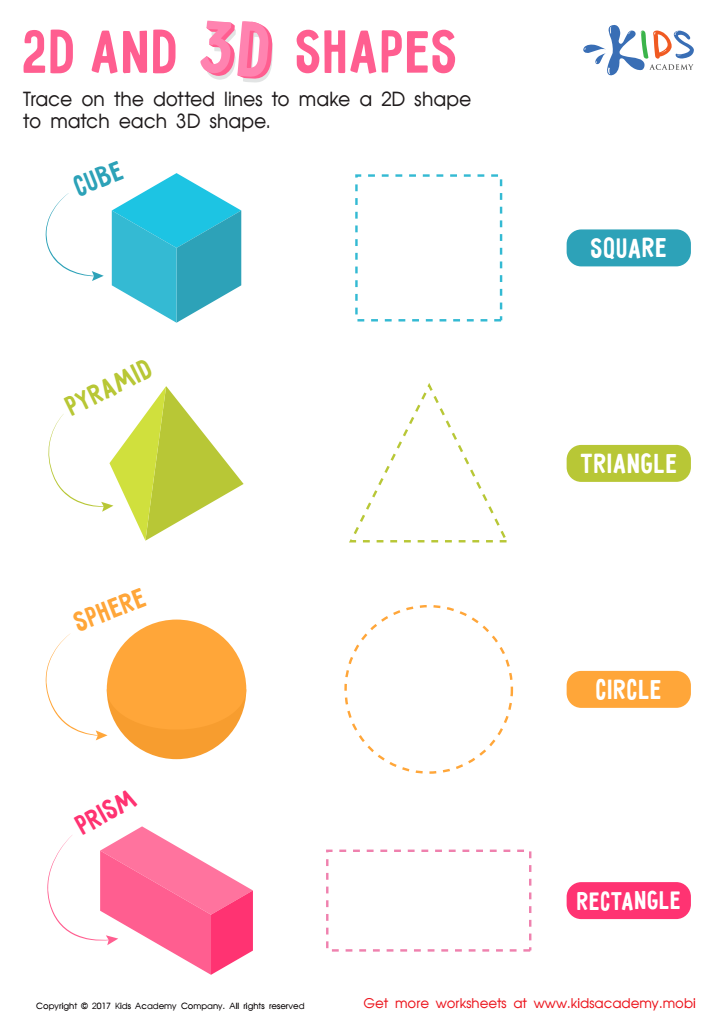
2D and 3D Shapes Worksheet
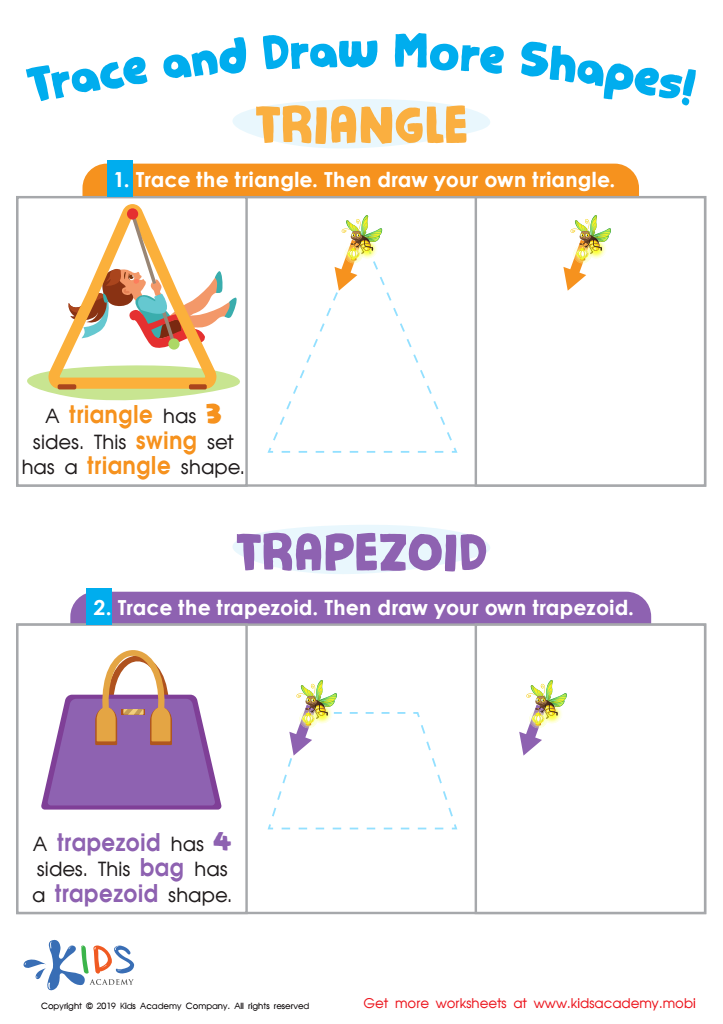
Trace and Draw More Shapes Worksheet
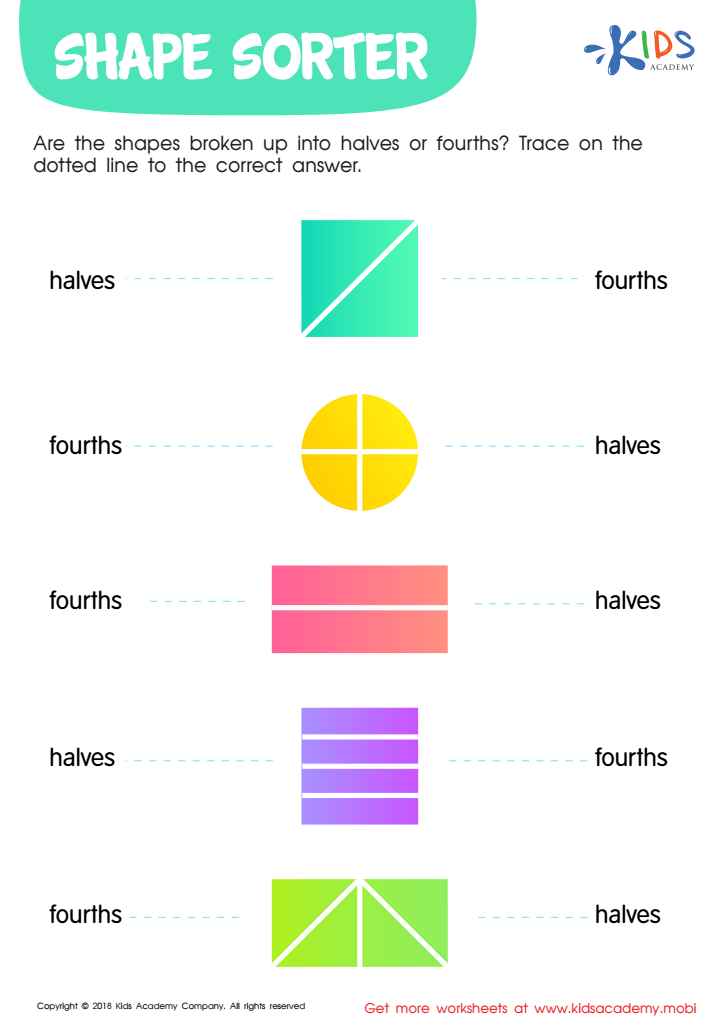
Shape Sorter Worksheet
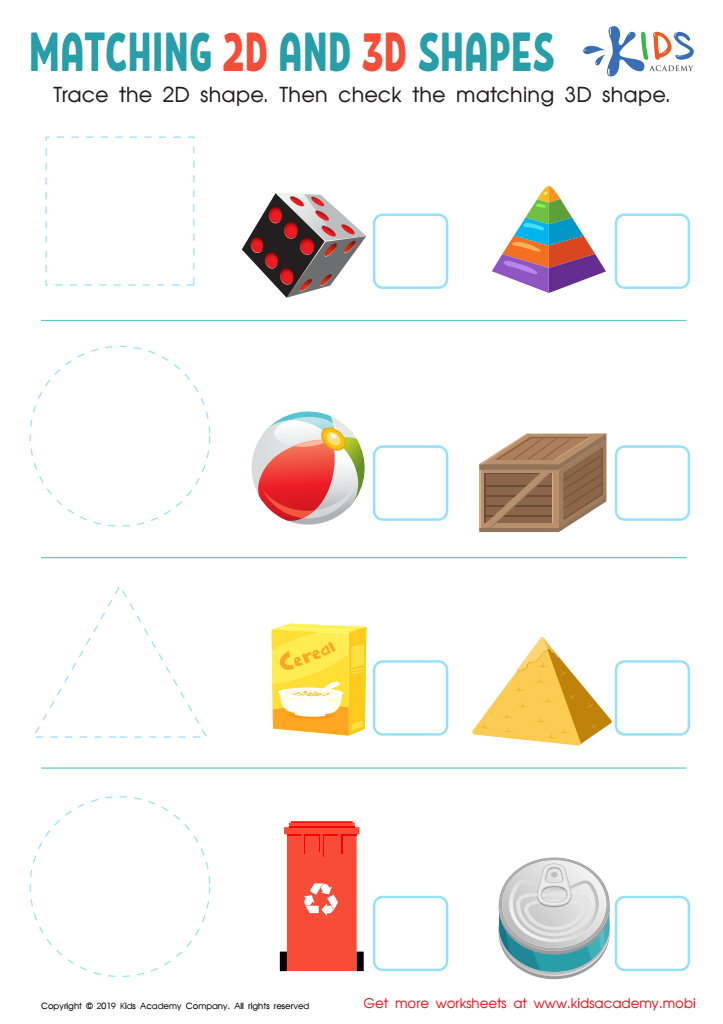
Matching 2D and 3D Shapes Worksheet
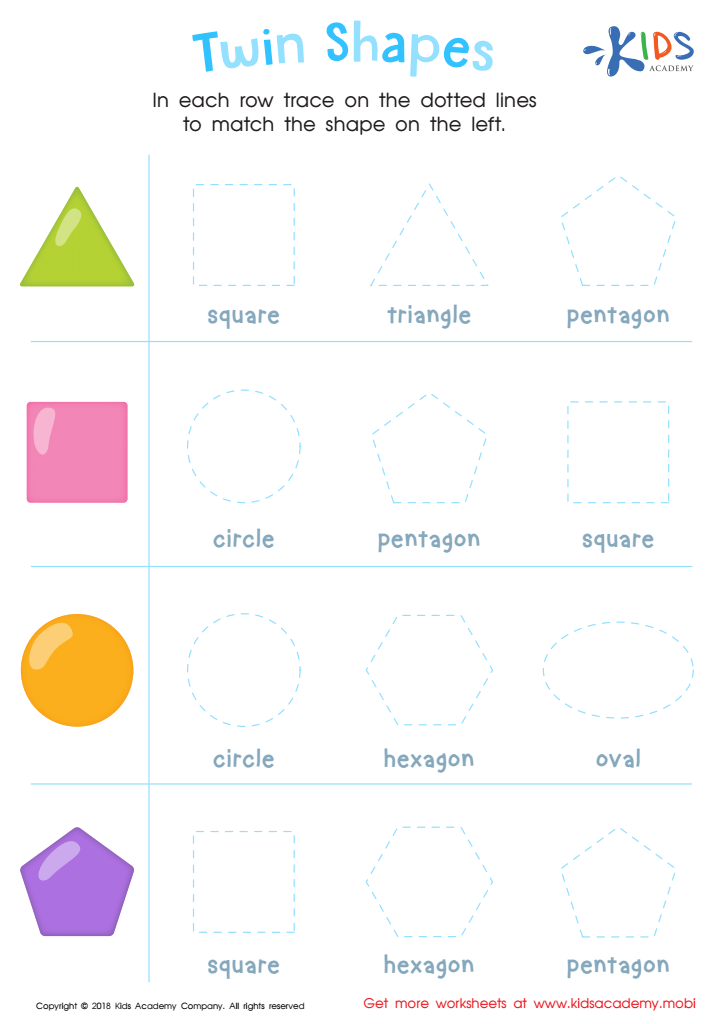
Twin Shapes Dot-to-Dot Worksheet
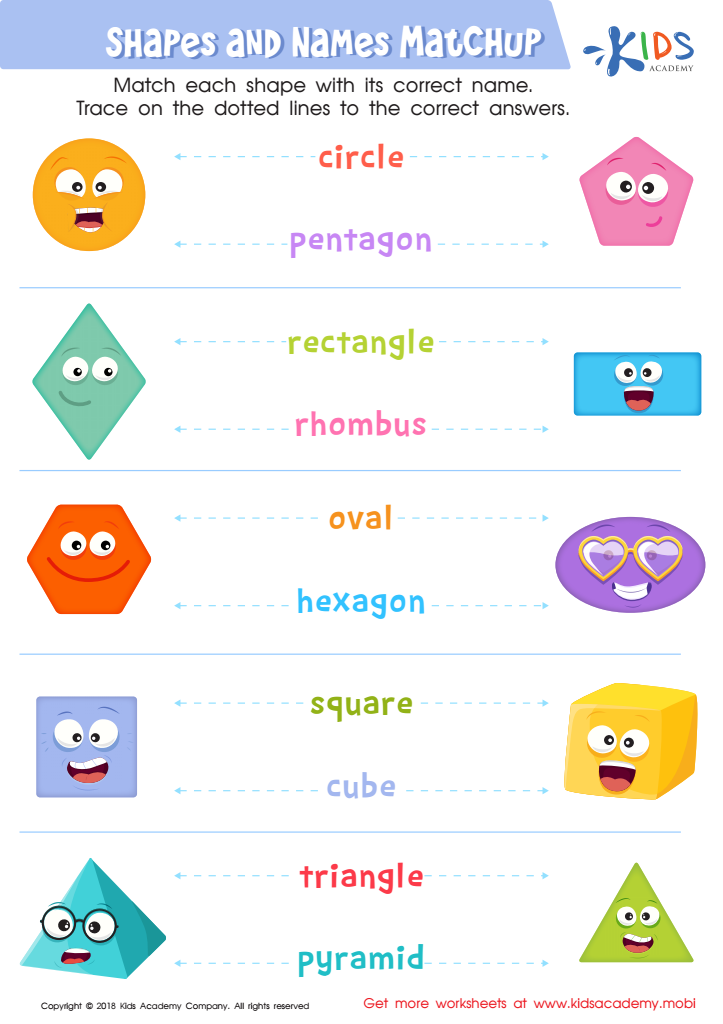
Shapes and Names Matchup Worksheet
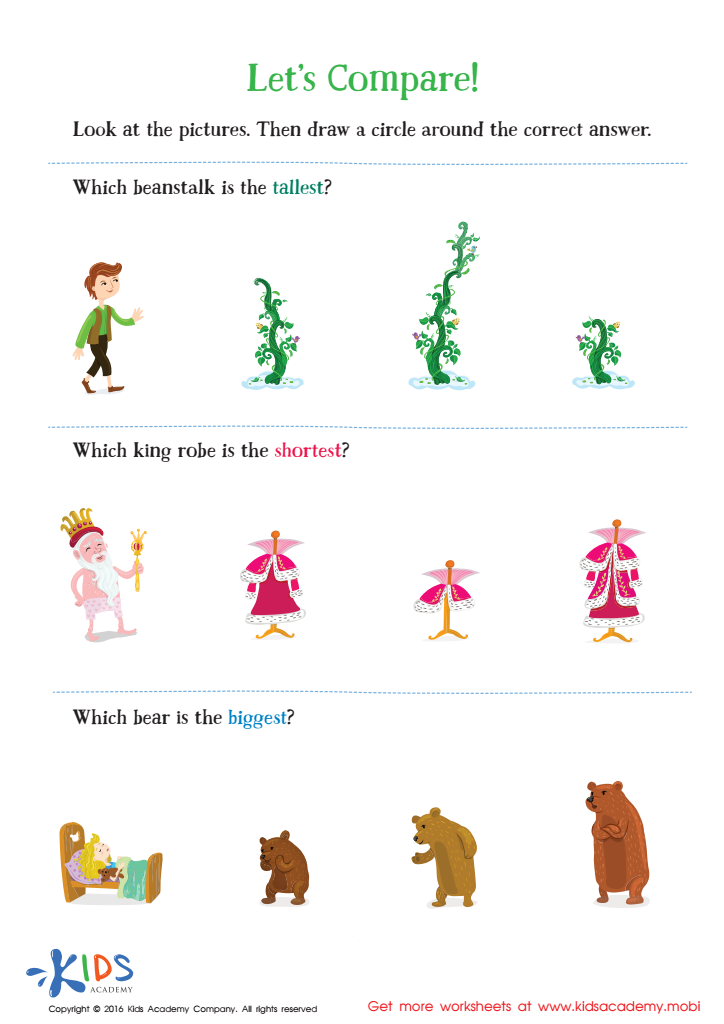
Fairy Tale Worksheet: Let's Compare







Shape Recognition Extra Challenge Math for ages 3-6 is essential for several reasons. Firstly, mastering shape recognition lays a solid foundation for early mathematical skills. Recognizing shapes is not only a cognitive milestone but also crucial for learning about patterns, geometry, and spatial awareness. These skills are integral to problem-solving and critical thinking, which are fundamental in later math concepts and overall academic achievement.
In addition, engaging children in shape recognition activities promotes fine motor skills as they often involve drawing, cutting, or manipulating different shapes. Such activities encourage hand-eye coordination and promote creativity through art projects.
Moreover, early exposure to concepts of shape leads to improved confidence in young learners. When children become proficient in recognizing and categorizing shapes, they are more likely to approach math and science subjects with enthusiasm.
Parents and teachers play a vital role in fostering this early learning through interactive play, games, and hands-on activities that incorporate math and sensing practice. Shape Recognition Extra Challenge Math emphasizes making learning enjoyable while strengthening these critical skills, ensuring that children are well-prepared for future academic success. Thus, prioritizing shape recognition is an investment in a child’s cognitive and holistic development.








