Handwriting practice Extra Challenge Worksheets for Ages 3-7
6 filtered results
-
From - To
Boost your child’s handwriting skills with our Handwriting Practice Extra Challenge Worksheets, designed for ages 3-7! These engaging and interactive worksheets provide exciting activities tailored to enhance fine motor skills and improve letter formation. With a mix of tracing, coloring, and writing exercises, children will develop confidence while learning essential handwriting techniques. Perfect for home or classroom use, our worksheets align with early literacy standards to support your child's writing journey. Discover a variety of themes and fun illustrations that will keep young learners motivated and entertained. Help your little ones take their handwriting to the next level with these comprehensive challenges!
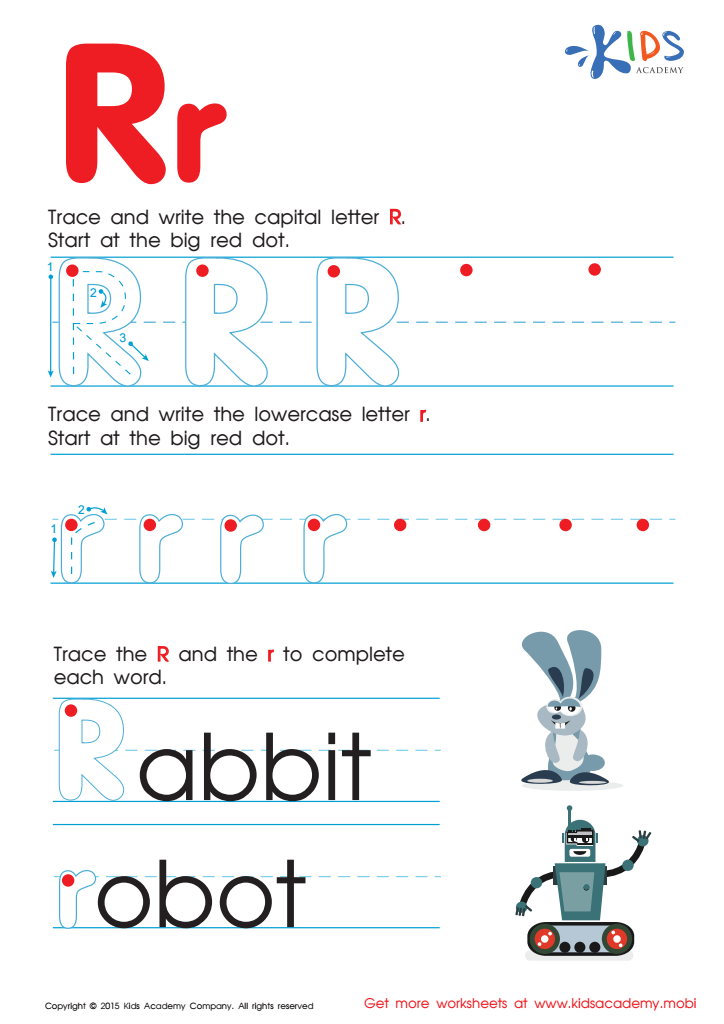
Letter R Tracing Page
 Assign to My Students
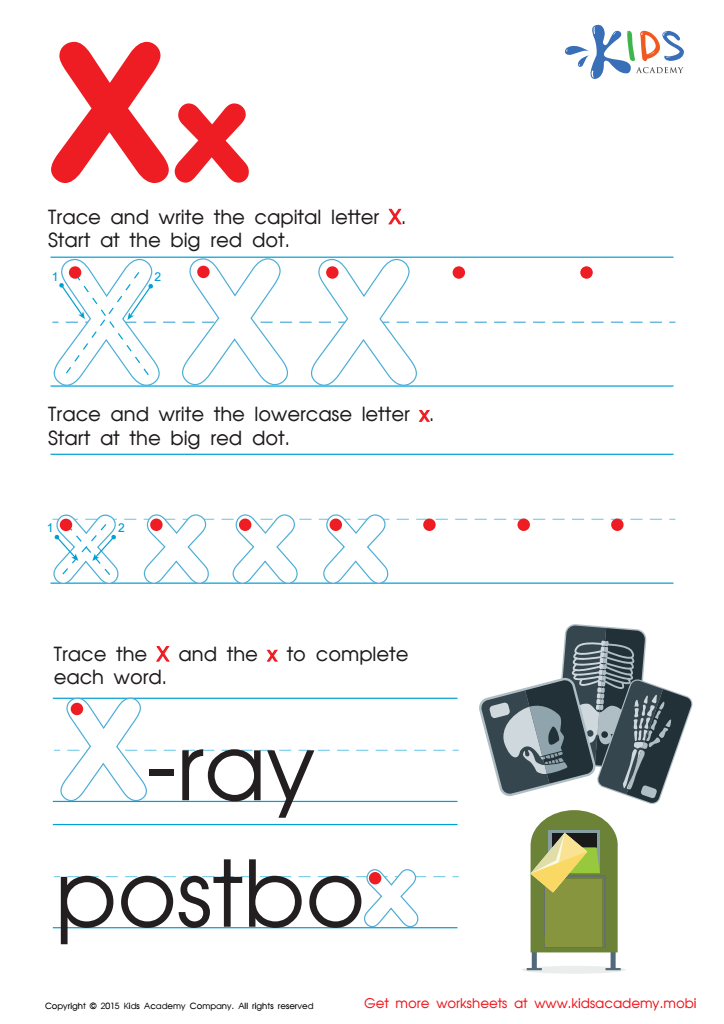
Letter X Tracing Page
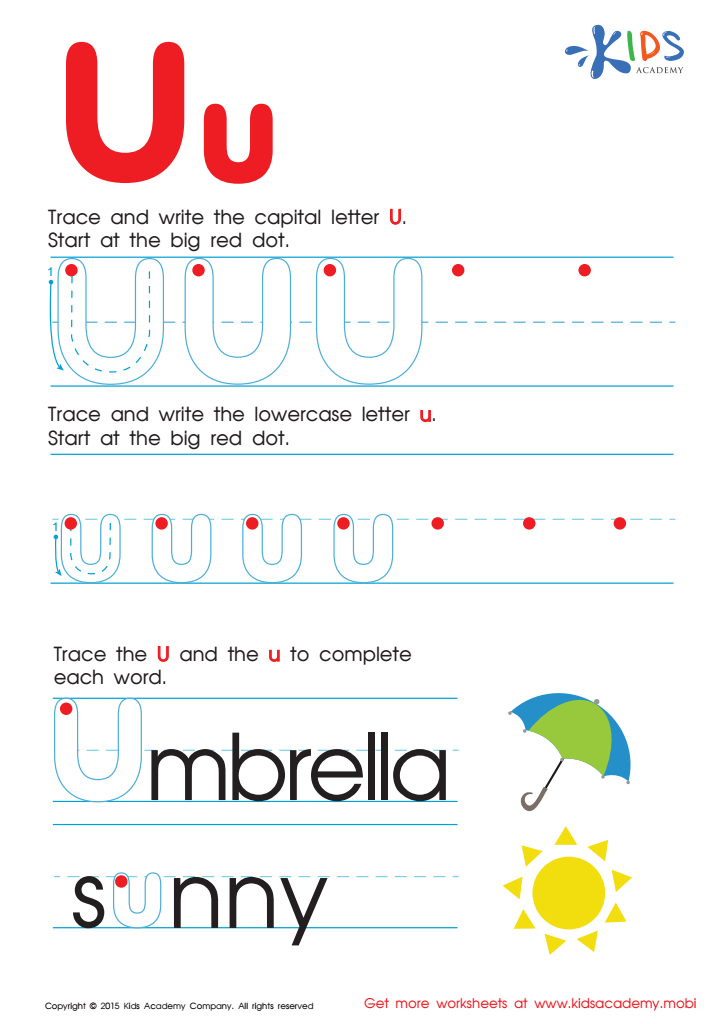
Letter U Tracing Page
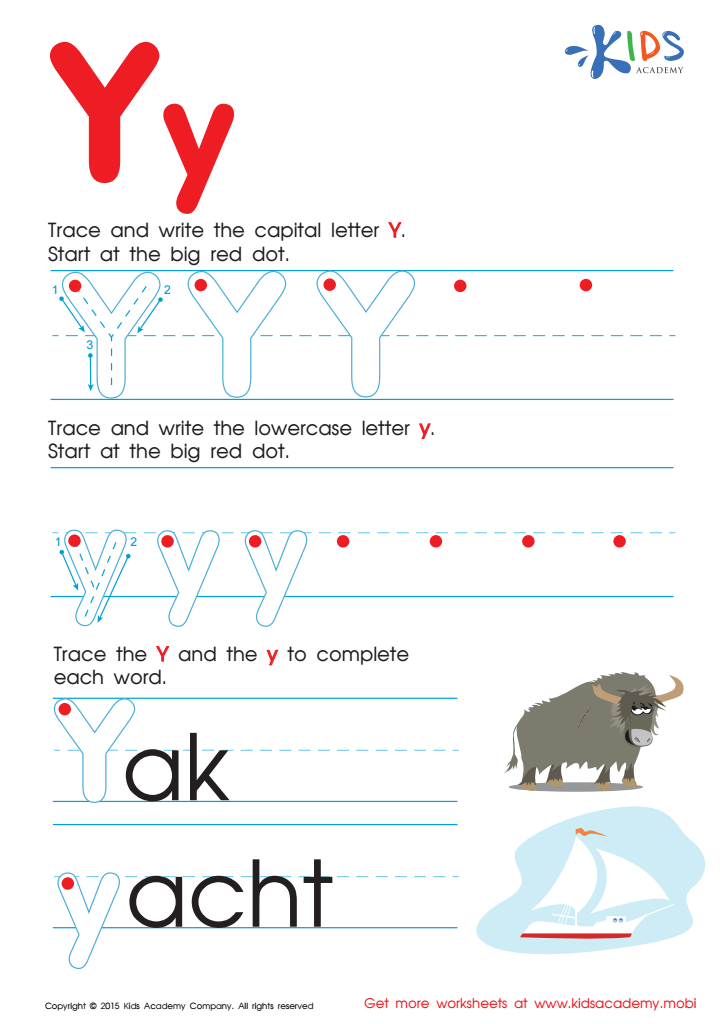
Letter Y Tracing Page
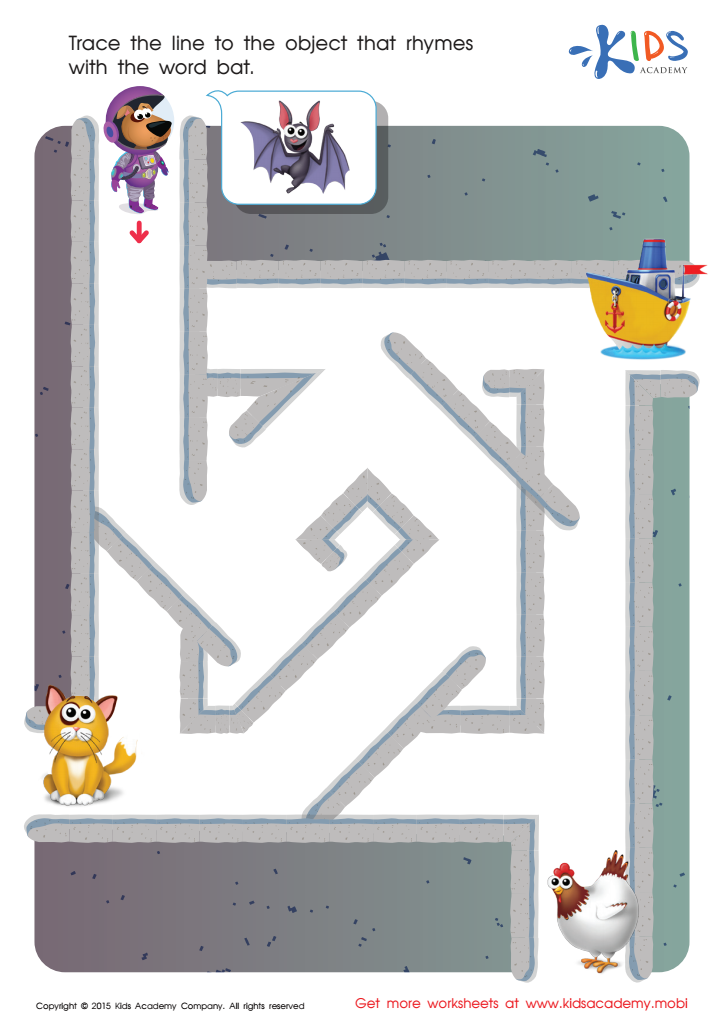
Bat Rhyming Words Worksheet
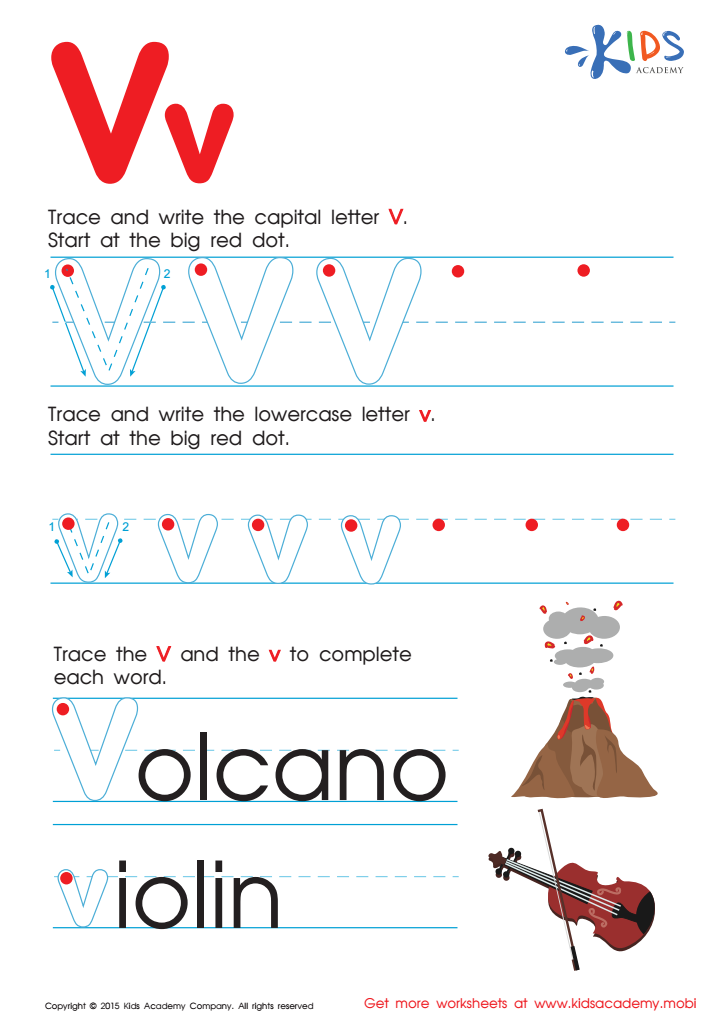
Letter V Tracing Page



.jpg)




Handwriting practice is crucial for children aged 3-7, as it bridges cognitive development, fine motor skills, and literacy. During these formative years, children's brains are incredibly receptive to learning, and by mastering handwriting, they build a foundation for effective communication skills. When children engage in handwriting activities, they hone their fine motor skills, crucial for tasks like buttoning clothes, using utensils, and other daily skills.
Moreover, handwriting has significant implications for academic success. Children who are proficient in writing by hand can express their thoughts more clearly, which fosters better comprehension and retention. Practice helps them develop muscle memory, leading to improved speed and fluency in writing.
Additionally, handwriting practice nurtures creativity, as children express their ideas through writing and drawing. In an age dominated by keyboards and touchscreens, preserving the art of handwriting prepares children for a balanced skill set.
Parents and teachers should care because handwriting is not just about learning letters; it is about developing a lifelong ability to communicate effectively, think creatively, and express oneself confidently. By encouraging consistent handwriting practice, adults play a pivotal role in enhancing their child’s cognitive and motor development, thus setting the stage for their overall academic success.








