Money counting skills Extra Challenge Worksheets for Ages 3-7
3 filtered results
-
From - To
Boost your child's confidence with our Money Counting Skills Extra Challenge Worksheets designed for ages 3-7. These engaging worksheets offer a variety of fun, interactive exercises that help young learners develop crucial money counting skills. Each activity reinforces concepts such as identifying coins, understanding their values, and performing basic addition. Perfect for extra practice at home or in the classroom, these worksheets provide a stimulating environment for children to advance their math skills. Created by educational experts, our materials ensure a balance between challenge and fun, making learning about money an enjoyable experience for little ones. Transform learning into an adventure today!
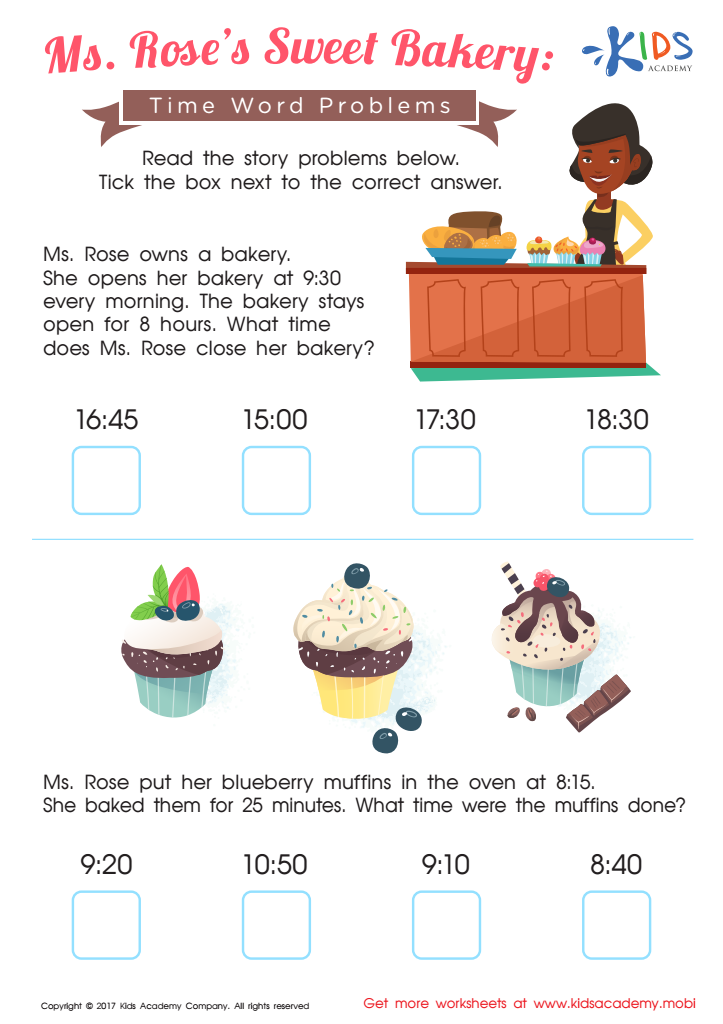
Ms. Roseв's Sweet Bakery Time Worksheet
 Assign to My Students
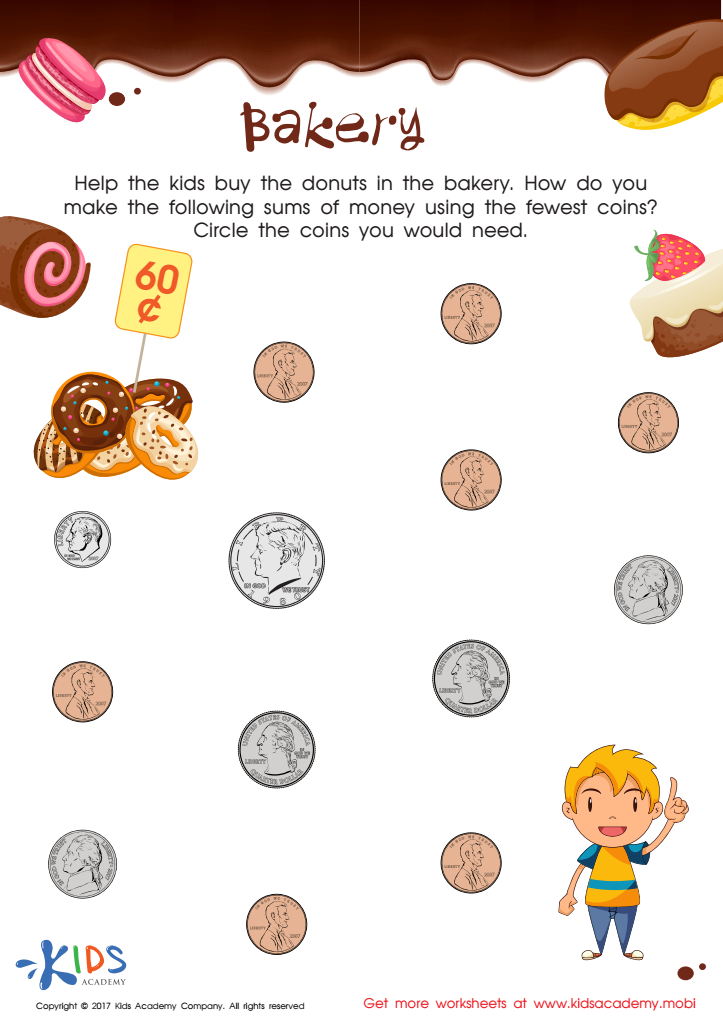
Counting Coins Worksheet
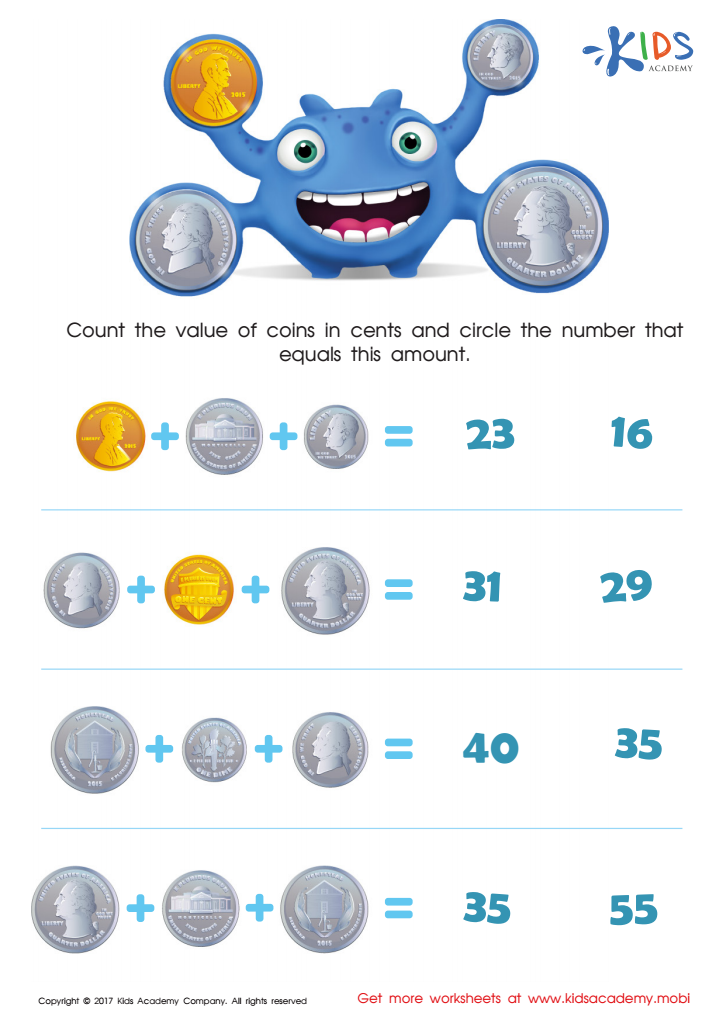
Counting the Coins Money Worksheet







Parents and teachers should care about money counting skills in early childhood as it lays the foundation for essential life skills. At ages 3-7, children are in a crucial developmental stage, where they effortlessly absorb new concepts. Introducing money counting encourages mathematical thinking and number recognition, enhancing their basic arithmetic abilities such as addition and subtraction.
Moreover, money-related activities help children understand value, making abstract concepts more tangible. When children physically handle coins and bills, they learn to recognize denominations and comprehend the concept of exchange, which fosters financial literacy from a young age.
These activities also improve fine motor skills and hand-eye coordination through actions like sorting and handling coins. Additionally, learning about money encourages problem-solving and critical thinking as children figure out how to make different amounts or calculate change.
Socially, involving children in simple transactions, like pretending to pay for groceries, promotes responsibility and independence. Integrating money counting into playtime makes learning enjoyable and relevant, forming a positive attitude towards education.
By laying this groundwork early, parents and teachers prepare children for future financial responsibilities, setting them on a path towards becoming financially savvy adults who can manage money wisely and make informed economic decisions.








