
Story sequencing Extra Challenge Worksheets for Ages 3-7
5 filtered results
Difficulty Level
Grade
Age
-
From - To
Subject
Activity
Standards
Enhance your child's comprehension and narrative skills with our Story Sequencing Extra Challenge Worksheets, designed for ages 3-7. These engaging worksheets help young learners organize events and grasp the order of stories, fostering critical thinking and creativity. Perfect for classroom use or home practice, they feature colorful illustrations and age-appropriate tasks that captivate children’s attention. Our challenges encourage kids to retell stories, predict outcomes, and create their own sequences, reinforcing essential literacy skills. With a variety of themes, these worksheets cater to diverse interests and learning styles, making story sequencing fun and educational. Watch your child excel in storytelling today!
Favorites
With answer key
Interactive
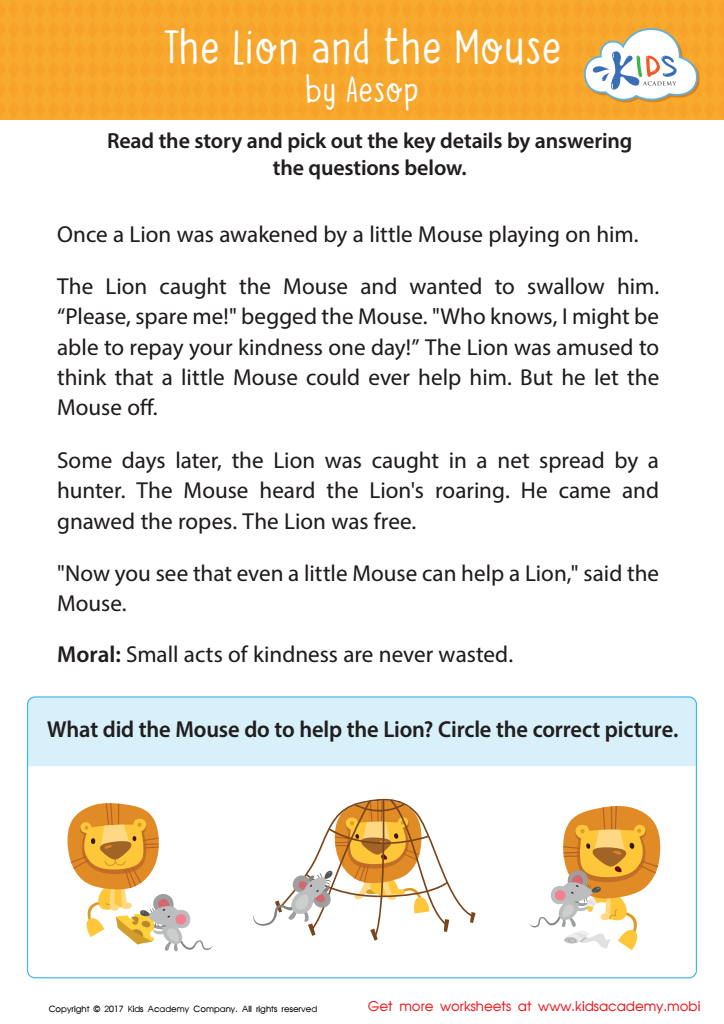
The Lion and The Mouse Sequencing Worksheet
Read the fable "The Lion and the Mouse" and test your child's comprehension skills! Answer the question by selecting the image that best matches the answer. It's a great way to practice reading comprehension.
 Assign to My Students
The Lion and The Mouse Sequencing Worksheet
Worksheet
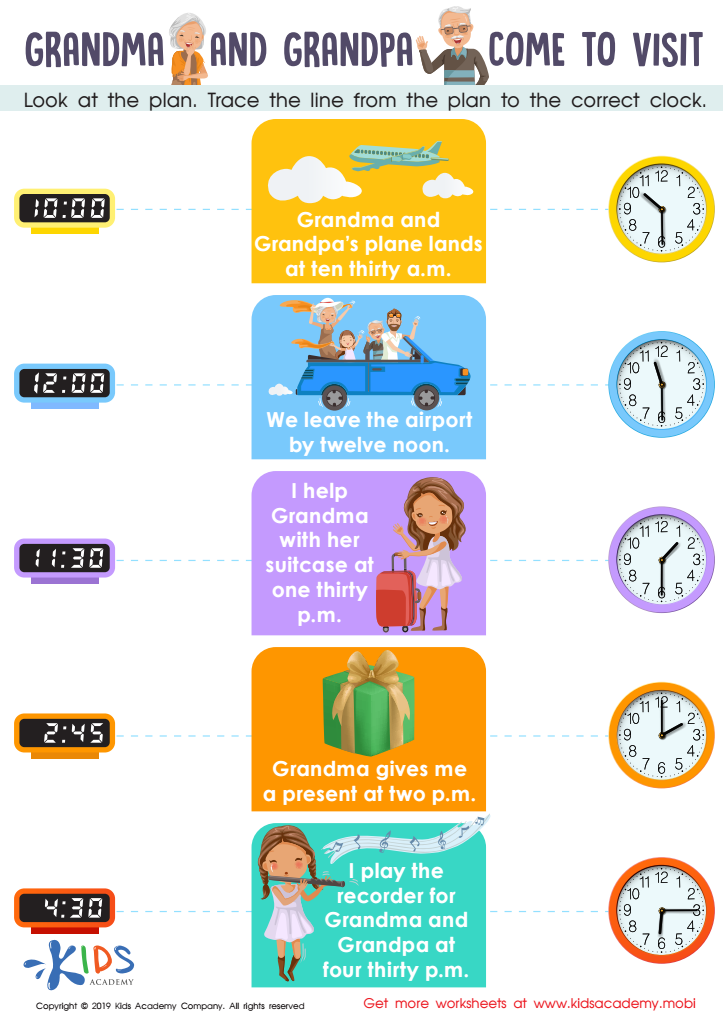
Grandpa and Grandma Come to Visit Worksheet
Have your kids learn about time using this worksheet. It contains pictures, accompanying texts and a clock, which you can use to help them trace the plan. Grandparents' visits and trips to their house are the perfect opportunity to practice this skill. Talk to your kids about the plan and watch them trace it to the correct clock.
Grandpa and Grandma Come to Visit Worksheet
Worksheet
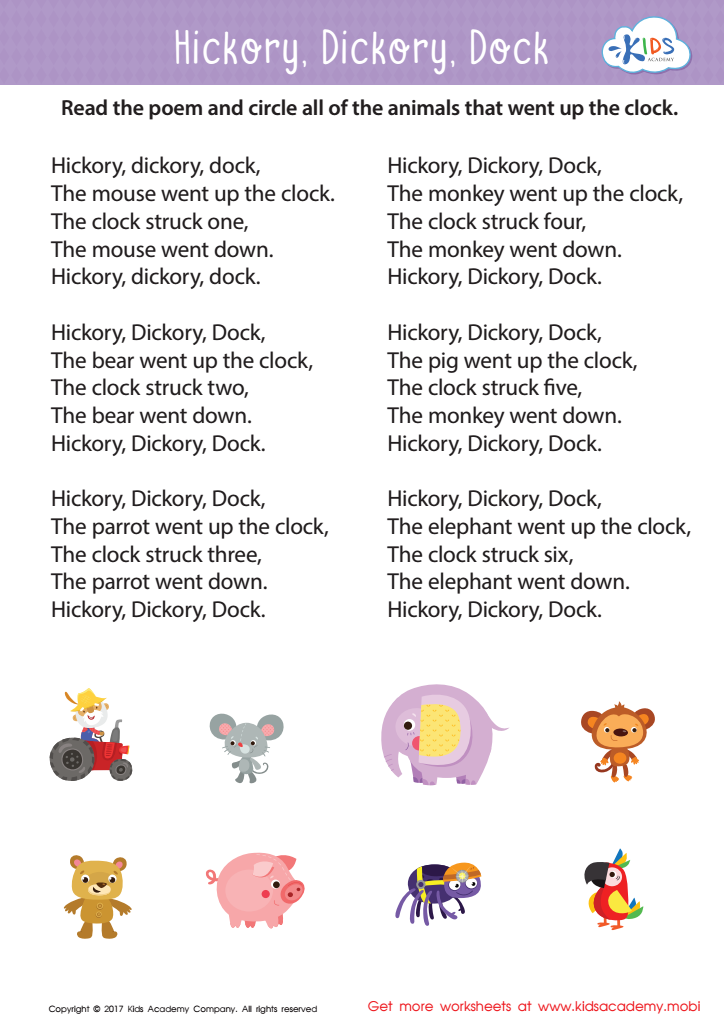
Hickory Dickory Dock Sequencing Worksheet
Help your child boost their reading skills with this fun Hickory Dickory Dock sequencing worksheet! They'll read and identify the animals in the right order, strengthening their story sequencing and comprehension skills.
Hickory Dickory Dock Sequencing Worksheet
Worksheet
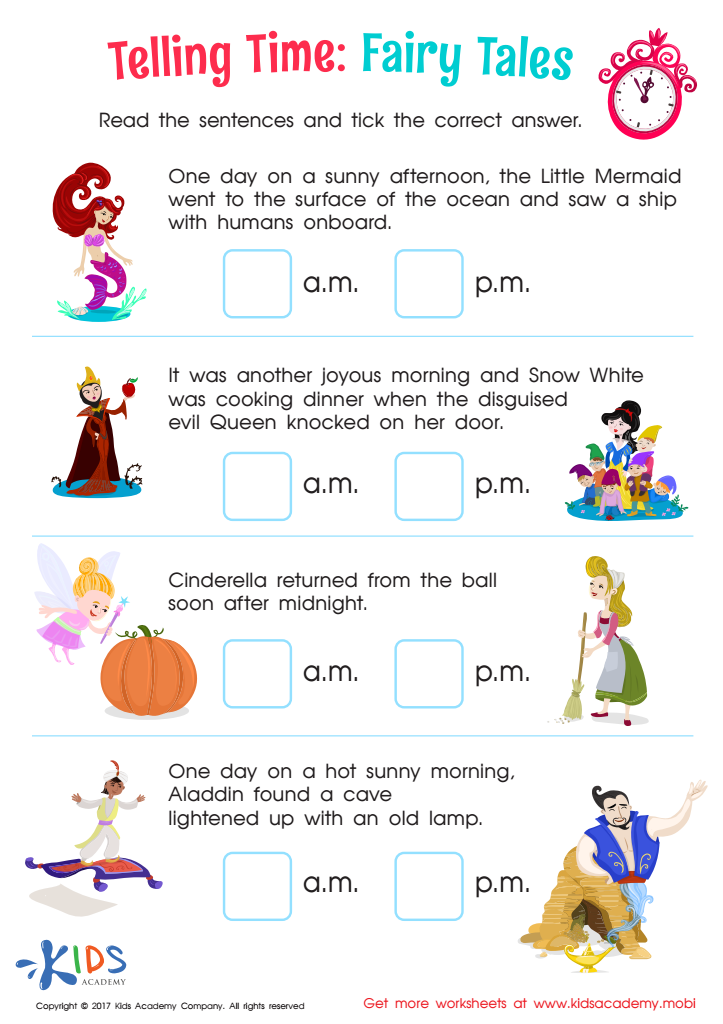
Telling Time: Fairy Tales Worksheet
Bring your child's imagination to life with classic fairy tales! This colorful telling time worksheet has it all: The Little Mermaid, Cinderella, and more! Plus, your child will have fun learning to distinguish a.m. from p.m. with this charming worksheet.
Telling Time: Fairy Tales Worksheet
Worksheet
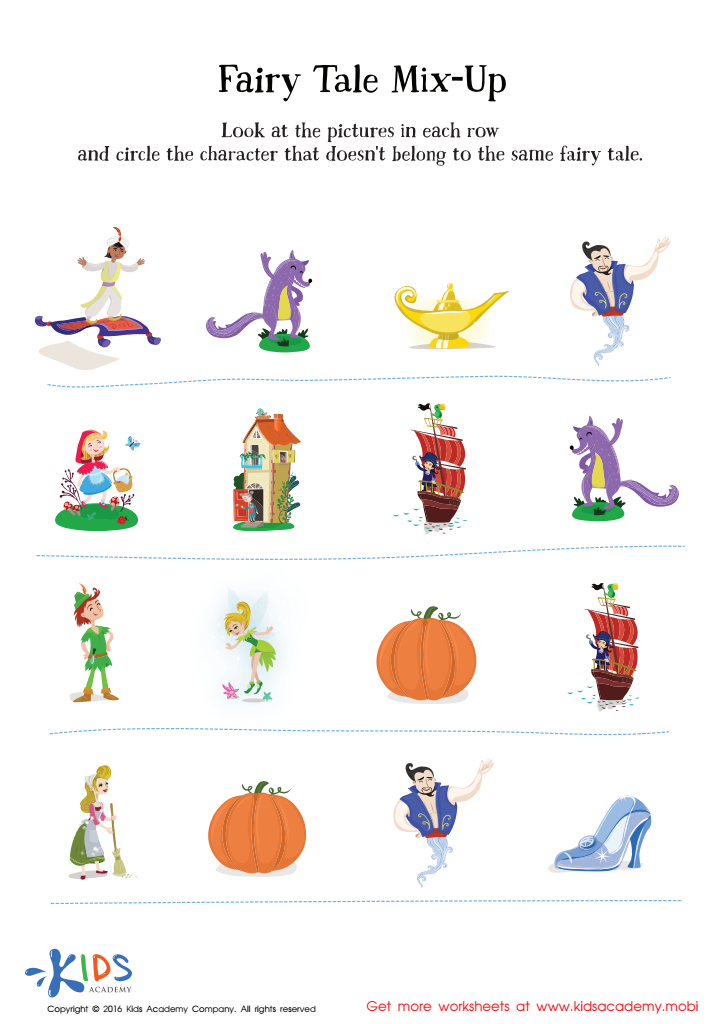
Fairy Tale Worksheet: Story Mix Up
Kids love fairy tales! Encourage your child to engage with their favorite stories using our vibrant worksheet. It'll help sharpen cognitive and comprehension skills, build problem-solving skills, and strengthen classification skills. Beforehand, read or watch the fairy tales and talk about each one's characters and elements. Your child will love the story and time spent together! Print the worksheet and get ready for a magical experience.
Fairy Tale Worksheet: Story Mix Up
Worksheet
Join Kids Academy for Free
Who is primarily going to use this learning content?








Story sequencing is a vital skill for young children aged 3-7 as it lays the foundation for literacy and cognitive development. Parents and teachers should prioritize this extra challenge because it encourages comprehension, logical thinking, and narrative skills. By engaging children in story sequencing, they learn to identify the beginning, middle, and end of a story, enhancing their understanding of narrative structure. This skill also fosters creativity, allowing children to create their own stories while practicing organization.
Furthermore, sequential thinking is inherent in problem-solving. Understanding how events are connected helps children make sense of the world around them and enhances their critical thinking abilities. It also promotes memory retention, as children recall the order of events in stories, improving their overall cognitive function.
Additionally, story sequencing activities can be interactive and fun, making learning enjoyable. They encourage collaborative learning, as students often share their thoughts and sequences with peers, fostering communication skills. For parents, participating in these activities strengthens their bond with children and encourages a love for reading.Collectively, emphasizing story sequencing enables children to build essential skills that are foundational for future academic success and lifelong learning.








