
Fraction visualization Extra Challenge Geometry Worksheets for Ages 3-7
3 filtered results
Difficulty Level
Grade
Age
-
From - To
Subject
Activity
Standards
Discover our "Fraction Visualization Extra Challenge Geometry Worksheets" designed specifically for children aged 3-7! These engaging and dynamic worksheets promote foundational math skills by introducing young learners to the concept of fractions through colorful visuals and interactive activities. Each worksheet encourages kids to identify, compare, and visualize fractions in fun ways, enhancing their understanding of shape and space. Perfect for teachers and parents looking to boost critical thinking and problem-solving skills in a playful manner, these worksheets provide an extra challenge to build confidence in math. Explore the exciting world of fractions and geometry with our thoughtfully crafted resources!
Favorites
With answer key
Interactive
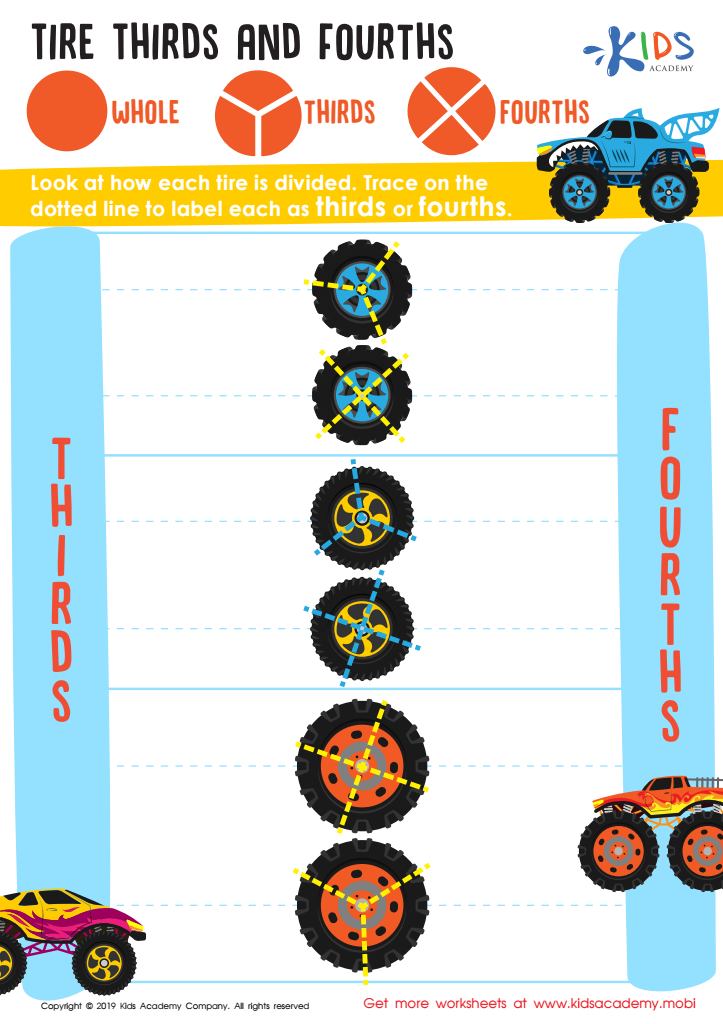
Tire Thirds and Fourths Worksheet
Learning geometry is key in your child's education. Have them identify and name shapes cut into 2, 3 and 4 parts. Test their knowledge with this worksheet - trace the dotted line to label each as third or fourth. Encourage them to keep learning!
 Assign to My Students
Tire Thirds and Fourths Worksheet
Worksheet











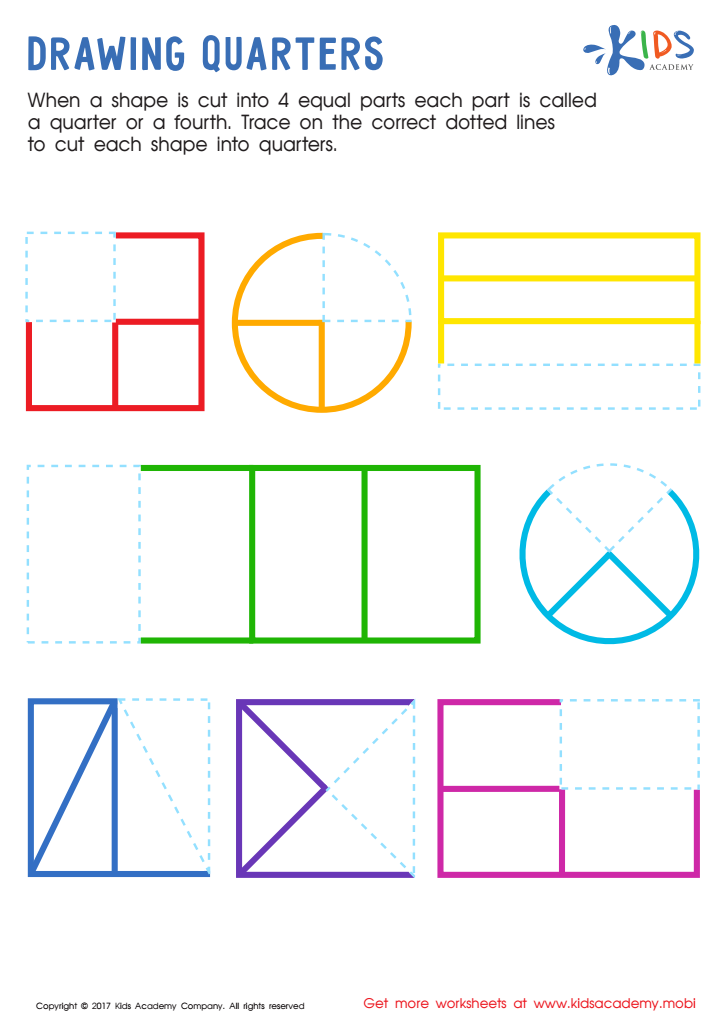
Drawing Quarters Worksheet
Help your kids divide shapes into quarters! Have them trace dotted lines to cut each shape into 4 equal parts. Each of the 4 parts is called a quarter or a fourth. This worksheet will help kids learn more about dividing shapes into four equal parts.
Drawing Quarters Worksheet
Worksheet
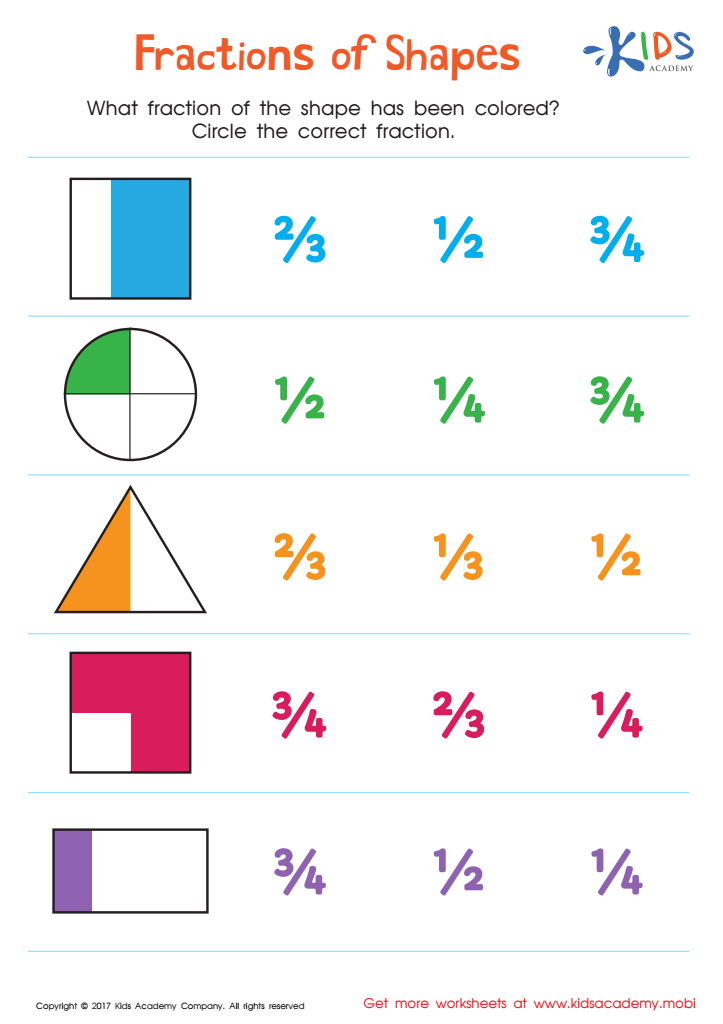
Fractions of Shapes: Math Concept Worksheet
Fractions can be tricky, but with pictures to illustrate them, they become much easier to understand. Our fractions of shapes worksheet is a great way to help children visualize fractions and gain a better understanding of them.
Fractions of Shapes: Math Concept Worksheet
Worksheet
Join Kids Academy for Free
Who is primarily going to use this learning content?








Fraction visualization in geometry is essential for children ages 3-7 as it lays the foundation for math skills they will use throughout their lives. At this young age, children are naturally curious and eager to explore shapes and relationships, making it the perfect time to introduce them to concepts such as fractions. By visualizing fractions, children can grasp the idea of part-whole relationships, enabling them to develop a deeper understanding of numbers and their applications.
Using visual aids like colorful shapes, picture cards, or interactive games makes learning fun while fostering critical thinking and problem-solving skills. This approach helps children see fractions not just as abstract numbers but as tangible parts of their world, enhancing their ability to comprehend more complex mathematical concepts later on.
Moreover, understanding fractions is foundational for subjects like measurement, ratios, and even basic algebra. Parents and teachers should prioritize fraction visualization because it encourages active participation and exploration, thereby instilling a love for math. Early exposure to these concepts ensures that students build confidence and a solid mathematical mindset, better preparing them for academic success and everyday problem-solving challenges in the future. Investing in these early skills equips children to face more complex mathematical challenges as they grow.








