Shape Recognition Extra Challenge Math Worksheets for Ages 3-7
12 filtered results
-
From - To
Discover our Shape Recognition Extra Challenge Math Worksheets designed specifically for children aged 3-7! These engaging, interactive worksheets provide young learners with the opportunity to enhance their shape recognition skills through fun and challenging activities. With a variety of shapes including circles, squares, triangles, and more, children will explore real-world applications while developing their critical thinking abilities. Ideal for preschool and early grade students, these worksheets make learning about shapes exciting and memorable. Perfect for at-home learning or classroom settings, our resources help bolster foundational math skills while fostering a love for learning. Join the fun and watch your child's confidence grow!
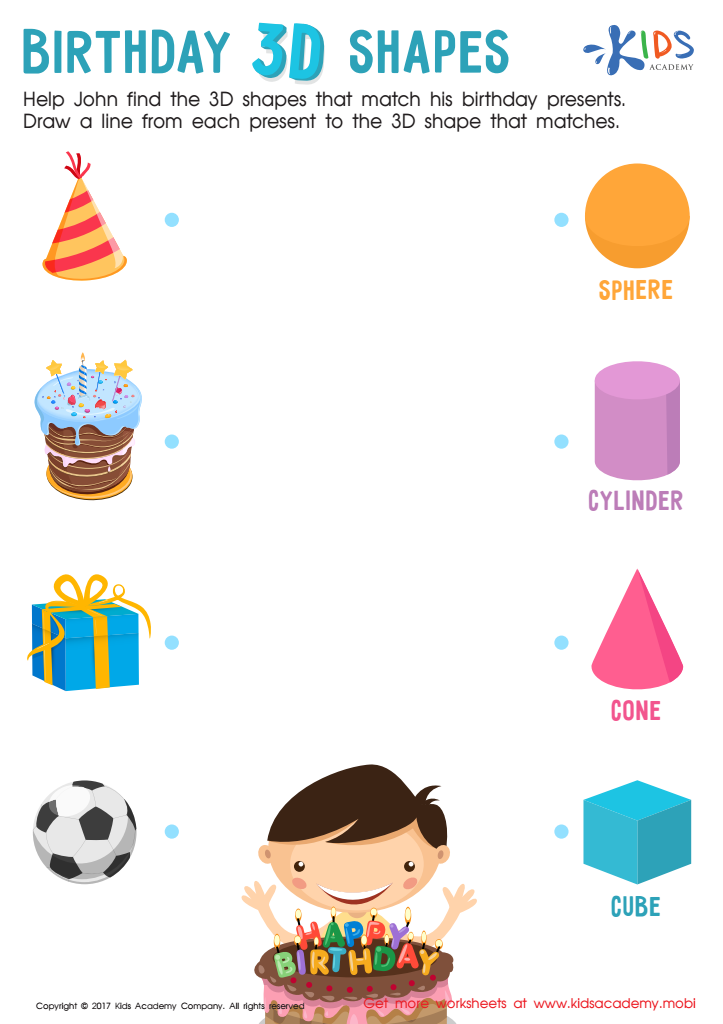
Birthday 3D Shapes Worksheet
 Assign to My Students
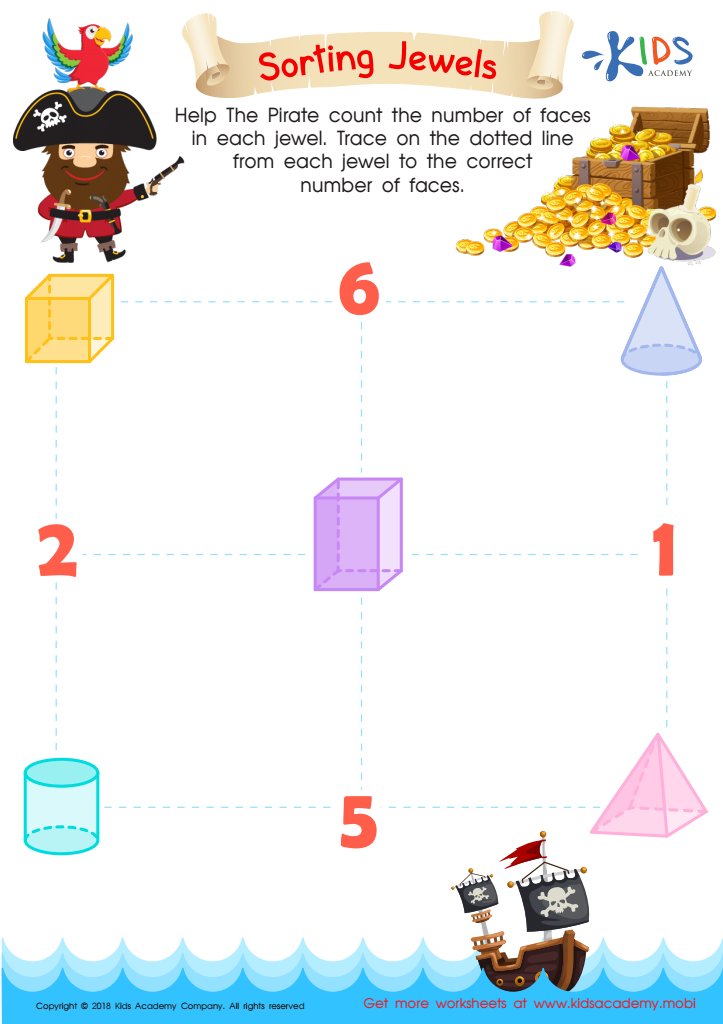
Sorting Jewels Worksheet
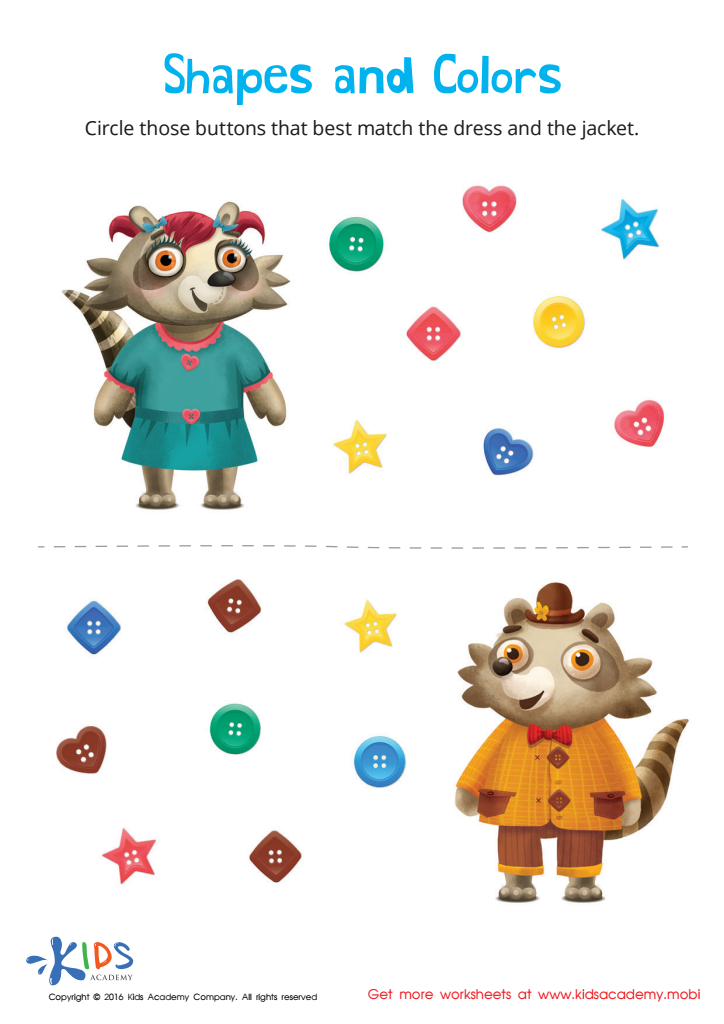
Matching: Shapes and Colors Worksheet
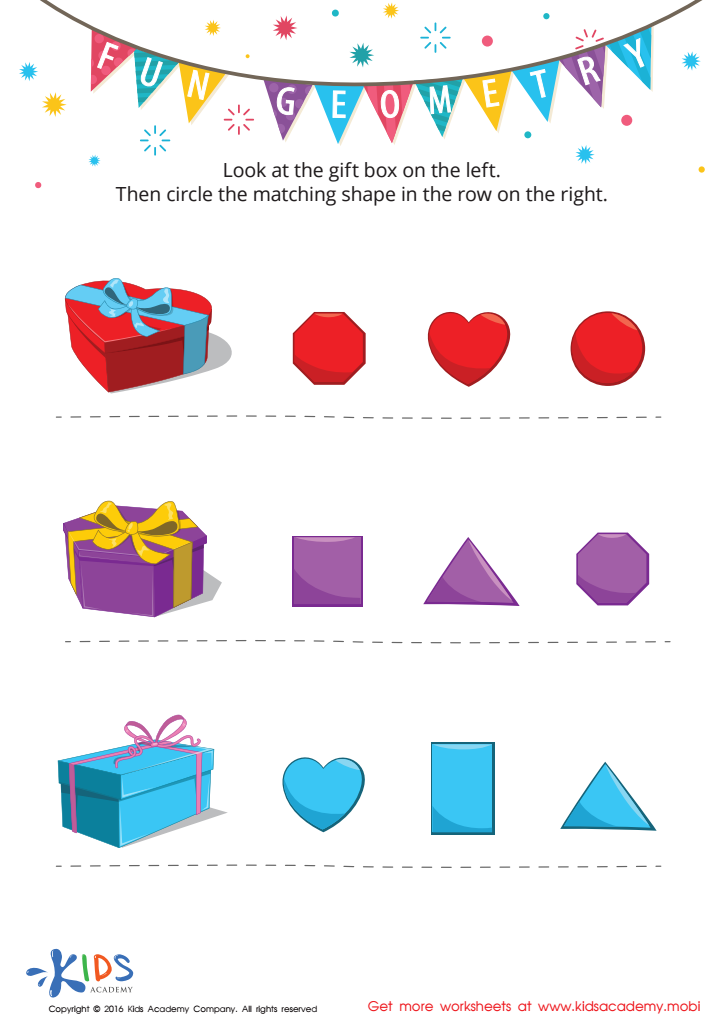
Fun Geometry Worksheet
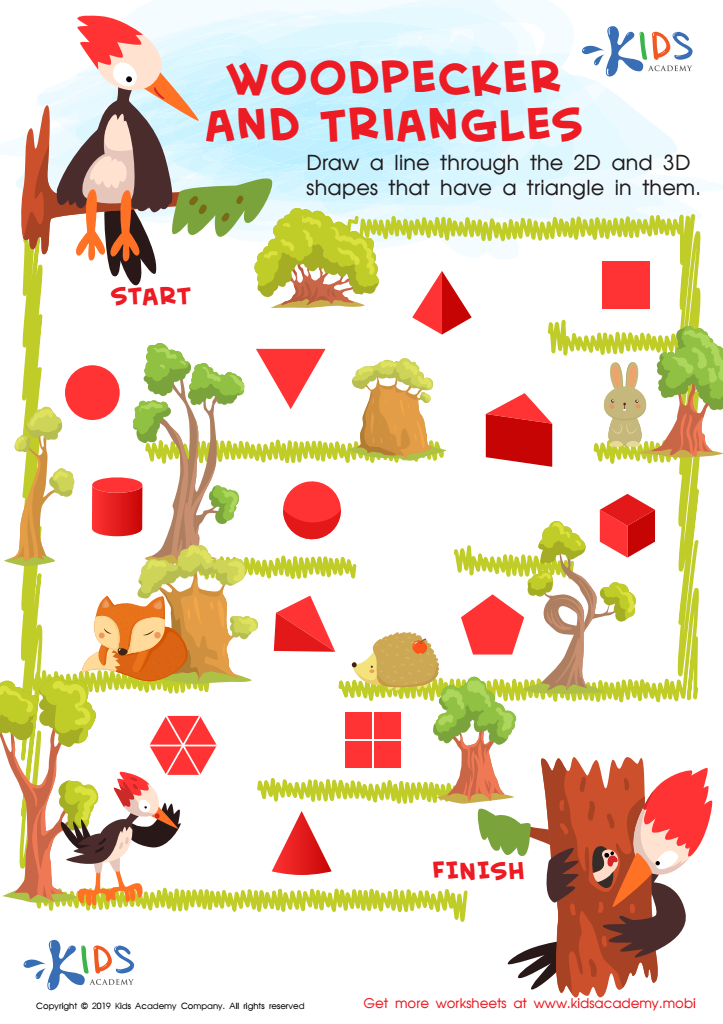
Woodpecker and Triangles Worksheet
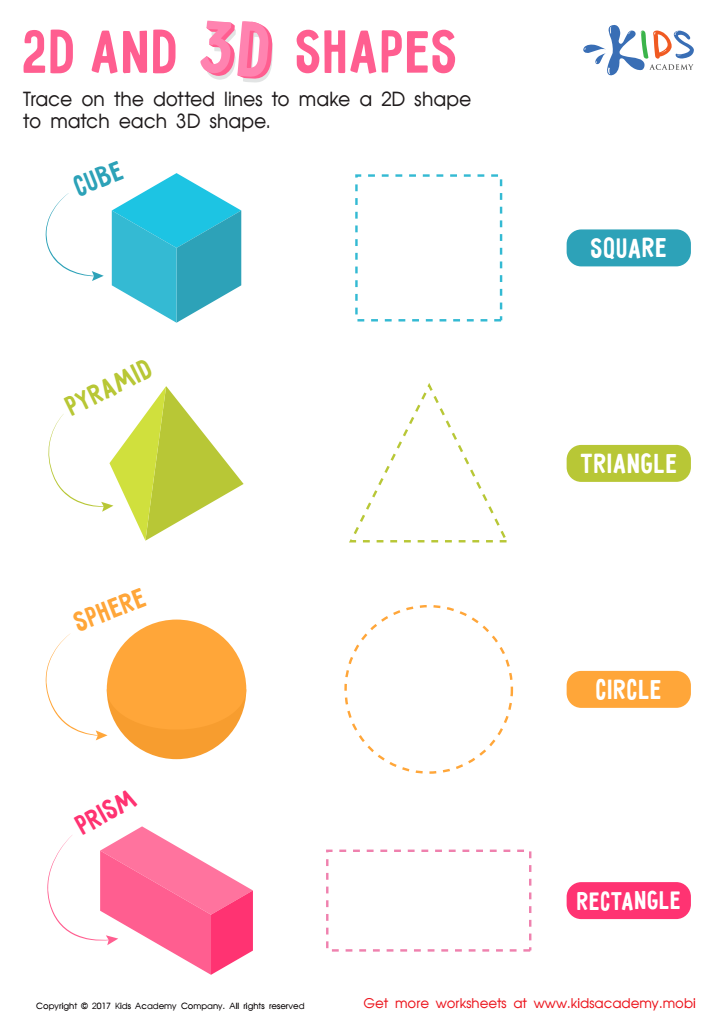
2D and 3D Shapes Worksheet
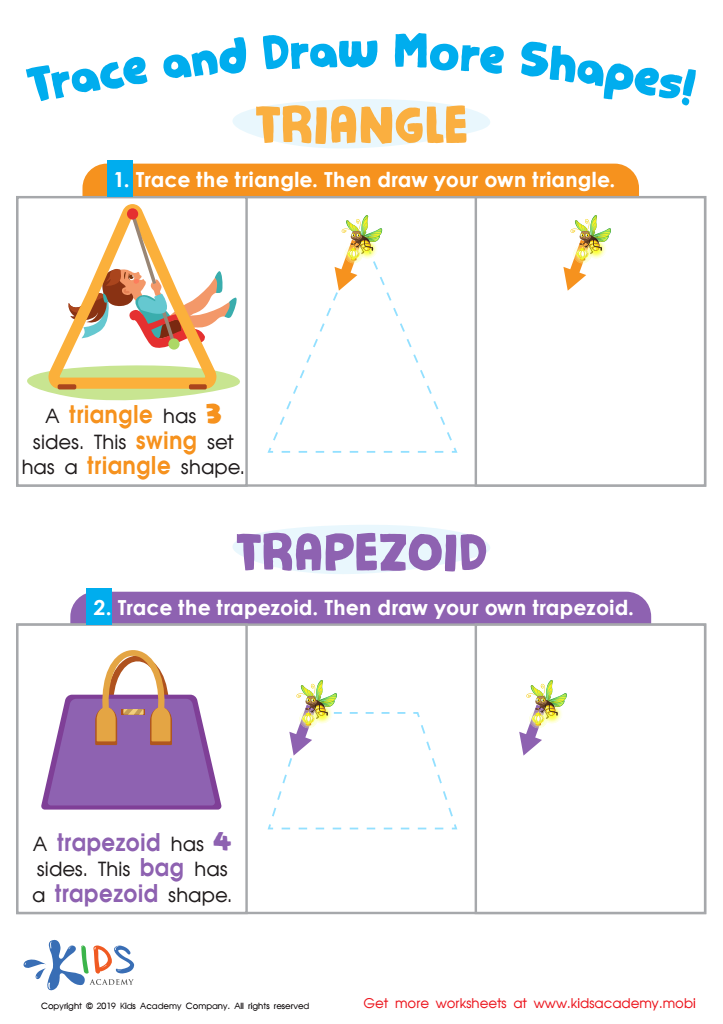
Trace and Draw More Shapes Worksheet
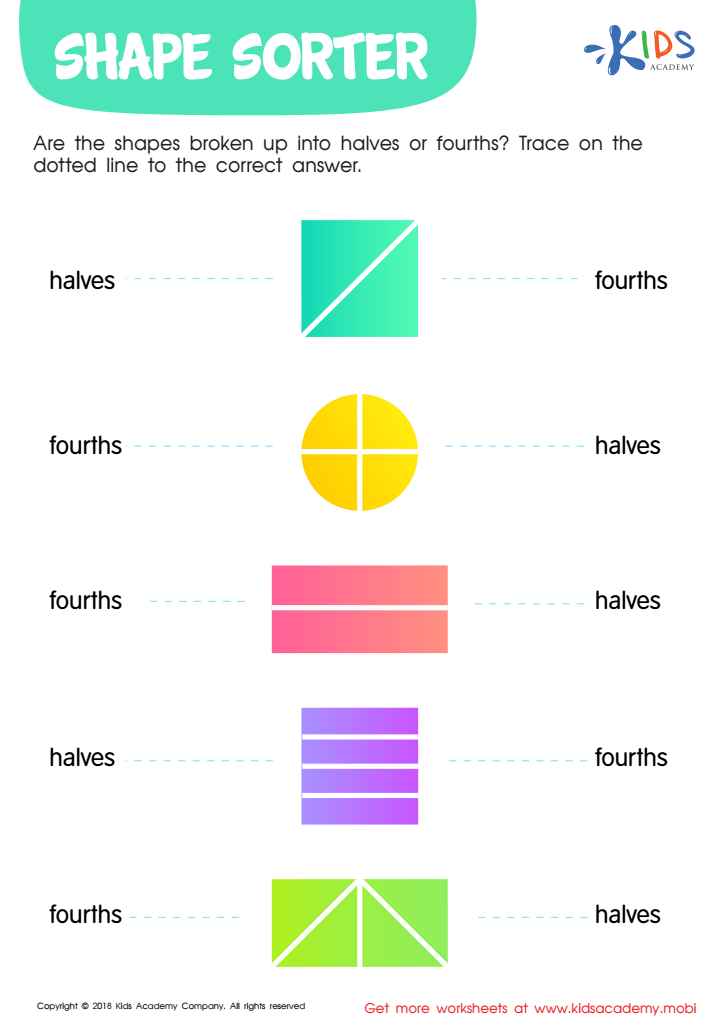
Shape Sorter Worksheet
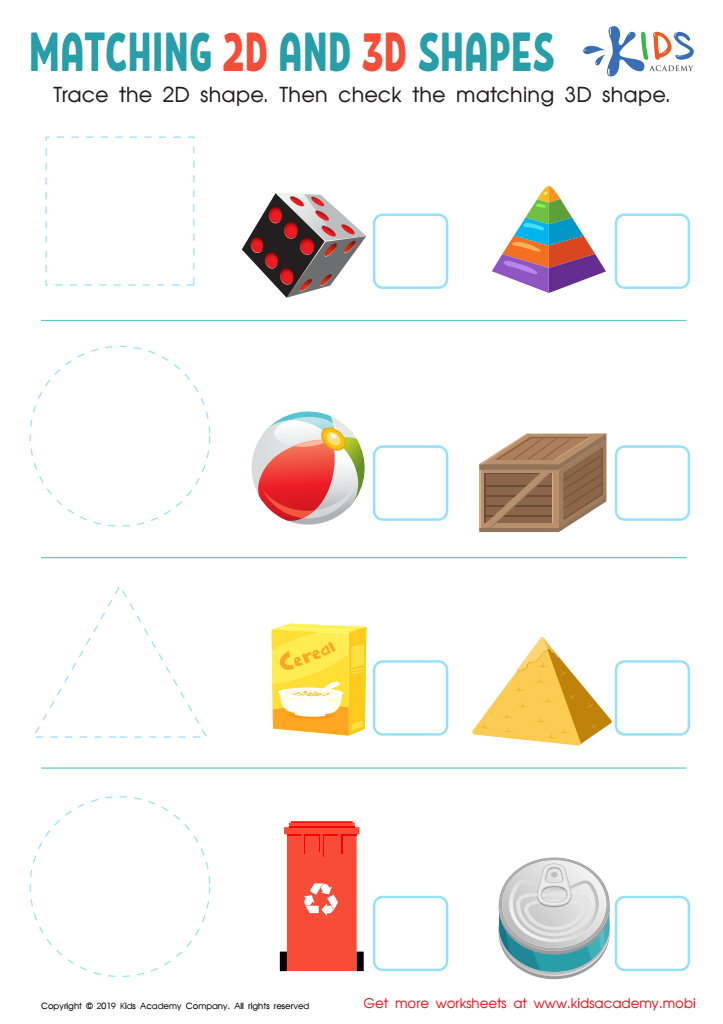
Matching 2D and 3D Shapes Worksheet
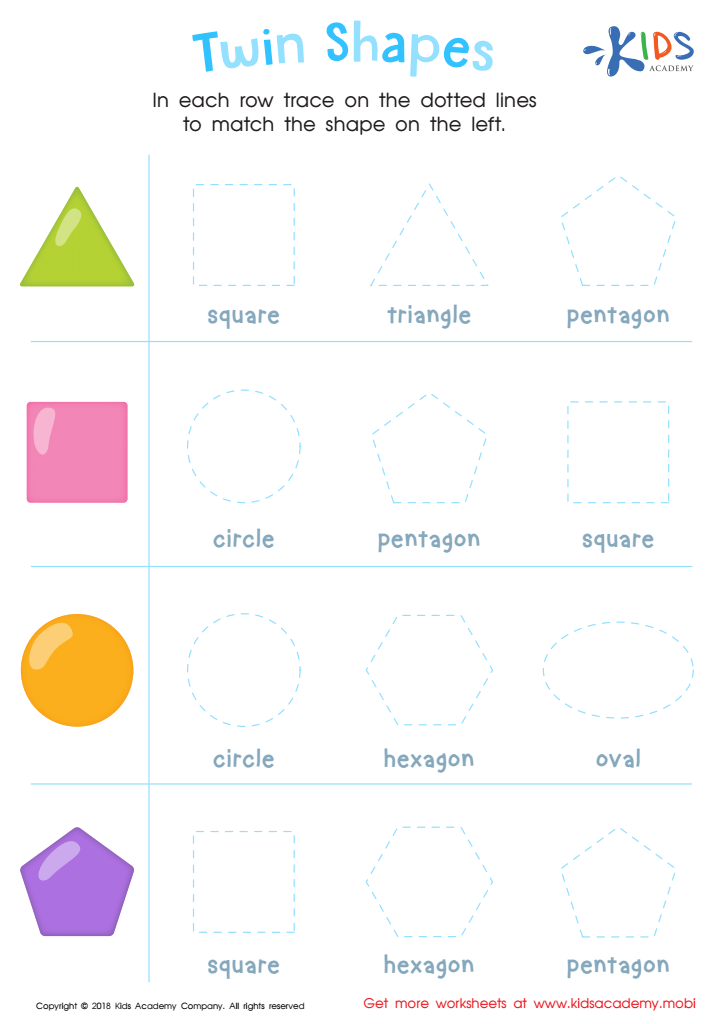
Twin Shapes Dot-to-Dot Worksheet
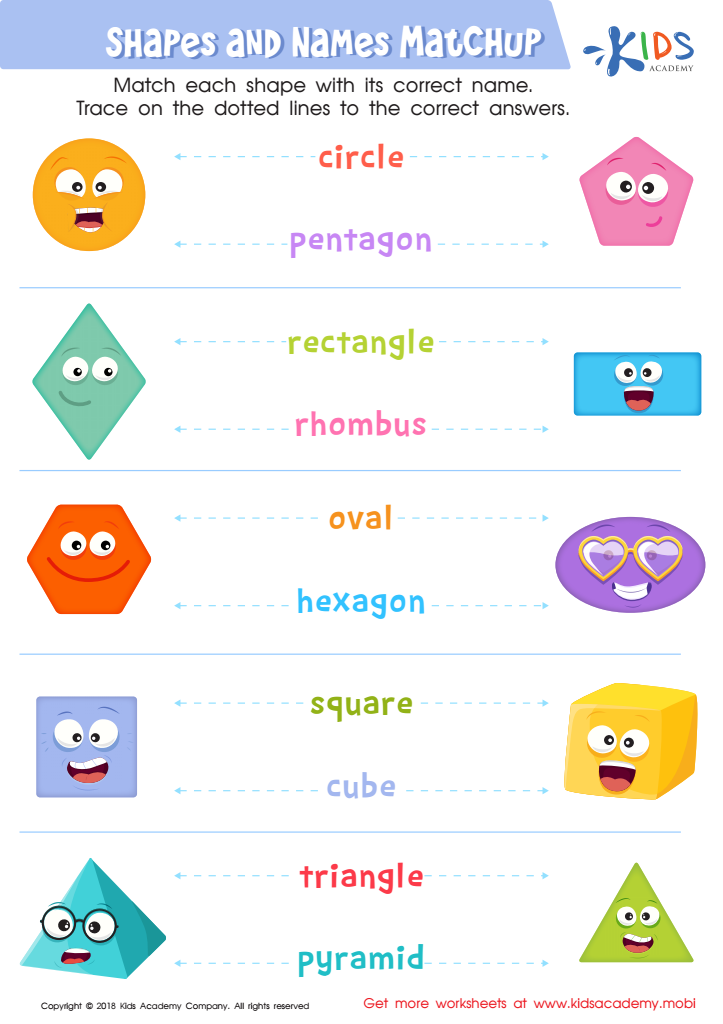
Shapes and Names Matchup Worksheet
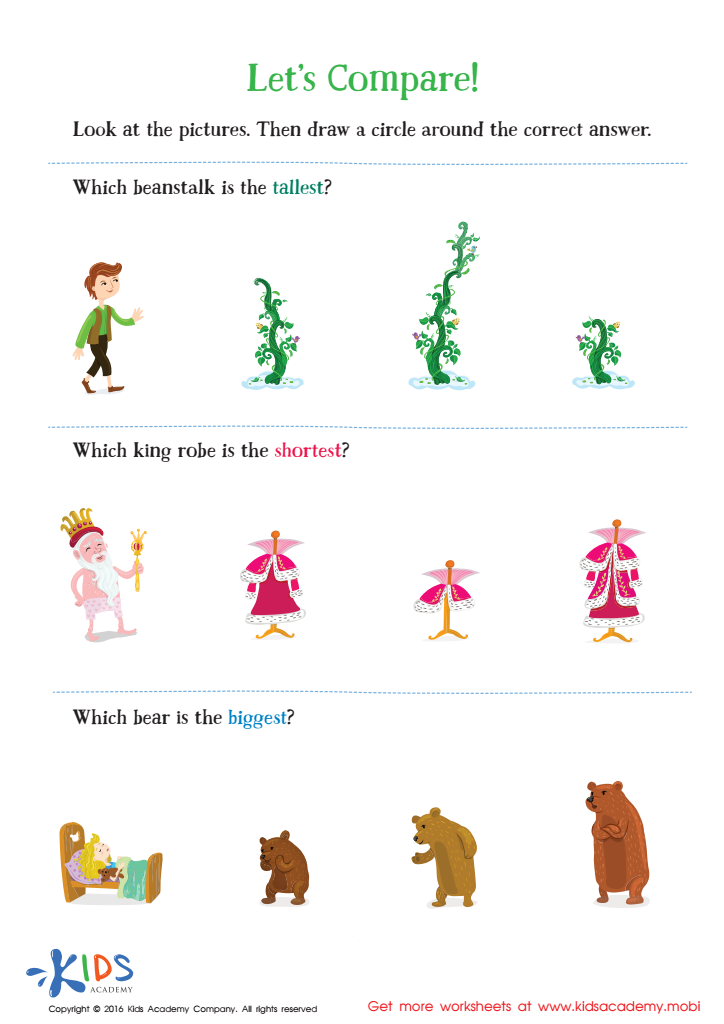
Fairy Tale Worksheet: Let's Compare


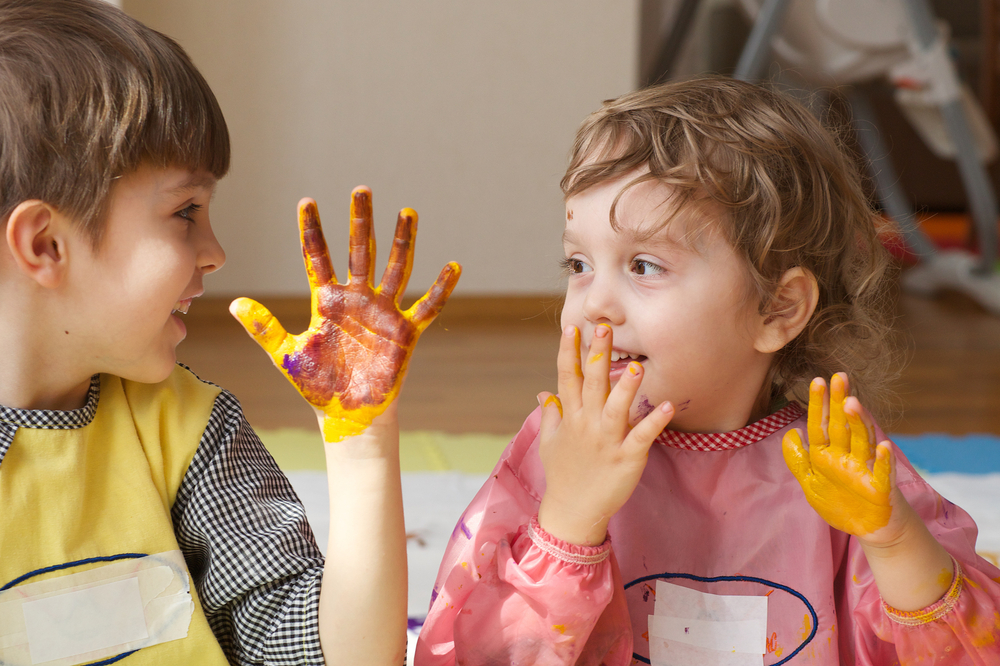





Shape Recognition Extra Challenge Math for Ages 3-7 is a crucial development tool for young learners, influencing cognitive, social, and motor skills. First, shape recognition lays the foundational skills for mathematics. Understanding shapes helps children grasp concepts such as size, volume, and spatial awareness, which are important for future mathematical learning. Engaging in shape recognition activities not only fosters analytical skills but also enhances problem-solving abilities.
Moreover, these challenges promote fine motor skills as children manipulate shapes—cutting, drawing, or sorting them—while developing hand-eye coordination. This simultaneous engagement of skills supports holistic growth.
Additionally, participating in shape recognition activities encourages collaboration and communication. When children work together on puzzles, games, or discussions centering around shapes, they learn to express their thoughts and ideas, fostering social skills.
Lastly, incorporating varied challenges makes learning enjoyable and enriching. Parents and teachers should embrace Shape Recognition Extra Challenge Math as it not only prepares children for academic success but also nurtures a positive attitude towards learning. This innovative approach transforms educational experiences into fun, interactive opportunities, making it an essential aspect of early childhood education.