Time reading skills Extra Challenge Math Worksheets for Ages 3-7
5 filtered results
Difficulty Level
Grade
Age
-
From - To
Subject
Activity
Standards
Enhance your child's understanding of time with our engaging Extra Challenge Math Worksheets designed specifically for ages 3-7. These worksheets provide a fun and interactive way to develop essential time-reading skills through vibrant illustrations and age-appropriate activities. Your little learners will enjoy identifying clock faces, differentiating between hours and minutes, and practicing basic time-related concepts. These worksheets not only promote independent learning but also boost confidence in math skills. Perfect for both home and classroom settings, our materials ensure that children build a solid foundation in telling time while enjoying the learning process. Start the journey to mastery today!
Favorites
With answer key
Interactive
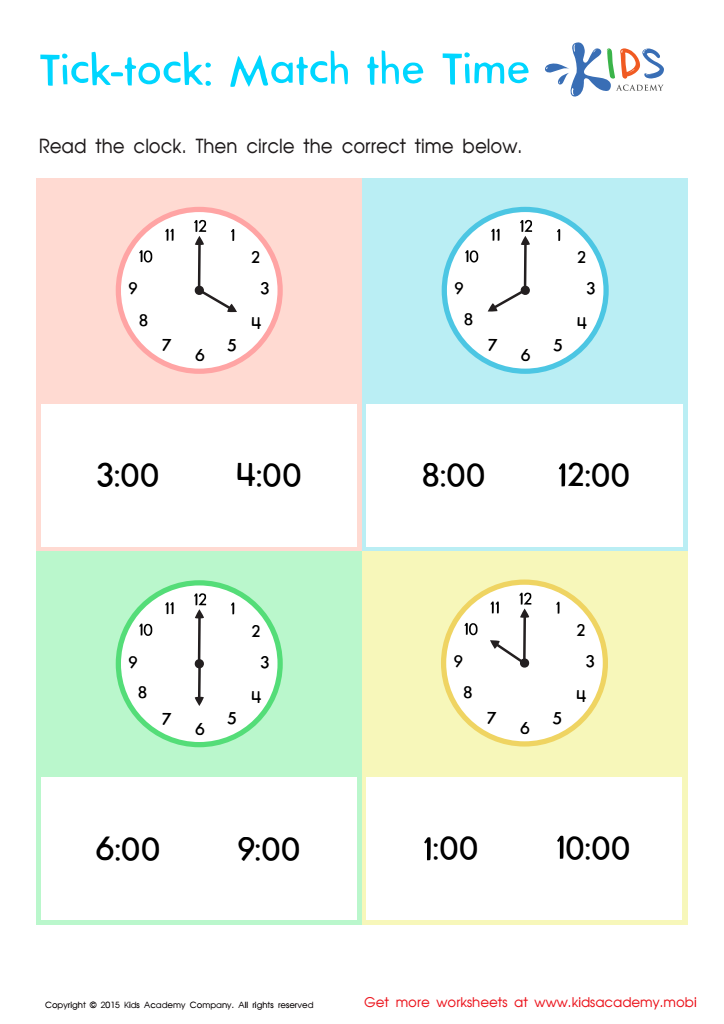
Telling The Time Worksheet: Part 4
Test your skills in telling the time! Circle the right time on 4 analog clock faces.
 Assign to My Students
Telling The Time Worksheet: Part 4
Worksheet
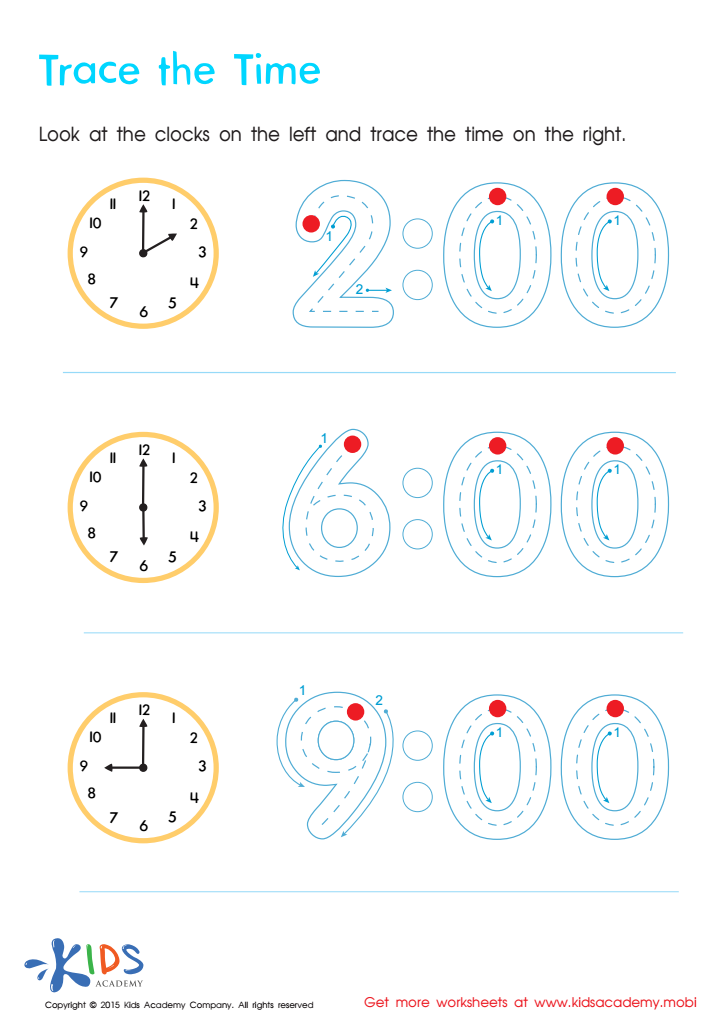
Telling The Time Worksheet: Part 2
Help your kids learn to tell the time with this free math worksheet from Kids Academy. Have them look at the clock faces and trace the time on the right - is it a full hour or half an hour? Get more practice with our wide selection of math worksheets for kindergarten.
Telling The Time Worksheet: Part 2
Worksheet
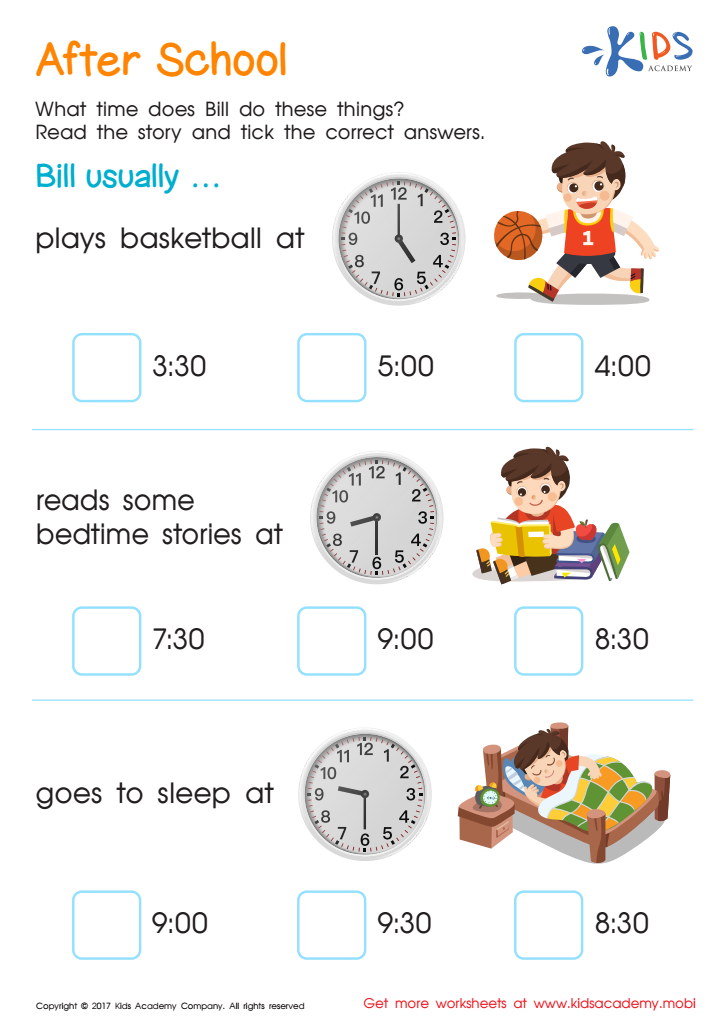
After School Time Printable
Meet Bill, a fun character who does the same things as all of us! This time-telling printable worksheet, 'After School', is an enjoyable way for your child to get familiar with Bill. It's a quick and cute activity to help understand the clocks and learn more about this new friend.
After School Time Printable
Worksheet
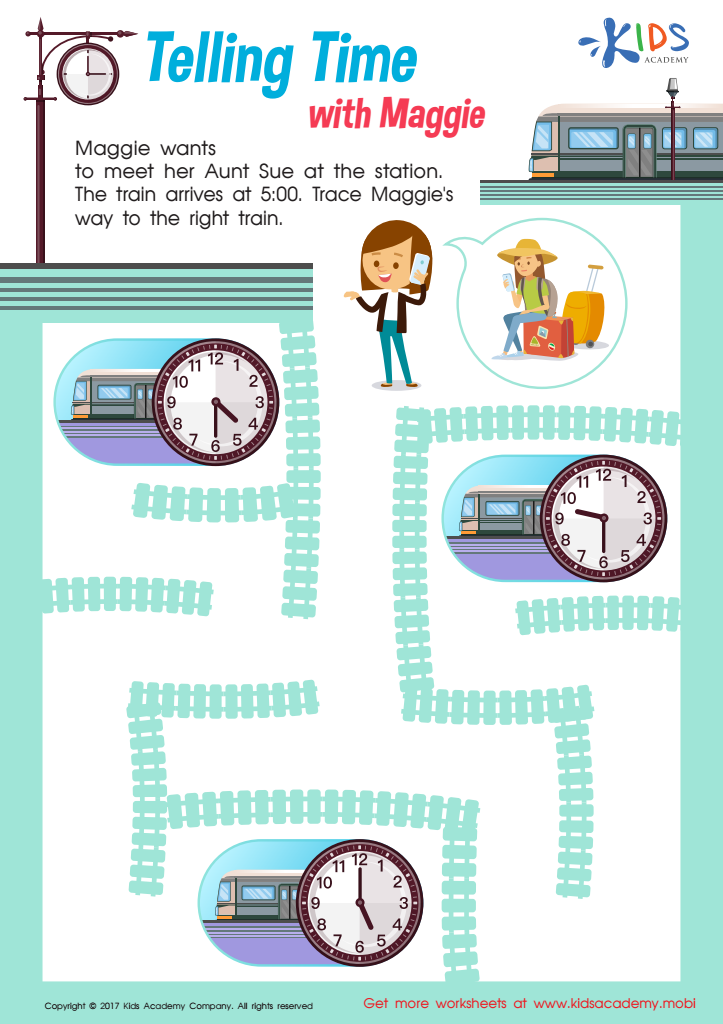
Telling Time With Maggie Time Worksheet
Help Maggie catch her train! Navigate the maze and read clocks to get her to her destination. Join her on a fun time-telling adventure with this puzzling worksheet. Your child will love it!
Telling Time With Maggie Time Worksheet
Worksheet
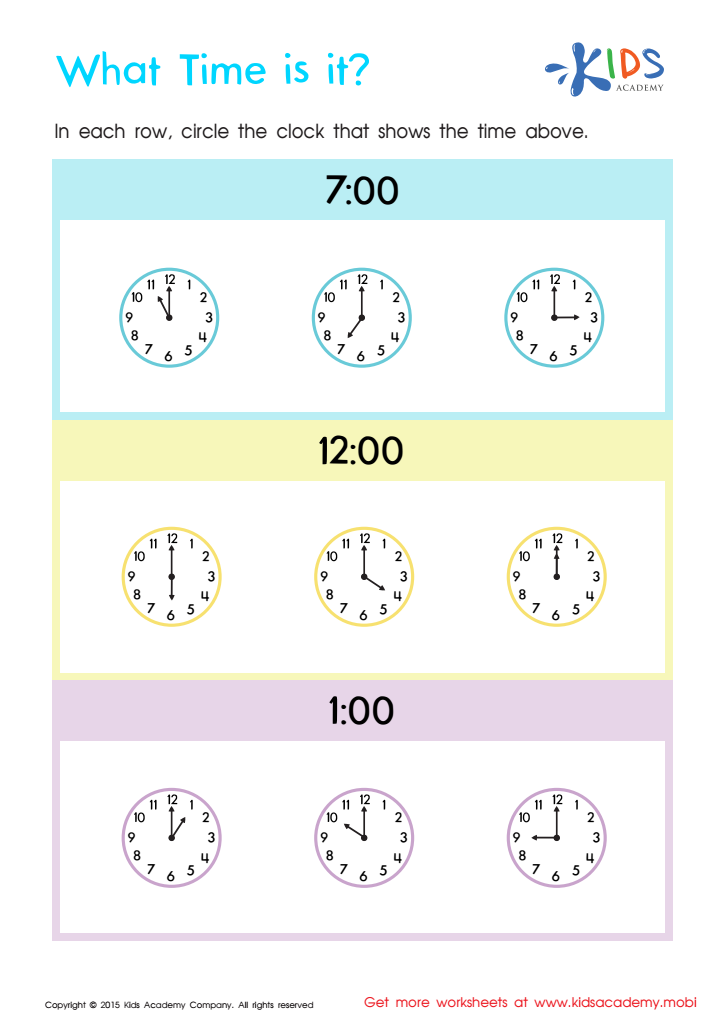
Telling The Time Worksheet: Part 3
Make learning to read clocks fun with our free printable worksheets! Have kids circle the clocks that show the time, remembering that the short hand is for hours and the long one is for minutes. For more worksheets, visit Kids Academy and explore the wonderful world of math with your little learners.
Telling The Time Worksheet: Part 3
Worksheet
Join Kids Academy for Free
Who is primarily going to use this learning content?








Parents and teachers should prioritize developing early reading and math skills, such as Time reading skills and Extra Challenge Math, for children ages 3-7 because these foundational abilities significantly shape a child's academic journey and overall development. At this young age, children are in a critical window of learning where early literacy and numeracy skills can influence their future educational success.
Time reading skills enable children to understand the concept of time and its importance in everyday life. This understanding helps them to follow routines, enhances their ability to follow instructions, and fosters independence. It also develops their cognitive skills needed for more complex mathematical concepts later on.
Extra Challenge Math encourages problem-solving and critical thinking at an early age. Offering challenges suitable for their level can boost their confidence and enthusiasm for learning. Engaging children in these activities nurtures a love for math and shapes positive attitudes toward learning as they see themselves succeed.
In summary, nurturing reading and math skills provides a strong educational foundation for children, benefiting them cognitively and emotionally as they mature. Parents and teachers should collaborate to create enriching environments that foster these crucial abilities.