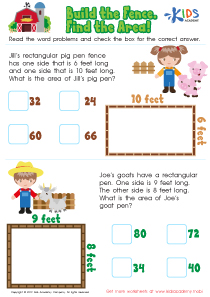
Pattern recognition Extra Challenge Matching Worksheets for Ages 3-7
3 filtered results
Difficulty Level
Grade
Age
-
From - To
Subject
Activity
Standards
Unlock your child's potential with our Pattern Recognition Extra Challenge Matching Worksheets designed for ages 3-7. These worksheets are perfect for young learners ready for an exciting challenge in identifying and matching patterns. With vibrant illustrations and engaging exercises, kids develop critical thinking and observational skills while having fun. Boost their cognitive development and prepare them for more advanced math concepts with our carefully crafted activities. Make learning enjoyable and watch your child thrive with our unique pattern recognition worksheets. Visit our page today and explore a new world of learning possibilities!
Favorites
With answer key
Interactive
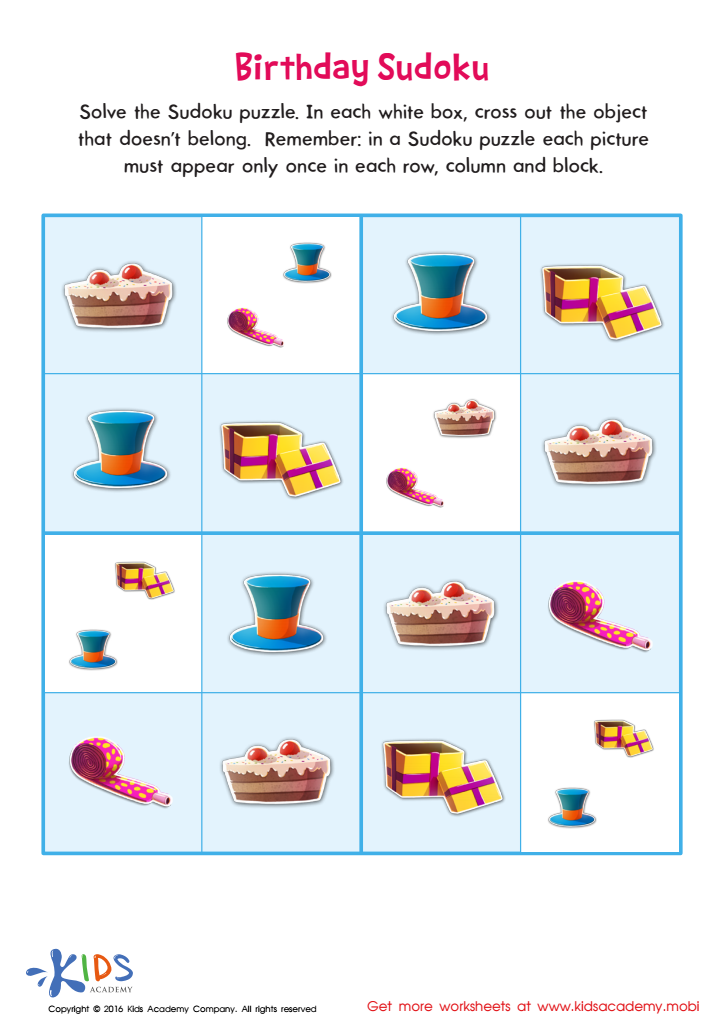
Birthday Sudoku Sorting Worksheet
With this Sudoku printable, your child will have fun and strengthen their problem-solving skills.
 Assign to My Students
Birthday Sudoku Sorting Worksheet
Worksheet
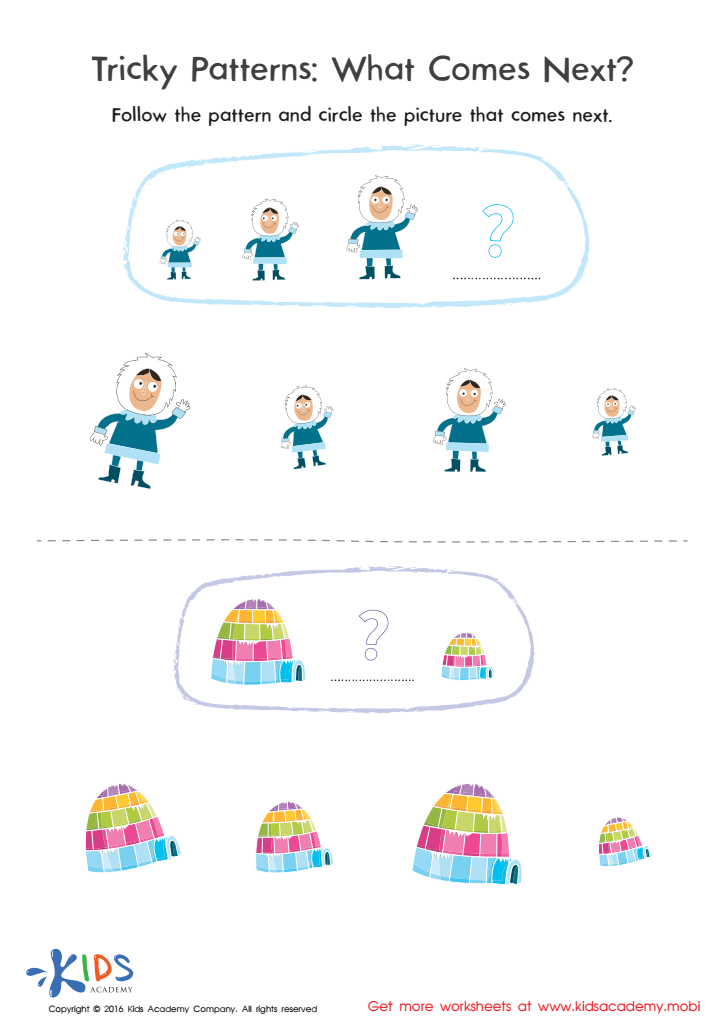
Tricky Patterns Size Worksheet
Give your child a head start on critical thinking with this picture pattern worksheet! It's an intriguingly fun way to help them master important skills like spatial reasoning, critical thinking, and logical reasoning. They'll differentiate between shapes, complete the pattern with a logical answer, and look for and understand patterns. It's the perfect foundation for future math skills, setting them up for future success!
Tricky Patterns Size Worksheet
Worksheet
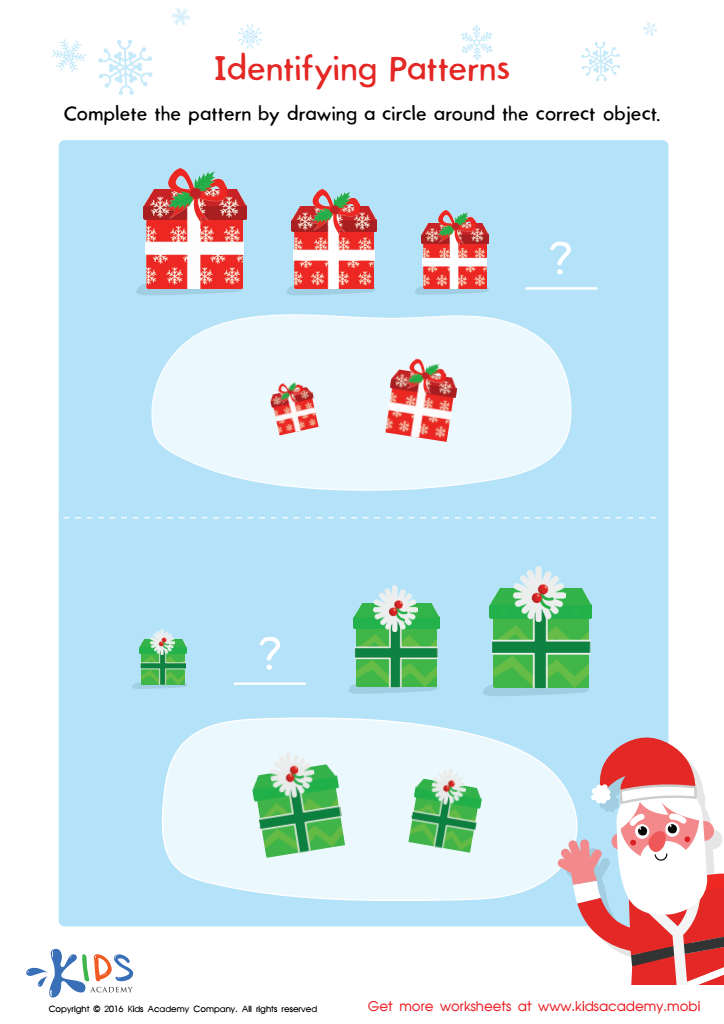
Identifying Patterns Worksheet
Kids can have fun as they learn with this festive worksheet! They'll practice early math skills while identifying patterns with colorful Christmas presents. Have your child get ready for the holidays by finding out which box comes next in the pattern!
Identifying Patterns Worksheet
Worksheet
Join Kids Academy for Free
Who is primarily going to use this learning content?








Pattern recognition extra challenges for children aged 3-7 are essential for their cognitive and developmental growth. For parents and teachers, fostering this skill benefits young learners in multiple ways.
Firstly, pattern recognition enhances a child’s mathematical abilities. Recognizing and understanding patterns lay the groundwork for more complex math concepts like sequencing, problem-solving, and logical thinking. When children see patterns in numbers, shapes, and even daily routines, they begin to predict what comes next, a foundational skill for arithmetic and algebra.
Secondly, it boosts cognitive development. Pattern recognition exercises stimulate the brain, improving memory, attention, and the ability to process visual information. These skills are crucial not only for academic subjects but also for everyday activities such as understanding time, schedules, and the rhythm of daily tasks.
Thirdly, pattern recognition aids in language development. Recognizing patterns in sound and word structure (like rhymes and rhythms) can enhance phonemic awareness, which is an essential skill for reading and writing. It also supports vocabulary growth, helping children to categorize and understand new information more effectively.
Lastly, it promotes creativity and critical thinking. Whether through identifying patterns in art, music, or nature, encouraging children to engage with and create patterns helps them appreciate beauty and order in their world, fostering a zest for learning and exploration.
By emphasizing pattern recognition, parents and teachers set young children on a path to academic success and lifelong learning.