Spelling practice Extra Challenge Short Vowels Worksheets for Ages 3-8
3 filtered results
-
From - To
Discover engaging and fun Spelling Practice Extra Challenge Short Vowels Worksheets designed specifically for children aged 3-8 at Kids Academy. These worksheets provide an exciting way for young learners to master short vowels through carefully crafted activities that promote letter recognition, phonics, and early reading skills. Boost your child's spelling capabilities with vibrant, interactive exercises that transform learning into an amusing adventure. From completing words to matching pictures and filling in the blanks, these worksheets are the perfect tool to enhance your child’s language development, fostering both confidence and a love for learning. Explore now for free!
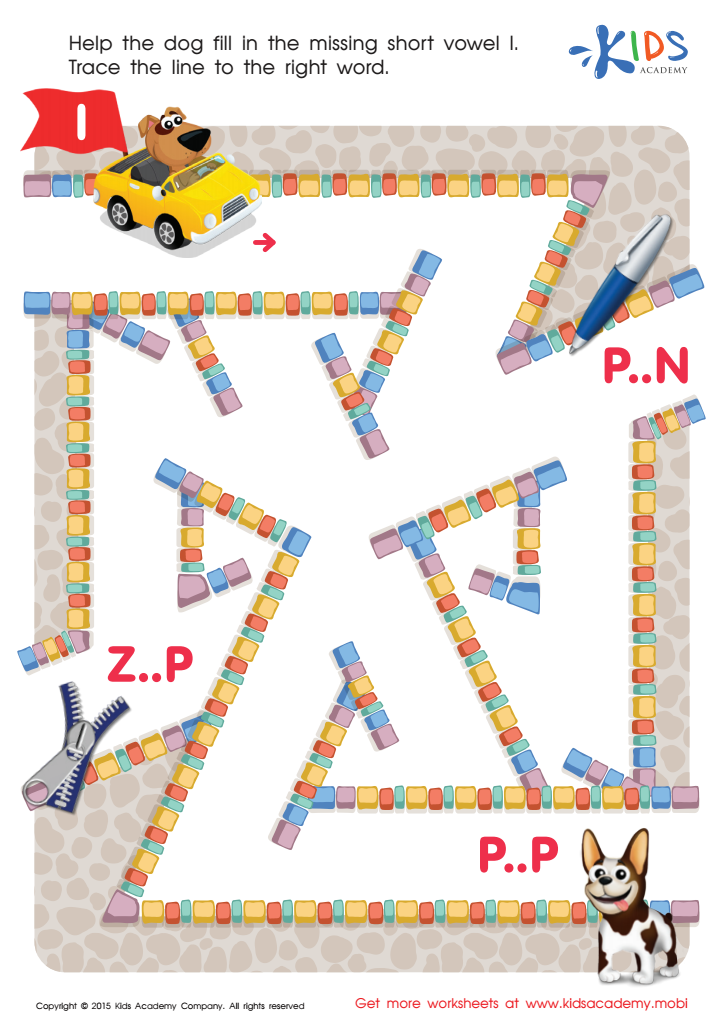
Short Vowel Sound I Worksheet
 Assign to My Students
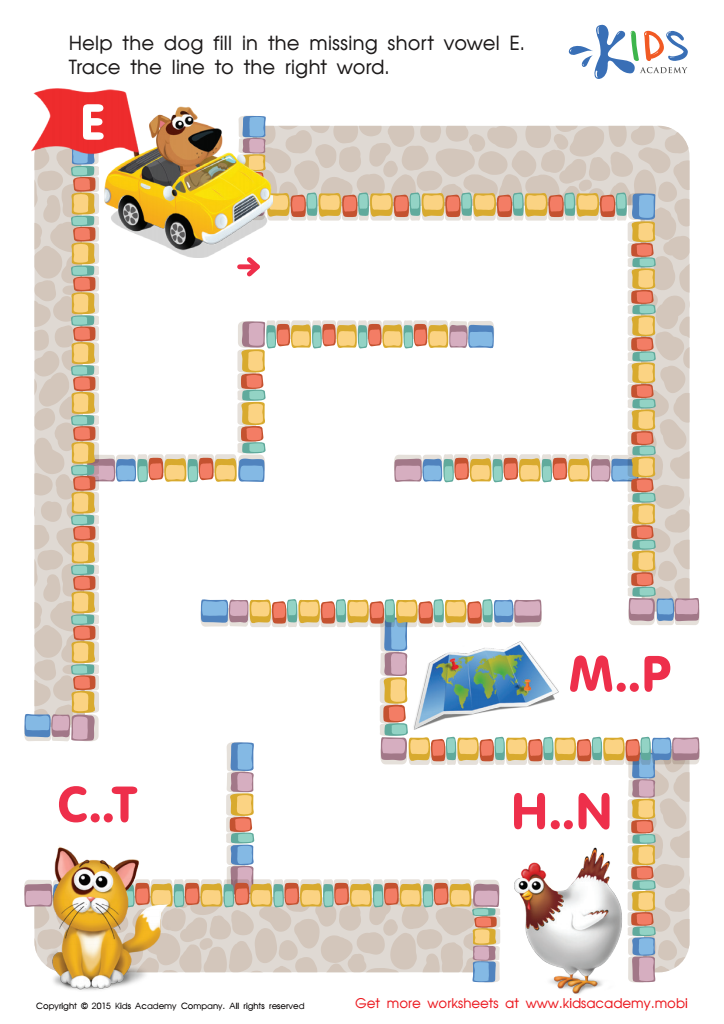
Short Vowel Sound E Worksheet
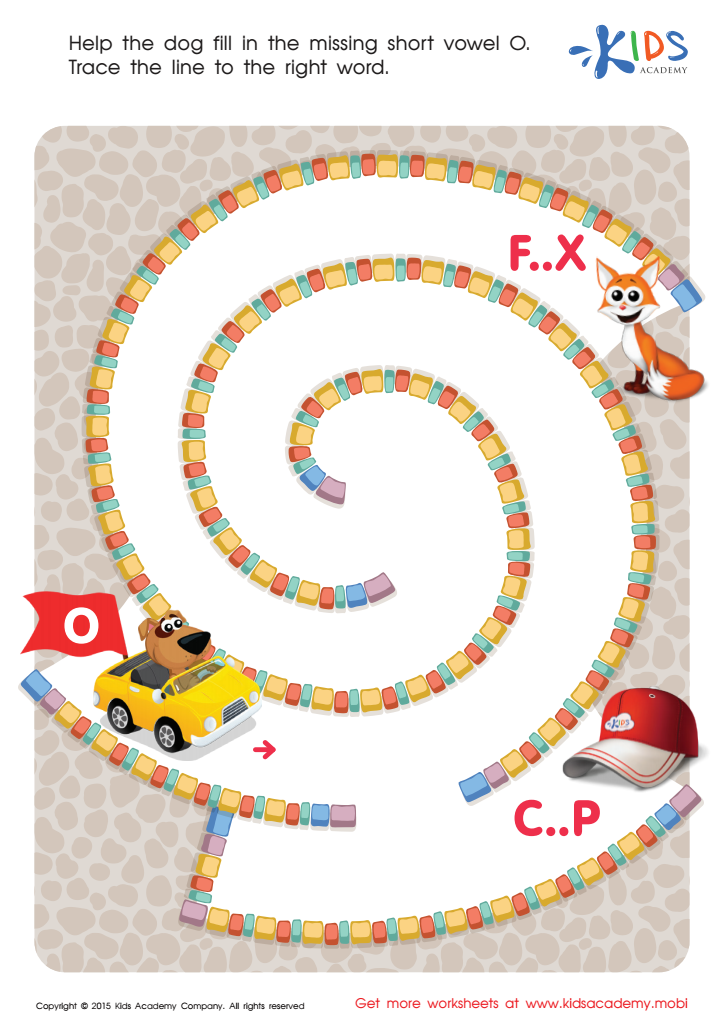
Short Vowel Sound O Worksheet



Parents and teachers should pay close attention to spelling practice, particularly focusing on Extra Challenge Short Vowels, for children ages 3-8 because foundational literacy skills are crucial at this stage of development. Short vowels play an essential role in early reading and writing. Mastering them helps children decode words, enhancing both reading fluency and comprehension.
Early exposure to structured spelling practice with short vowels solidifies children's understanding of phonics—the relationship between sounds and their corresponding letters or letter groups. This ability to sound out words is a critical step towards independent reading and writing. Moreover, challenges in mastering short vowels can lead to difficulties in recognizing and spelling common CVC (consonant-vowel-consonant) words, which form the bedrock of early vocabulary.
Children in this age range are at a developmental stage where their brains are exceedingly receptive to language acquisition. Tailored, engaging spelling challenges not only help keep their interest alive but also enhance memory retention and build confidence.
Therefore, regular practice with short vowels empowers children to progress from simple to more complex language tasks, laying a durable foundation for future academic achievement. By supporting children in this core area, parents and teachers contribute significantly to their long-term literacy and learning success.