Vowel Recognition Extra Challenge Short Vowels Worksheets for Ages 3-8
4 filtered results
Difficulty Level
Grade
Age
-
From - To
Subject
Activity
Standards
Enhance your child's reading foundation with our "Vowel Recognition Extra Challenge Short Vowels Worksheets for Ages 3-8". Specially designed for kids aged 3 to 8, these engaging sheets focus on mastering short vowel sounds through fun and interactive exercises. Combining playful themes with educational rigor, they help children identify, pronounce, and differentiate between short vowels effortlessly. Ideal for early learners, these worksheets support literacy development and boost confidence in reading. Give your child that extra edge in recognizing vowels and set the stage for lifelong reading success with our expertly crafted learning tools.
Favorites
With answer key
Interactive
Short Vowel Sound U Worksheet
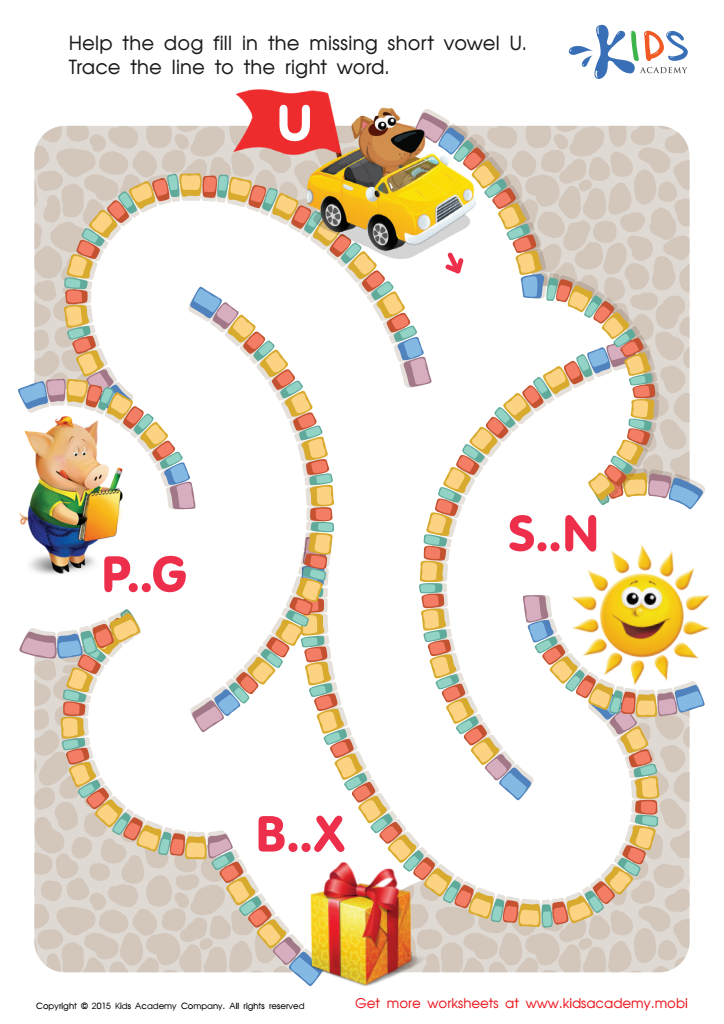
Practice abc phonics to help young learners link sounds to letters. This free printable phonics worksheet helps your kid learn the short vowel sound U. Guide them through the maze to help the dog complete the word "sun". Make sure they say the word out loud to emphasize the short U sound. Check out more phonics worksheets with mazes here.
 Assign to My Students
Short Vowel Sound U Worksheet
Worksheet
Short Vowel Sound I Worksheet
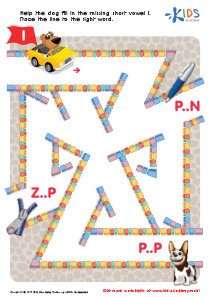
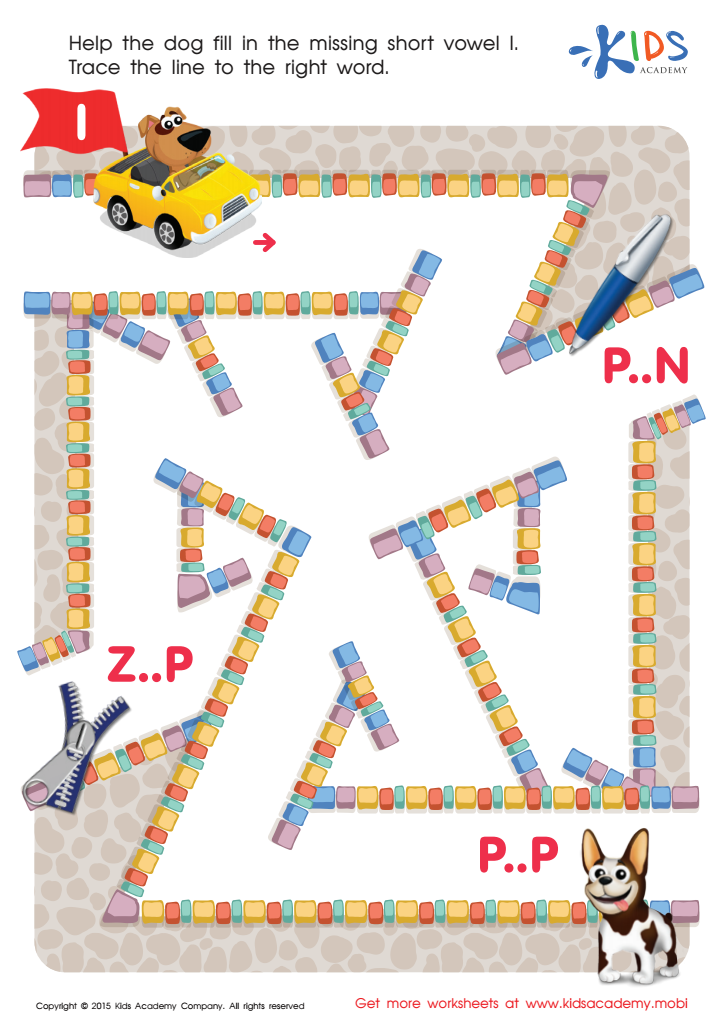
This free printable phonics worksheet will get your kid prepped for reading! It's a maze to help the dog complete the word “zip” with the missing letter I. Have your kid say the word aloud to learn the I sound. It's a great way to practice reading, writing and spelling skills. Check out here for more phonics worksheets!
Short Vowel Sound I Worksheet
Worksheet
Short Vowel Sound E Worksheet
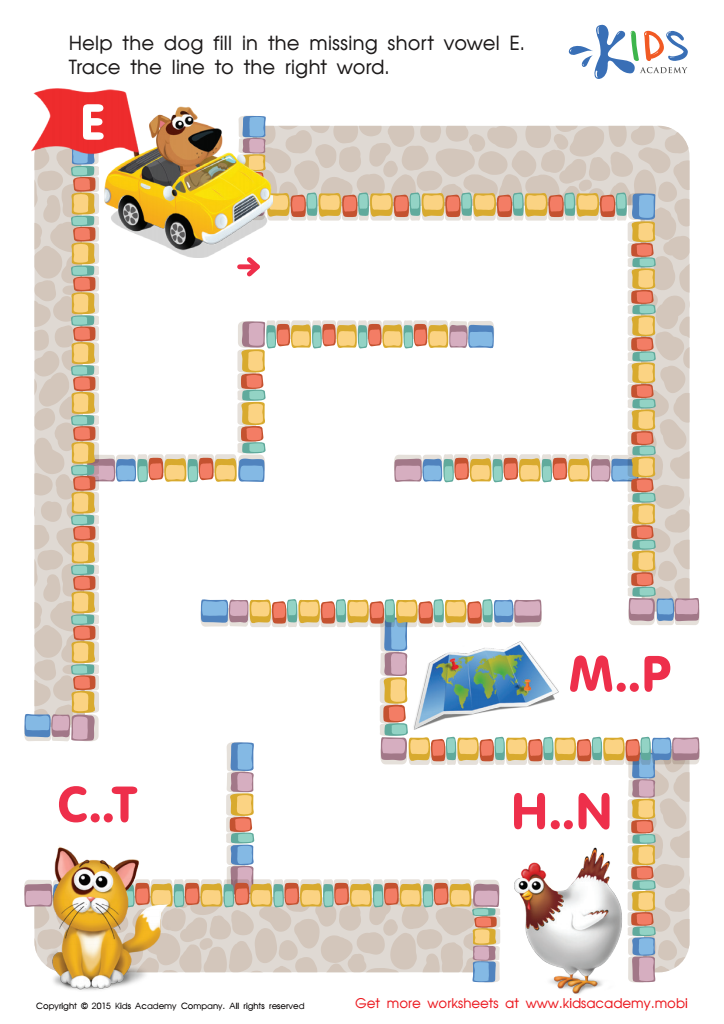
This free printable phonics worksheet helps kids learn the short vowel sound E. Kids need to help the dog complete the word “hen” by finding their way through a maze. It teaches kids to see the connection between letters and sounds and also strengthens their writing and spelling skills. Fun and educational, this phonics worksheet is great for kids. Want more? Check out here.
Short Vowel Sound E Worksheet
Worksheet
Short Vowel Sound O Worksheet
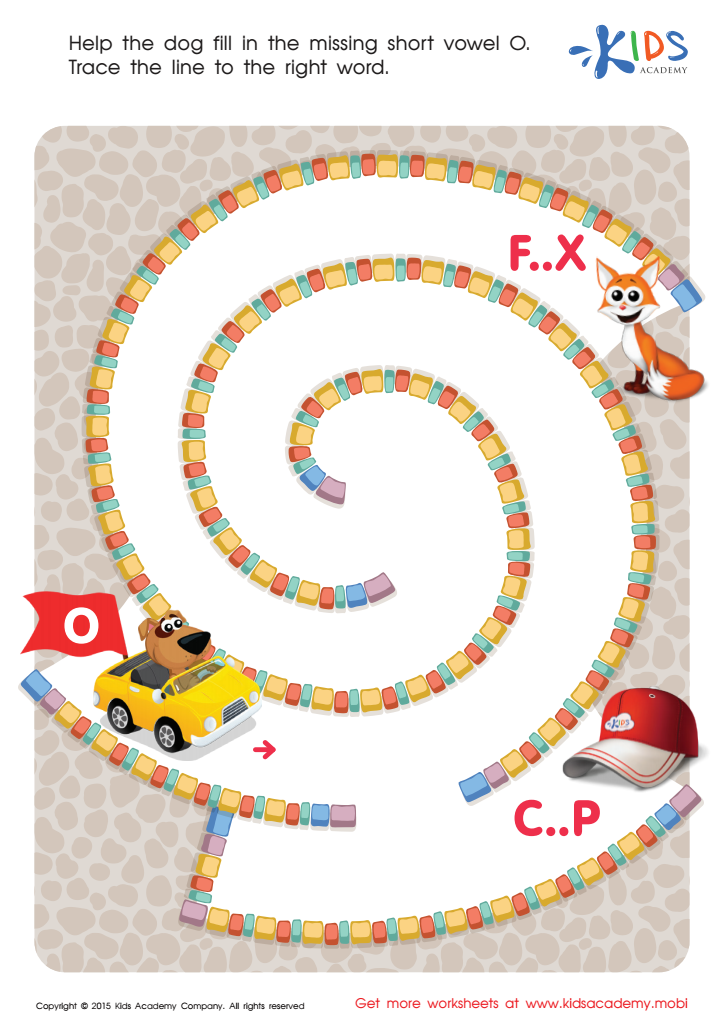
Help your child learn the short vowel sound O with this fun and free printable phonics worksheet! They'll need to complete the maze to help the dog finish the word "fox" with the missing letter O. Engage their fine motor muscles while they color or trace the maze with crayon or pencil. This educational activity is sure to bring a smile to your little learner's face! For more phonics worksheets, check here.
Short Vowel Sound O Worksheet
Worksheet
Join Kids Academy for Free
Who is primarily going to use this learning content?



Vowel recognition, specifically short vowels, is fundamental for early literacy development in children ages 3-8. This critical skill enables young learners to decode and spell words accurately, enhancing their reading fluency and comprehension. By offering extra challenges in recognizing short vowels, we encourage students to deepen their understanding and solidify these foundational phonetic skills.
At this formative age, children's brains are highly receptive to language acquisition. Mastery of short vowels helps in the development of strong phonemic awareness, which is crucial for interpreting written language. When children can easily identify and pronounce short vowel sounds, they can more confidently tackle new words, engage in storytelling, and enjoy reading activities more.
For parents and teachers, emphasizing vowel recognition offers a gateway to a wealth of learning opportunities. It prepares students for academic success by fostering an enjoyable and supportive learning environment. Activities that include short vowel recognition challenges can make learning interactive and fun, thus maintaining the child's interest and motivation.
Furthermore, early proficiency in vowel recognition reduces future reading difficulties. Struggling with these basics often causes frustration and diminished self-esteem, which can negatively impact a child’s educational trajectory. Ultimately, prioritizing vowel recognition ensures foundational literacy skills are robust, cultivating confident and skilled young readers.