Boost your child’s English language skills with our "Letter Recognition Extra Challenge Worksheets," designed specifically for beginners ages 3-8. These engaging worksheets provide a variety of fun activities that help young learners identify and distinguish letters, setting the foundation for reading and writing. Perfect for parents and educators, our resources cater to different learning styles and encourage independence in letter recognition. Each interactive worksheet fosters creativity while reinforcing essential language skills. Whether used in the classroom or at home, our worksheets are an excellent way to support early learners on their English language journey. Download now and make learning enjoyable!

Check out this FREE Trial Lesson on English for Beginners for age 3-8!

X

Favorites
With answer key
Interactive
  • 3-8
  • Letter recognition
  • English for Beginners
  • Extra Challenge
Letter R worksheets
Letter R worksheets

Letter R Tracing Page

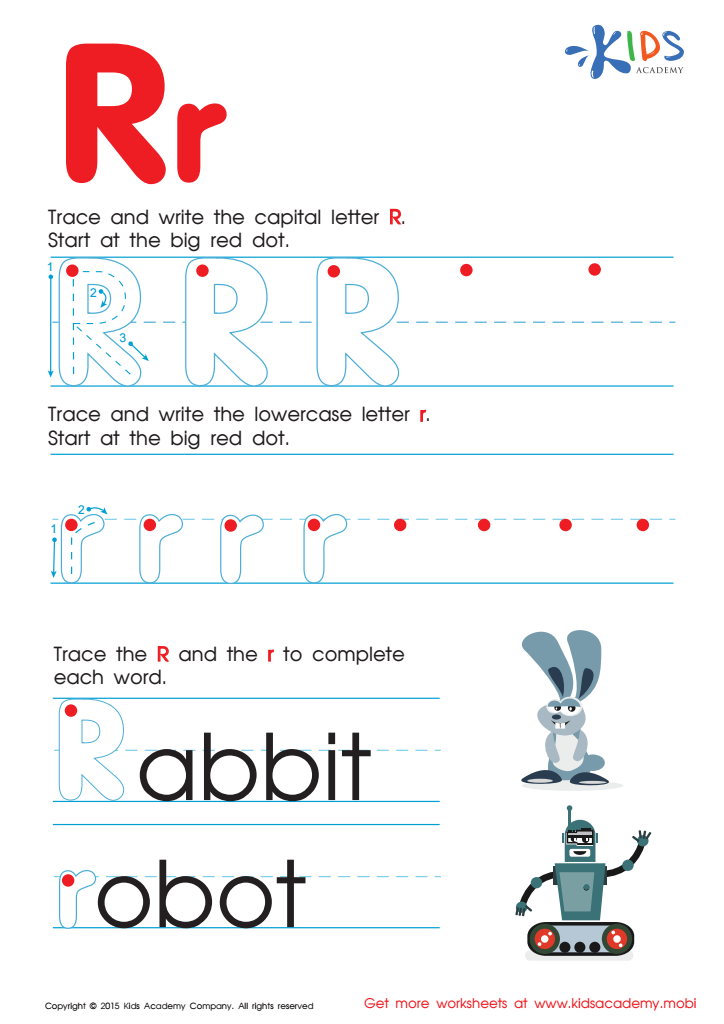
Trace and write the letter "R" with this worksheet for kindergarten. Start with the uppercase, then move on to the lowercase. Write the letters several times for practice. Then help complete the words for the rabbit and robot, spelling carefully. More ABC worksheets can be found at Kids Academy.
Letter R Tracing Page
Worksheet
Letter X worksheets
Letter X worksheets

Letter X Tracing Page

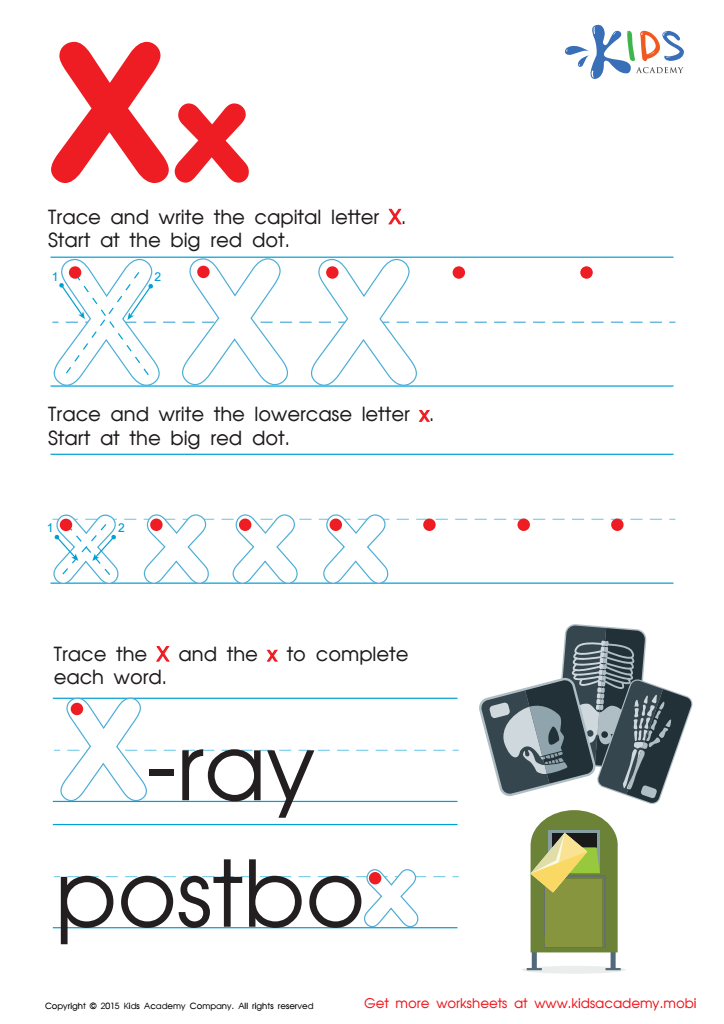
Trace the uppercase letter "X" to learn, then write it yourself and practice. Then do the same with the lowercase "x" before completing the words "X-ray" and "postbox". Enjoy our alphabet printables!
Letter X Tracing Page
Worksheet
Letter U worksheets
Letter U worksheets

Letter U Tracing Page

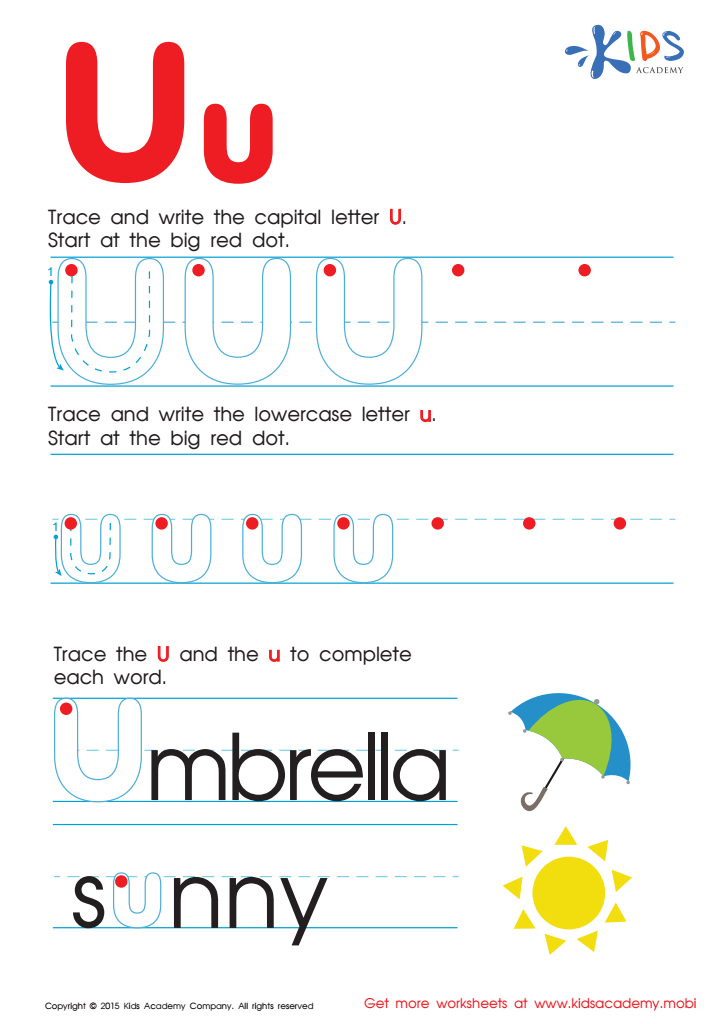
Ready to trace and write the letter "U"? Use our worksheet and practice tracing both uppercase and lowercase letters. Complete the words "umbrella" and "sunny" with a capital "U". Check our full collection of alphabet printables for more activities.
Letter U Tracing Page
Worksheet
Letter S worksheets
Letter S worksheets

Letter S Tracing Page

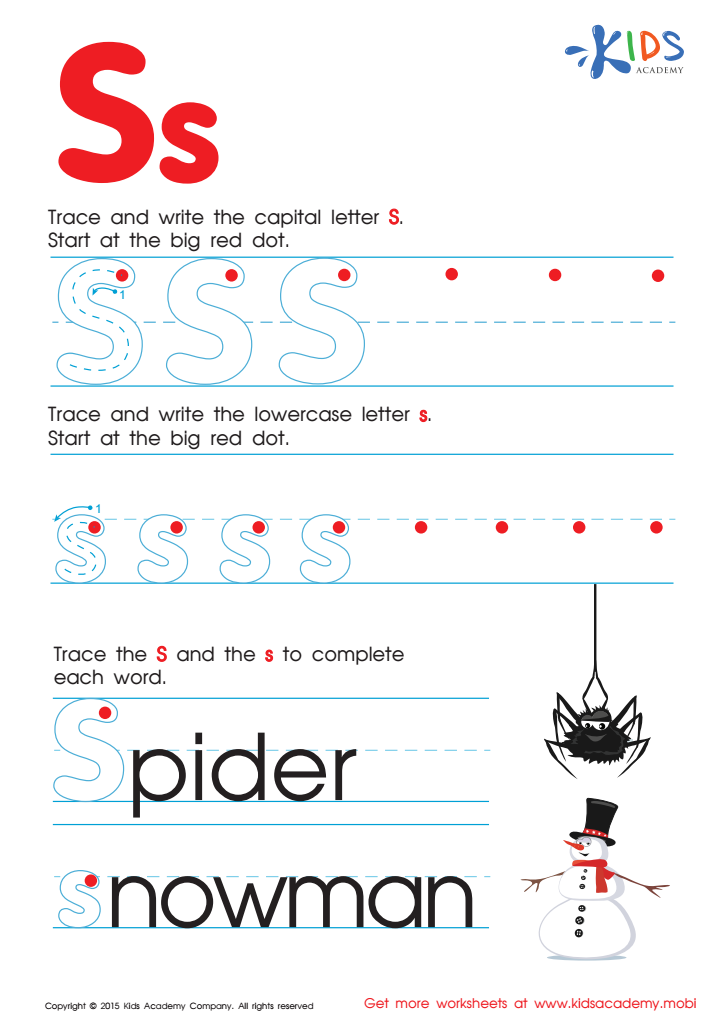
Trace and write the capital and lowercase "S" on this ABC worksheet for kindergarten. Start with the big red dot and be careful. When you finish, help the spider and snowman in the pictures restore their words with the capital and lowercase letters. Continue learning the alphabet with Kids Academy.
Letter S Tracing Page
Worksheet
Letter W worksheets
Letter W worksheets

Letter W Tracing Page

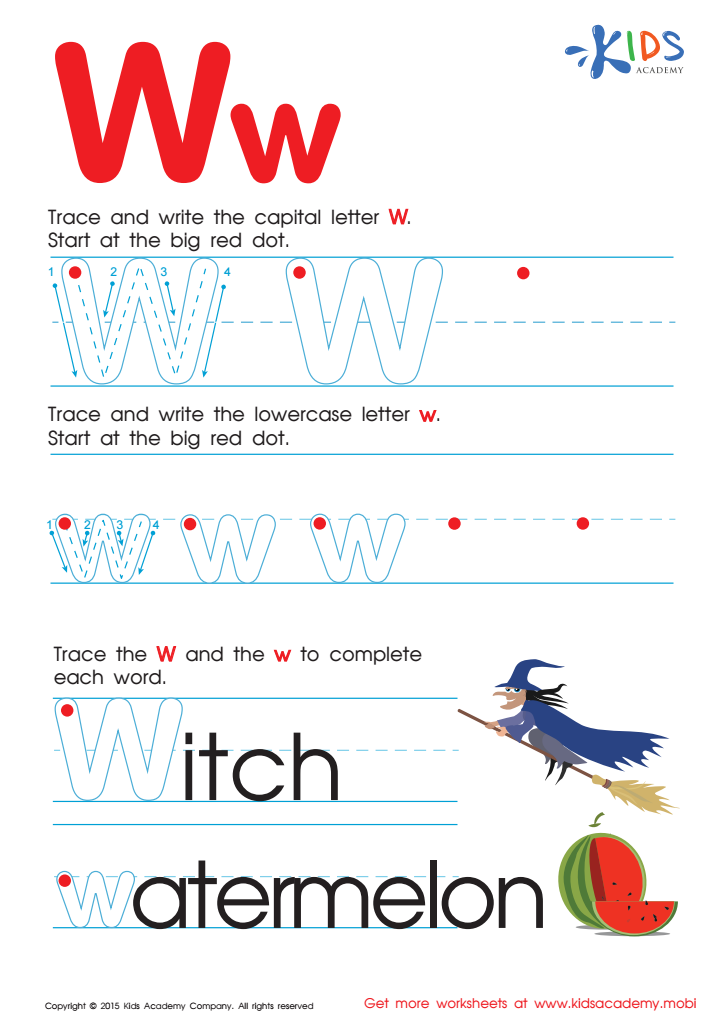
Trace and write the capital and lowercase letter W with this free letter tracing worksheet by Kids Academy. Complete the words "Witch" (capital) and "watermelon" (lowercase). Check out our other kindergarten alphabet worksheets!
Letter W Tracing Page
Worksheet
Letter V worksheets
Letter V worksheets

Letter V Tracing Page

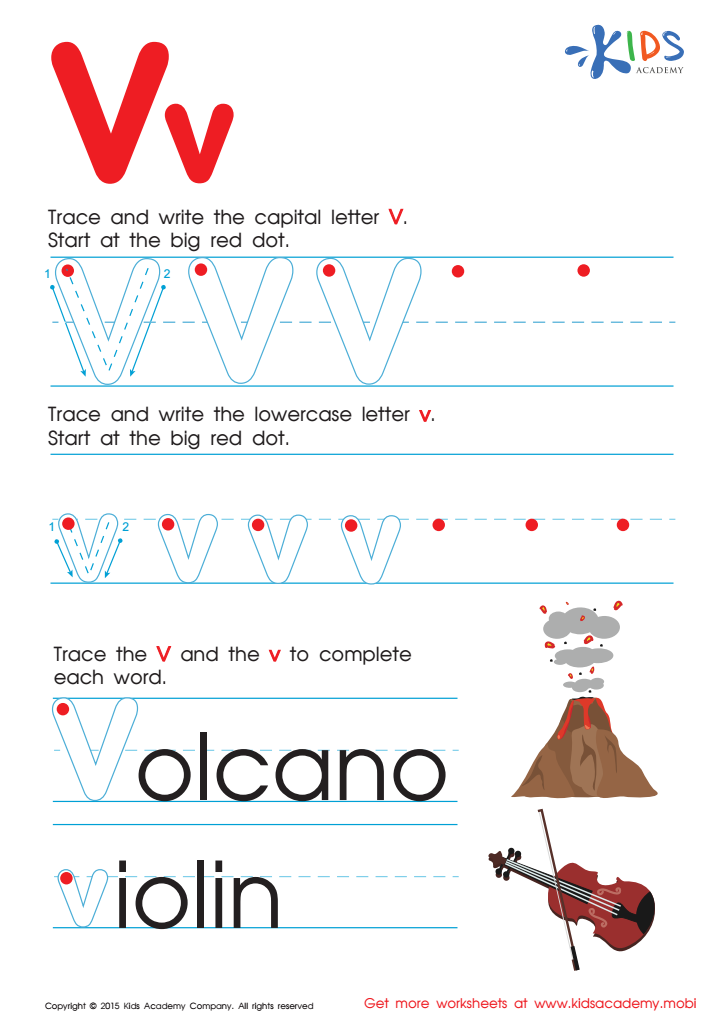
Trace the uppercase and lowercase letter "V" with our kindergarten tracing worksheet. Begin at the red dot and follow the lines. Write it several times. Complete the words "Volcano" and "violin". Get more alphabet activities at Kids Academy.
Letter V Tracing Page
Worksheet
Letter T worksheets
Letter T worksheets

Letter T Tracing Page

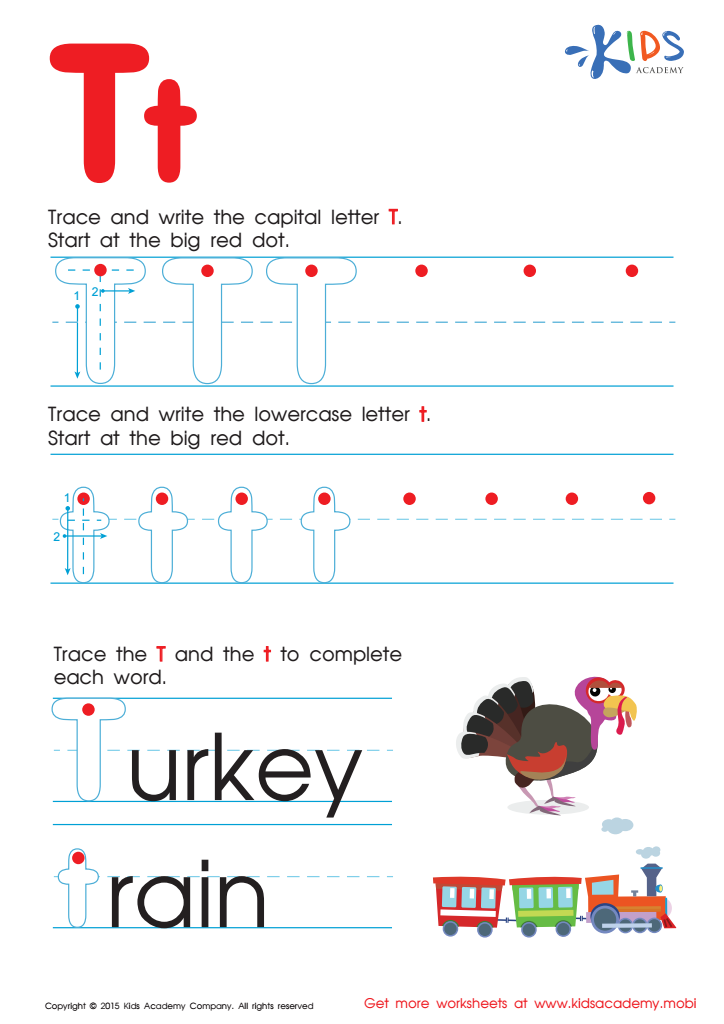
Trace letters, complete words, draw pictures and see your kids having fun! Kids Academy offers alphabet tracing worksheets to learn to write letters. Start with the big red dot, trace the letter, then write it. Practice uppercase and lowercase. Have fun completing words with a Turkey or a rain-train and draw pictures. Get more printable worksheets to make learning enjoyable.
Letter T Tracing Page
Worksheet


Letter recognition is a foundational skill that plays a crucial role in early literacy development for children ages 3-8. For parents and teachers, understanding its importance is vital in fostering a child's educational journey. Recognizing letters is the first step towards reading and writing, which are essential for academic success.

When children can identify letters, they gain the ability to decode words, enhancing their vocabulary and comprehension skills. This skill supports language development and improves communication abilities. Early letter recognition can lead to a more confident approach to learning and literacy tasks, reducing anxiety when children encounter text.

Interactive and engaging activities—like games and crafts focused on letter recognition—create enjoyable learning experiences, making it more likely for young learners to retain information. Moreover, it encourages curiosity about letters and words, paving the way for a lifelong love of reading.

For parents, being actively involved in their child’s literacy journey by incorporating letter recognition activities at home nurtures family bonding and instills a sense of accomplishment. Thus, investing time in developing letter recognition skills provides a strong educational foundation, ensuring that children are well-prepared for future learning opportunities and challenges.