Understanding plurals Extra Challenge Worksheets for Ages 3-8
5 filtered results
-
From - To
Enhance your child's grasp of plurals with our "Understanding Plurals Extra Challenge Worksheets for Ages 3-8." Designed to engage young learners, these worksheets incorporate fun activities that make learning about singular and plural forms exciting. Children will enjoy creative exercises, including matching, fill-in-the-blanks, and coloring, all aimed at solidifying their understanding of how to form and recognize plurals. Ideal for parents and educators alike, these extra challenge worksheets supplement classroom learning and help boost confidence in language skills. Give your little ones the tools they need to master plurals and foster a lifelong love for learning!
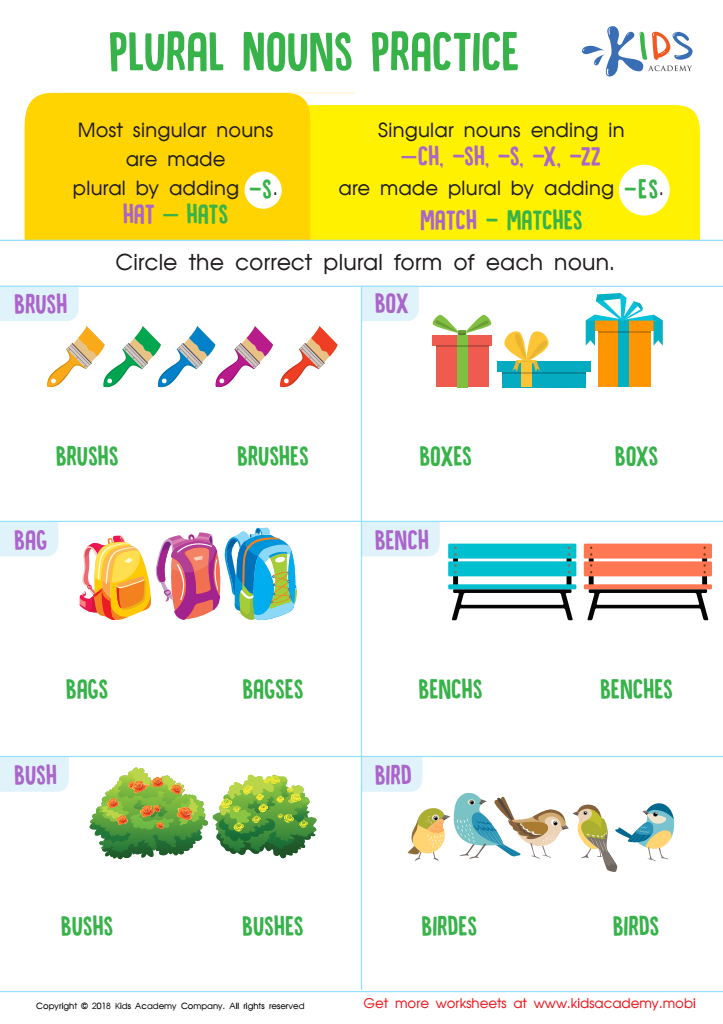
Plural Nouns Practice Worksheet
 Assign to My Students
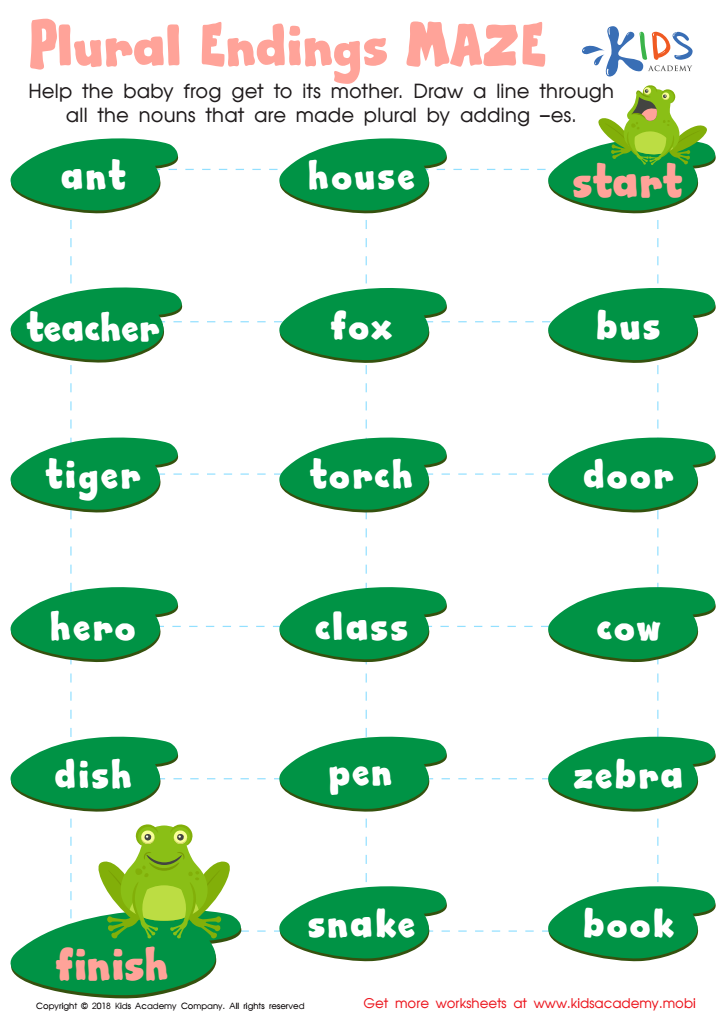
Plural Endings Maze Worksheet
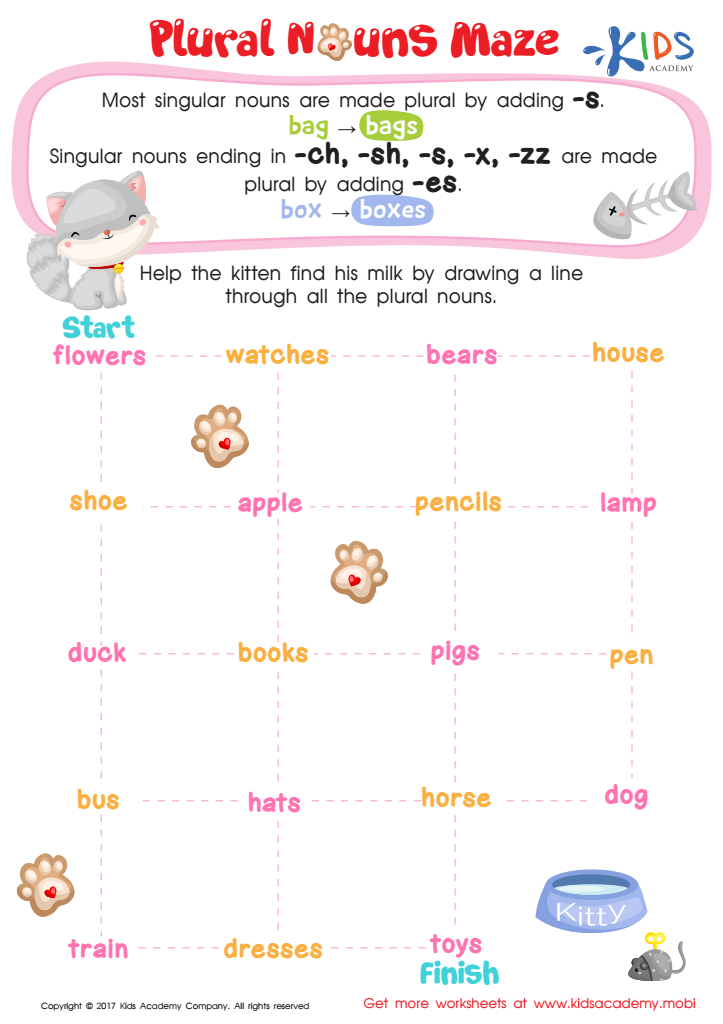
Plural Nouns Maze Worksheet
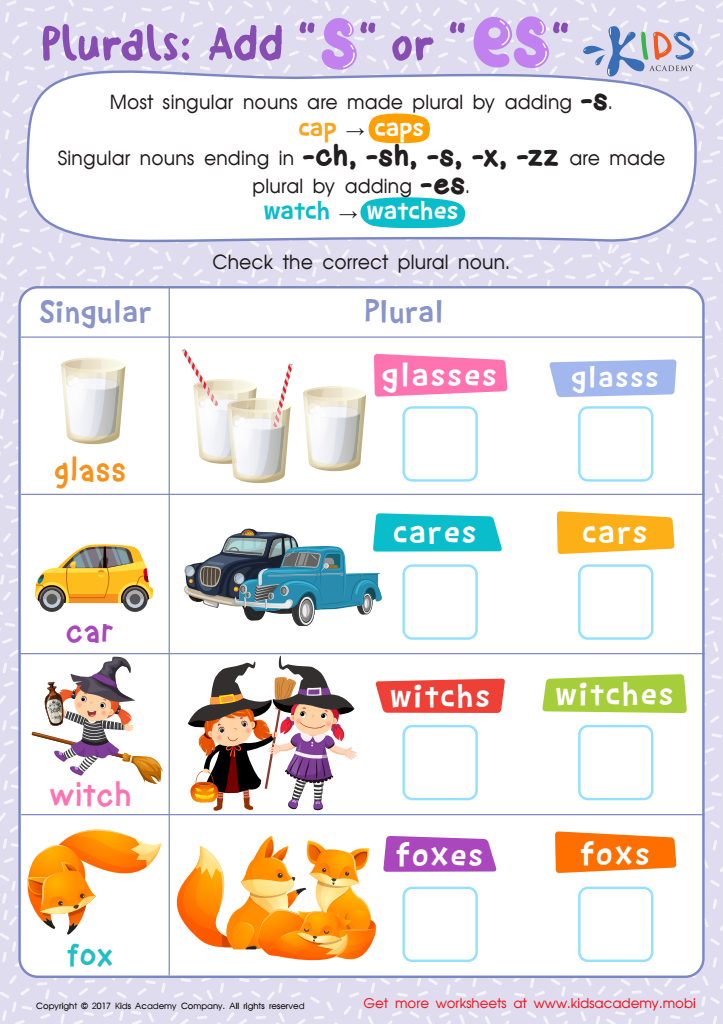
Plurals: "–es" or "–es"? Worksheet
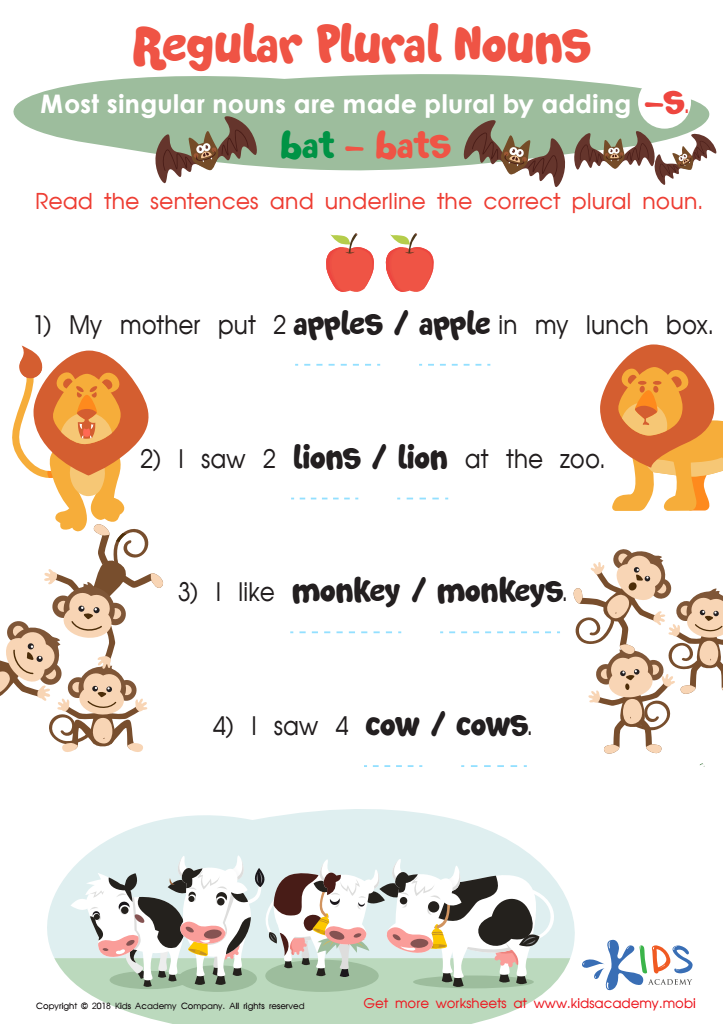
Regular Plural Nouns Worksheet






Understanding plurals is crucial for children aged 3-8 as it lays the foundation for effective communication and literacy skills. As children begin to express themselves, being able to differentiate between singular and plural forms enhances their ability to convey meaning. This helps them articulate their thoughts more clearly, whether in daily conversations, storytelling, or writing.
Moreover, the mastery of plurals fosters critical cognitive development. It encourages children to engage in language exploration, promoting vocabulary expansion and sentence structure complexity. For parents and teachers, this means facilitating an environment where language skills can flourish, aiding comprehension and early reading abilities.
In the classroom, recognizing the difference between one and many fosters collaboration during group activities. It encourages sharing and cooperation, core social skills for young children. Additionally, challenging children to produce plurals through fun activities can make learning engaging and memorable.
By prioritizing understanding plurals, parents and teachers equip children with essential language-building tools. This not only benefits academic achievement but also bolsters self-confidence as they navigate social interactions. Ultimately, nurturing these skills at an early age prepares children for lifelong learning and effective communication.








