Recognizing shapes Extra Challenge Geometry Worksheets for Ages 3-8
3 filtered results
-
From - To
Boost your child's geometry skills with our "Recognizing Shapes Extra Challenge Geometry Worksheets" designed for ages 3-8! These engaging worksheets provide a fun and interactive way for young learners to explore different shapes, enhancing their critical thinking and visual recognition abilities. Each worksheet is packed with exciting activities that challenge children to identify, compare, and manipulate shapes using both familiar and creative approaches. Ideal for classroom use or at-home learning, these worksheets cater to various skill levels, ensuring every child is supported in their learning journey. Help your child develop a strong foundation in geometry while having fun!
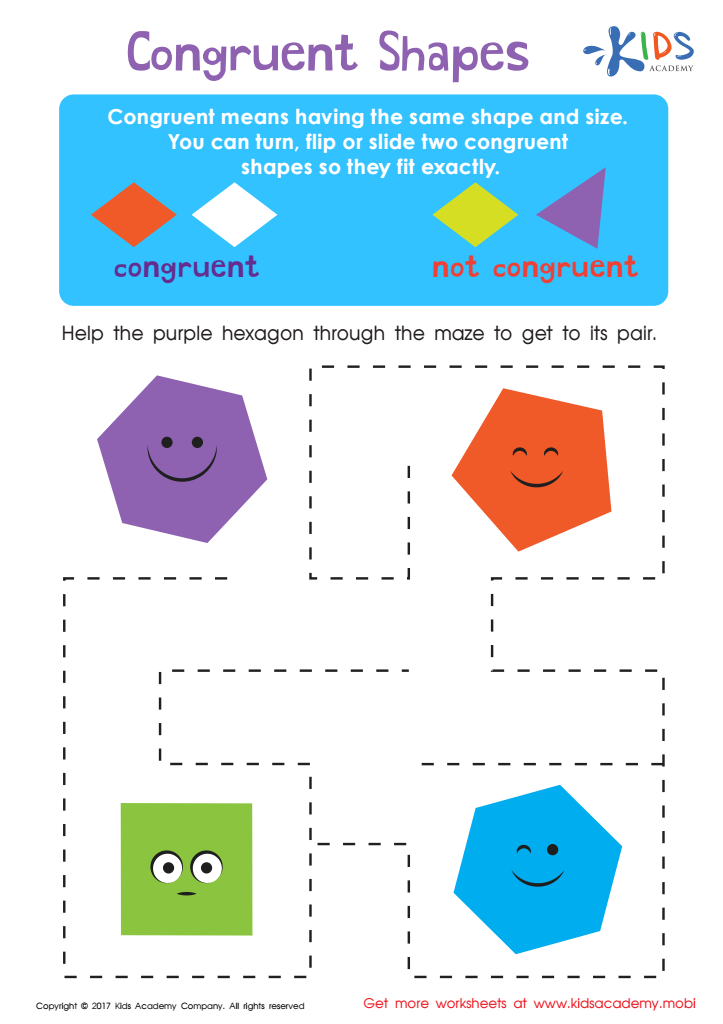
Congruent Shapes Worksheet
 Assign to My Students











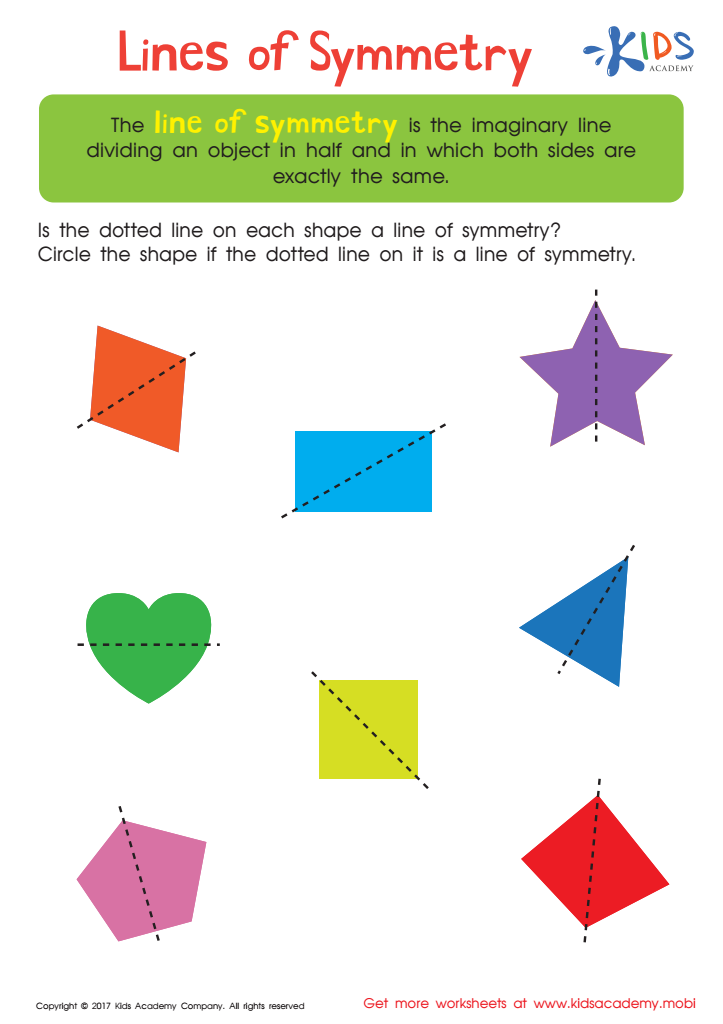
Lines of Symmetry Printable
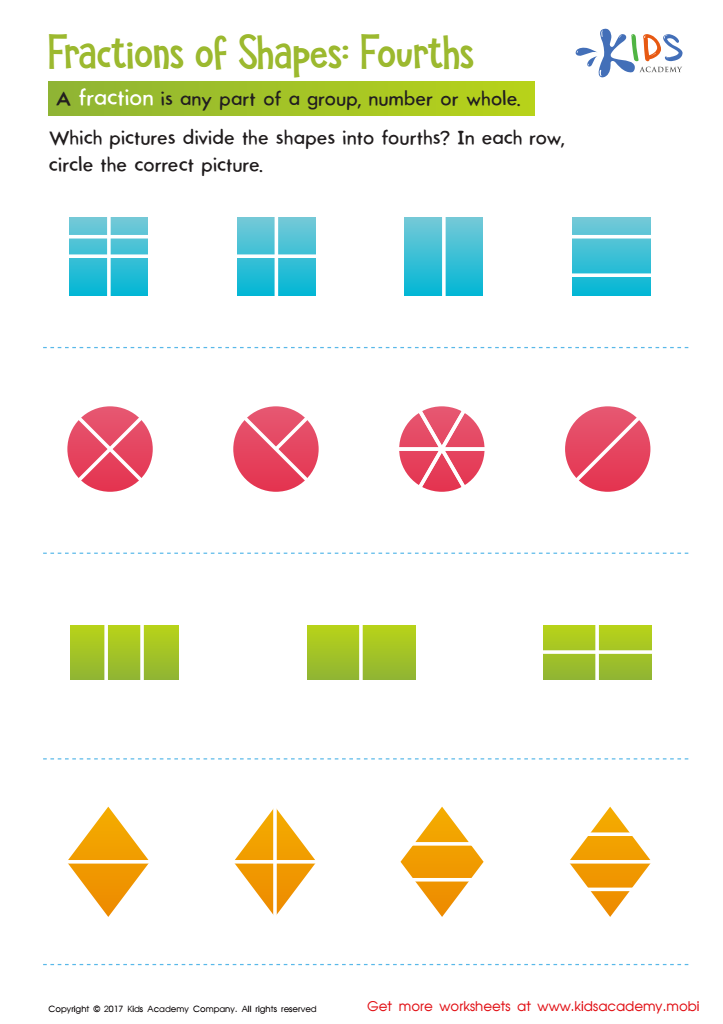
Fractions of Shapes Worksheet








Recognizing shapes is a foundational skill in early childhood education that plays a crucial role in a child's cognitive development. For parents and teachers, understanding and fostering this skill through activities like "Recognizing Shapes Extra Challenge Geometry" is vital for several reasons.
Firstly, identifying shapes enhances spatial awareness, which is crucial for activities ranging from everyday tasks to advanced mathematical concepts. This skill not only helps children understand their environment better but also builds a strong base for future learning in geometry and other STEM fields.
Moreover, recognizing shapes encourages critical thinking and problem-solving skills. Engaging children in shape identification challenges them to analyze and compare different figures, stimulating their cognitive abilities. This play-based learning approach is essential for keeping young children motivated and excited about learning.
Additionally, activities that focus on shape recognition often foster social interaction and collaboration, as children work together to identify, sort, or create shapes. Such interactions bolster communication skills and social development.
In summary, "Recognizing Shapes Extra Challenge Geometry" is not just an exercise in identifying shapes; it is an important step in a child's overall learning journey. Enthusiastic support from parents and teachers can significantly influence a child's confidence and success in future educational endeavors.








