Comparing lengths Extra Challenge Math Worksheets for Ages 3-8
6 filtered results
-
From - To
Unlock your child's curiosity with our "Comparing Lengths Extra Challenge Math Worksheets" designed for ages 3-8! These engaging worksheets foster essential measurement skills as children learn to compare and differentiate various lengths. Fun and interactive activities encourage hands-on learning, allowing kids to practice measuring, ordering, and understanding lengths in real-life contexts. With visually appealing graphics and intuitive designs, our worksheets cater to diverse learning styles, making math enjoyable and accessible. Perfect for supplementary practice at home or in the classroom, these challenges will build your child's confidence in math while boosting their problem-solving skills. Start their math journey today!
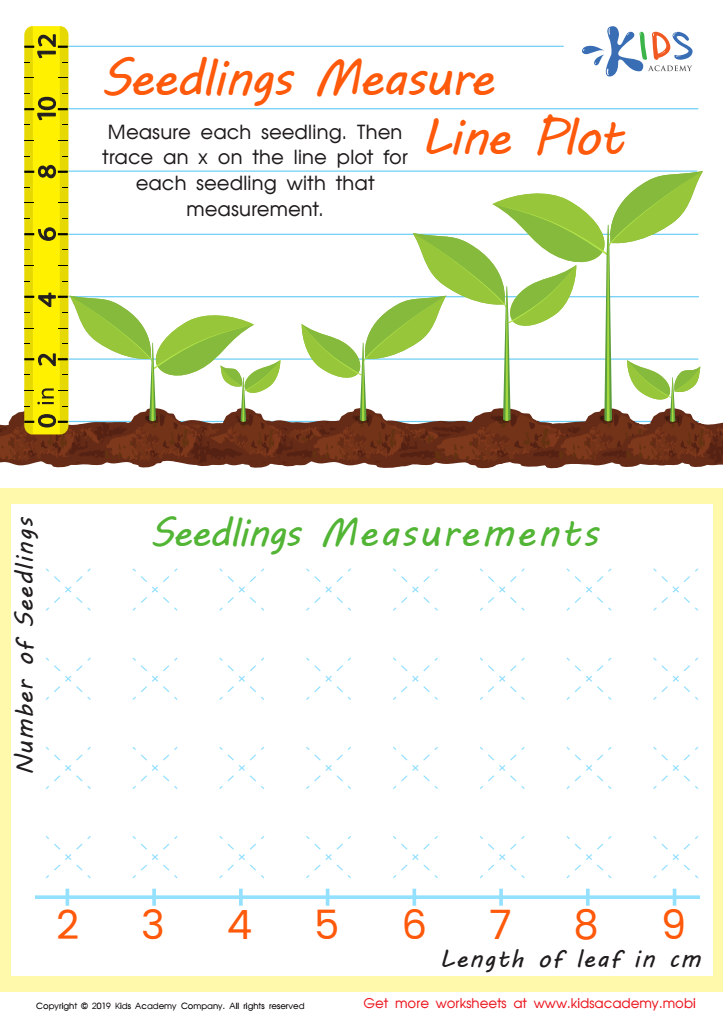
Seedling Measure Line Plot Worksheet
 Assign to My Students
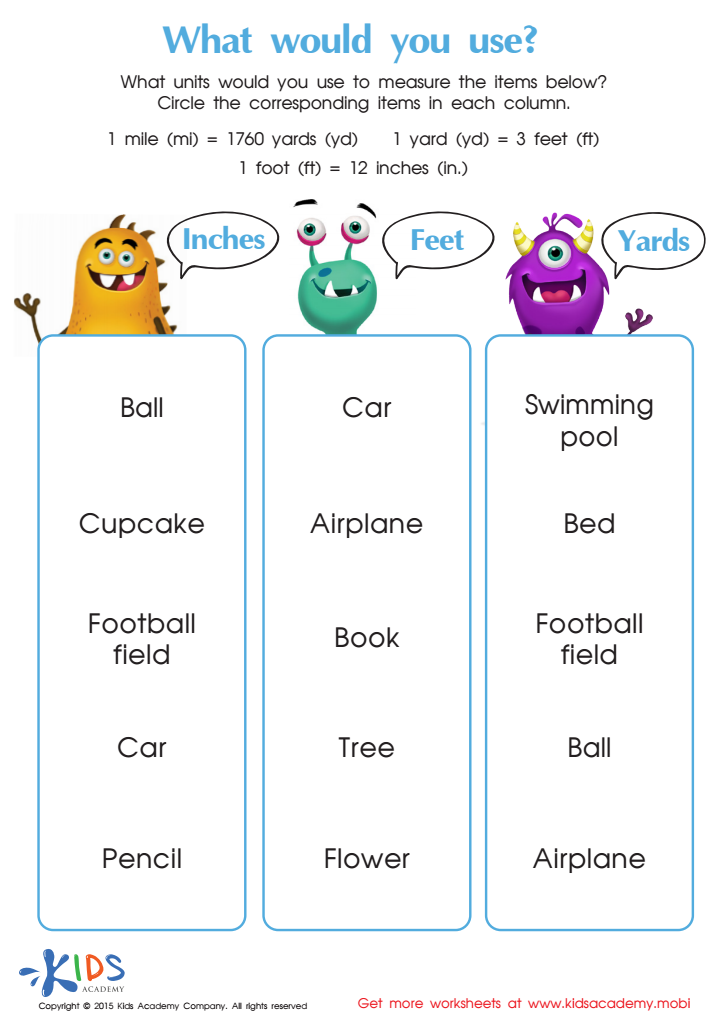
Learning about measuring objects in inches, feet and yards Worksheet
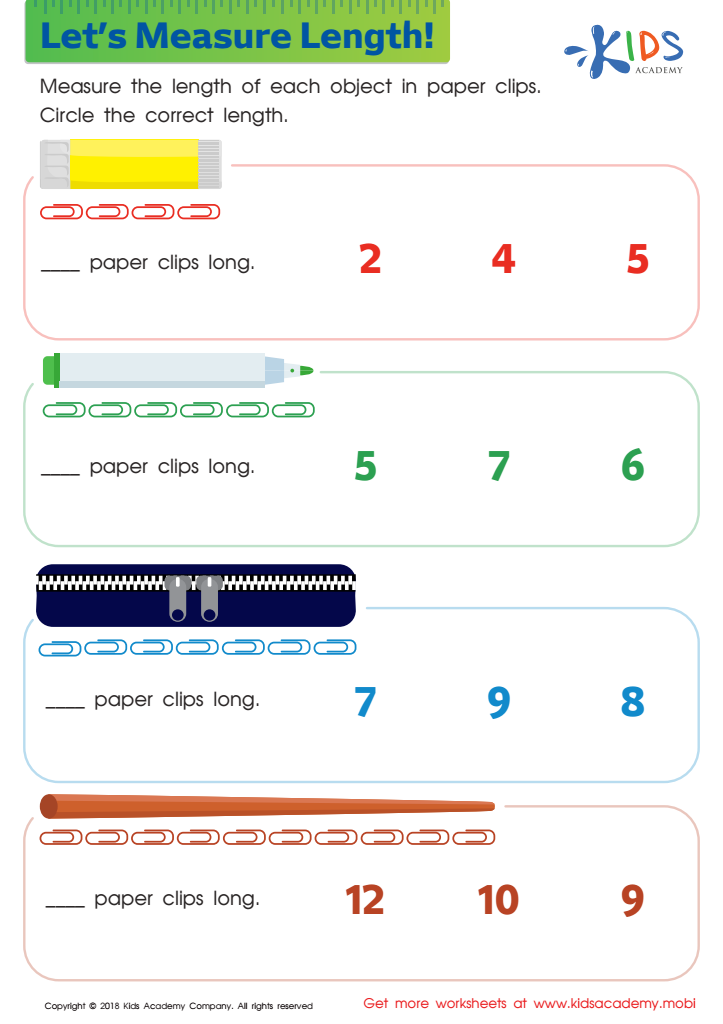
Lets Measure Length Worksheet
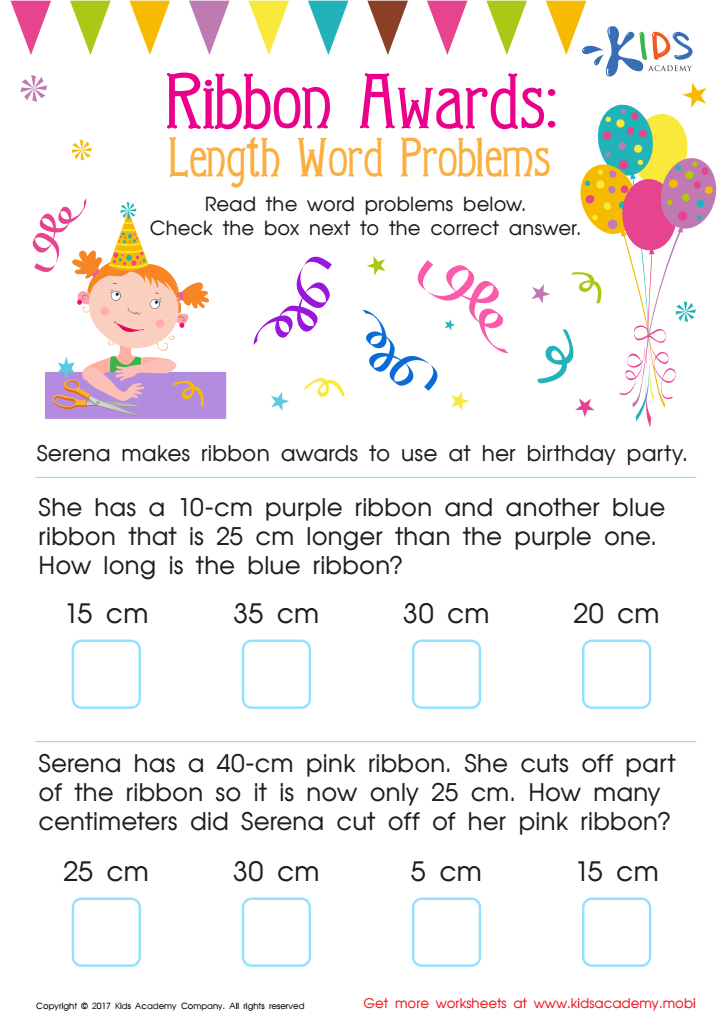
Length Word Problems Worksheet
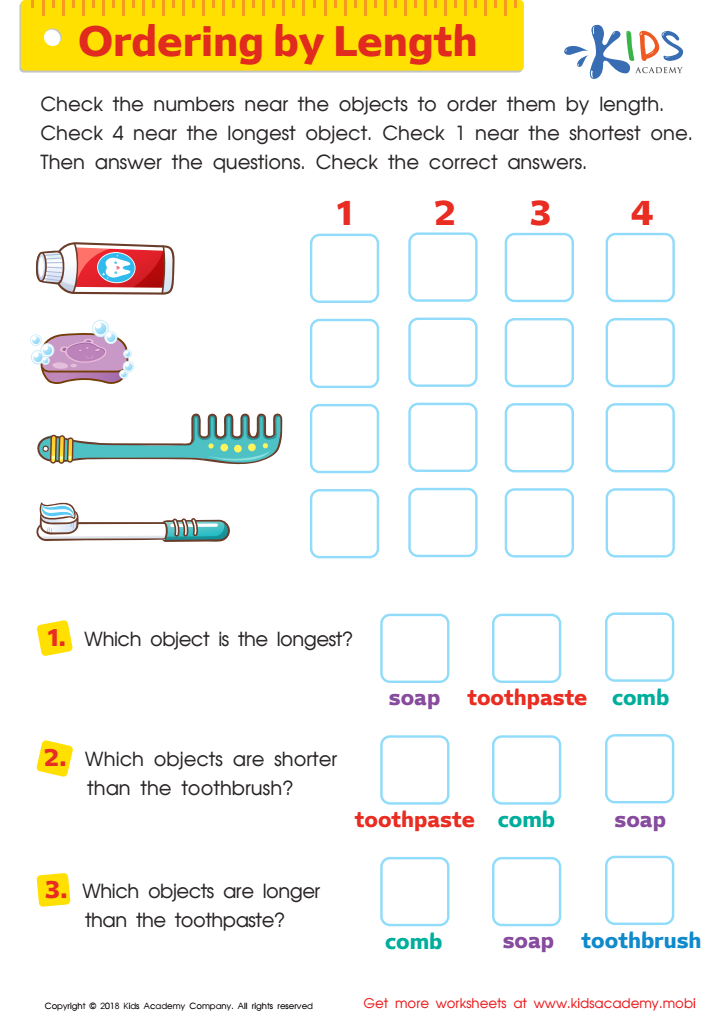
Ordering by Length Worksheet
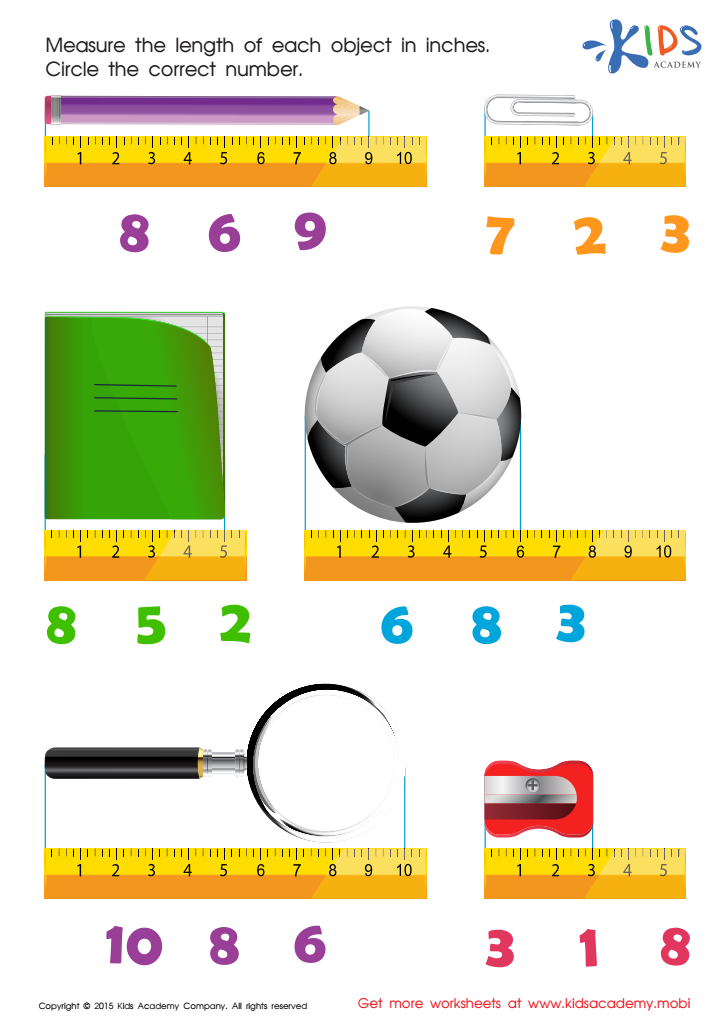
Learning measuring objects in inches Worksheet


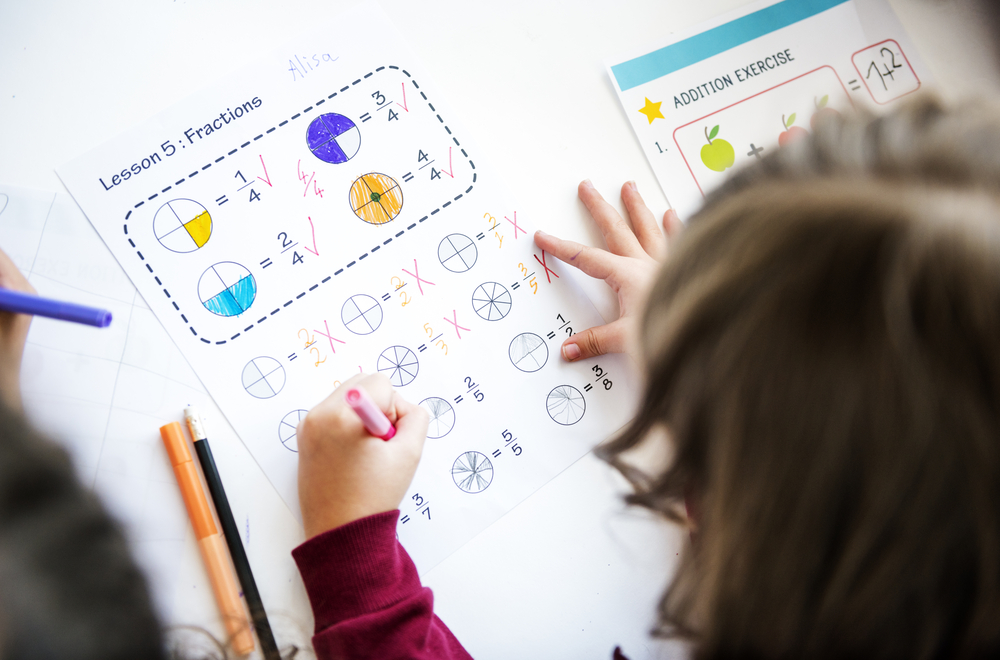
.jpg)




Comparing lengths is a vital mathematical skill that nurtures foundational understanding for young learners aged 3 to 8. Parents and teachers should prioritize this skill because it fosters critical thinking and problem-solving abilities. By engaging children in activities that involve measuring and comparing lengths, they not only grasp basic concepts of size and distance but also develop spatial awareness essential for future math concepts.
Moreover, comparing lengths enhances vocabulary as children learn and use terms like "longer," "shorter," and "equal." This linguistic development operates parallel with cognitive growth, enabling children to articulate their thoughts and understand comparisons more abstractly as they advance in their education.
Engagement in comparing lengths often involves hands-on activities, which cater to various learning styles, keeping children motivated and assistive in developing fine motor skills. Furthermore, these activities can instill a sense of curiosity and exploration in children, encouraging them to seek patterns and relationships in their everyday environment.
Incorporating Comparing lengths into learning not only aligns with early childhood education standards but also prepares children for higher-order thinking skills needed in math and science as they grow. Thus, parents and teachers should actively facilitate and encourage these activities to build a strong foundation for future learning.








