Fraction visualization Extra Challenge Math Worksheets for Ages 3-8
3 filtered results
-
From - To
Explore our "Fraction Visualization Extra Challenge Math Worksheets" designed for children ages 3-8! These engaging worksheets provide a fun and interactive way to deepen young learners' understanding of fractions. Through vibrant visuals and engaging problems, kids will practice fraction recognition, comparison, and representation. Perfect for reinforcing classroom learning or enhancing at-home education, these challenging exercises encourage critical thinking and problem-solving skills. Suitable for varying skill levels, each worksheet adapts to each learner's needs, ensuring that math is both enjoyable and educational. Help your child master the foundational concepts of fractions with our thoughtfully crafted worksheets today!
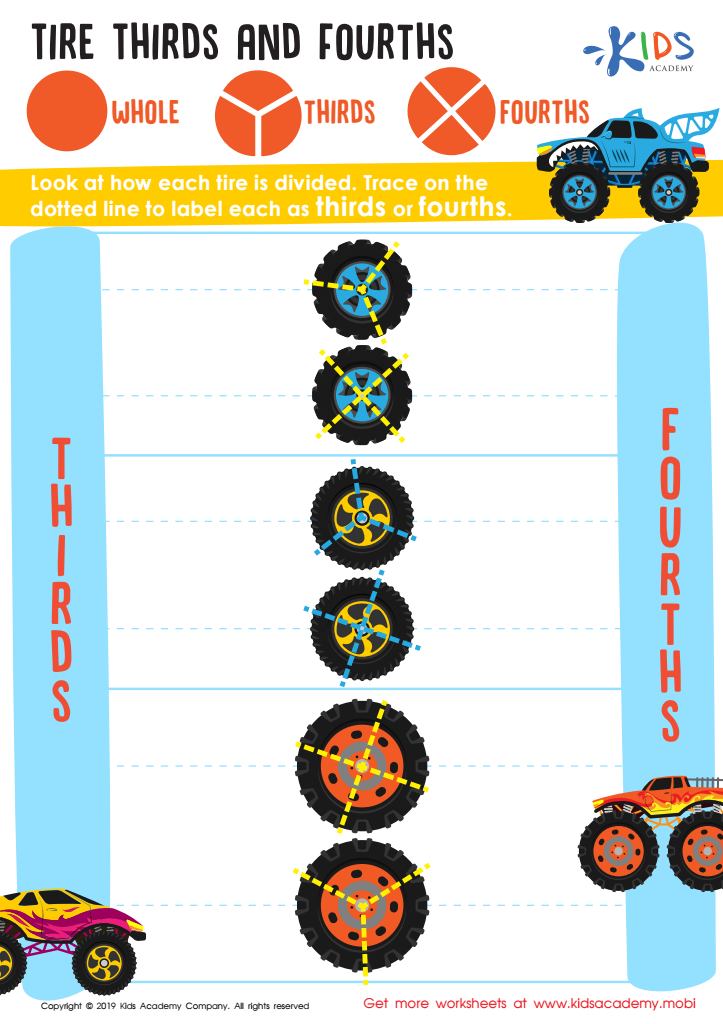
Tire Thirds and Fourths Worksheet
 Assign to My Students
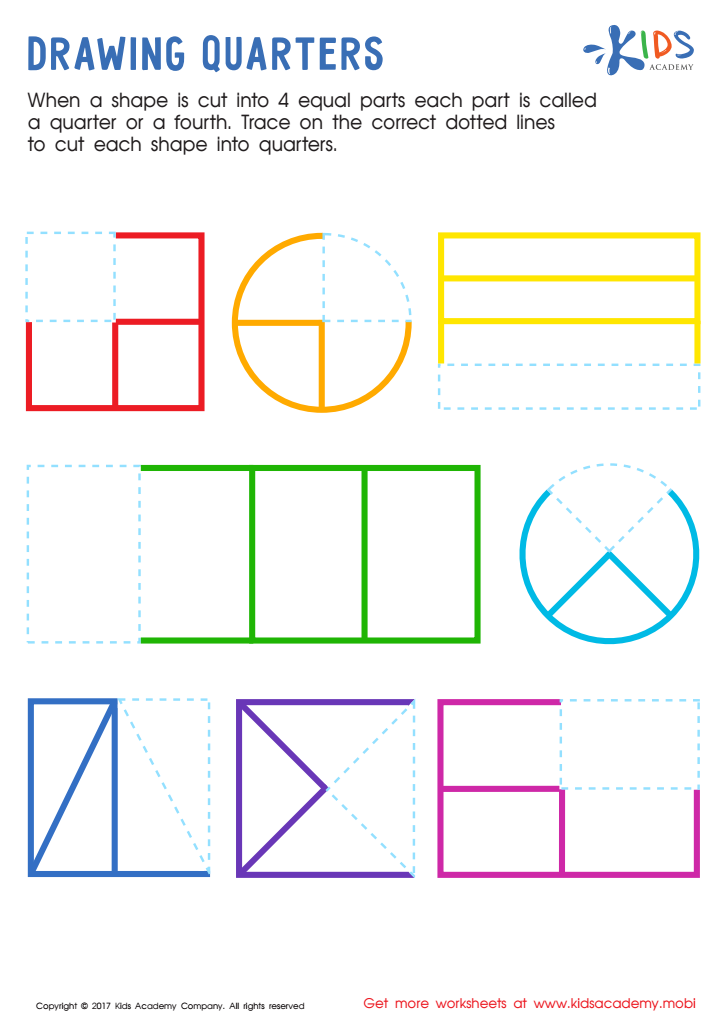
Drawing Quarters Worksheet
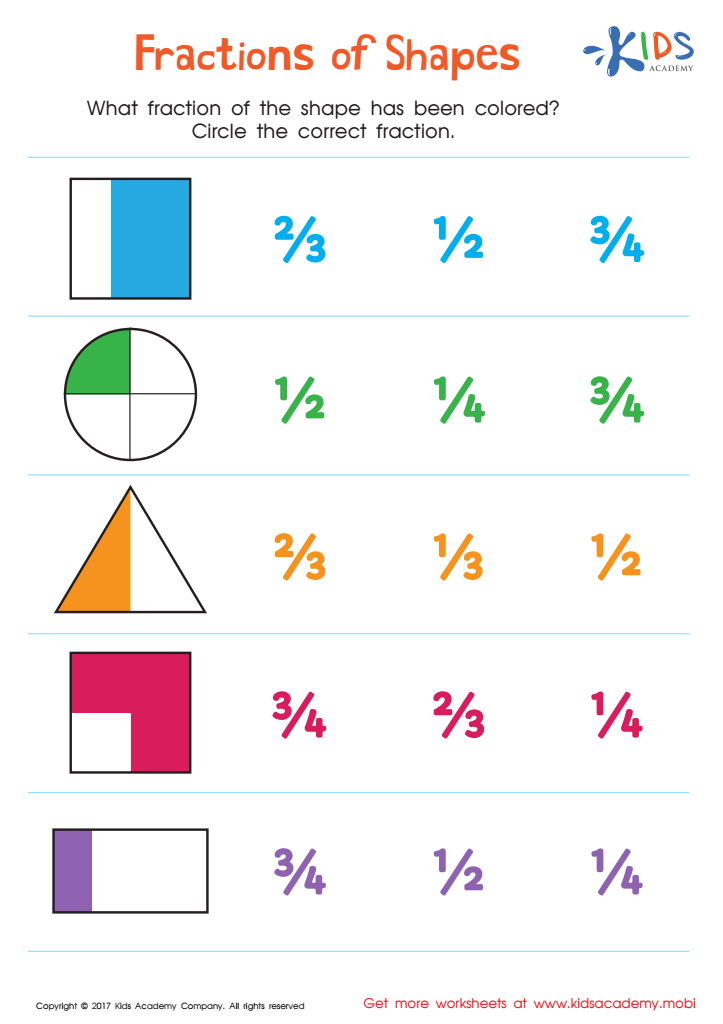
Fractions of Shapes: Math Concept Worksheet








Fraction visualization is crucial for children aged 3-8 as it lays the foundation for their understanding of mathematics. By engaging with extra challenge math tasks, children can build a strong conceptual framework instead of merely memorizing procedures. Visualizing fractions helps kids grasp the idea of parts of a whole, fostering critical thinking and problem-solving skills.
Parents and teachers should prioritize fraction visualization because it transforms abstract concepts into tangible experiences. Hands-on activities like pie slices, building block partitions, or water measurement using cups make fractions accessible and enjoyable. This age is pivotal for cognitive development; thus, providing varied visual experiences enhances children’s mathematical reasoning and retention.
Moreover, strong fraction skills are essential for later math topics, including ratios, proportions, and algebra. As foundational as literacy, these skills contribute to a child’s overall academic success and confidence.
Encouraging fraction visualization also promotes a positive attitude toward math by making learning interactive and engaging. As children navigate challenges, they learn perseverance and grit, essential traits for lifelong learning. Therefore, parents and teachers should nurture these visual experiences to bolster children’s mathematical journey and empower them for future academic hurdles.