Recognizing shapes Extra Challenge Math Worksheets for Ages 3-8
3 filtered results
-
From - To
Explore our "Recognizing Shapes Extra Challenge Math Worksheets" designed for children aged 3-8! These engaging worksheets are perfect for enhancing your child’s shape recognition skills in fun and creative ways. Featuring various shapes such as circles, squares, triangles, and more, these activities encourage critical thinking and problem-solving. Ideal for both classroom and home use, they offer a variety of challenges, from identifying shapes to drawing and coloring them. Inspire a love for learning as your child unlocks their geometric potential! Download these worksheets today and watch your little one's confidence soar in mathematics!
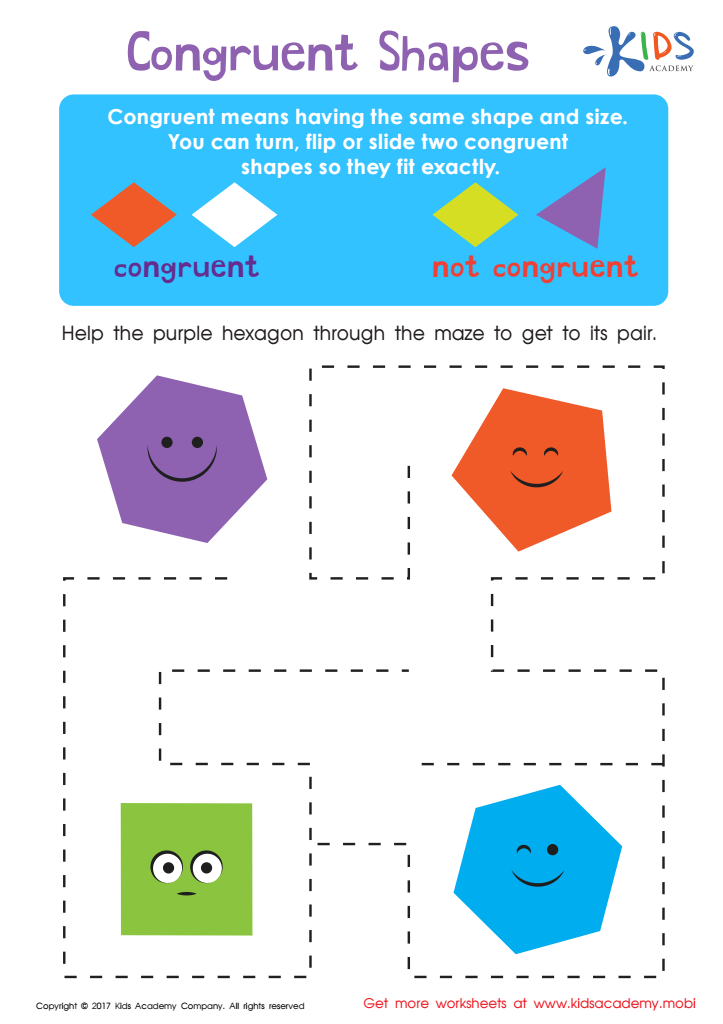
Congruent Shapes Worksheet
 Assign to My Students
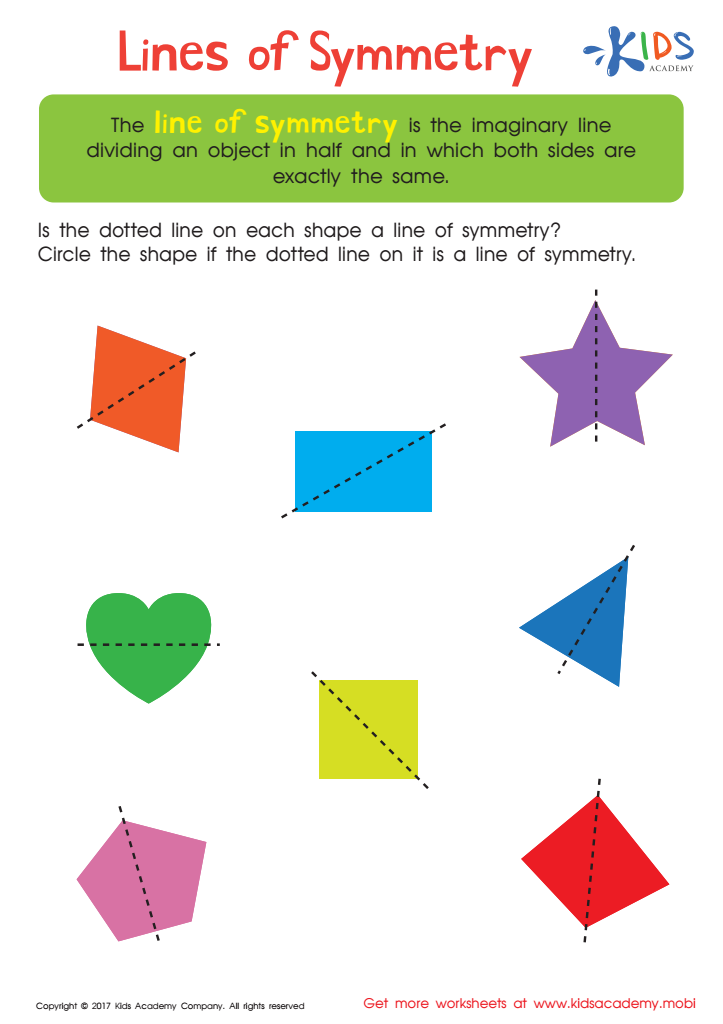
Lines of Symmetry Printable
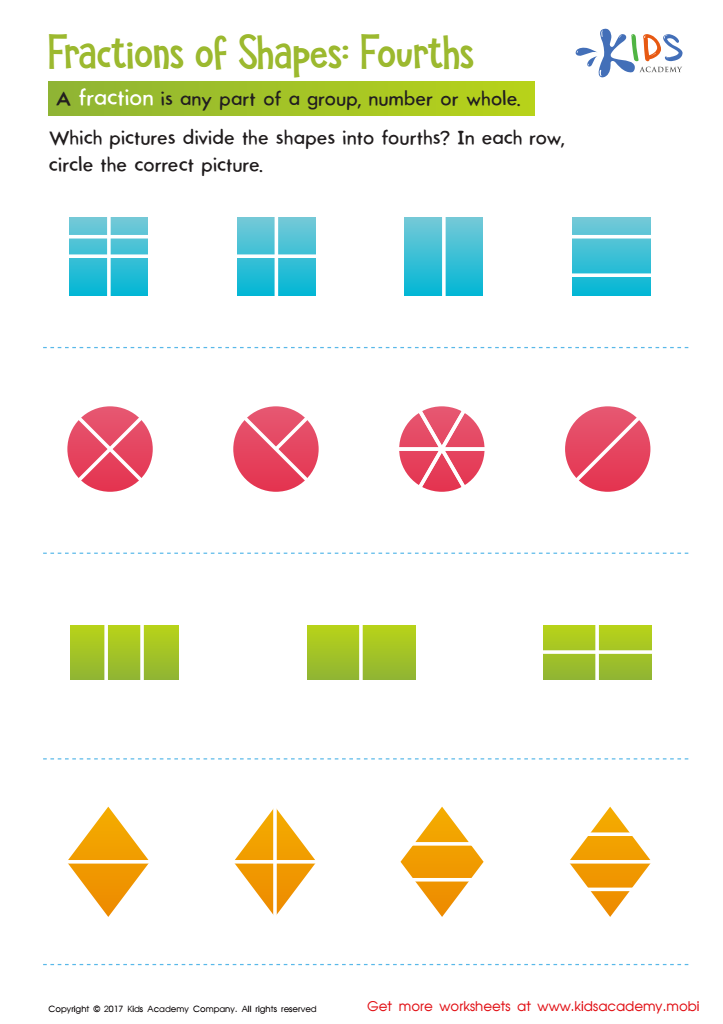
Fractions of Shapes Worksheet








Recognizing shapes is a foundational skill that plays a crucial role in early math development and overall cognitive growth in children aged 3-8. Parents and teachers should care about this concept because it lays the groundwork for more advanced mathematical reasoning later in life. Shape recognition enhances spatial awareness, which is essential for problem-solving and critical thinking.
Engaging children in activities like Recognizing Shapes Extra Challenge Math encourages them to think analytically and develop their ability to classify objects based on their properties, such as size, color, and form. This skill is integral not only to mathematics but also to subjects like science and art, fostering a well-rounded education.
Moreover, recognizing shapes can boost fine motor skills through hands-on activities, such as drawing or manipulating geometric shapes. Additionally, this focus can help children build their vocabulary and communication skills as they learn to describe shapes and their attributes.
For parents and teachers, prioritizing shape recognition allows for meaningful, playful learning experiences. Such activities can cultivate a love for math and a foundational understanding that empowers children to approach future learning challenges with confidence and enthusiasm.








