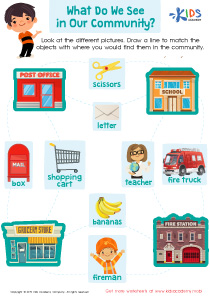
Understanding currency Extra Challenge Math Worksheets for Ages 3-8
3 filtered results
-
From - To
Introduce your young learners to the world of money with our "Understanding Currency Extra Challenge Math Worksheets" designed for ages 3-8. These fun and engaging worksheets help children recognize and understand different types of currency while practicing essential math skills. Through colorful visuals and interactive exercises, kids will learn to identify coins and bills, understand their values, and practice counting money. Perfect for developing financial literacy from an early age, these worksheets not only challenge their math abilities but also make learning about currency a delightful experience. Ideal for classroom activities or additional practice at home.
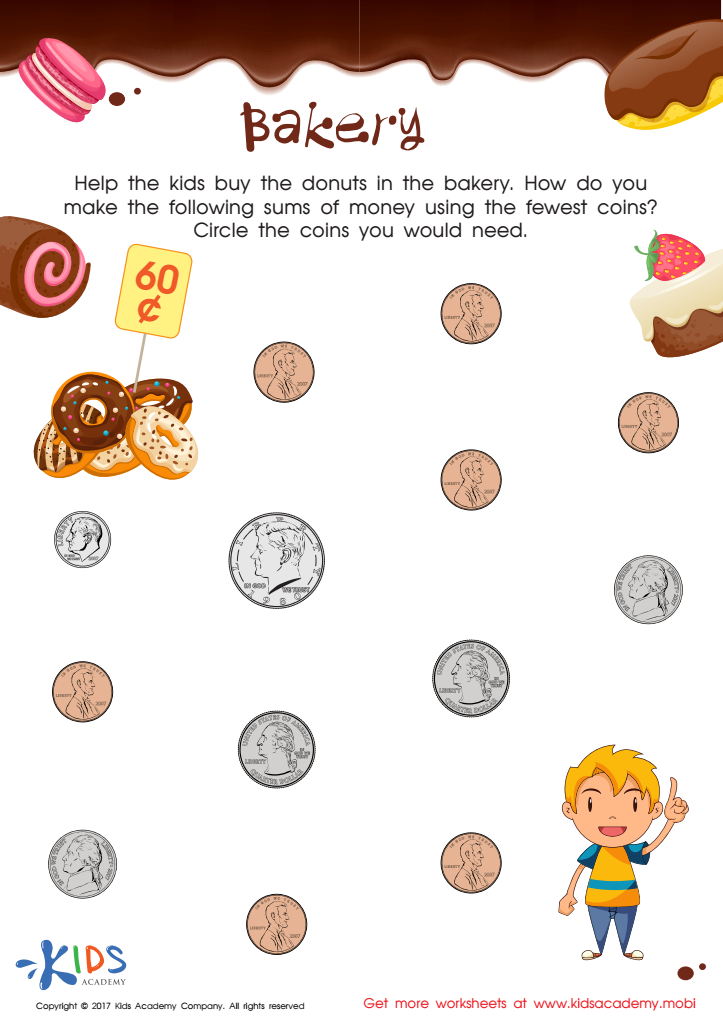
Counting Coins Worksheet
 Assign to My Students
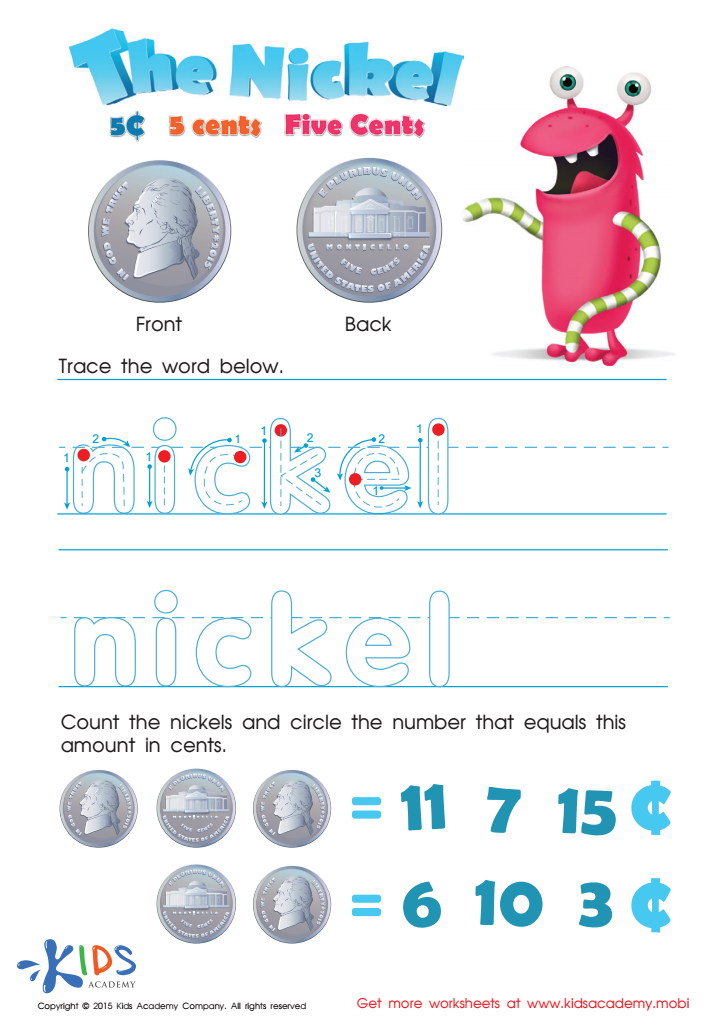
Five Cents or the Nickel Money Worksheet
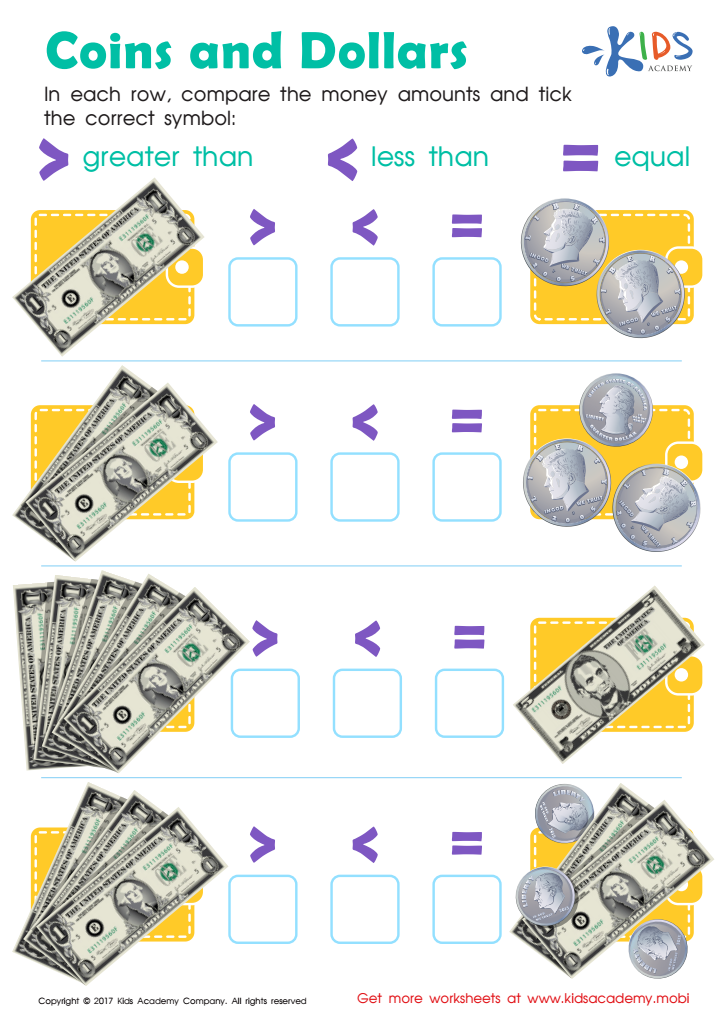
Money: Coins Dollars Printable








Understanding currency is a foundational life skill for young children, and introducing it through Extra Challenge Math for ages 3-8 can be particularly beneficial for both parents and teachers. At this age, children are highly receptive to learning new concepts and building foundational skills that will support their future academic and personal development.
First, grasping the concept of money helps kids develop essential math skills. Simple activities like counting coins, identifying currency values, and making small transactions enhance their understanding of addition, subtraction, and number recognition. These skills are not only crucial for mathematical proficiency but also for everyday problem-solving.
Moreover, learning about currency fosters financial literacy from an early age. Children who understand the value of money are more likely to grow up with better spending habits, an appreciation for saving, and an awareness of financial responsibility. This early exposure can plant the seeds for lifelong financial health.
Incorporating these extra challenges means engaging children in interactive, hands-on learning activities that make learning fun and relevant. Teachers and parents can use games, role-playing scenarios, and practical experiences like trips to the store to make the abstract concept of money tangible and understandable.
By caring about this aspect of their education, parents and teachers help young learners develop critical cognitive skills, foster a sense of responsibility, and nurture practical knowledge that will serve them throughout their lives.