Understanding graphs Extra Challenge Math Worksheets for Ages 3-8
3 filtered results
-
From - To
Discover the "Understanding Graphs Extra Challenge Math Worksheets" designed specifically for children ages 3-8. These engaging worksheets introduce young learners to essential graphing skills through interactive and enjoyable activities. Tailored to foster critical thinking, they help children analyze and interpret different types of data represented visually. Each worksheet encourages kids to explore concepts like bar graphs, pictographs, and line graphs, enhancing their mathematical understanding while making learning fun. Perfect for classroom practice or at-home learning, these challenging worksheets empower young mathematicians to build confidence in graph comprehension early on. Start your child's mathematical journey today with exciting graphing challenges!
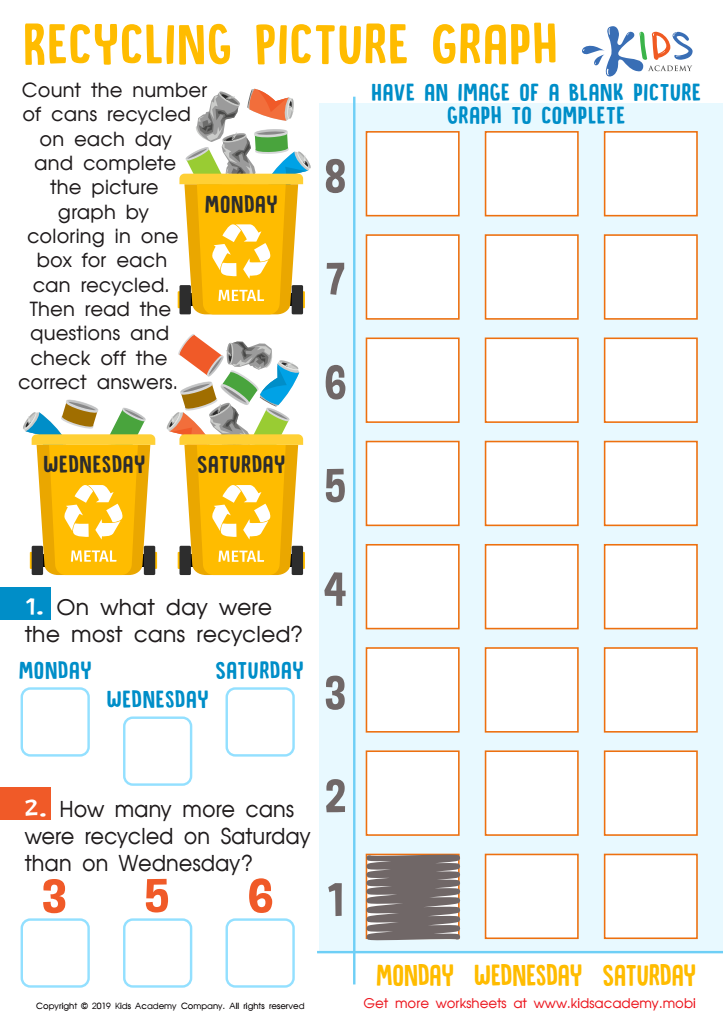
Recycling Picture Graph Worksheet
 Assign to My Students
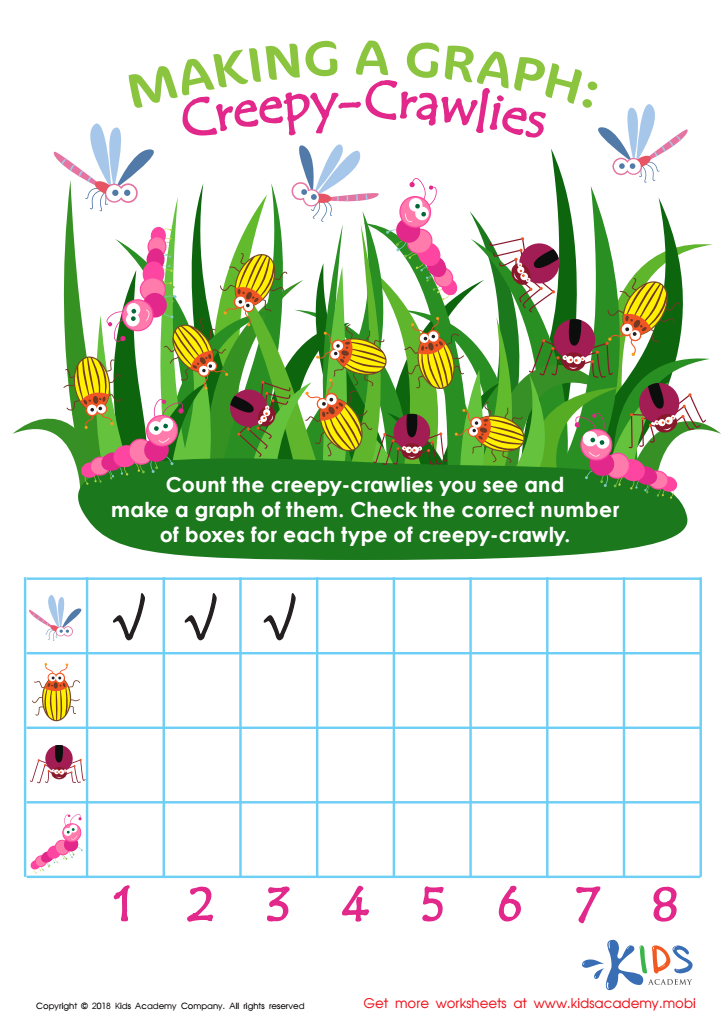
Making a Graph: Creepy Crawlies Worksheet
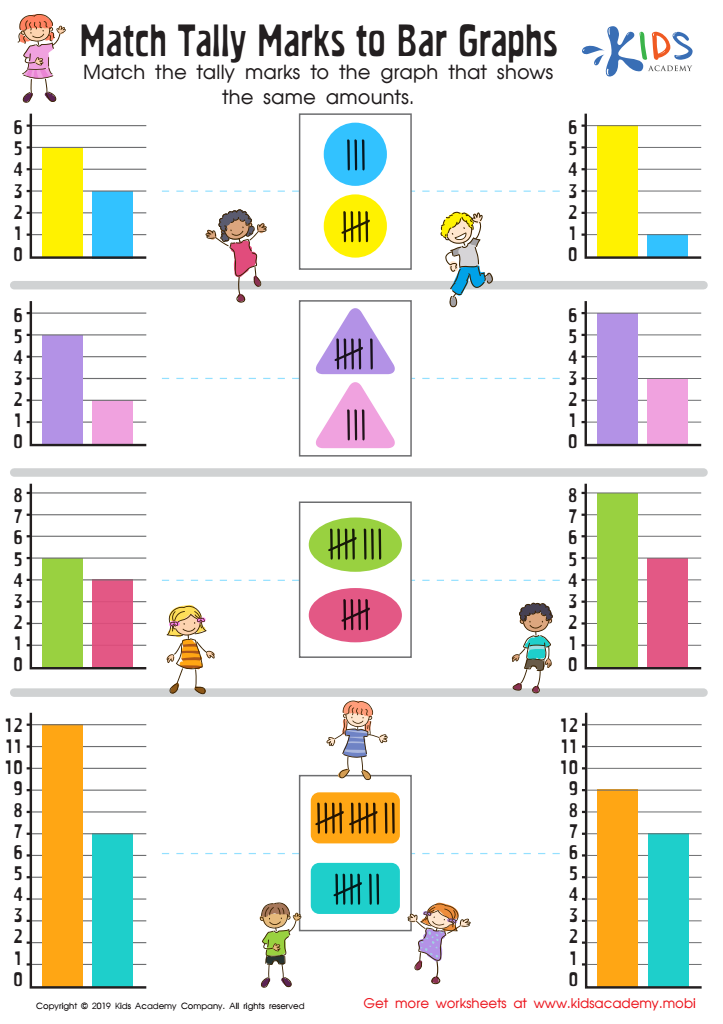
Match Tally Marks to Bar Graphs Worksheet








Understanding graphs is a foundational skill that plays a crucial role in early mathematics education, particularly in the "Understanding Graphs Extra Challenge Math" program for ages 3-8. Parents and teachers should care about this program because it equips young children with essential critical thinking and analytical skills. Graphs are a visual representation of data, and learning to read and interpret them early on fosters cognitive development and logical reasoning.
Moreover, the program promotes curiosity and engagement in math by making data relatable through real-life contexts, such as comparing favorite fruits or sports. This practical approach helps children make connections between abstract concepts and their everyday experiences, fostering a love for learning.
Additionally, as our world becomes increasingly data-driven, equipping children with the ability to understand graphs prepares them for future academic tasks and informed decision-making. Analytic skills gained from graph interpretation extend beyond math, boosting a child’s overall problem-solving abilities. Early exposure to graphing concepts also helps in laying the groundwork for more advanced mathematical skills in later years. Therefore, parents and teachers play a vital role in supporting children's mathematical journeys, shaping confident learners equipped for future challenges.








