Understanding patterns Extra Challenge Multiplication Worksheets for Ages 3-8
3 filtered results
-
From - To
Enhance your child's math skills with our "Understanding Patterns Extra Challenge Multiplication Worksheets" tailored for ages 3-8. Designed to make learning multiplication fun and engaging, these worksheets focus on recognizing and applying patterns within numbers. Kids will explore multiplication concepts through colorful visuals and interactive exercises that encourage critical thinking and problem-solving. Ideal for young learners, these extra challenge worksheets promote foundational math skills, ensuring children grasp multiplication in an enjoyable way. Join us in nurturing your child's mathematical abilities and building confidence with our comprehensive resources. Get started today and watch their skills soar!
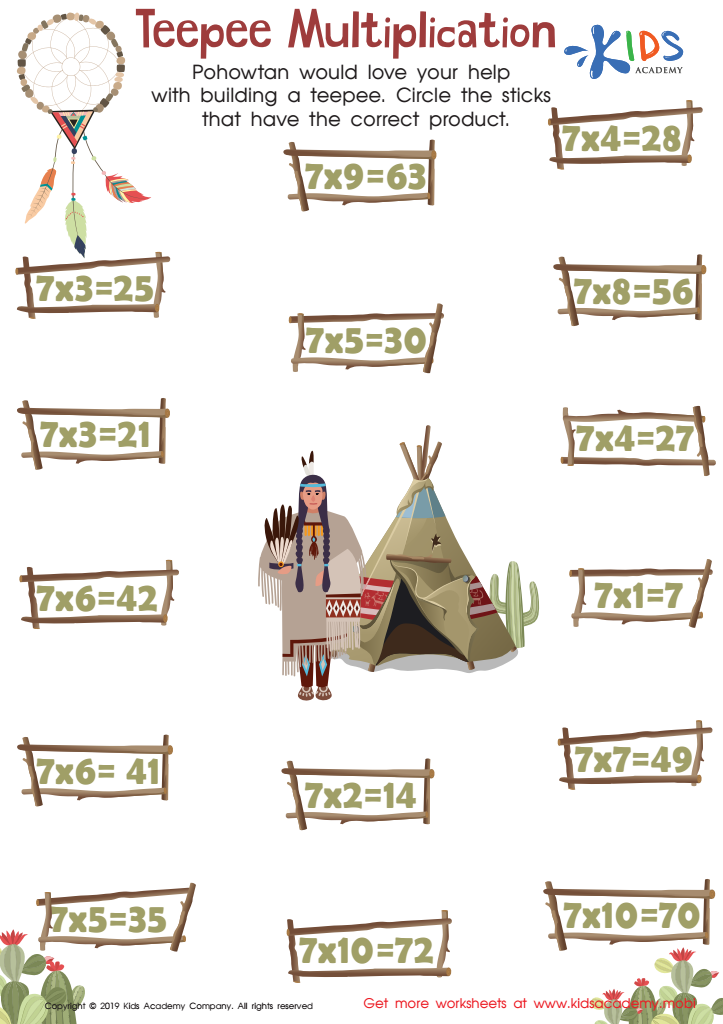
Teepee Multiplication Worksheet
 Assign to My Students
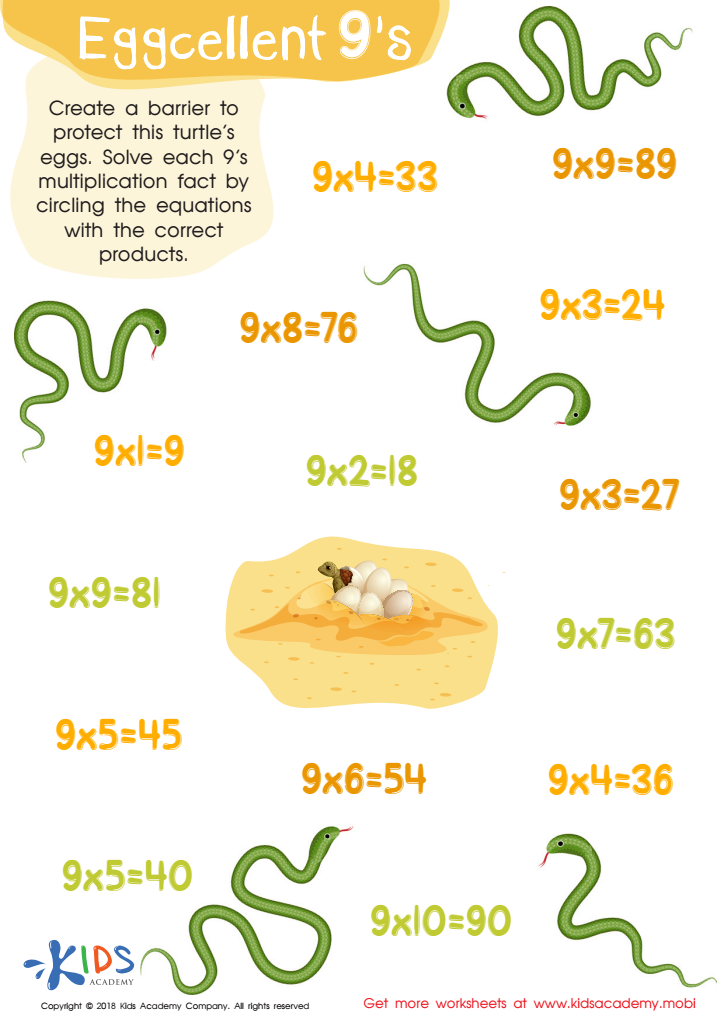
Eggcellent 9’s Worksheet
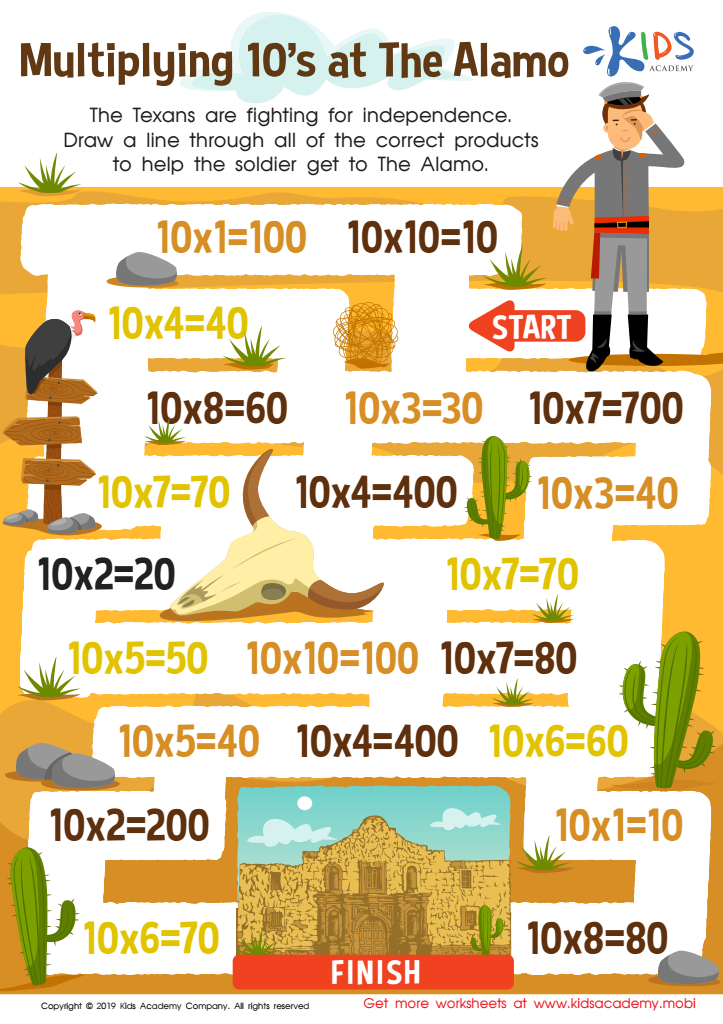
Multiplying 10’s at The Alamo Worksheet







Understanding patterns is crucial in early childhood education, particularly for children aged 3-8, as it forms the foundation for mathematical thinking and problem-solving skills. When parents or teachers engage in activities that emphasize pattern recognition and manipulation, they help children develop critical cognitive abilities that are essential for future learning, especially in mathematics.
Patterns underpin many mathematical concepts, including counting, addition, subtraction, and eventually multiplication. By introducing an extra challenge with multiplication connected to patterns, educators can stimulate children's cognitive skills, encouraging them to see relationships between numbers and recognize sequences. This not only builds their confidence in mathematical reasoning but also enhances their overall academic performance.
Furthermore, understanding patterns fosters creativity, as children begin to create their own sequences or patterns using various materials. It also aids in developing fine motor skills through hands-on activities, promoting an integrated learning experience.
Incorporating pattern recognition and multiplication challenges makes learning more enjoyable and interactive. It encourages collaboration among peers, enhances social skills, and often leads to a lifelong love for mathematics. Ultimately, paying attention to these early learning priorities equips children with the essential tools needed for their educational journey.