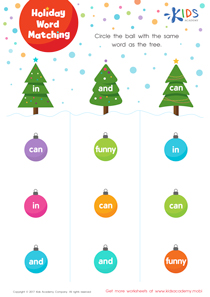
Problem-Solving Skills Extra Challenge Word Scramble Worksheets for Ages 3-8
3 filtered results
Difficulty Level
Grade
Age
-
From - To
Subject
Activity
Standards
Enhance your child's cognitive development with our Problem-Solving Skills Extra Challenge Word Scramble Worksheets for ages 3-8. Carefully designed to engage young minds, these worksheets will stimulate your child's critical thinking and problem-solving abilities. Each worksheet presents a fun and educational word scramble challenge that encourages kids to focus, recognize patterns, and rearrange letters to form words. Ideal for both classroom and at-home learning, our exercises promote language development, spelling skills, and concentration. Spark your child's curiosity and boost their confidence in learning through engaging, age-appropriate puzzles they’ll love solving. Download today to start the learning adventure!
Favorites
With answer key
Interactive
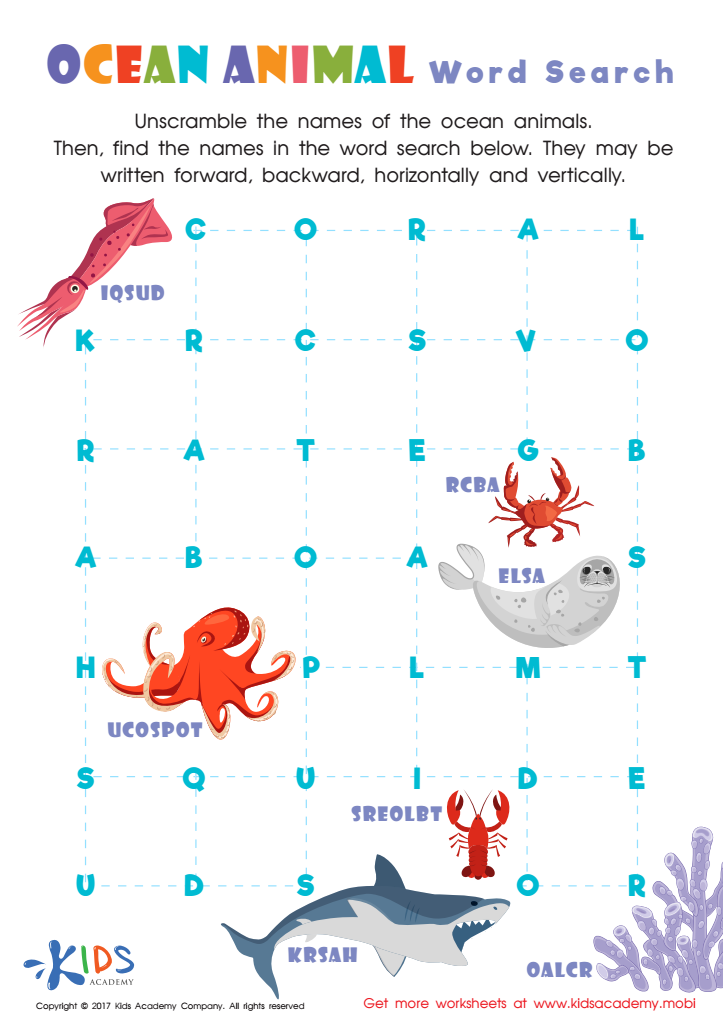
Ocean Animals Word Search Printable
Challenge your child to unscramble the names of ocean animals and find them in the word search. This ocean animals printable is a fun way to teach kids more about these fascinating creatures!
 Assign to My Students
Ocean Animals Word Search Printable
Worksheet
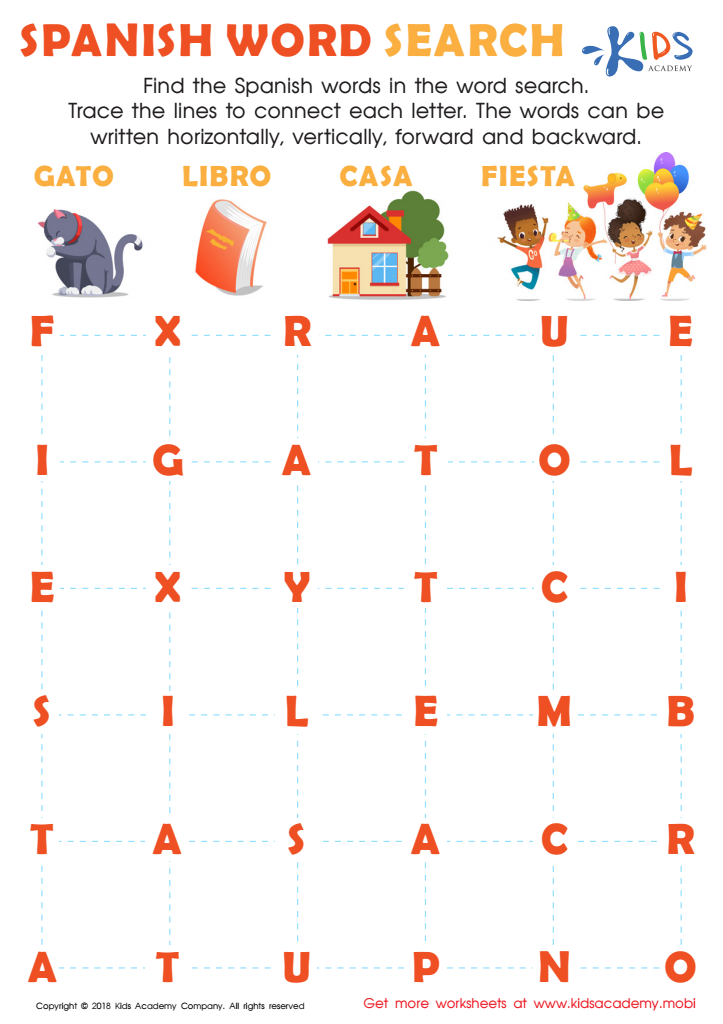
Spanish Word Search Worksheet
This free worksheet encourages students to learn Spanish words while developing visual, fine motor, and hand-eye coordination skills. Through colorful pictures and traceable lines, the task of finding words such as gato, libro, casa, and fiesta is disguised as a fun and engaging way to explore new cultures.
Spanish Word Search Worksheet
Worksheet
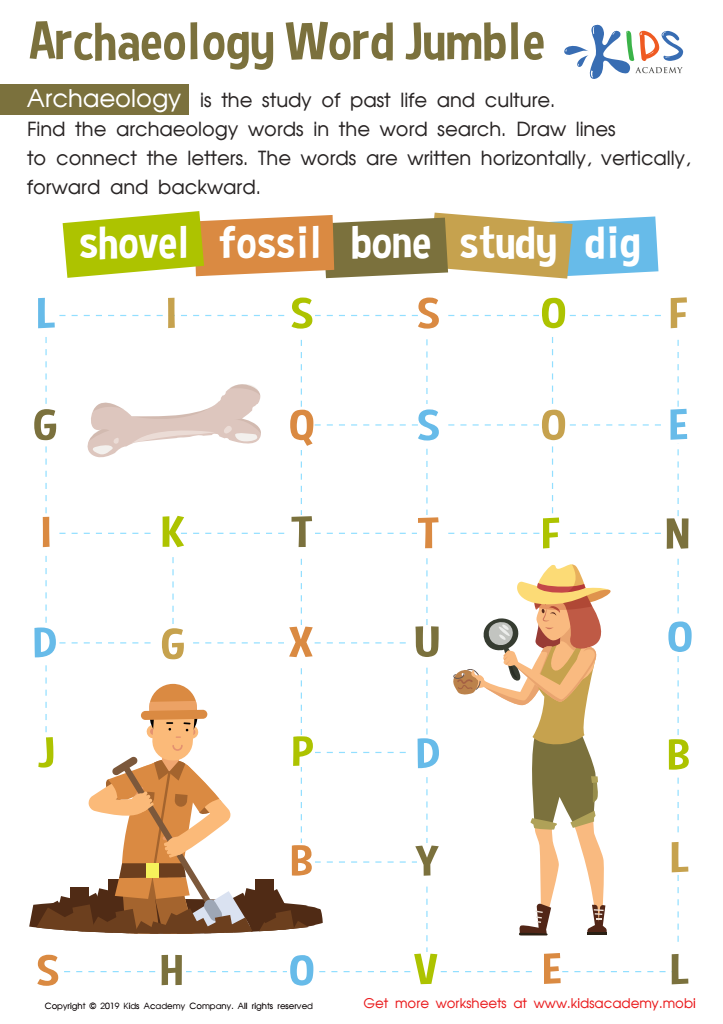
Archaeology Word Jumble Worksheet
Kids will love this fun, colorful word search about archeology! Tracing the lines, they'll uncover terms related to the study of past life and cultures. As they explore, they'll learn about fossils and bones and discover new archeology words.
Archaeology Word Jumble Worksheet
Worksheet
Join Kids Academy for Free
Who is primarily going to use this learning content?




Problem-solving skills are essential for children's cognitive and emotional development, and incorporating activities like an extra challenge word scramble can significantly enhance these abilities. For ages 3-8, engaging in word scrambles taps into several developmental benefits. Firstly, such activities encourage critical thinking and pattern recognition as kids decipher jumbled letters to form meaningful words. This thought process lays a strong foundation for future academic skills.
Additionally, word scrambles enhance vocabulary and spelling proficiency. As children experiment with different letter combinations, they become more familiar with word structures, which aids in reading and writing skills. This activity is also an excellent way for young minds to improve their attention to detail, focus, and concentration. Completing a word scramble requires sustained attention, helping children practice the persistence needed for larger, more complex tasks.
Moreover, problem-solving through word scrambles can boost a child's self-esteem and confidence. Successfully solving a puzzle gives children a sense of accomplishment, reinforcing the idea that persistent effort leads to positive outcomes.
Finally, these activities provide a fun and interactive bonding experience for parents and teachers with children. They offer opportunities to discuss strategies, explore new words, and celebrate successes together, fostering a positive learning environment that emphasizes both educational growth and emotional support.