Noun identification Extra Challenge Grammar Worksheets for Ages 3-8
4 filtered results
-
From - To
Unlock the world of grammar with our "Noun Identification Extra Challenge Grammar Worksheets" designed for children ages 3-8! These engaging worksheets provide an exciting way for young learners to enhance their understanding of nouns through fun activities and challenges. Each worksheet encourages kids to identify, categorize, and use different types of nouns, building foundational writing skills. Perfect for both classroom settings and at-home practice, these sheets cater to varying skill levels, ensuring that every child can progress at their own pace. Join us in making grammar fun and interactive while fostering a love for language in your child!
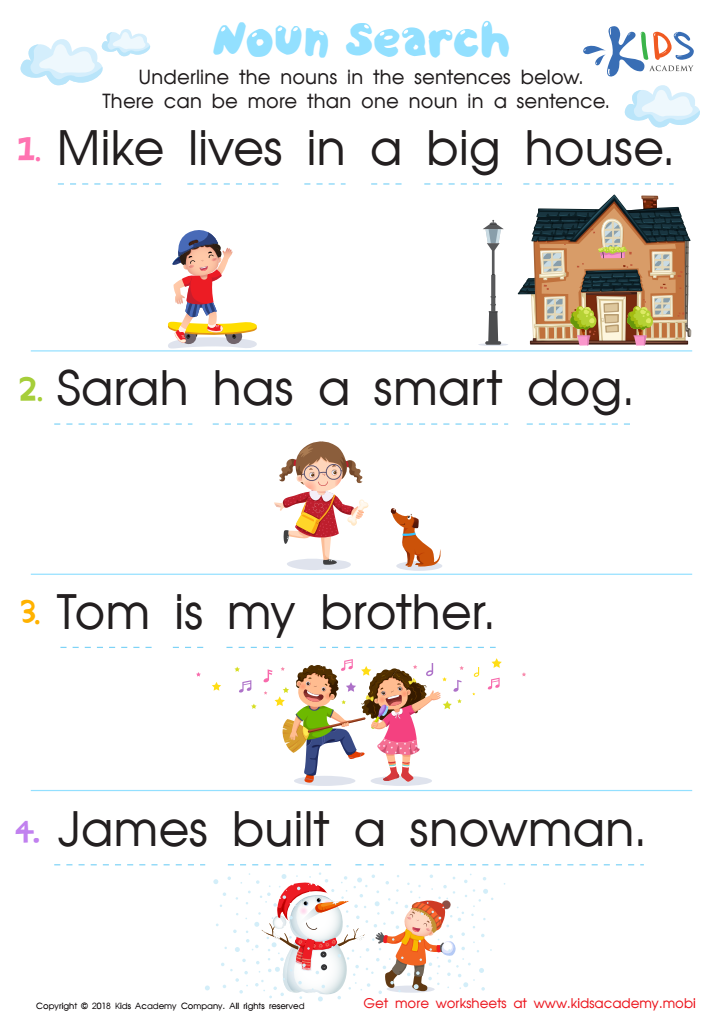
Noun Search Worksheet
 Assign to My Students
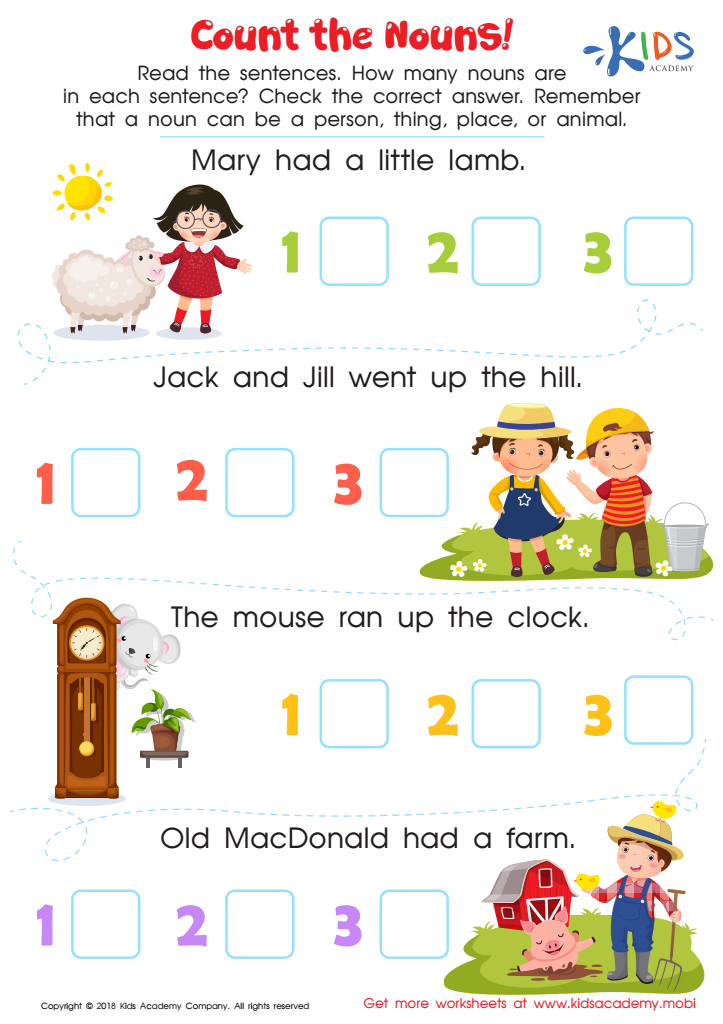
Count the Nouns Worksheet
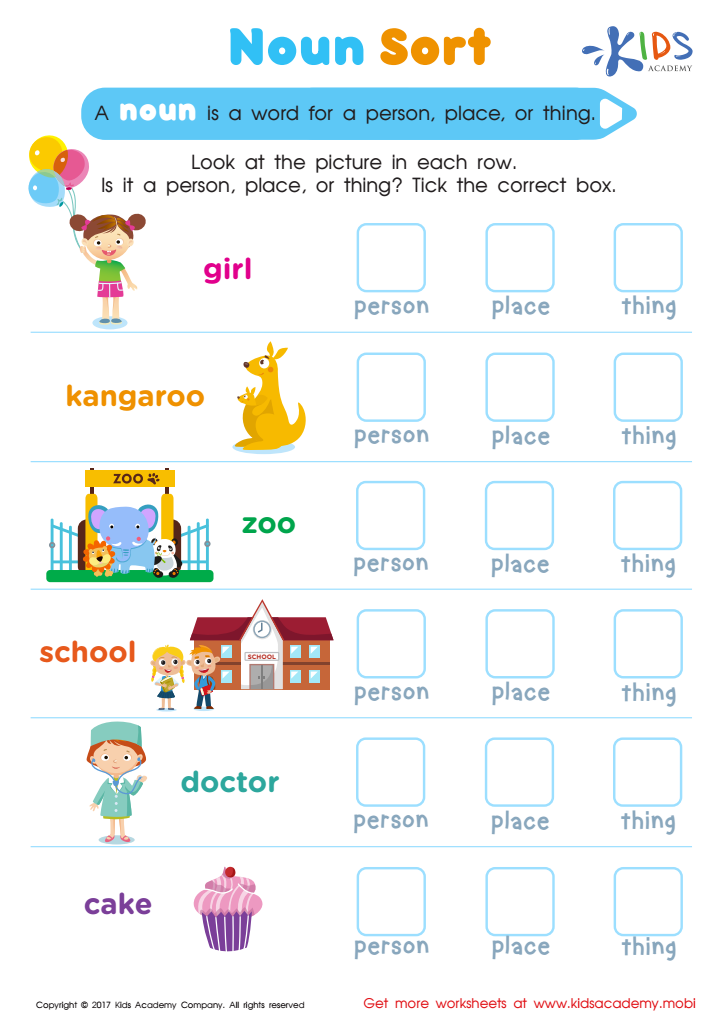
Noun Sort Printable
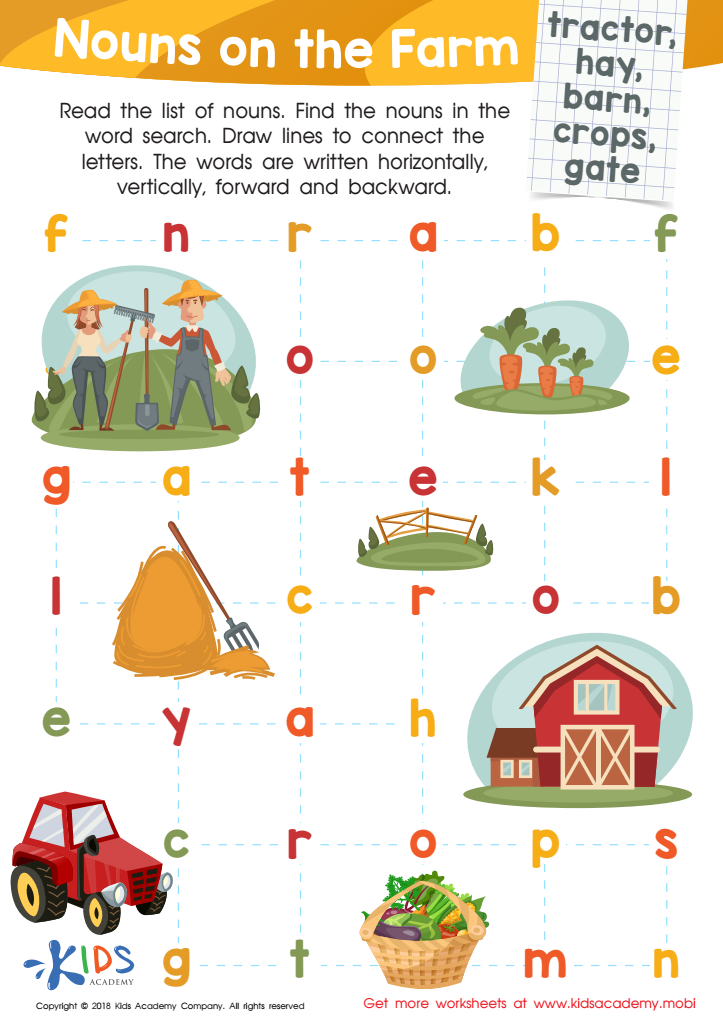
Nouns on the Farm Worksheet


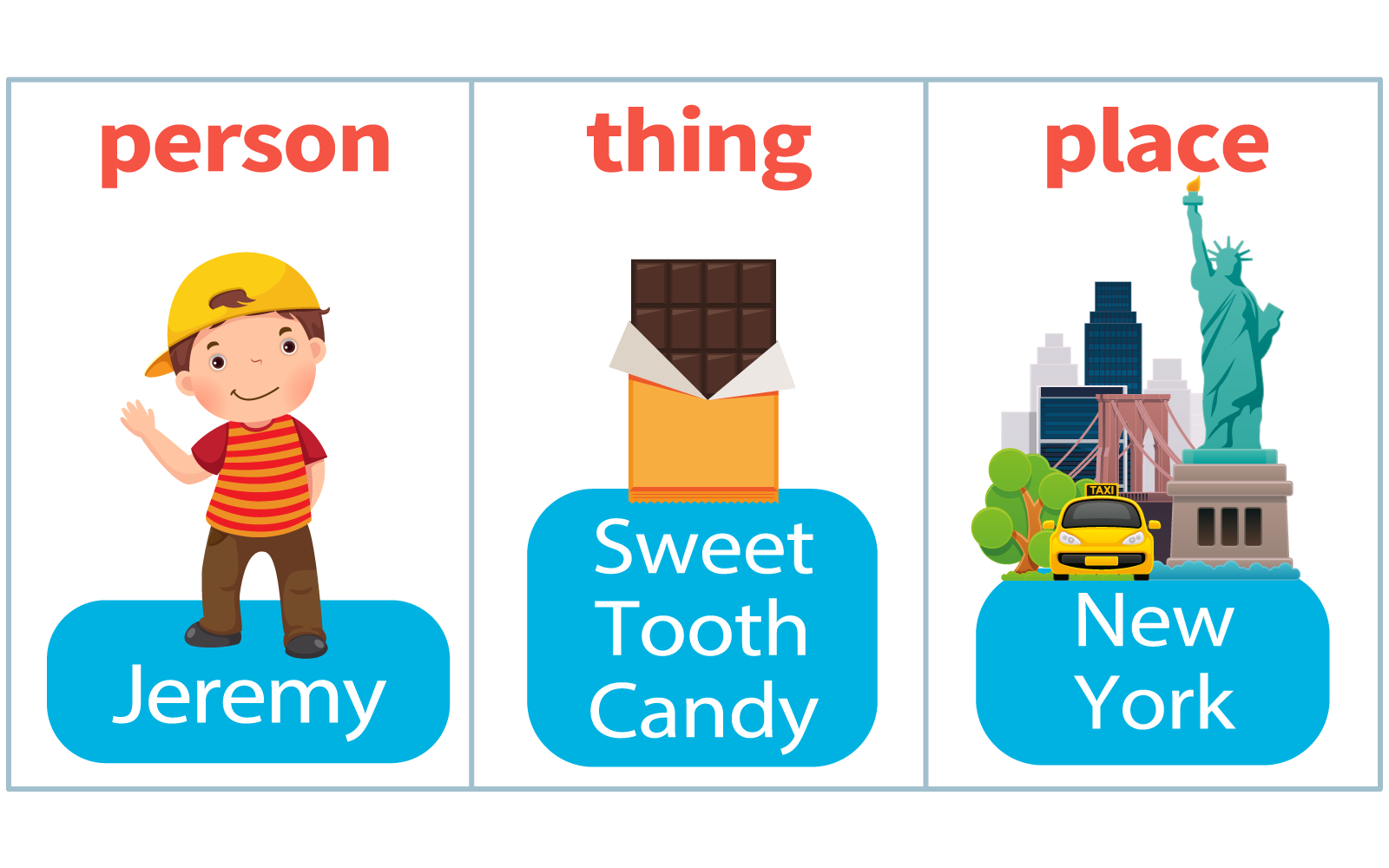





Noun identification is a foundational aspect of language development that significantly impacts early literacy skills. For children aged 3-8, understanding nouns helps them name people, places, things, and ideas, which are crucial for effective communication. Parents and teachers should care about this skill because it lays the groundwork for sentence construction, vocabulary expansion, and comprehension.
Children who can identify nouns are better equipped to understand stories, follow directions, and express their feelings and thoughts. Engaging in activities that challenge children to identify nouns not only makes learning fun but also reinforces their observational skills and other cognitive abilities. For example, "Noun Identification Extra Challenge Grammar" activities can motivate children to look closely at the world around them, fostering curiosity and enhancing their analytical skills.
Moreover, teaching nouns in a structured way promotes confidence in their speaking and writing as they gain clarity in their expression. Early mastery of nouns can lead to better academic performance in the future. Therefore, embracing these grammatical challenges is vital for nurturing well-rounded communicators who thrive in social and educational settings. By prioritizing noun identification, parents and teachers facilitate a robust foundation for lifelong learning and language proficiency.