Data interpretation Extra Challenge Worksheets for Ages 3-9
4 filtered results
-
From - To
Unlock the power of data interpretation for young learners with our Extra Challenge Worksheets designed for ages 3-9! These engaging resources are crafted to enhance your child's analytical skills while making learning fun. Each worksheet features colorful illustrations and interactive activities that encourage children to explore concepts such as sequencing, graphing, and pattern recognition. Ideal for both home and classroom settings, these worksheets promote critical thinking and problem-solving abilities. Whether your child is a beginner or ready for advanced challenges, our worksheets offer a range of difficulty levels to suit every learner. Support your child’s educational journey with our comprehensive data interpretation resources!
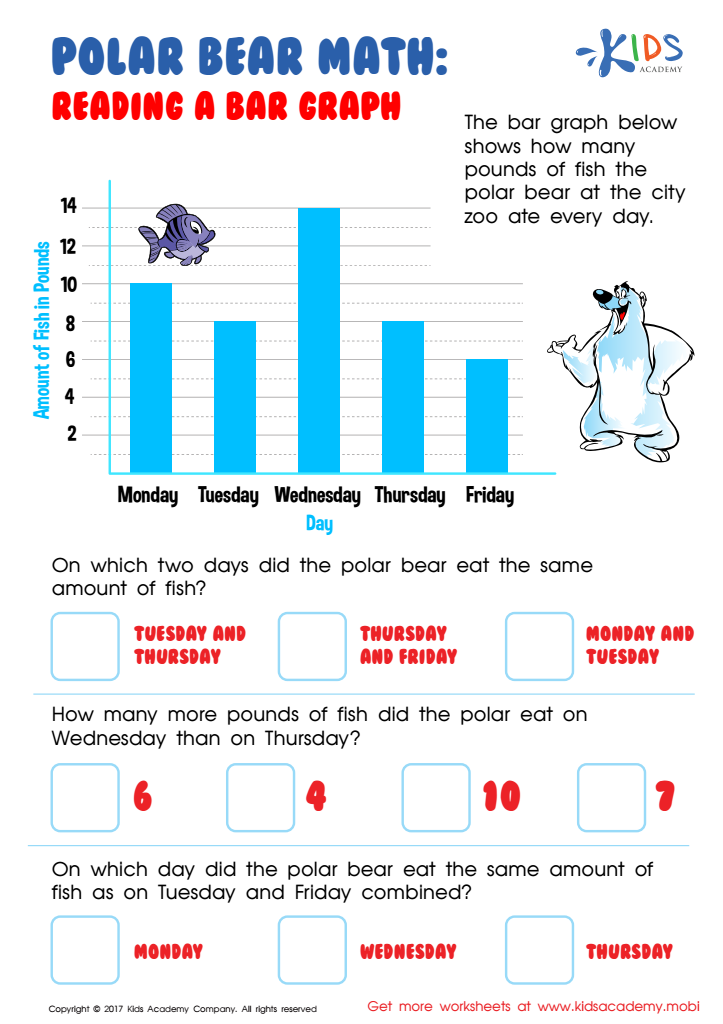
Reading Bar Graph Worksheet
 Assign to My Students
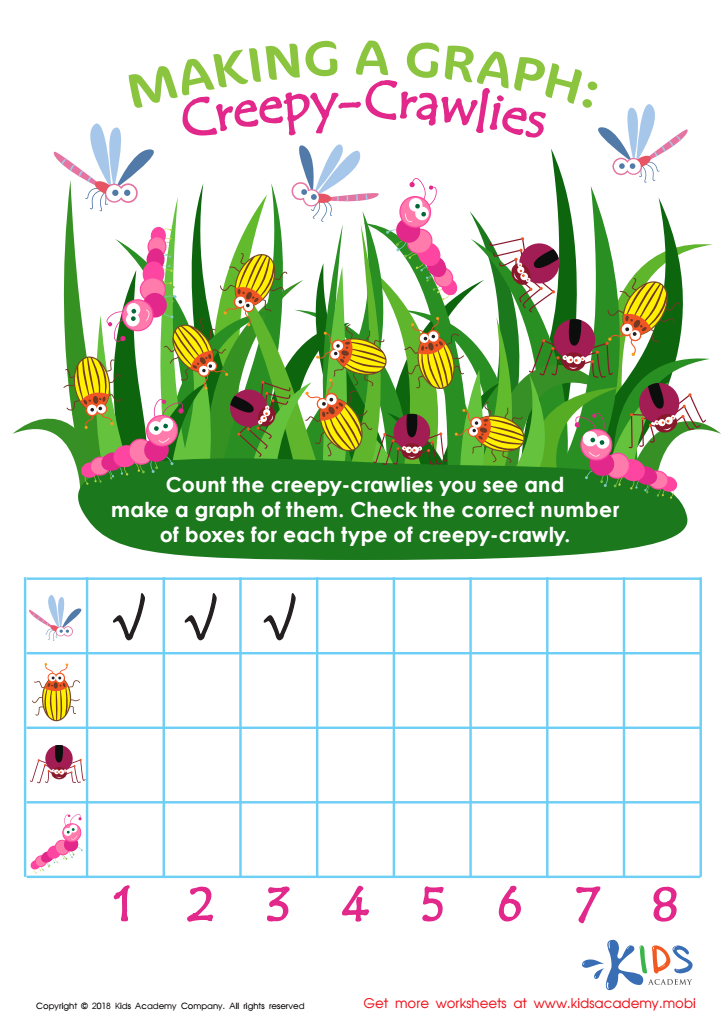
Making a Graph: Creepy Crawlies Worksheet
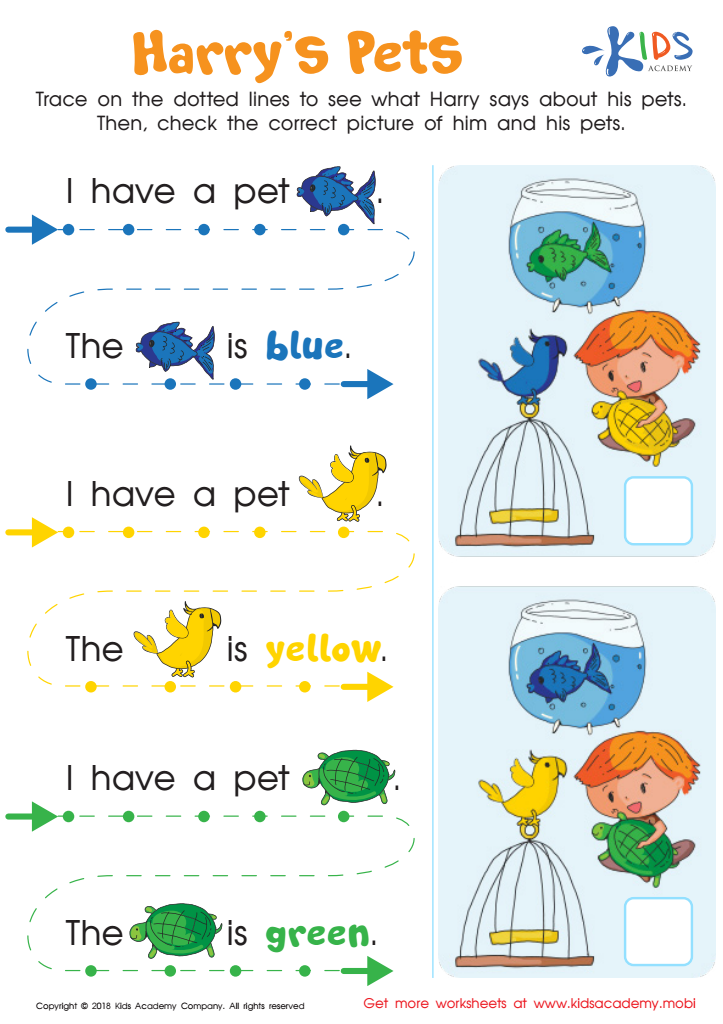
Read from Left to Right: Harry's Pets Worksheet
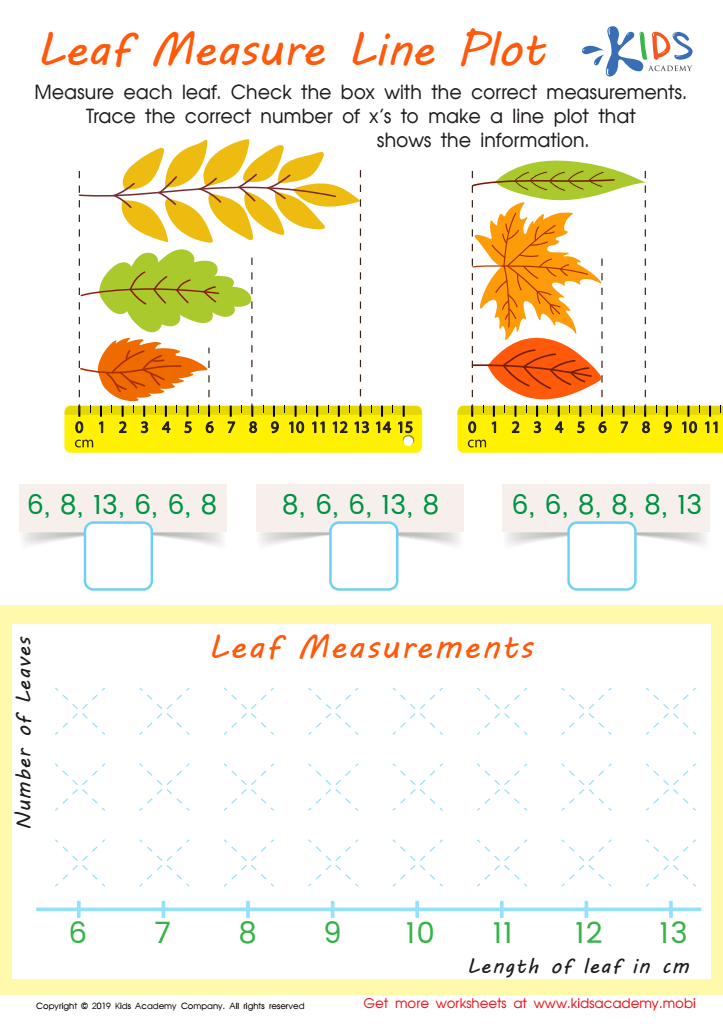
Leaf Measure Line Plot Worksheet







Data interpretation is a crucial skill for children aged 3-9, and parents or teachers should prioritize it for several reasons. Firstly, developing data interpretation skills early helps foster critical thinking. Children learn to analyze information, recognize patterns, and draw conclusions, skills essential for problem-solving in everyday life. By engaging in data activities, such as sorting, classifying, or graphing, young learners can make sense of the world around them and understand how to work with information.
Secondly, data interpretation nurtures mathematical competencies. As kids explore concepts like quantity, number relationships, and measurements, they build a solid foundation for advanced math skills in later grades. Additionally, it cultivates their curiosity and encourages them to ask questions, driving a love for learning.
Moreover, these skills benefit social development. Children learn to communicate findings, discuss results, and collaborate with peers on projects, reinforcing teamwork and respect for diverse perspectives.
Incorporating data interpretation challenges in daily activities—whether through graphing their favorite fruits or counting toys—engages young learners and makes learning fun. These foundational skills not only prepare children academically but also empower them to navigate an increasingly data-driven world. Hence, prioritizing these activities ensures holistic development for children in their early years.








