Listening skills Extra Challenge Worksheets for Ages 3-9
3 filtered results
-
From - To
Enhance your child's listening abilities with our engaging Extra Challenge Worksheets designed for ages 3 to 9! These interactive resources provide a fun and educational way for children to improve their auditory skills through a variety of targeted activities. Each worksheet focuses on fostering comprehension, attention, and memory through captivating exercises tailored to different age groups. Ideal for classrooms or home learning environments, our worksheets encourage active participation and make listening practice enjoyable. Perfect for reinforcing learning, these worksheets challenge young learners to develop essential listening skills critical for academic success. Explore our collection and watch your child's skills flourish!
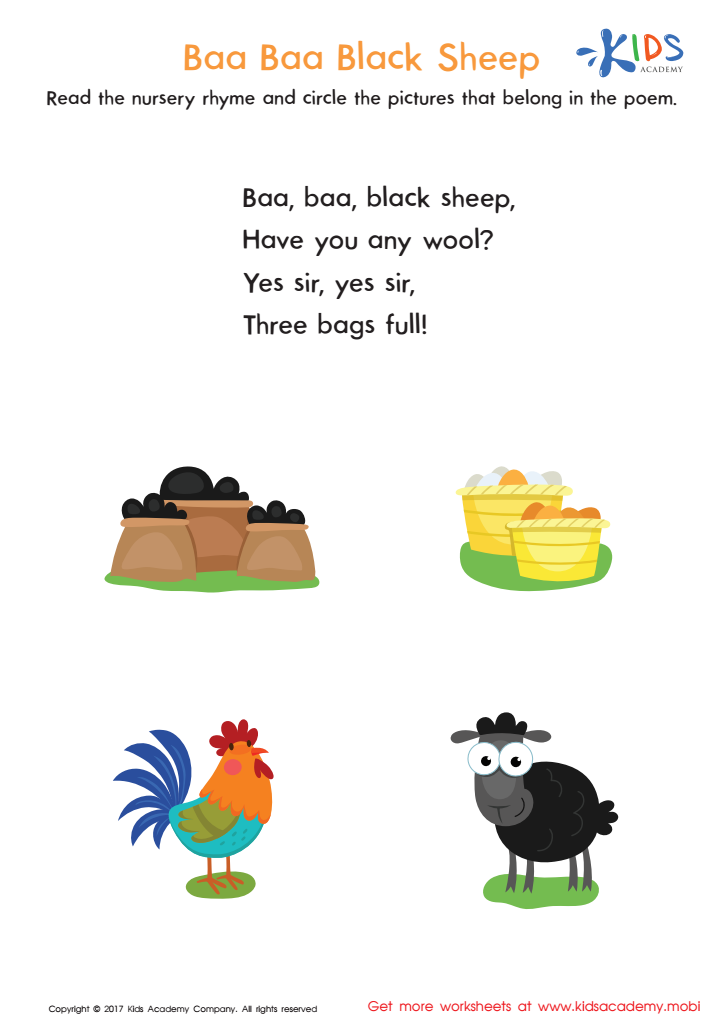
Baa Baa Black Sheep Printable
 Assign to My Students
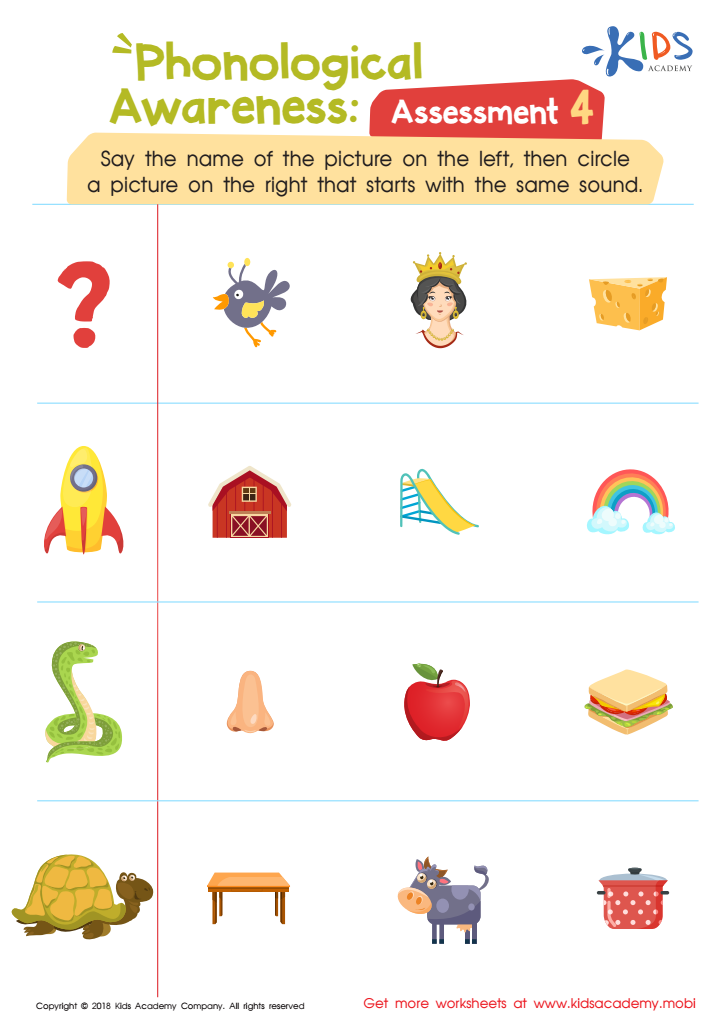
Phonological Awareness: Assessment 4 Worksheet
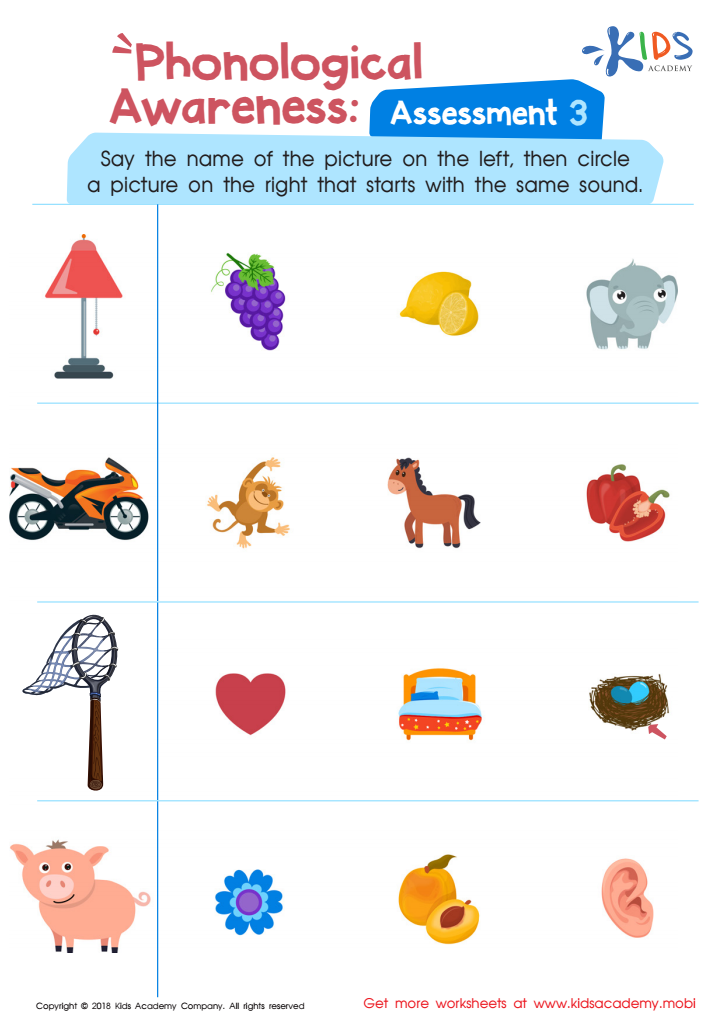
Phonological Awareness: Assessment 3 Worksheet








Listening skills are a foundational component of early childhood development, particularly for children aged 3-9. Parents and teachers should care about developing these skills because effective listening is crucial for communication, social interaction, and learning. When children master listening skills, they improve their ability to comprehend instructions, participate in conversations, and engage with stories, which enhances literacy and cognitive development.
Moreover, good listening helps foster emotional intelligence; children who listen well are better equipped to understand and empathize with others, promoting positive relationships. This age group is also developing their ability to focus, and listening exercises can significantly improve their attention spans, leading to better academic performance.
Incorporating listening challenges at home or in the classroom can create dynamic learning experiences that keep children engaged while allowing them to practice following directions, memory recall, and critical thinking. These challenges can include games, auditory storytelling, and group discussions that promote not just individual growth, but also collaborative skills. In summary, nurturing listening skills in early childhood leads to lifelong advantages in academic and personal contexts, making it a priority for both parents and educators.








