Number comprehension Extra Challenge Worksheets for Ages 3-9
6 filtered results
-
From - To
Explore our "Number Comprehension Extra Challenge Worksheets for Ages 3-9," designed to enhance mathematical understanding and skills in young learners. These printable worksheets offer a variety of engaging activities that promote number recognition, counting, and value comparison. Tailored to be both fun and educational, these resources cater to different learning styles, ensuring every child can grasp foundational number concepts. Suitable for homeschooling, extra practice, or classroom activities, each worksheet encourages critical thinking and problem-solving in a playful format. Empower your child's numerical confidence and comprehension in a supportive way, allowing them to thrive in their mathematical journey. Download now to get started!
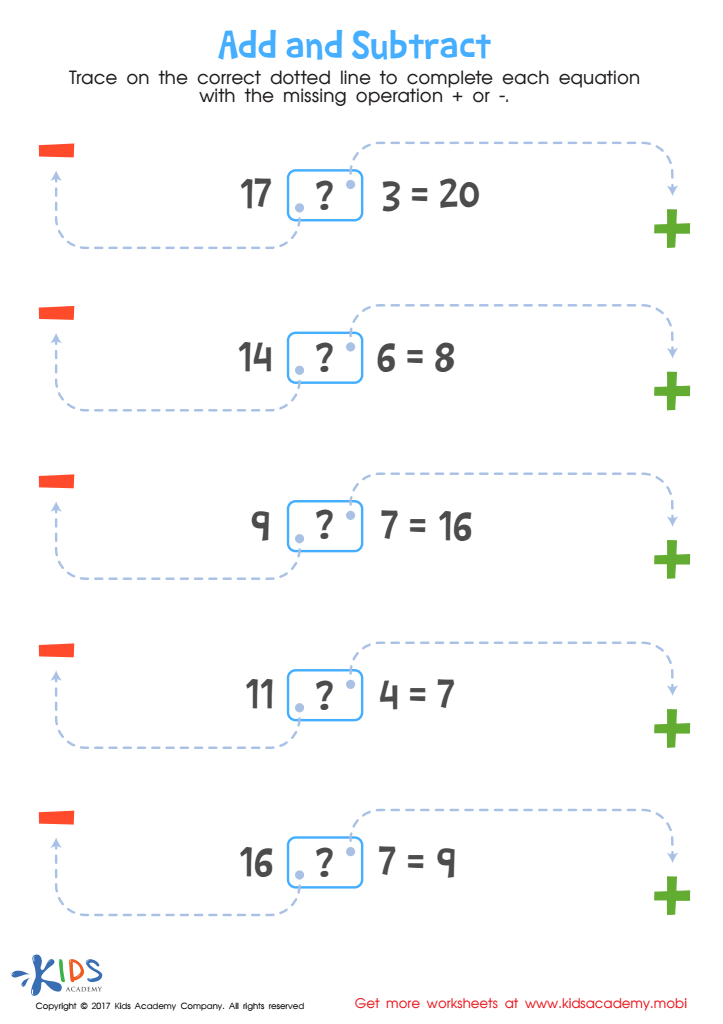
Add and Subtract Worksheet
 Assign to My Students
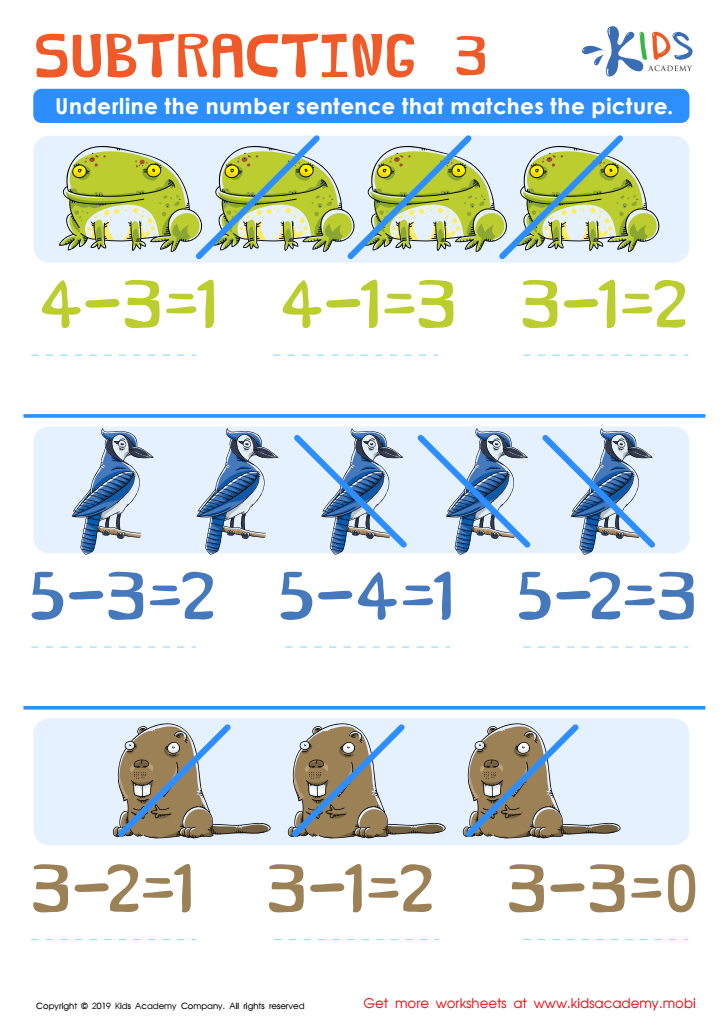
Subtracting 3 Worksheet
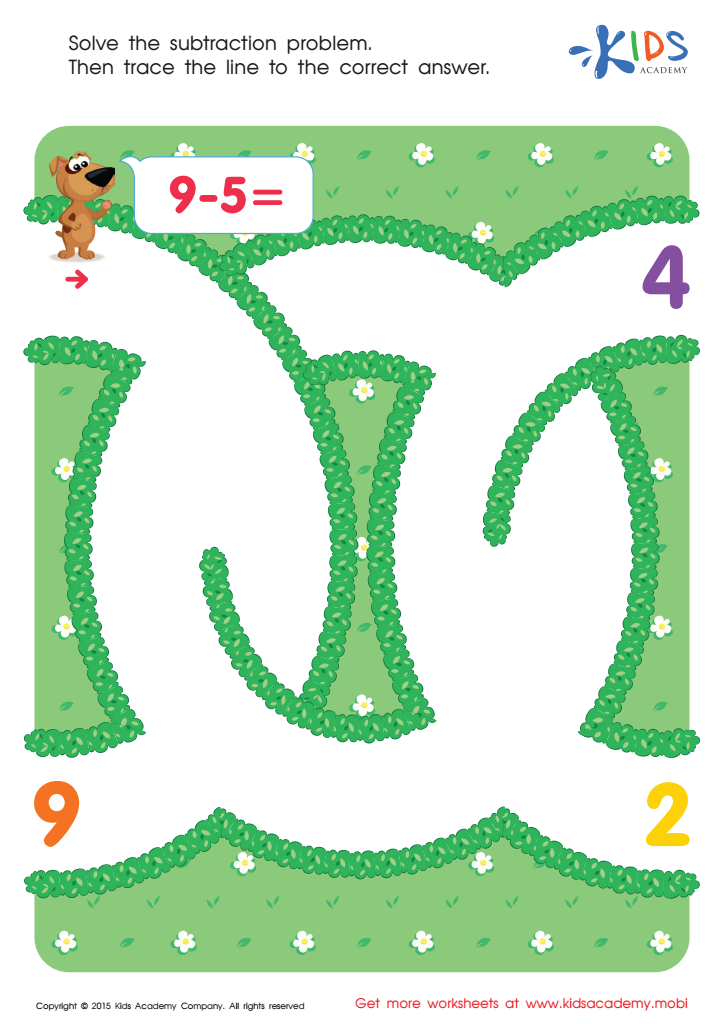
Subtraction Nine And Five Worksheet
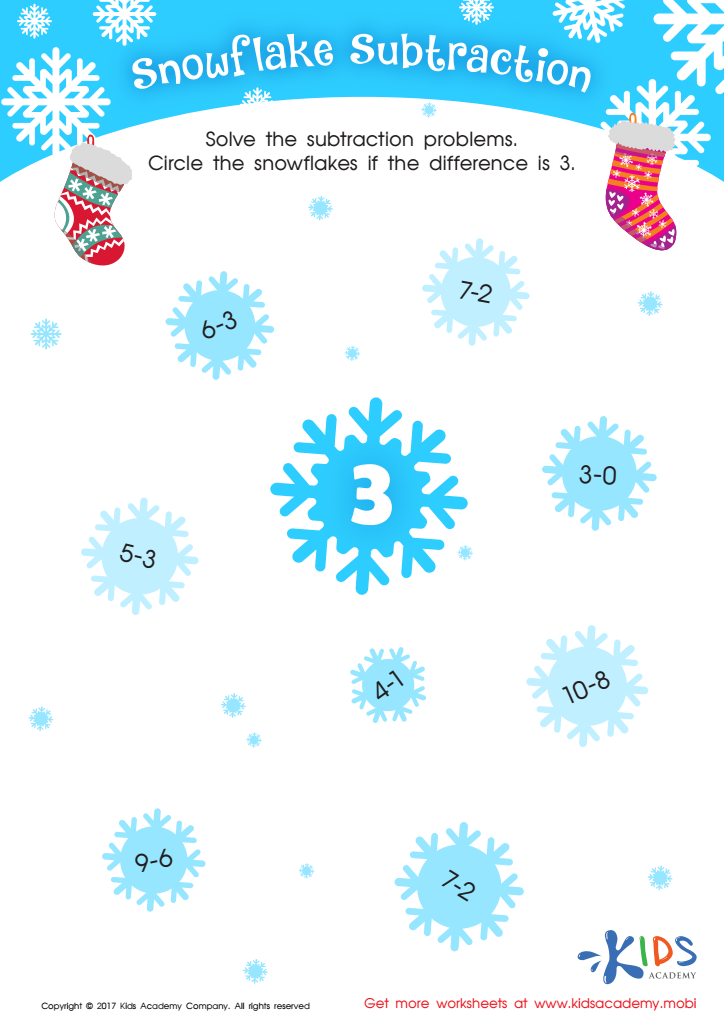
Snowflake Subtraction Worksheet
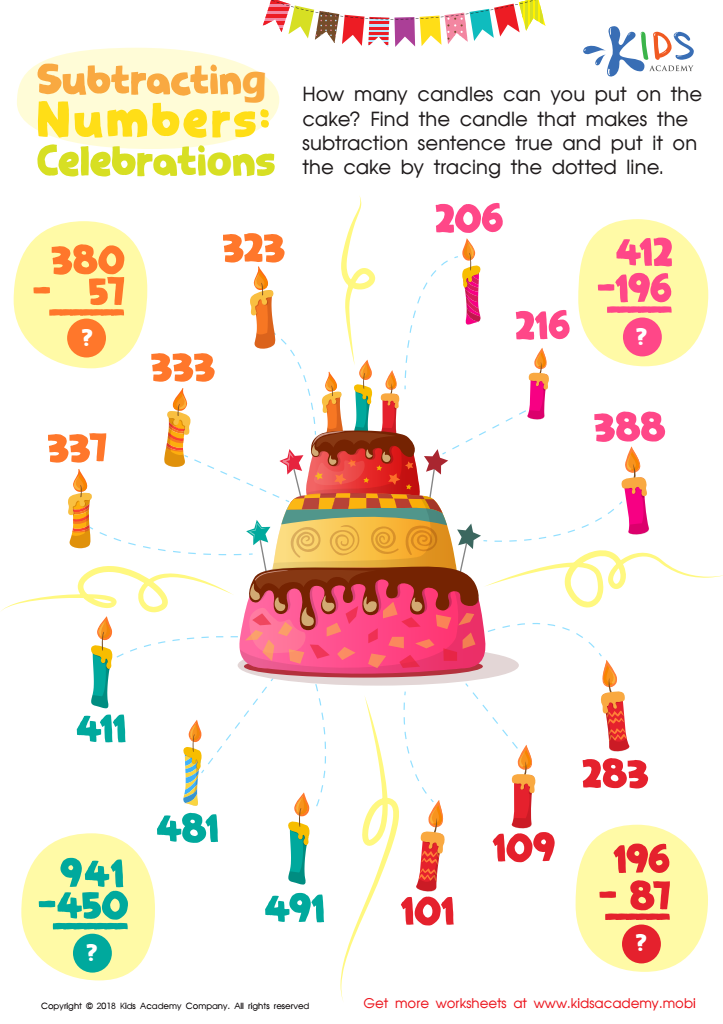
Subtracting Numbers: Celebrations Worksheet
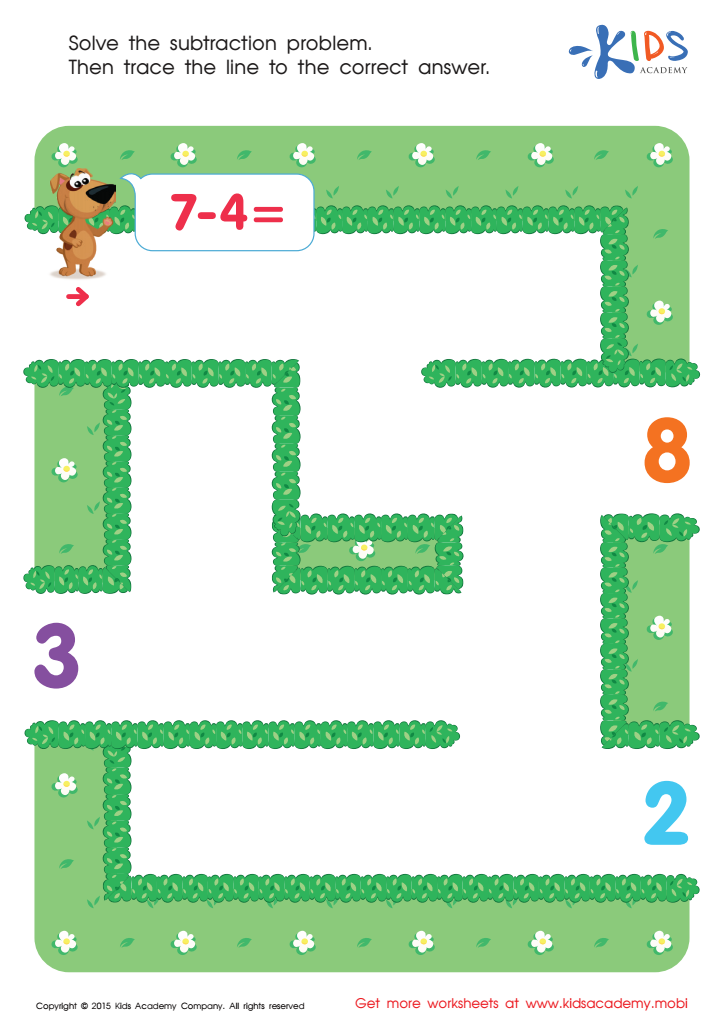
Subtraction Seven Minus Four Worksheet








Number comprehension is vital for children aged 3-9 as it forms the foundation for future mathematical skills and overall cognitive development. During these formative years, children develop critical thinking and problem-solving abilities, which are crucial not just in math but across all subjects. By focusing on extra challenges in number comprehension, parents and teachers can enhance children's engagement and understanding of mathematical concepts in a fun, interactive way.
Introducing challenges encourages children to analyze, reflect, and articulate their thought processes, fostering a love for learning. These activities not only build foundational skills like counting and recognizing numbers but also introduce concepts such as addition, subtraction, and even simple patterns earlier.
Moreover, nurturing number comprehension early on can boost children's confidence and establish positive attitudes toward math, reducing anxiety in later years. For educators and parents, supporting this foundational skill ensures students are better prepared for more complex mathematical concepts in higher grades, ultimately leading to greater academic success.
More importantly, emphasizing number comprehension helps create a strong analytical mindset in children, important for real-life problem solving. Thus, prioritizing extra challenges in number comprehension equips young learners with skills they'll use for years to come.








