Pattern recognition Extra Challenge Worksheets for Ages 3-9
7 filtered results
-
From - To
Unlock your child's potential with our "Pattern Recognition Extra Challenge Worksheets for Ages 3-9." Designed to enhance critical thinking and observational skills, these engaging worksheets provide fun exercises that promote pattern identification and sequencing. Each worksheet features colorful illustrations and diverse activities tailored for young learners, ensuring they stay motivated while developing important cognitive skills. Perfect for both classroom and home learning, these extra challenges encourage creativity and confidence in problem-solving. Equip your child with the tools they need to excel in mathematics and logic. Explore our worksheets today and watch their skills soar! Ideal for children aged 3-9.
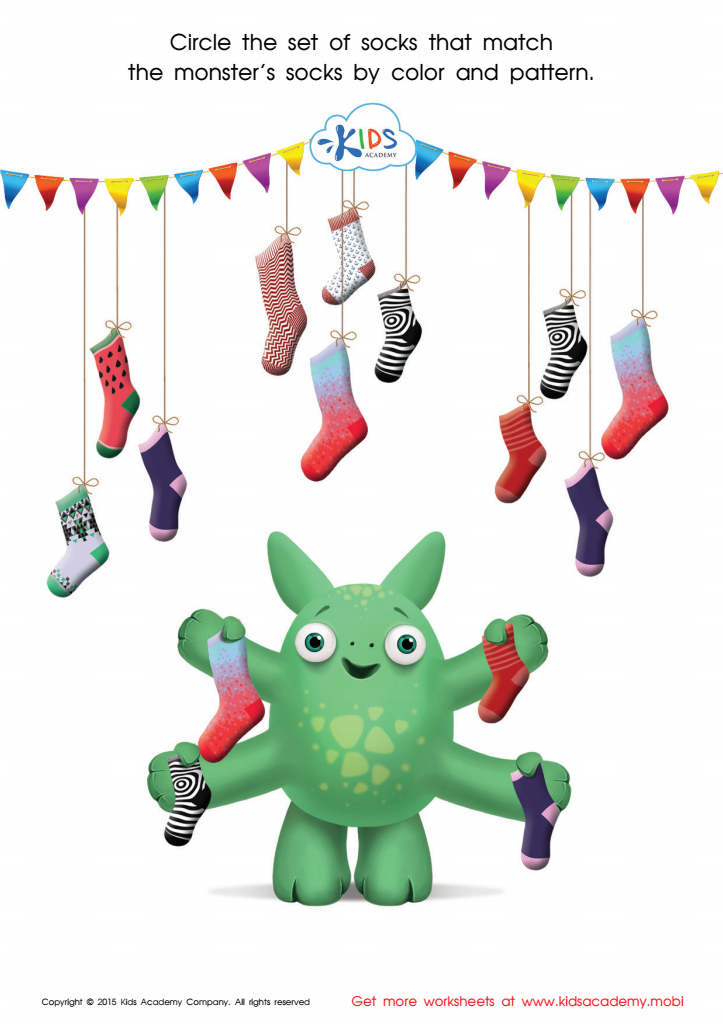
Sort the Monster's Socks Worksheet
 Assign to My Students
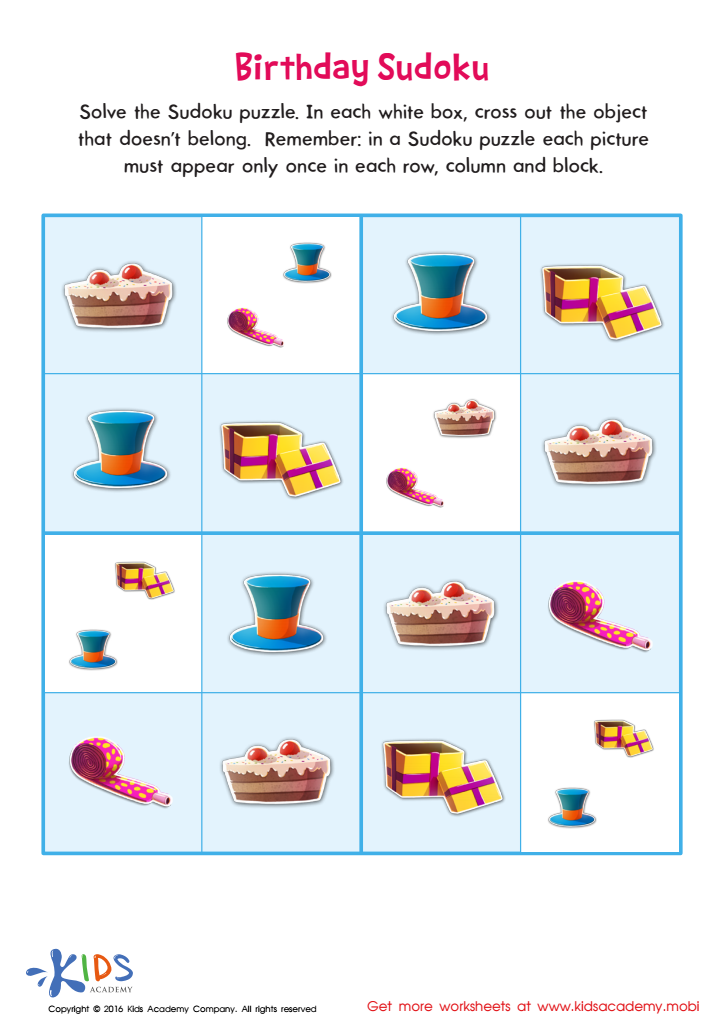
Birthday Sudoku Sorting Worksheet
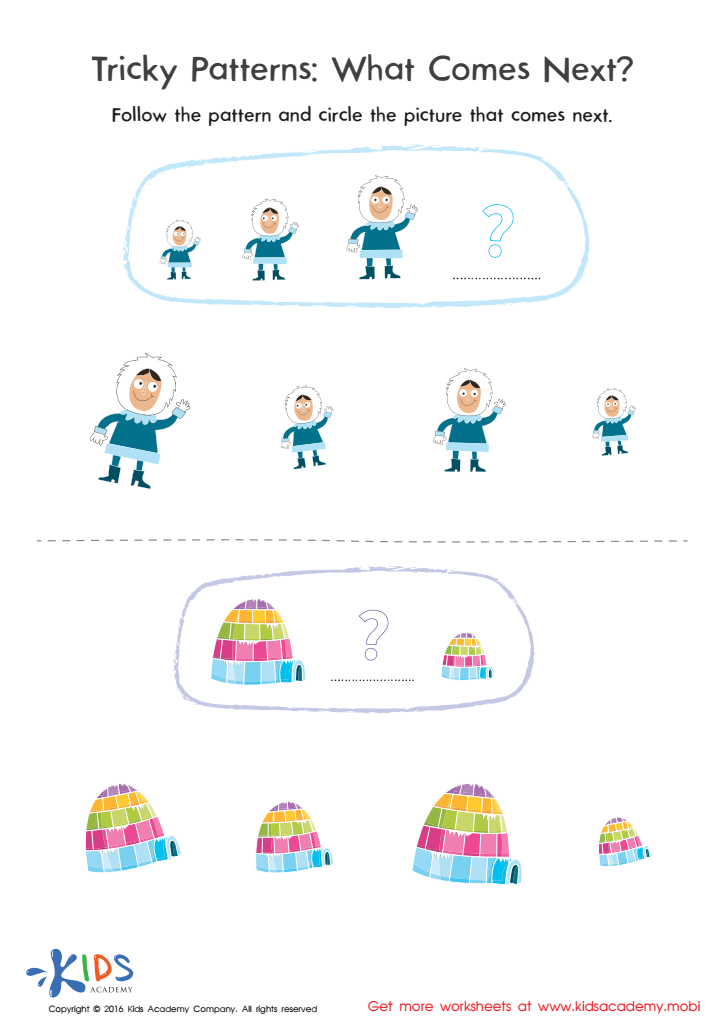
Tricky Patterns Size Worksheet
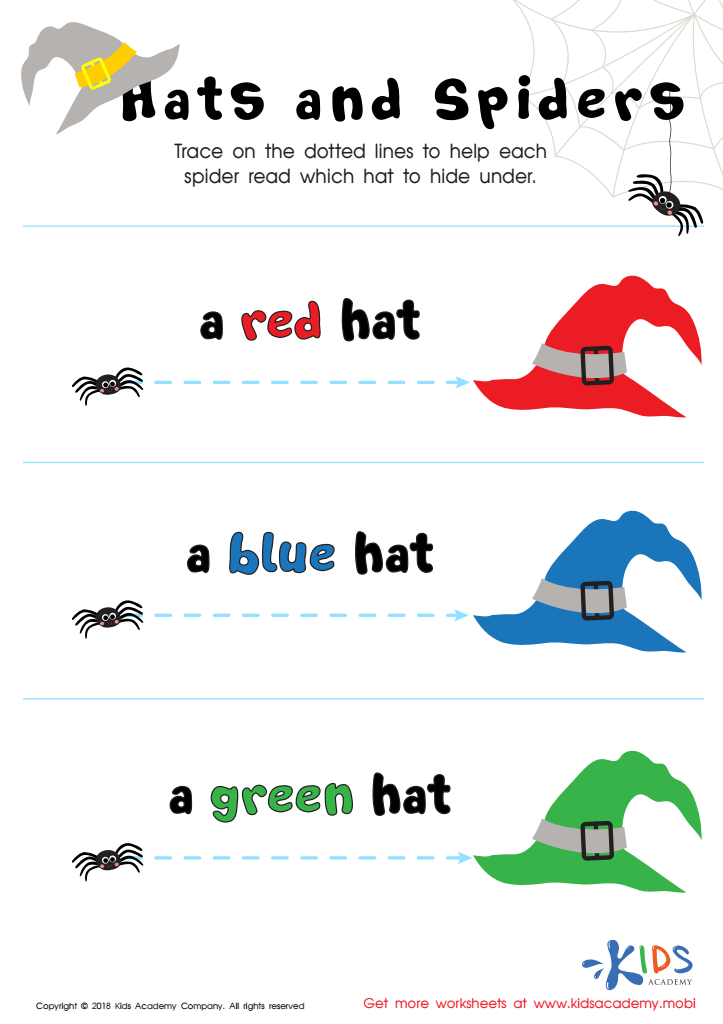
Read from Left to Right: Hats and Spiders Worksheet
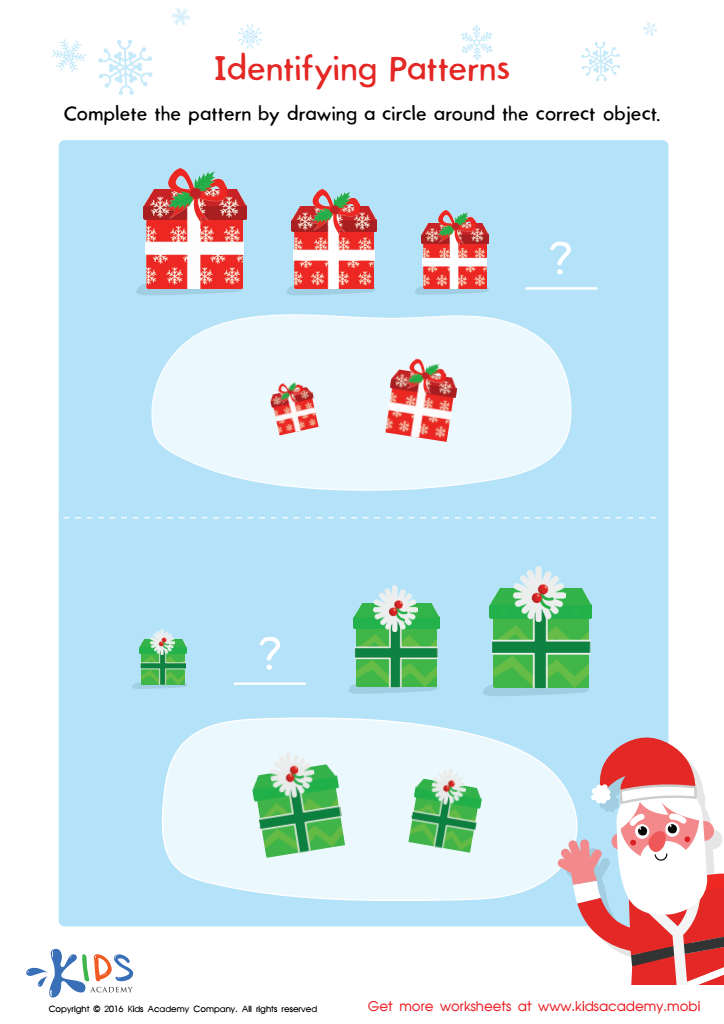
Identifying Patterns Worksheet
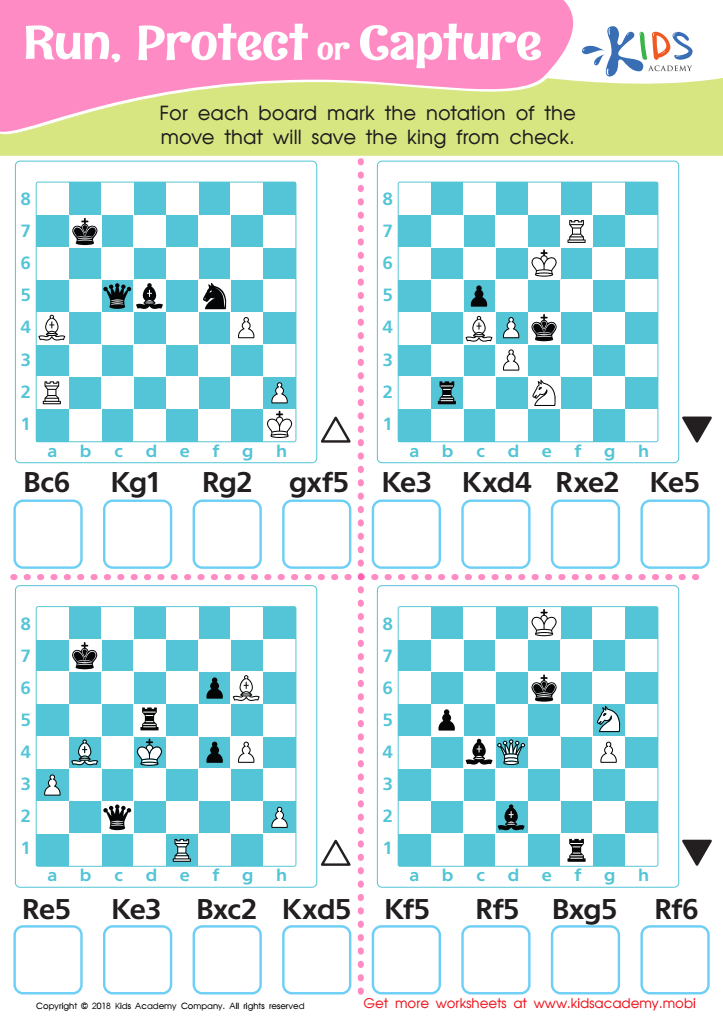
Run, Protect or Capture Worksheet
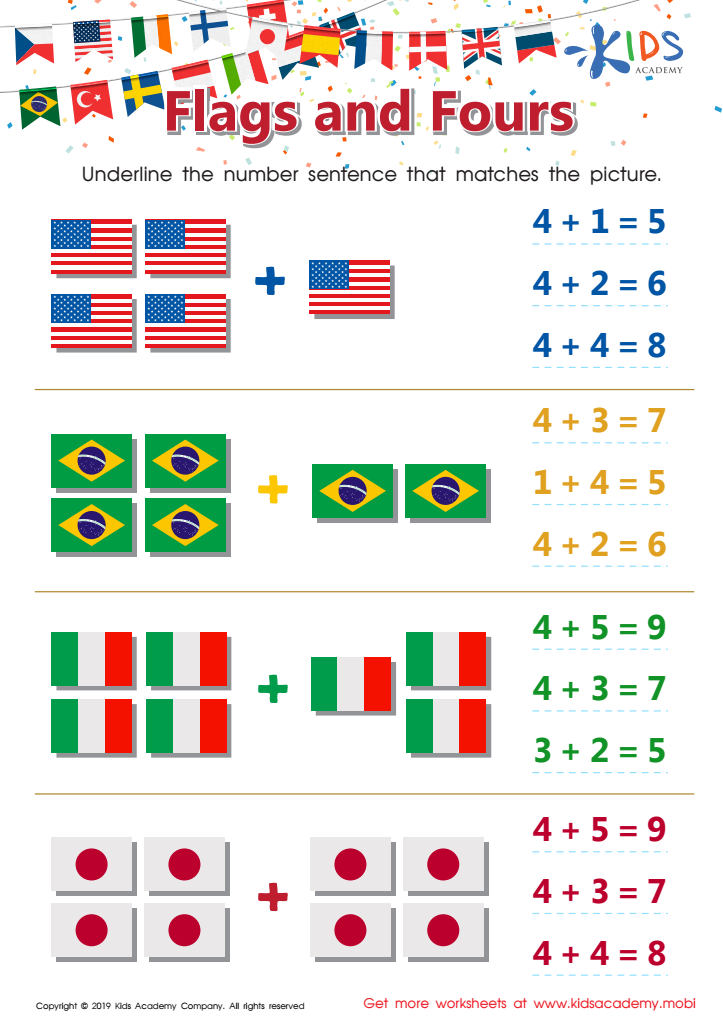
Flags and Fours Worksheet








Pattern recognition is a foundational cognitive skill crucial for early childhood development. For parents and teachers working with children aged 3-9, fostering this ability is essential for various reasons. First, pattern recognition enhances critical thinking and problem-solving skills. As children learn to identify, predict, and create patterns in their environment, they develop the ability to approach challenges systematically, promoting creativity and logical reasoning.
Additionally, recognizing patterns forms the basis for essential mathematical concepts. Understanding sequences, symmetry, and relationships nurtures early numeracy skills, helping to prepare children for future mathematical learning. This is particularly relevant as they transition into formal schooling where such concepts become increasingly integral.
Moreover, engaging in pattern recognition activities enhances children's observational skills and attention to detail. These skills are not only invaluable in academic settings but also in everyday life, helping children develop a keen awareness of their surroundings.
Lastly, discovering patterns fosters perseverance and resilience. As children confront challenges in recognizing or creating patterns, they learn to navigate difficulty, providing a foundation for lifelong learning and adaptability. In essence, encouraging pattern recognition in young children prepares them holistically for educational success and equips them for complex social and academic interactions in the future.








