Extra Challenge Numbers 11–20 Worksheets for Ages 3-9
3 filtered results
Difficulty Level
Grade
Age
-
From - To
Subject
Activity
Standards
Our "Extra Challenge Numbers 11-20 Worksheets for Ages 3-9" provide engaging and educational activities tailored for early learners. Designed to introduce and reinforce foundational math skills, these worksheets help children confidently count, recognize, and write numbers 11-20. Each printable worksheet offers a variety of exercises, including fun illustrations, number tracing, and simple counting tasks that keep young minds captivated. Perfect for classroom use or homeschooling, these resources ensure kids build strong number sense while having fun. Ideal for preschoolers to early elementary students, our worksheets foster a love for math in every child!
Favorites
With answer key
Interactive
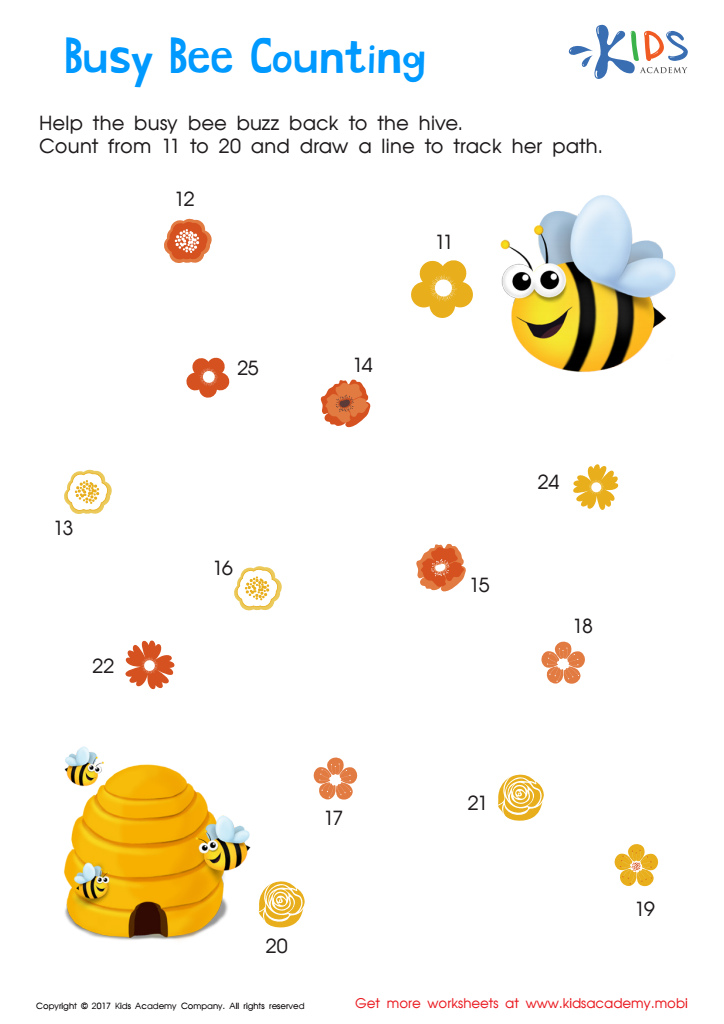
Ordering 11–20: Busy Bee Counting Worksheet
Help your child master counting from 11 to 20 with our connect the dot counting worksheet. Kids will have fun counting, drawing and problem-solving with this vibrant worksheet. With clear directions, adorable pictures and a sense of purpose, your child will develop crucial numeracy skills without even knowing it!
 Assign to My Students
Ordering 11–20: Busy Bee Counting Worksheet
Worksheet
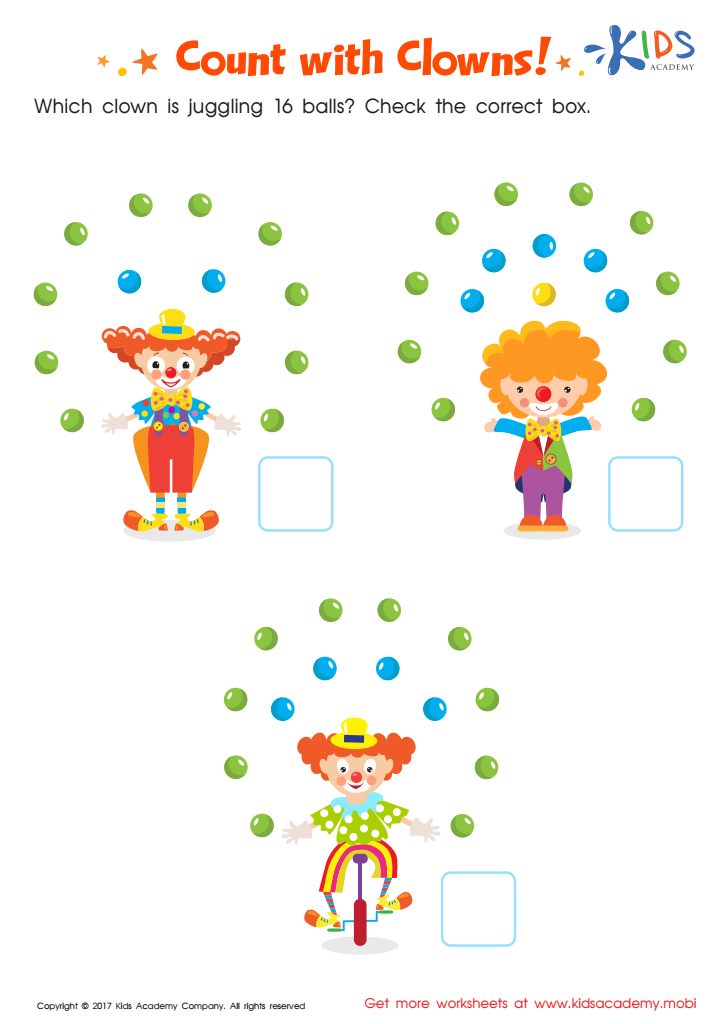
Count with Clowns Worksheet
Math may not be a laughing matter, but this worksheet sure is! Download the PDF and get ready to count balls with the clowns! Your child will have a blast and learn how to count at the same time. It's an easy, fun way to practice math!
Count with Clowns Worksheet
Worksheet
Join Kids Academy for Free
Who is primarily going to use this learning content?



Extra Challenge Numbers 11–20 are crucial for children ages 3-9 as they form an essential bridge between basic counting and more advanced mathematical concepts. During this developmental window, children transition from recognizing simple quantities to understanding more complex number relationships. The numbers 11–20 can be particularly tricky because they don't follow the simple "teen" pattern as intuitively as subsequent numbers do, potentially causing confusion.
Engaging with these numbers through extra challenges helps solidify children's grasp of place value—an essential building block for arithmetic. This solid foundation in place value supports future learning in addition, subtraction, and eventually, multiplication and division. Early proficiency in these numbers can also foster confidence, reducing math-related anxiety down the road.
Moreover, challenges tailored to these numbers can develop critical thinking and problem-solving skills. Children are not just memorizing numbers; they're understanding how to manipulate and interact with them. This can lead to better performance in school, a more positive attitude towards learning, and greater perseverance in tackling new challenges.
For parents and teachers, this stage presents an opportunity to nurture a child's numerical literacy—making it fun and engaging lays the groundwork for a lifelong love of math. Prioritizing these foundational skills helps ensure children are well-prepared for future academic demands and everyday mathematical tasks.