Alphabet Recognition Extra Challenge ABC Order Worksheets for 3-Year-Olds
3 filtered results
-
From - To
Introducing our "Alphabet Recognition Extra Challenge: ABC Order Worksheets for 3-Year-Olds" – the perfect resource for early learners! Designed to enhance alphabet familiarity, these engaging worksheets help your child master the ABCs while arranging letters in the correct order. Crafted to boost cognitive skills and hand-eye coordination, each activity provides a fun and interactive way for children to learn. Our worksheets are tailored to capture the interest of young minds, offering an excellent blend of education and enjoyment. Ideal for preschool settings or at-home practice, these resources support foundational literacy skills and a lifelong love for learning.
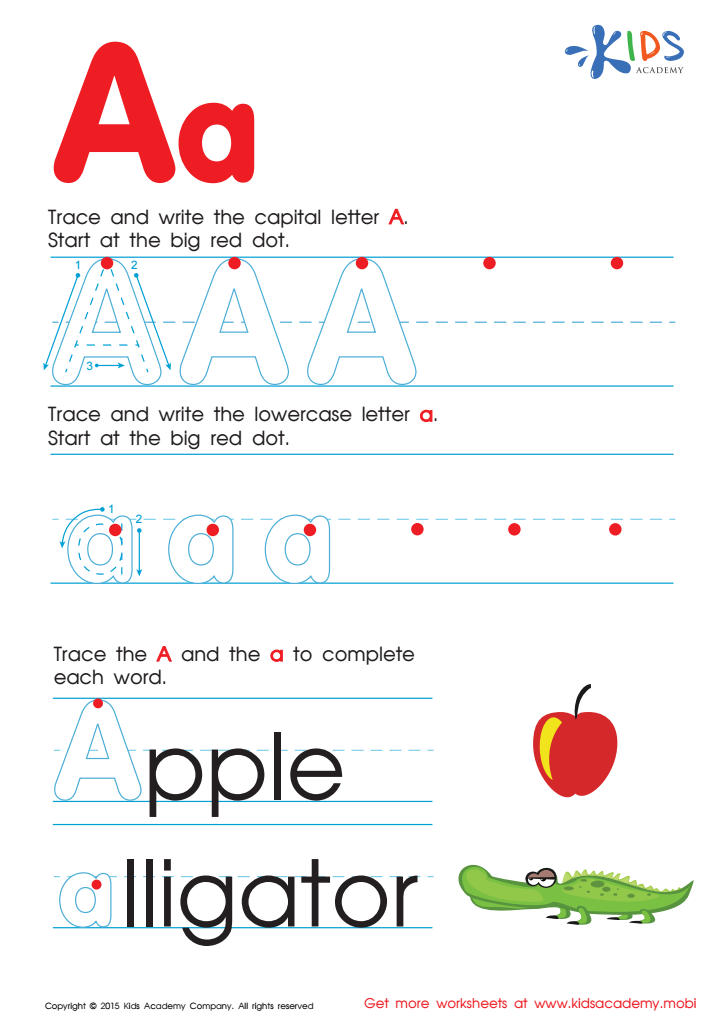
Letter A Tracing Page
 Assign to My Students

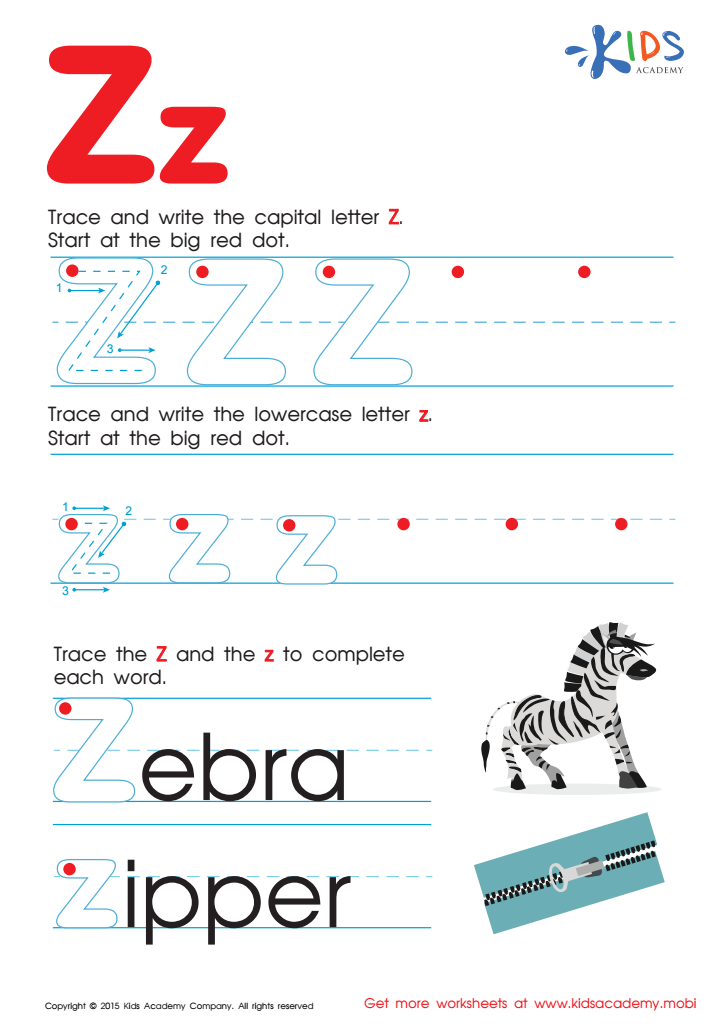
Letter Z Tracing Page
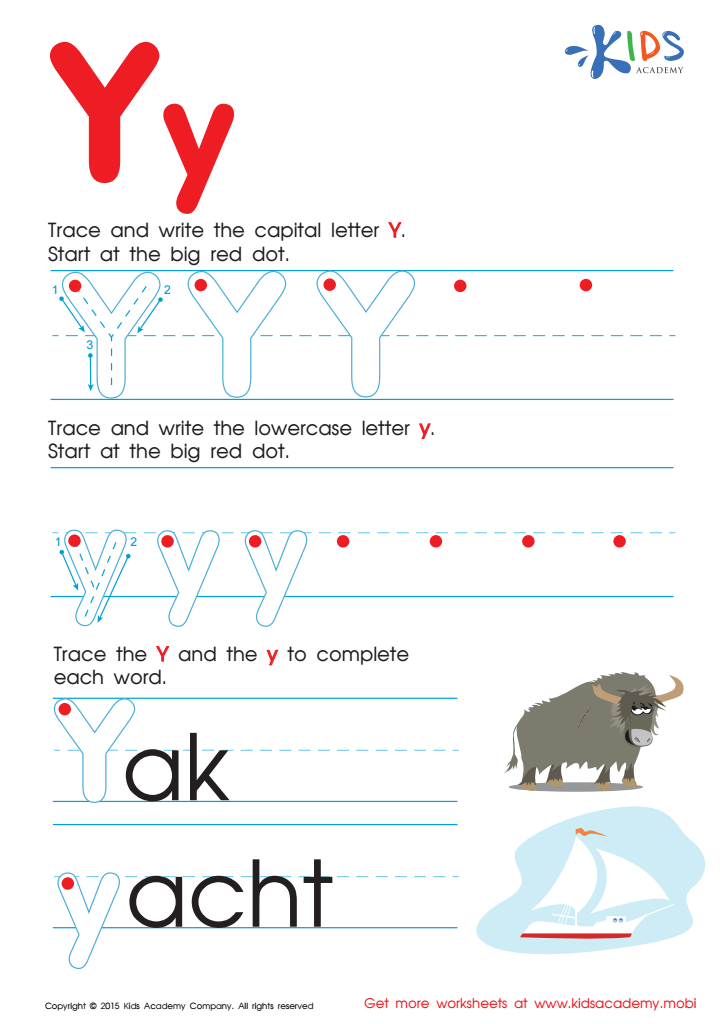
Letter Y Tracing Page








Alphabet Recognition and mastering ABC order in 3-year-olds holds significant educational value. Early engagement with these skills forms the foundation for their reading and writing abilities, which are essential for future academic success. For parents and teachers, fostering an environment that challenges children with an advanced grasp of the alphabet can enhance cognitive development, reinforce pattern recognition, and bolster memory skills.
Introducing alphabetic challenges does more than teach letters; it builds crucial pre-literacy skills, such as phonemic awareness. Children who regularly engage in alphabet recognition tend to develop a keen understanding of the letter-sound relationships, thus easing the transition to phonics and eventually fluent reading. Additionally, knowledge of ABC order assists in language organization and dictionary skills they will use throughout their education.
Having rich, learning experiences through games or activities specifically designed for alphabet practice can make the process enjoyable, ensuring that children remain engaged while learning. For teachers, incorporating these challenges can provide structure for lesson planning and gauge developmental milestones. For parents, participating in these exercises allows opportunities for bonding and insights into their child’s progress. Prioritizing these early literacy interventions equips children with confidence and the foundation necessary for educational success.








